Star Domestic Cleaners
Menu
Fabric sofa with removable seat cushions in a UK lounge
UPHOLSTERY CARE · HANWELL

Upholstery Cleaning Hanwell

If a patch looks different after a home cleaning attempt, tell us what happened before adding another product. Share the furniture fabric and the treatment history, including any change in colour or texture. We can discuss the concern and upholstery cleaning options for your Hanwell home.

  • Earlier products discussed
  • Changed patches explained
  • Treatment expectations made clear
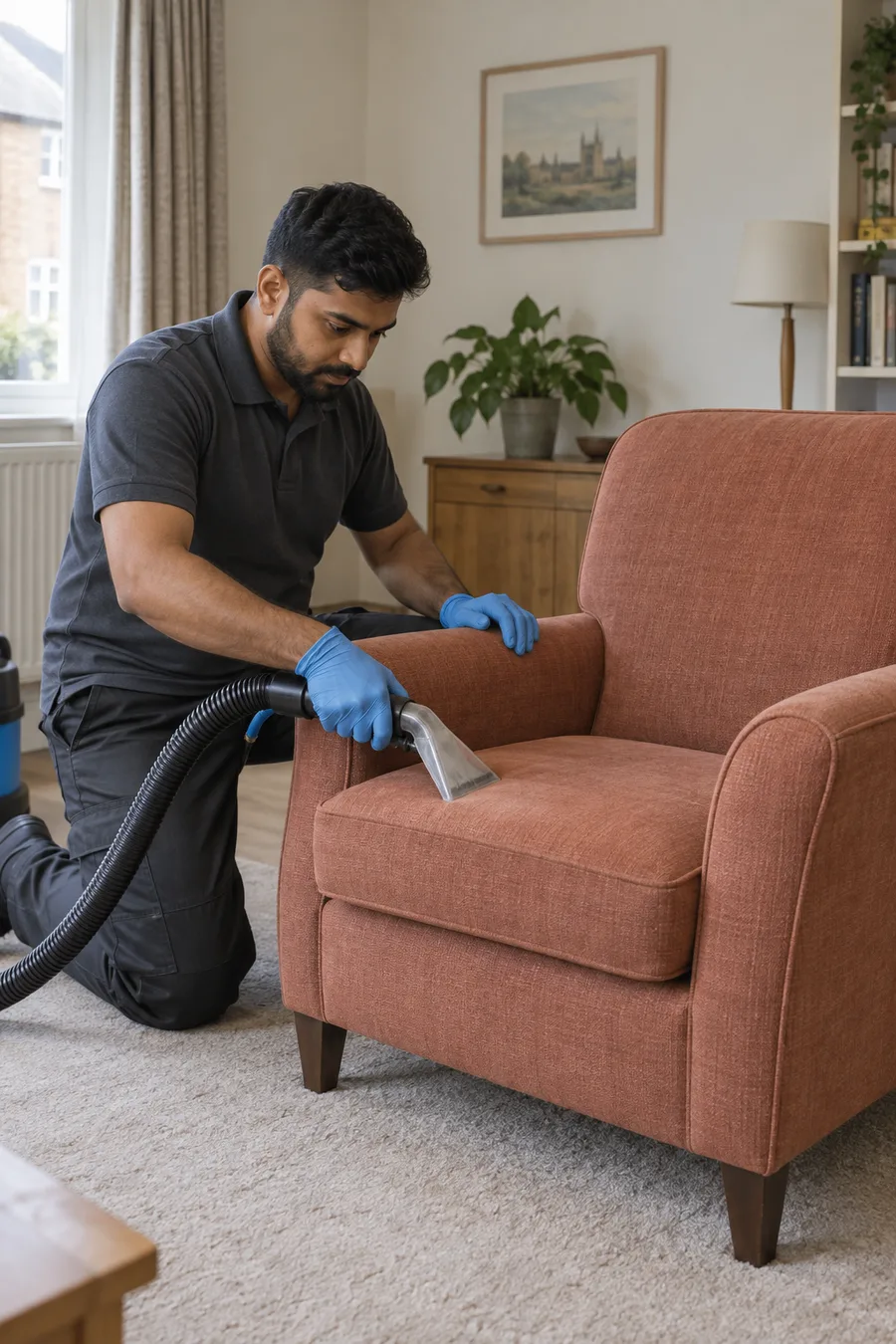
Technician treating the seat of a fabric armchair
Close view of woven upholstery fabric on a sofa

Describe the first spill and each later attempt.

Write down what caused the original mark if known, approximately when it happened and how you responded. Include the product names, rubbing or blotting and repeated applications. A photograph of packaging is useful where the name is unclear, but tell us when an old product cannot be identified.

Explain what changed afterwards: a ring, pale area, stiffness or a different-looking texture. Show the patch in normal room light with some surrounding upholstery. Avoid another trial treatment while waiting for advice, so the existing concern can be discussed without adding a new unknown product.

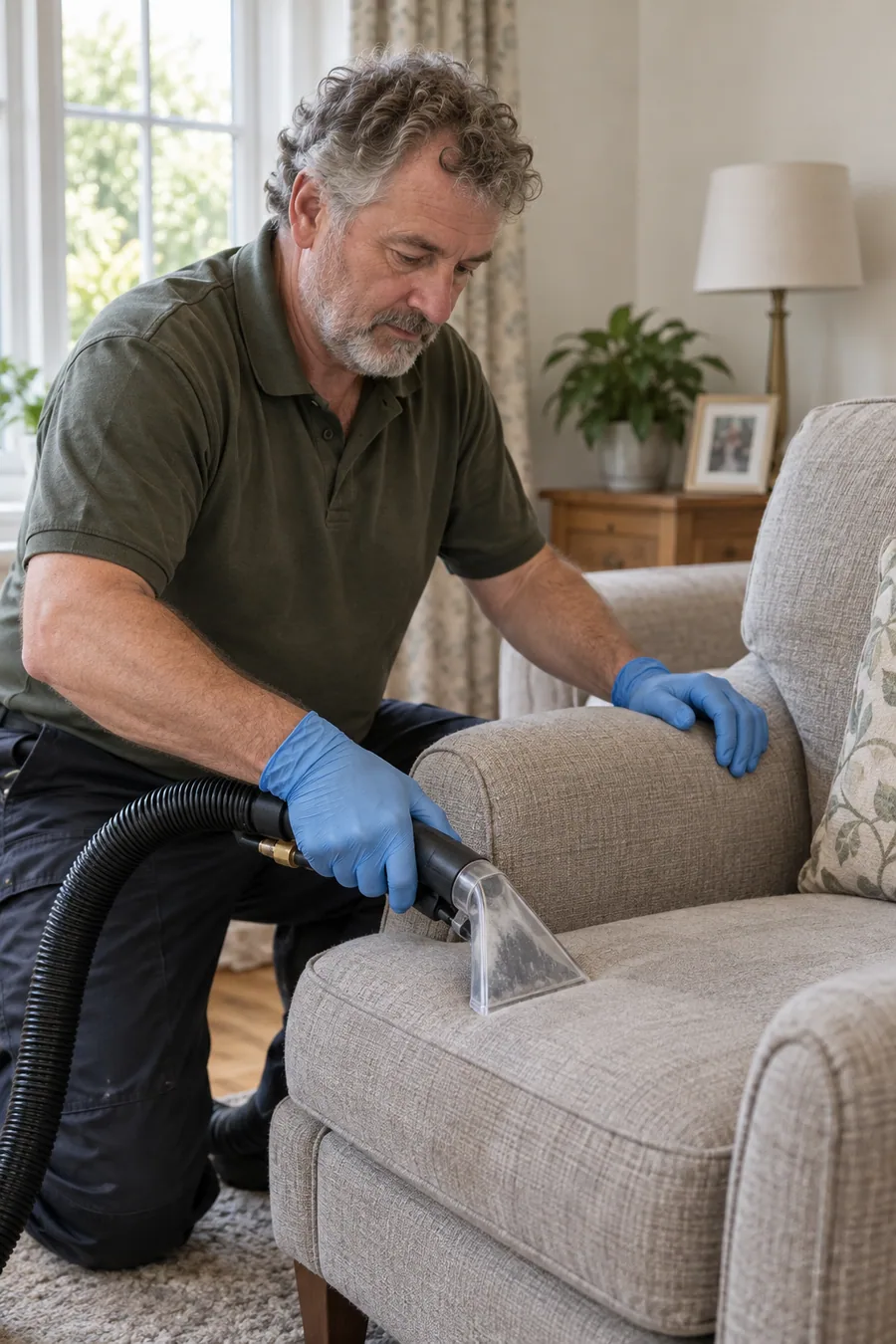
Cleaner treating a fabric armchair seat

Keep the furniture’s condition in the picture.

Send a wider view of the chair or sofa, not just the patch. Describe seat count, size and separate sections, and identify other areas of general soiling if you want them cleaned too. The enquiry can address a particular concern while still explaining the piece as a whole.

Cleaning cannot repair damaged fibres or restore lost colour. Tell us about worn threads, open seams or other deterioration alongside the mark. Discuss likely limits directly, including the possibility that a changed patch remains after treatment even when surrounding dirt is addressed.

Find the cover guidance before making another decision.

Share the manufacturer label or instructions, including restrictions on moisture or products. Mention different materials on cushion reverses and decorative trim. If the material is unknown, say so and provide any purchase information available rather than identifying the fibre by appearance.

Close detail of upholstery piping and woven fabric

Discuss suitable options without choosing a remedy by name.

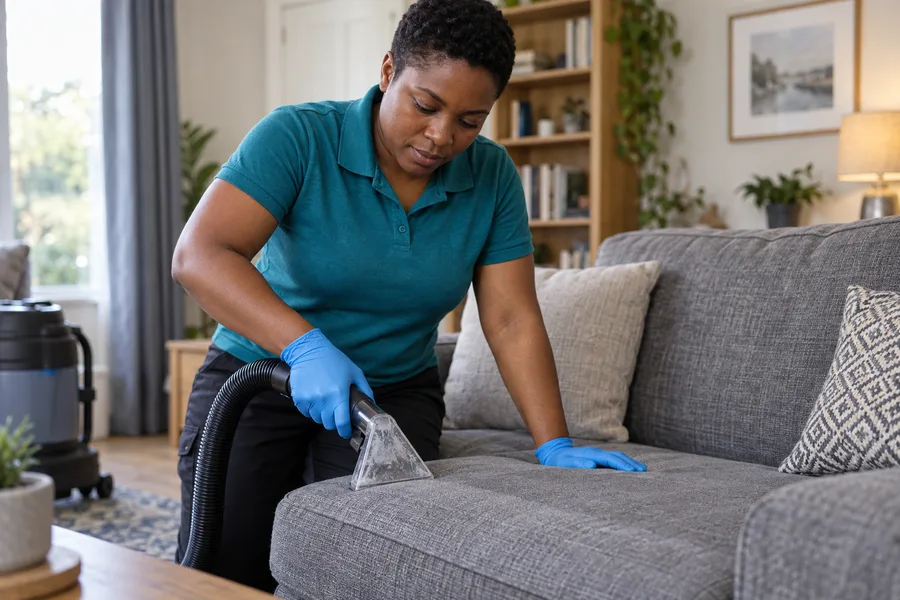
Technician treating a fabric sofa with a small upholstery extraction tool

Hot water extraction

We offer extraction for suitable upholstery. Ask how the proposed treatment relates to the cover and previous products, and which stain work is included. The method should be discussed around the actual furniture and concern rather than treated as a guaranteed correction.

Dry cleaning and delicates

Dry cleaning is also available for delicates. Share the care information and changed condition before selecting an option. Ask what preparation and aftercare apply and how any material restrictions affect the work that can be agreed.

Identify the affected cushion and its faces.

Tell us whether the marked section is a loose seat, fixed pad or back cushion. Explain the face, edge or reverse involved and whether the underside has a different cover. Agree which surfaces will be treated and list decorative cushions separately if they need attention.

Leave filling and fastenings together while discussing the appointment. Show weak stitching or a damaged zip before booking. The description should make the affected area accessible in the conversation without requiring you to dismantle a cushion or furniture mechanism.

Prepare the room and keep the product information handy.

Remove personal items from the furniture, clear the route to the piece and keep any product packaging available to show. Tell us about stairs, restricted entry or a table obstructing the working space. Explain who will receive the cleaner and describe the earlier attempts.

Assistance with lightweight furniture is included. Discuss heavy moving needs before the visit and agree what stays in position. Keep pets away from the working area and leave unfamiliar fittings alone rather than changing the furniture arrangement to expose a difficult patch.

Ask how to care for the piece after treatment.

Drying varies with material, method, filling and room conditions. Ask when the seating can be used again and how loose cushions should be arranged. Follow the advice for your furniture, including ventilation and when throws or belongings can return.

If protection is discussed, confirm suitability and whether it is included or separately charged. Ask for guidance about a future spill. Avoid treating a remaining discoloured area as a reason to begin another series of home products immediately after the visit.

Agree the work and total before booking.

An armchair starts from £15 for extraction or £19 for dry cleaning. A two-seat sofa starts from £36 or £42. Give the actual size, fabric and condition, including the treatment history, so the full quotation relates to the furniture you want considered.

The published figures are starting prices. Size, arrangement, area and availability can affect the total, and applicable congestion charges are additional. Check the agreed surfaces, stain-treatment inclusions and any protection cost as part of the booking discussion.

Mention the other affected surfaces separately.

If the spill also reached a floor covering, enquire about carpet cleaning and give that surface its own history. One-off deep cleaning can address broader household work. If the piece is part of a furnished handover, discuss it within an end of tenancy cleaning plan so its requirements are clear.

Send the Hanwell enquiry with the history attached.

Give the postcode, dates and receiving contact, together with furniture photographs, care labels and the earlier cleaning details. Include practical access information. We can discuss availability and the proposed upholstery appointment using the piece and concern you have described.

BEFORE THE FURNITURE IS TREATED

Questions after a home spot-cleaning attempt

What if I cannot remember the product name?

Explain what you know about the attempt and when it happened. Mention that the product is unknown rather than naming a similar one or applying another product to compare results.

Should I try to remove a ring before enquiring?

Ask for advice first and show the ring clearly. Repeated wetting or rubbing may affect the material and adds to the history that needs to be considered.

Is a pale patch always remaining dirt?

No. It may involve colour loss or earlier product damage. Explain the change and its timing so it can be discussed separately from removable soiling.

Can I book general cleaning despite the patch?

Describe the patch and the wider cleaning request together. Discuss the proposed work and realistic limits before agreeing the furniture appointment and complete price.

Do you need the product bottle on the day?

Keep packaging or a photograph available if you have it. It can help explain what was used, particularly when someone else will receive the cleaner.

What if the patch remains after treatment?

Ask about likely results beforehand and follow aftercare afterwards. Permanent changes may remain; cleaning is not a repair for damaged fabric or missing colour.

Tell us what changed after the first attempt.

Share the furniture details, product history and photographs of the patch. We will discuss suitable care and a quotation for your Hanwell appointment.

Illustrative generated photographs show furniture and cleaning situations, rather than actual staff or local customer jobs.