
Mould removal in London
Mould on a wall, ceiling or window edge needs more attention than an ordinary dusting or wiping task. It is important to understand the affected surface and why it is staying damp. Star Domestic Cleaners takes mould-removal enquiries in London and the M25. Tell us where the mould is, the approximate area, how long it has been present and whether it has returned after previous cleaning. We will discuss the assessment, suitable scope and quote before confirming a visit. Cleaning visible mould and fixing the source of moisture are separate parts of the problem. This page does not promise a permanent result while damp remains unresolved.
Read the service details ↓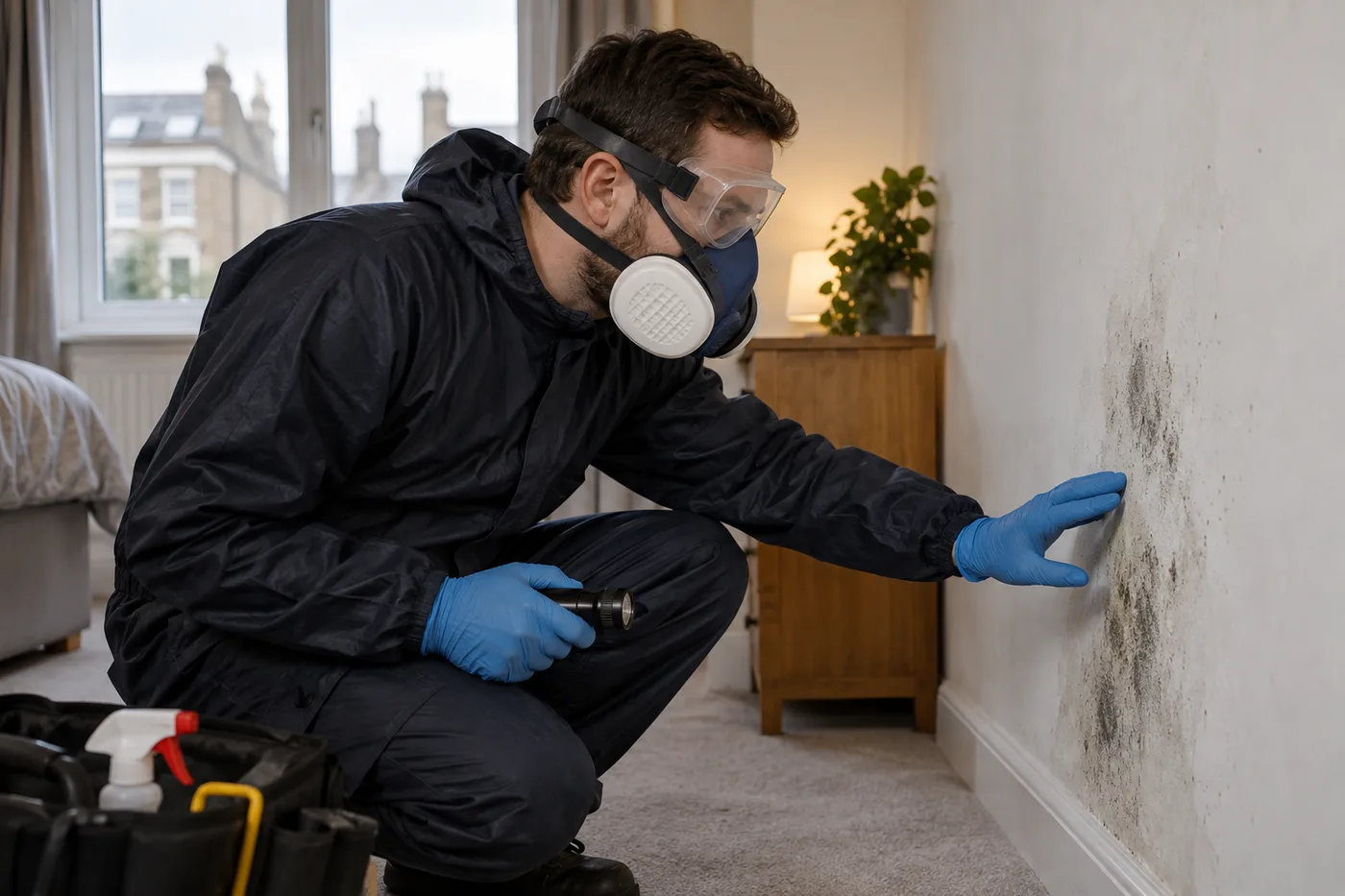
Start with the location and condition
Describe each affected room and surface. A small patch around a bathroom window is different from mould spread across a bedroom wall, behind fitted furniture or within damaged plaster. Give an approximate area without disturbing the material to measure it. Say whether the surface is painted plaster, a window seal, tile grout, wood or another material. Mention peeling paint, soft plaster, staining or a musty smell. Photographs can help explain the location if requested, but they do not reveal everything behind a surface. An assessment may be needed before the treatment and full scope can be agreed.
The moisture problem matters
Mould is linked to moisture. The source may involve condensation, a leak, water entering the building or another defect. Tell us about recent flooding, leaking pipes, roof problems and damp that continues even when the visible patch has been cleaned. Do not assume every case is caused by how a household uses a room. Building condition needs consideration too. The booking discussion should make clear which cleaning work is proposed and which moisture problem needs a separate professional. Removing the visible growth alone may not stop it returning. If a repair or further investigation is required, that should be addressed alongside the cleaning plan.
An assessment before treatment
The person assessing the job needs to consider extent, access, materials and the condition of the room. Some mould is visible on an accessible surface; other cases may involve concealed areas or damaged building materials. That difference affects what can be safely handled within the proposed service. Explain any previous treatment and whether the patch came back. Tell us if a surveyor, plumber, landlord or other professional has already inspected the problem. Keep their findings available. A useful plan does not rely on a photograph to promise one treatment for every room. It starts with understanding what is affected and what remains uncertain.
What the cleaning scope should explain
Before booking, ask which surfaces will be treated, how access and protection will be managed, and what preparation is required. Check whether the quote includes only accessible surface treatment or another task agreed after assessment. Removal of damaged materials, plumbing repairs, roof work and redecorating should not be assumed to be part of cleaning. Some finishes may remain marked or need further work after suitable treatment. Painting over a patch is not the same as addressing mould and damp. The proposed scope should distinguish treatment, repair and finishing so you can understand what the visit is expected to achieve.
Prepare information, not the affected material
You do not need to scrub, sand or disturb the mould to make an enquiry. Give a clear description and follow preparation instructions from the provider after the work has been assessed. Do not mix cleaning chemicals or apply several products to the area while waiting for advice. Tell us what has already been used. Discuss furniture near the affected surface and whether it can be moved safely. If mould is behind a large fitted unit, do not assume the cleaner can dismantle it during a standard visit. Access and any separate work need to be agreed rather than discovered on arrival.
Occupants and working arrangements
Mould can affect health, particularly for some people with existing conditions or increased vulnerability. Tell the booking team about any practical needs affecting access or who can be present during work. The provider should explain appropriate working arrangements and what must be kept away from the treatment area. Do not treat a general webpage as personal medical advice. If someone has symptoms or a concern about the effect of damp or mould on their health, seek advice from an appropriate health professional. For the cleaning enquiry, the useful details are the condition, location, occupants’ practical requirements and any existing advice that affects the plan.
Rented homes and reporting damp
If you rent the property, report damp and mould to the landlord or managing agent and keep a record of the communication. Cleaning should not replace the investigation or repair of a building problem. Explain who is responsible for arranging access and who needs the quote or assessment details. If a landlord, agent or contractor is already involved, coordinate the timing so treatment is not carried out just before another task creates more moisture or disturbs the area. This page does not make a legal decision about responsibility for your particular tenancy. It helps you prepare a practical service enquiry while the wider damp issue is dealt with.
Price and the information behind it
Mould removal is quoted after the affected areas and proposed work have been discussed. The extent, materials, condition, access and confirmed work affect the quote. Ask whether an assessment is required, which surfaces are included and whether any separate charges apply. Clarify work that falls outside the cleaning scope, including repair or replacement of affected materials. Give accurate information rather than describe a large recurring problem as a small mark to obtain a shorter appointment. A useful quote is based on the actual condition. Call 020 3404 6962 with your postcode and the affected areas to discuss the next step and available arrangements.
What to check after the work
Keep the assessment, quote and aftercare information supplied for the agreed service. If visible mould returns, note the location and timing and report it, especially if the room or surface is still damp. Continuing moisture may need further investigation rather than repeated surface cleaning. Follow relevant advice about repairs, ventilation and use of the room for the particular property. We do not claim that one cleaning visit permanently prevents mould or removes every hidden source. The important outcome is an agreed treatment for the suitable surfaces and a clear understanding of what still needs attention to address the moisture problem.
Questions about mould removal
Is mould treatment part of regular cleaning?
Do not assume it is. Describe the mould before booking so the job can be assessed separately. Ordinary home cleaning is not automatically an appropriate response to an affected surface or unresolved damp.
Can you guarantee mould will not return?
No permanent prevention promise is made here. If moisture continues, mould may return. The scope should explain the treatment and the separate steps needed to investigate or repair the cause.
Can you quote from photographs?
Photographs can help with an initial enquiry, but the extent, material and concealed condition may need assessment. We will discuss what information is required before a treatment or final price is confirmed.
Discuss your booking
Call with your postcode and the job you need done.
Call 020 3404 6962 ↗Prepare an enquiry ↗
Have your postcode, preferred date and the rooms or items ready when you call. Mention access restrictions and any particular areas that need attention.
Discuss your quote ↗020 3404 6962Mould removal area information
- Acton
- Balham
- Barking
- Barnet
- Battersea
- Bayswater
- Beckenham
- Belgravia
- Belsize Park
- Bermondsey
- Bethnal Green
- Brentford
- Brixton
- Bromley
- Canary Wharf
- Chelsea
- Chislehurst
- Chiswick
- Clapham
- Cricklewood
- Croydon
- Dulwich
- Ealing
- Earls Court
- Earlsfield
- East Sheen
- Edgware
- Enfield
- Erith
- Finsbury
- Fulham
- Golders Green
- Greenwich
- Hammersmith
- Hampstead
- Hampton
- Harrow
- Hendon
- Highbury
- Highgate
- Hounslow
- Ilford
- Islington
- Kensington
- Kentish Town
- Kilburn
- Kings Cross
- Kingston upon Thames
- Ladbroke Grove
- Lewisham
- Marylebone
- Mayfair
- Morden
- Mortlake
- Notting Hill
- Orpington
- Paddington
- Pimlico
- Pinner
- Poplar
- Putney
- Regents Park
- Richmond
- Rickmansworth
- Romford
- Rotherhithe
- Ruislip
- Shepherds Bush
- St Johns Wood
- Stanmore
- Stoke Newington
- Streatham
- Surbiton
- Sutton
- Teddington
- Twickenham
- Uxbridge
- Wallington
- Walthamstow
- Wandsworth
- Wembley
- West Hampstead
- Weybridge
- Willesden
- Wimbledon
Find area information
Choose your area to read about the service, then contact us with your postcode to check availability for your address.
Browse areas for this service ↗