
Accessible surfaces
We consider visible materials and condition before agreeing suitable cleaning or treatment. Ask which areas can actually be reached and how any limit affects the proposed work.
A partly hidden patch needs its access explained before work is planned. Tell us what you can see and what blocks the view. We’ll discuss appropriate inspection, moisture investigation and suitable treatment for the Wembley property.

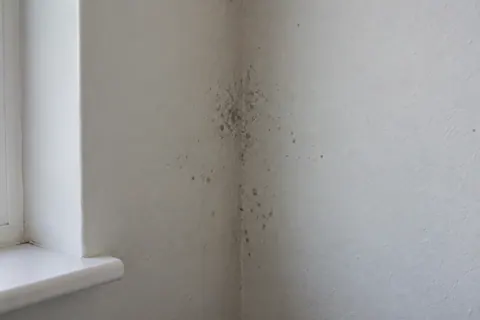
Give the room, the position of the affected patch and the material you can identify. Say whether a wardrobe, sofa, cupboard or appliance blocks the view, and mention wetness, staining or a persistent smell. An accessible photograph can help, but missing views should be described honestly rather than filled in with a guess.
Do not move a heavy item, dismantle a unit or open a wall just to gather evidence for the enquiry. Explain whether the furniture is freestanding or fitted and who controls access. The assessment can then be planned around the actual restriction instead of expecting hidden areas to be included automatically.

Keep dates, repair details and names of earlier products ready. Ask what small belongings should be cleared and how any furniture or restricted area will be handled. Do not brush, scrape or disturb affected material yourself. If an ordinary room clean is also needed, request household deep cleaning separately; shifting belongings for routine work is not the same as accessing mould.
We consider visible materials and condition before agreeing suitable cleaning or treatment. Ask which areas can actually be reached and how any limit affects the proposed work.
We inspect accessible areas and investigate moisture concerns. A partly concealed patch or suspected hidden dampness may require further assessment before its cause or full extent can be explained.
Dismantling, opening finishes, replacing damaged material or carrying out repairs is not automatically included. Clarify any additional task, who arranges it and whether it is separately quoted.

Describe the wall, corner and visible edge of the concern. Mention repeated patches or nearby wetness and whether access has changed since it was noticed. The position behind furniture is relevant context, but does not prove a single cause.
Identify affected paint, tile, joints or sealant and any areas behind fittings you cannot see. Include known extraction concerns or recurring condensation. Cleaning and replacing damaged finishes are different requests.
Explain which accessible wall or joint surfaces are affected and whether a plumbing problem is already known. Limited space or a fitted unit matters to the assessment. Ordinary grease cleaning elsewhere is not mould investigation.
Moisture can involve condensation, a leak or water entering the building. Tell us when the signs appeared and share any earlier professional findings. Their position can inform an investigation, but a photograph or smell alone cannot establish the extent behind a finish. Recurring, widespread or suspected concealed mould needs appropriate professional assessment.
Visible surface treatment may leave the source of moisture unresolved. If a separate repair or further access is needed, that should remain part of the discussion rather than being treated as completed by a cleaner-looking patch.

We discuss the reported signs, accessible views and anything blocking the assessment. Explain who can provide entry and whether access to another part of the property needs arranging.
Inspection and moisture investigation help establish suitable next steps. Ask what is known, what remains uncertain and whether further assessment or a separate task is required.
Check the named surfaces and treatment, the investigation and any additional arrangements. Preparation and occupant requirements should be discussed, with changed scope explained before agreement.
Avoid mixing cleaning substances or applying improvised treatments while waiting for advice. HSE guidance about cleaning substances explains chemical precautions. Discuss practical occupant and pet requirements when arranging the work. Health concerns should be taken to an appropriate healthcare professional; a cleaning enquiry does not diagnose symptoms or certify indoor air.
Follow the instructions for the agreed treatment and retain information about further assessment or moisture tasks. Report where signs return and when. A treated accessible surface does not prove a hidden area has been repaired. Regular domestic cleaning can address ordinary household tasks separately once the relevant issues are dealt with; it is not continuing mould remediation.
Extent, material, access and investigation affect the suitable proposal. Ask what the total covers and which further checks, opening, repairs or finishing are separate. A standard room-cleaning rate is not a mould tariff. If a property handover is planned, discuss the separate tenancy clean and its timing without assuming that a deadline removes the need for assessment.
Explain what blocks access and provide views you can obtain safely. Agree preparation and handling before moving an awkward item.
It is a reason to describe the concern, not a complete diagnosis. Appropriate investigation is needed to consider concealed moisture or other causes.
It must be clarified separately. Treatment of accessible surfaces does not automatically include dismantling, opening or reinstatement.
Mention its location, signs and access limit. A missing view matters to the assessment rather than making the concern irrelevant.
No complete result should be inferred. Further assessment and moisture work may be necessary for concealed areas.
Tell us who supplies entry and who can approve work. Coordinate those arrangements before assuming a particular visit can proceed.
Call with your Wembley postcode and accessible photographs. Discuss the restrictions, suitable assessment and a clear scope before booking work.
Generated photographs illustrate affected surfaces and room conditions. They are not customer cases or evidence of treatment results.