Star Domestic Cleaners
Menu
MOULD & MOISTURE · EARLS COURT

Mould Removal Earls Court

An accessible inspection should make its findings and limits clear. Explain what can be seen and what remains out of view. Discuss moisture concerns and suitable treatment for Earls Court.

  • Accessible areas identified
  • Uncertain extent kept clear
  • Further assessment discussed
Visible affected wall corner beside a freestanding cabinet
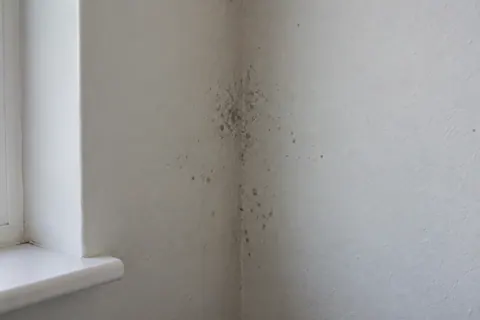
Dark surface speckles along a painted wall corner

Say what the available view cannot show.

Send a wider location image and an accessible detail, with material, extent and history where known. Explain whether marks continue behind a fitting or the affected surface cannot safely be reached. Do not remove panels, move heavy furniture or open construction to establish a hidden boundary yourself. Identifying uncertainty is useful, not a failure to prepare the enquiry. It lets the assessment and any further access be discussed around the actual concern.

A separate household clean has ordinary tasks. It should not be read as assessment or clearance of concealed mould and moisture.

Know what an accessible assessment covers.

Visible surface tasks

We discuss suitable cleaning and treatment of agreed accessible areas after considering material, condition and extent. Explain damaged finishes early. Treatment of a visible face does not automatically include every hidden layer or replacement of weakened parts.

Moisture questions

Ask which wetting observations were checked in the available areas and what supports the next recommendation. If examining a concealed position could change that decision, its purpose, permissions and access need discussing first. We explain accessible findings without treating the face of a lining as evidence that the wall behind it is dry.

Separate tasks

Clarify opening, repairs, replacement, installation and decoration separately if required. Ask who will carry out further work and which tasks are quoted. A surface-treatment amount is not automatic inclusion of rebuilding or reinstating affected construction.

Keep findings and remaining questions distinct.

Describe the limitation

Provide the postcode, photographs and history, including previous products and repairs. Explain recurring, extensive or suspected hidden growth early. State where access is restricted rather than treating an obscured area as confirmed clear or affected.

Review accessible observations

We inspect agreed surfaces and relevant moisture conditions. Ask which findings support suitable treatment and what still needs further professional assessment. A clear limit is more useful than assuming an initial visit answers every concealed question.

Agree suitable next work

Check named areas, inspection and treatment in the quotation. Discuss preparation and occupant arrangements. If authorised further access changes the findings, confirm revised tasks and amount before assuming additions were already covered.

Describe access and material for each location.

Condensation on a window with dark marks near the inner frame

Bathroom areas

Name paint, grout, tile or sealant with nearby fittings and known water or extraction concerns. Damaged seals or weak finishes need distinguishing from suitable treatment of retained surfaces. Explain any portion hidden behind fittings.

Windows and reveals

Show frames and adjacent walls with condensation observations. Location alone cannot decide the source. Say what furniture or blinds obscure without moving heavy items or disturbing growth for photographs.

Kitchen corners

Identify accessible walls, joints or cupboard areas and known plumbing history. Leave panels and heavy appliances in place. Ordinary kitchen-cleaning tasks do not establish the condition of concealed material or replace mould assessment.

A limited view cannot settle the source.

Condensation, leaks and water entering a building can need different action and may combine. Give known incidents and observations rather than diagnosing from the visible edge. Removing growth does not necessarily address moisture. Returning, extensive or suspected hidden mould needs appropriate professional assessment. In rented housing, report the concern and access limitation to the landlord or agent too, keeping dates and safely available photographs.

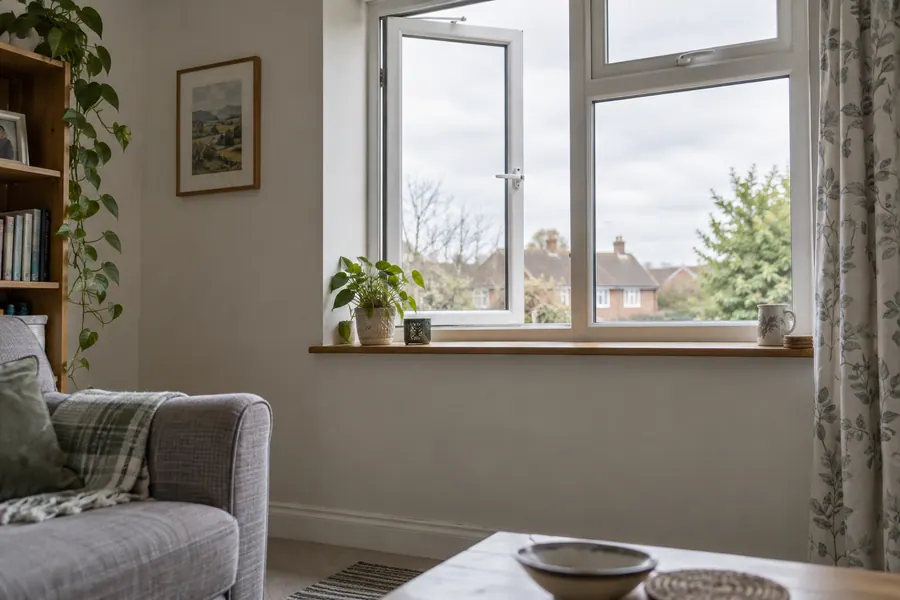
Partly open window in an ordinary sitting room
Small affected wall area beside a kitchen window

Prepare records before changing access.

Keep dates, product names and earlier work details ready. Describe belongings or furniture blocking the area, then ask what needs clearing and who will provide suitable access. Do not disturb growth or open material to prepare an enquiry. Discuss arrangements for people and pets. If arranging a separate handover clean, explain the date without expecting it to replace mould and moisture assessment.

Health questions need appropriate healthcare advice.

Damp and mould can affect health. A cleaning enquiry cannot diagnose symptoms or certify safety from a photograph; speak to a healthcare professional if concerned. UK government guidance on damp and mould explains risks and underlying-cause concerns. Do not mix products or improvise treatment. Share relevant occupant circumstances when preparation and access for the agreed work are discussed.

Keep any unanswered source questions in view.

Follow treatment instructions and check which further assessment or separately needed tasks remain. Report returning dampness or marks with dates. A cleaner accessible area does not establish that hidden material is clear or every source repaired. Regular domestic cleaning of ordinary tasks can have a separate role after appropriate treatment and moisture work; it is not concealed-mould clearance or a permanent prevention service.

Quote named accessible work and any agreed additions.

Material, extent, condition, access, inspection and suitable treatment define the requested scope. Check the total and whether further assessment, opening, repairs or replacement are separately quoted. General room-cleaning figures are not a mould tariff. An uncertain hidden area should be described honestly rather than interpreting one visible patch as an unlimited amount for all work behind it.

Give the Earls Court postcode and access arrangements.

We serve Earls Court. Availability and suitable arrangements require confirmation for the actual property and concern. Explain who can provide entry or approve further tasks where relevant.

Accessible-assessment questions

Does an inspection automatically see behind every wall?

Accessible findings have limits. Discuss any further concealed investigation, authorisation and scope rather than assuming an initial visit establishes every hidden condition.

Should I remove a panel before calling?

Leave material undisturbed and explain restricted access. Appropriate assessment and authorised further access should be discussed first.

Does visible treatment clear every hidden layer?

That should not be assumed. Check the named areas, findings and limits, including whether further professional assessment is required.

Can I describe uncertain extent in the enquiry?

Yes. Explain what is visible and what is unknown, with safely accessible views. Say when the boundary is unclear rather than forcing access to measure it.

Is reinstatement included if opening is needed?

Clarify opening, replacement, repairs and decoration separately. Ask which tasks are agreed and who will carry out further property work.

What if findings change after more access is agreed?

Ask for suitable next steps and revised scope and amount. Additional tasks should not be assumed included in the original accessible-surface quotation.

Explain the available view and its limits.

Identify what can be seen, what remains concealed and who controls further access. For your Earls Court enquiry, discuss the assessment boundaries before choosing the next work.

Generated photographs illustrate affected surfaces and room conditions. They are not customer cases or evidence of treatment results.