
Sofa Cleaning Kingston upon Thames
Describe where liquid went and what happened afterwards. For your Kingston upon Thames sofa, the material, cushion construction and earlier products all belong in the cleaning enquiry.
- Spill route described
- Cushion construction considered
- Limits and costs discussed
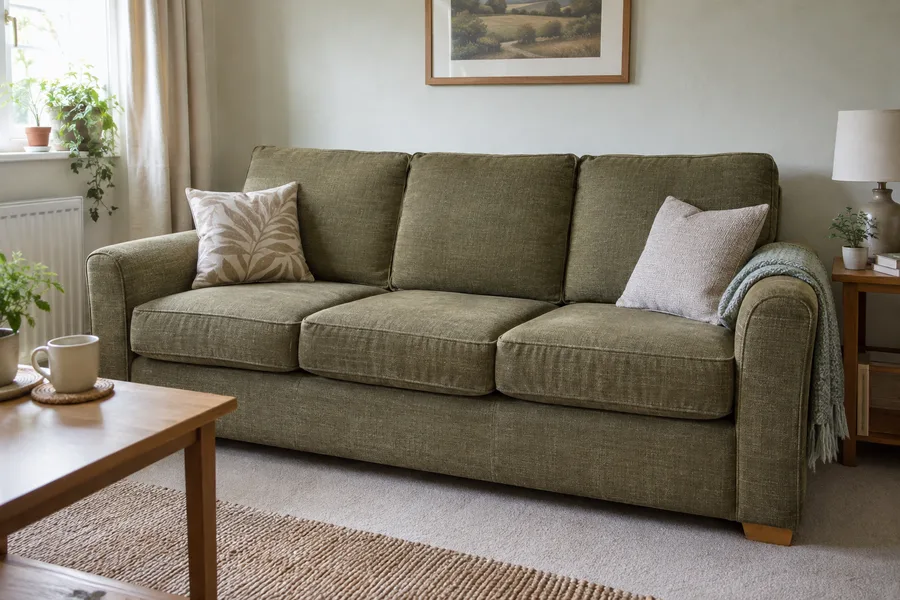
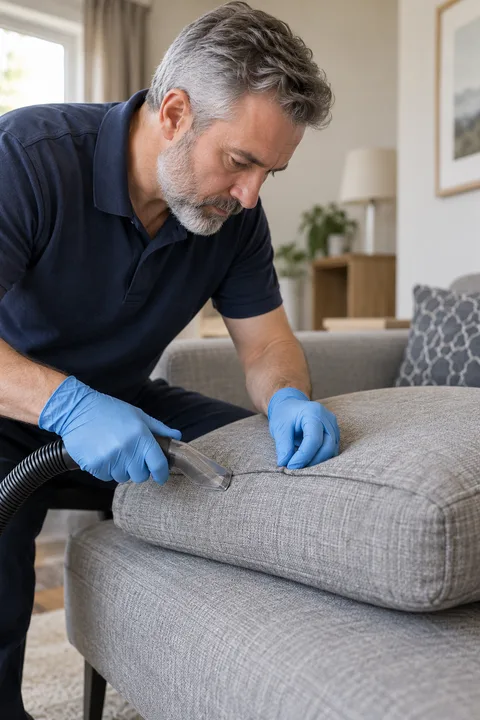
Explain where the liquid travelled.
A drink can travel from the seat face into an edge or join. Tell us where you saw the liquid and what parts still show a mark or smell. A close photograph of the top may not reveal the entire request. Explain whether the affected seat is loose or fixed and include the sofa’s size and fabric information.
Give a straightforward history of blotting, rubbing and any products used. Avoid more soaking before the visit in an attempt to reach inside a cushion. Fabric cleaning should not be assumed to treat every part of the filling or remove every odour. Discuss the proposed scope and realistic limits for the pieces you have described.
Describe the incident and later changes separately.
Say what was spilled, roughly when and how the fabric changed after your response. A ring that grew following repeated wetting has a different history from the original splash. If the cause is unknown, keep that uncertainty in the enquiry instead of choosing a convenient stain description. For another marked chair, use wider fabric-furniture care.
Identify the route across the cushion.
Mention the upper face, edges and underside where relevant. Do not remove a cover to inspect the filling without suitable guidance. Ask which surfaces can be considered and included. A loose cushion is not automatically a washable cover or an agreed interior treatment. A drink on the floor needs its own carpet request.
Find the material guidance before another attempt.
Check accessible labels and available manufacturer instructions. Mention contrasting faces, past re-covering and any weak seam. The amount spilled does not override the care limits: a delicate material cannot be assumed suitable for the same treatment as an ordinary-looking woven seat. General household work can be discussed under one-off deep cleaning.

Ask which process fits the material and request.

Hot water extraction and dry cleaning for delicates are offered. Explain the incident and prior products during the suitability discussion. The approach is not chosen simply by how wet the sofa became, and neither process is a blanket promise of removing all marks inside a cushion.
More than one wet piece and useful photographs.
If more than one cushion was wet, identify each even if only one now has a visible mark. Explain what you noticed at the time and any later smell or texture change. Do not open a filling or probe a seam to produce more evidence. Discuss the cover surfaces you want treated, and keep any concerns about the filling separate so the requested scope is clear.
A close view of the concern is useful alongside a whole-sofa photograph and the care guidance. The wider view locates the affected piece and shows the configuration, while the history explains previous products. Keep those kinds of information distinct. They support a practical quote and treatment discussion, but no photograph proves that every stain or odour will disappear from the material and filling.
Keep products and access details available.
Write down what has already been used, where known. Clear throws and personal belongings from the requested seating and explain nearby furniture. Avoid moving a heavy sofa or taking apart joined sections to expose a spill without discussing suitable access arrangements first.
Separate cleaning time from readiness to sit.
Ask about aftercare for the chosen method and affected pieces. A thick seat can need different attention from an outer arm. Have another place to sit and follow advice about cushion placement and covers, rather than assuming a dry-feeling patch means the whole item is ready.
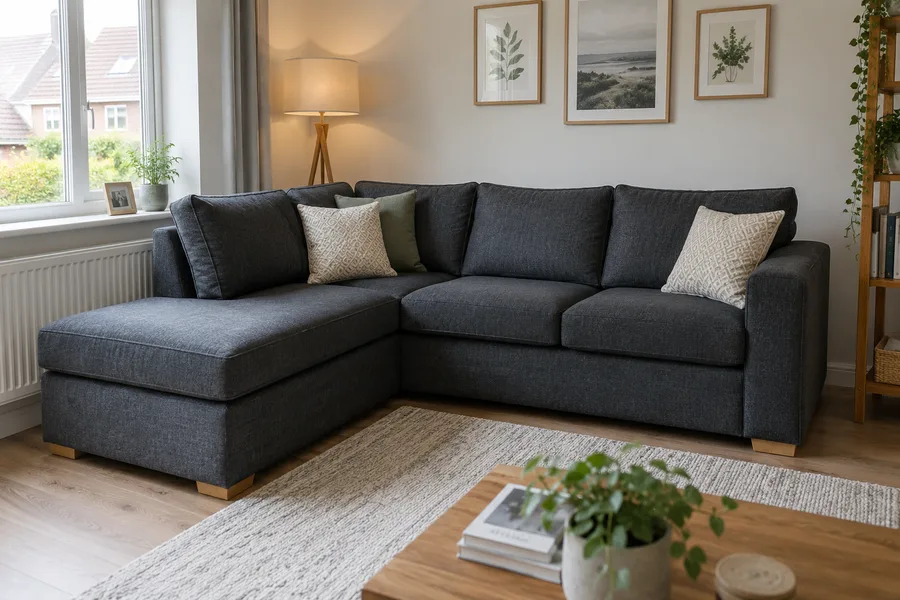
Get a quote for the identified surfaces.
The table below gives standard sofa starting figures, not a per-spill tariff. Describe the configuration, material and cushion request for the total. If more than one piece was affected, include it explicitly rather than expecting the first sofa description to cover everything.
| Sofa | Hot water extraction | Dry / delicates |
|---|---|---|
| Two-seater | £36 | £42 |
| Three-seater | £102 | £114 |
Starting figures depend on size, condition, area and availability. Applicable congestion charges are extra. Ask for the total for your sofa and the method suitable for its fabric.
Share the Kingston upon Thames postcode and entry plan.
Confirm the actual address for availability, including practical route and room details. Tell the person receiving the visit the spill history and agreed piece list. Availability needs to be checked.
Questions after a drink reached a cushion
Can you tell how far liquid travelled from a photo?
A photograph helps show the visible mark, but does not prove the condition inside the filling. Describe what you observed during the incident.
Should I keep soaking the patch until it looks clear?
Avoid repeated experiments before the enquiry. Explain existing products and wetting so the material history remains clear.
Is treatment inside the cushion included?
Do not assume that. Ask what the proposed fabric work can reasonably address for the construction and concern described.
Will the smell definitely disappear?
There is no complete odour guarantee. Its source may extend beyond the visible fabric, so describe it separately from the stain.
Does a big spill always require extraction?
Material suitability still comes first. A large spill does not mean a wet process suits the actual cover.
Can another sofa be quoted at the same time?
List it individually with its dimensions, fabric and requested pieces. The quote should identify both rather than merge their seat counts.
Explain the spill route when you call.
Tell us which cushion faces and joins were affected, what was used afterwards and the sofa material. Ask what suitable cleaning can address and the complete price for the requested pieces.
Generated photographs illustrate sofas and cleaning situations. They are not actual staff or customer-job photographs.