
Sofa Cleaning Morden
Tell us what was used on the sofa and what changed afterwards. For your Morden quote, the current fabric condition matters alongside the original spill and sofa size.
- Previous products recorded
- Colour changes explained
- Suitable scope discussed
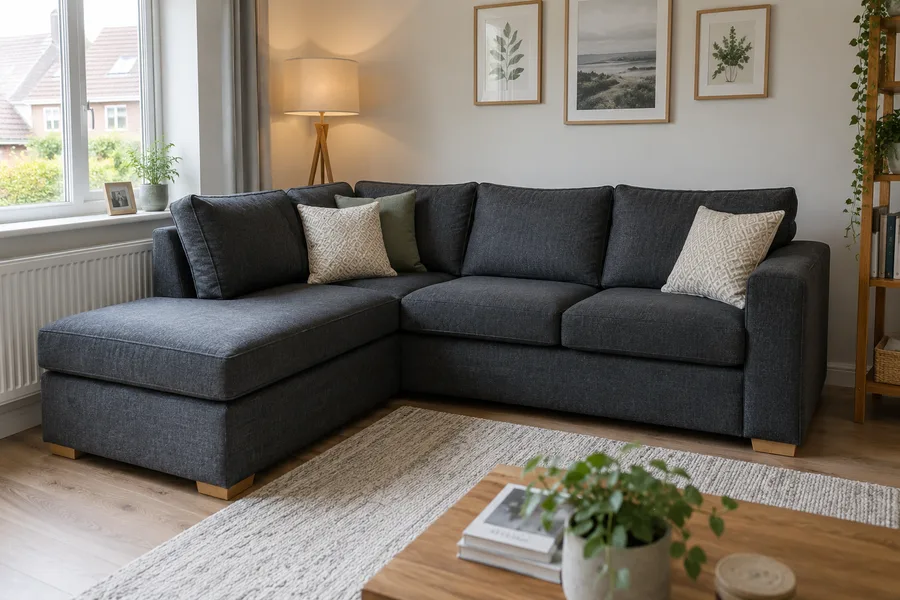
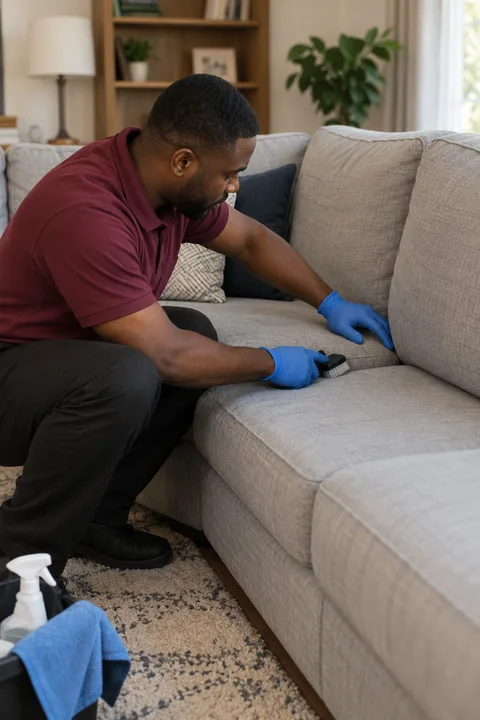
Explain the original mark and later products.
A stain may have had several home treatments before a professional enquiry. List the products you remember and the areas where they were used. An approximate history is better than guessing a chemical name. Describe the original incident and any new ring, roughness or lighter patch separately; those changes may not be ordinary removable soil.
Give the whole-sofa size, material information and requested cushion faces. A close-up of a treated patch is useful alongside a wider view of its location. Do not add another product just to see whether the surface responds. Ask what is suitable for the current cover and what limits should be expected after the earlier attempts.
Start with the incident, then the attempts.
Explain the food, drink or other known cause and roughly when it happened. Follow that with blotting, rubbing and applied products. If you cannot remember an item, say so. Do not present a changed fabric colour as proof that the original stain is still the only concern. Other treated chairs can be named through the wider upholstery service.
Care guidance still matters after spot treatment.
Find available cover instructions and mention replaced panels or contrasting cushions. A product label cannot replace the sofa cover’s own care information. If the label is missing, keep that uncertainty clear rather than choosing another cleaning attempt from texture or apparent durability. A floor patch belongs in a carpet-material enquiry.

Discuss the present material rather than a stronger-sounding cure.
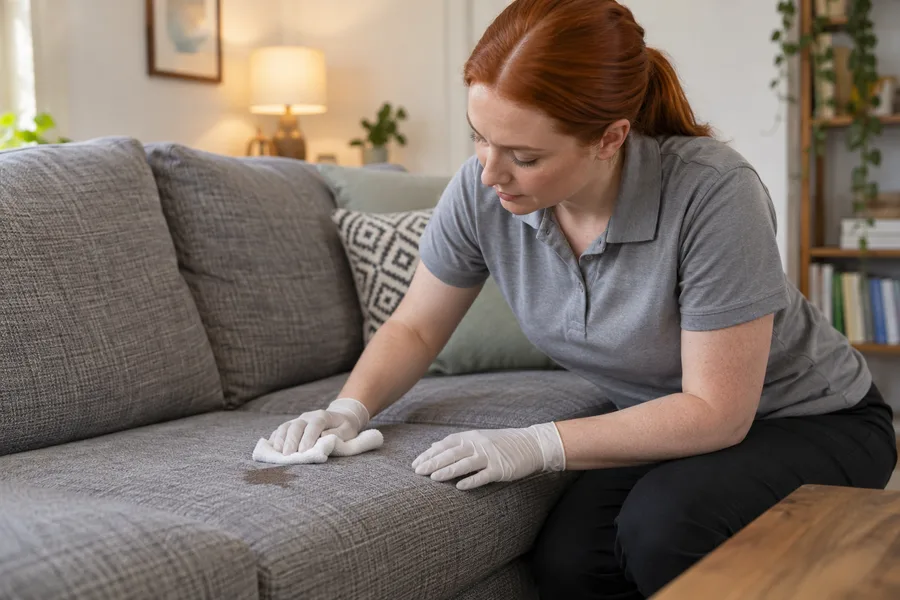
We offer hot water extraction and dry cleaning for delicates. Ask what suits the cover and its changed condition. Neither method guarantees reversal of colour loss or damage from an earlier product. Explain the history before agreeing the requested surfaces and approach. For room tasks beyond fabric, use a separate one-off clean.
Record which face had which product.
A loose cushion may have been turned after treatment, leaving the affected side underneath. Identify it and state the faces you want considered. Keep covers in place while care is discussed, and do not assume the filling or every reverse face is included in the sofa quote.
Current condition and a shared treatment history.
Keep current condition separate from the original problem. A drink mark may now be accompanied by a rough area from rubbing or a pale patch from a product. Explain those changes honestly and do not keep repeating treatment to make the photograph look simpler. The enquiry can then consider appropriate fabric work against the present material instead of an incomplete history of only the first spill.
If more than one person tried to clean the sofa, ask what each remembers before the visit. Where names or dates are uncertain, leave them uncertain. Include the location of each attempt and any cushion that was turned afterwards. A short accurate note is useful; a guessed account of the products makes the care discussion less clear and can hide a fabric change worth mentioning.
Keep useful product details with the booking notes.
If you still have a product container, note its name and share the information where helpful. Do not recreate the treatment for a photograph. Clear small possessions and explain access around the sofa, with heavy movement discussed separately rather than attempted as routine preparation.
Ask about aftercare for the agreed work.
A surface already altered by home treatment should not be judged ready solely from appearance. Follow guidance for the actual process and cushions. Have another place to sit and ask before replacing covers or throws; the working visit ending is not a fixed drying deadline.
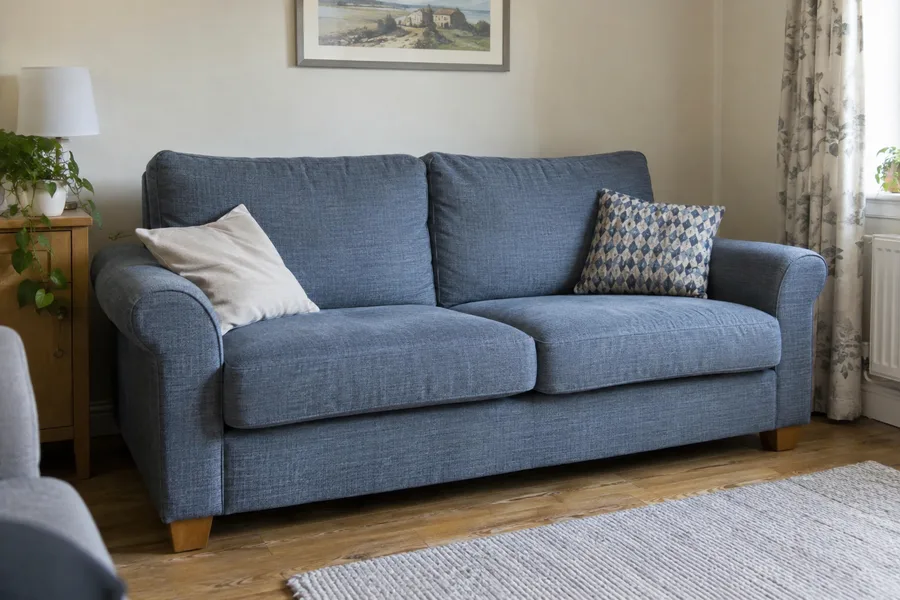
The quote should reflect the actual scope.
Use the standard sofa figures as a starting enquiry, then describe dimensions, fabric, surfaces and history. Ask for the complete amount and treatment limits. Explain lasting colour or texture changes as condition concerns, separately from the soil you want cleaned. Ask what can realistically be addressed.
| Sofa | Hot water extraction | Dry / delicates |
|---|---|---|
| Two-seater | £36 | £42 |
| Three-seater | £102 | £114 |
Starting figures depend on size, condition, area and availability. Applicable congestion charges are extra. Ask for the total for your sofa and the method suitable for its fabric.
Share the Morden address and treatment notes.
Give the postcode, practical entry details and preferred date. If someone else is receiving the cleaner, pass them the known product history and requested pieces. Ask which dates are available after explaining the item list and the route to the requested sofa surfaces.
Questions after home spot treatment
What if I cannot remember the spot product name?
Say that and describe what you do know, including where it was applied and changes afterwards. If the name is uncertain, explain that clearly.
Can cleaning reverse a light patch left by a product?
Colour loss or material damage may remain. Describe the change separately from the original mark and ask about realistic limits.
Should I demonstrate the product again?
No new experiment is needed for the enquiry. Share the history and current appearance without adding more treatment.
Does extraction always remove leftover home cleaner?
There is no blanket result for every product and cover. Explain the history before the suitable approach is discussed.
Can only the previously treated cushion be quoted?
Name the requested piece and faces, with material and condition details. Confirm the scope instead of assuming a whole-sofa request.
Should I hide the changed face underneath?
Keep its location and history clear. Turning a cushion does not remove the need to explain the affected material.
Bring the product history to the enquiry.
Tell us what was applied, where it went and how the fabric changed afterwards. Discuss the requested surfaces and suitable work for the current cover before asking for a complete quote.
Generated photographs illustrate sofas and cleaning situations. They are not actual staff or customer-job photographs.