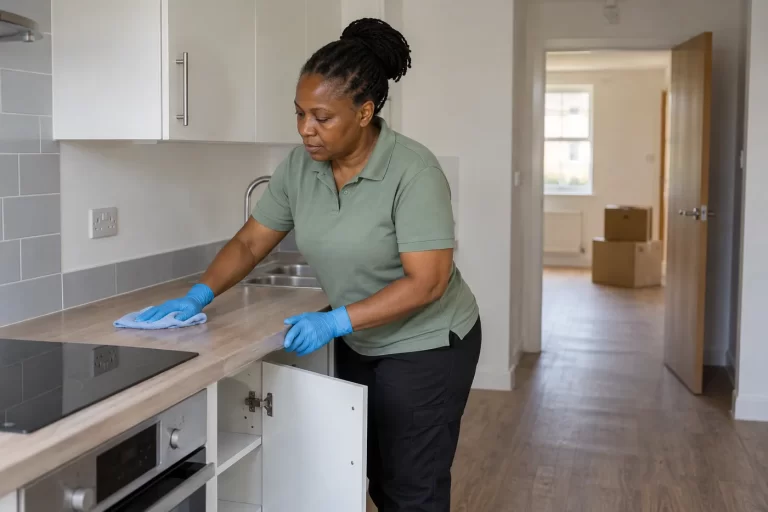
The builders leaving does not always mean a home is ready for a final clean. There may still be snagging work, loose materials, fresh finishes or dust-producing jobs booked for the following day. Check those details before arranging the cleaning, then work through the rooms in a sensible order.
Book the final clean after the dust-producing work and agreed waste removal have finished, with safe access and the relevant care instructions available. The cleaner should know what work was done, which rooms were affected and whether any unusual dust or residue needs assessment. A household checklist cannot establish that a building site is safe or that hazardous materials have been dealt with. Resolve those questions with the contractor first.
Start with the contractor’s handover
Walk through the work with the person responsible for it. Separate completed areas from jobs that remain outstanding. Ask whether sanding, cutting, drilling, plastering or decorating will happen again. A room can look finished while a joiner is still planning to trim doors there. Cleaning it before that task may mean paying for the same work twice, and it makes it harder to tell whether a new mark is dirt or a snag.
Record the rooms that are ready, the remaining work and the expected access arrangements. Ask for the care information for new floors, worktops, glazing, painted surfaces and fittings. Keep the manufacturer’s instructions rather than a verbal suggestion to use any standard cleaner. When requesting cleaning after renovation, explain the actual project: a bathroom replacement, a kitchen refit and a whole-house refurbishment have different preparation needs.
Agree who removes waste and leftover materials
Do not assume a cleaning appointment includes taking away plasterboard, tiles, timber, rubble, packaging or unused paint. Ask the contractor which waste is theirs to remove and check what remains at the property. Loose nails, broken glass and sharp offcuts need appropriate handling before anyone starts ordinary surface cleaning. Keep useful spare tiles or fittings in a labelled, agreed place so they are not mistaken for rubbish.
Confirm that routes to the rooms are clear. A cleaner should not have to shift a pile of construction materials to reach a sink or floor. If a skip, waste collection or final delivery is still booked, explain when it will happen. The timing can affect whether doors need to be kept open and whether clean rooms will be crossed again. The quote should distinguish waste removal, site clearance and the cleaning of accessible finished surfaces.

Identify the dust before choosing tools
Tell the contractor or cleaning team what materials were worked on and where. Fine construction dust is not the same as the ordinary dust collected during a regular household visit. Avoid creating a fresh dust cloud with dry brushing, compressed air or an unsuitable vacuum. HSE’s guidance on dry sweeping construction dust explains the need for an assessed method and appropriate controls. This is not a recommendation to buy a mask and carry on regardless.
If there is uncertainty about asbestos or another hazardous material, stop and refer the question to a competent contractor or specialist. Do not disturb suspect debris to take a better photograph, and do not put it into a domestic vacuum. HSE’s asbestos guidance is a starting point for understanding why this work needs specific arrangements. An ordinary after-builders cleaning booking should never be presented as clearance or certification of hazardous contamination.
Once the work and materials have been assessed, agree which cleaning method and equipment suit the remaining residue. State any occupied rooms, pets or belongings that need protection. If another part of the house is still being renovated, the contractor should explain how it will be separated from the finished areas. A clean doorway does not prevent dust travelling from continuing work.
A readiness checklist for the booking
| Question | What to confirm | If the answer is unclear |
|---|---|---|
| Is the work finished? | No further dust-producing tasks in the rooms being cleaned | Agree the remaining work and cleaning sequence with the contractor |
| Has waste been removed? | Clear floors and safe routes, with retained materials labelled | Arrange site clearance separately |
| Are finishes ready for cleaning? | Care instructions and any cure or drying requirements | Ask the installer or manufacturer before treatment |
| Are facilities usable? | Safe power, water and access arrangements as required for the work | Resolve faults before the appointment |
| Is the residue understood? | Known materials and a suitable assessed cleaning approach | Request assessment rather than guessing |
Send photographs that show the room as a whole and the details that need attention. A close-up of one dusty tap does not show the state of the floor or whether cupboards are full of belongings. Include the areas outside the main project if dust has travelled into them. Describe what you know and what remains uncertain; photographs help with planning but do not replace an on-site assessment where one is needed.
Protect new finishes from an eager first scrub
A fresh surface may need time before wet cleaning or normal use. There is no single waiting period that applies to every paint, sealant, adhesive or floor finish. Ask the installer for the actual product instructions. Write down any restrictions and make them available to the cleaning team. If the instruction is to avoid a product or method, testing it in a corner does not make it acceptable.
Look at remaining marks with the contractor before trying to remove them. Paint overspray, grout haze, silicone, scratches and chips are different problems. Some belong on the snagging list, and some need a specialist method. Do not assume that stronger chemicals or a sharper scraper will produce a better result. A quote should say whether specific residue treatment is included and what happens if a material cannot be identified safely.
For ordinary upkeep after the handover, the existing guide to different household flooring materials can help explain why care requirements vary. It is not a substitute for the instructions for your particular installed floor. Keep those instructions with the property’s maintenance information, especially if you will later employ a regular cleaner.

Check each room for the work it actually needs
Kitchens
Check accessible cupboard interiors before filling them. Explain whether drawers and shelves are empty and which appliances were fitted or exposed during the work. Confirm the worktop material and whether protective films should be removed by the installer. Do not dismantle new appliances or attempt to clean ventilation openings with water. A kitchen installation may still need commissioning or adjustment that cleaning cannot perform.
Bathrooms
Ask which finishes can be cleaned and whether sealants are ready for use. Note debris around accessible fittings and any marks on tiles or shower screens. A leak, poor seal or damaged fitting belongs on the contractor’s list. Avoid treating all pale deposits as limescale: after installation the mark may be a building residue, and its removal needs the right information.

Living rooms and bedrooms
Explain whether furniture stayed in place and whether fabrics were covered. Dust on a hard surface and residue in a carpet need different arrangements. Ask about a separate carpet assessment if the flooring was exposed during the project; an ordinary surface hoover is not automatically an extraction clean. Do not promise yourself that every stain will disappear before the material and cause are understood.
Windows, doors and access areas
Include sills, frames, doors and the route used by the builders. State which glass is safely accessible and identify protective stickers or films. Request window cleaning as a named task where required. Scrapers and abrasive tools can damage glazing or coatings, so the presence of stubborn residue is a reason to assess the surface rather than simply increase pressure.
Plan the sequence before replacing furniture
Keep rooms accessible while the agreed cleaning takes place. Decide which spaces need to be completed first and whether furniture deliveries can wait. Moving boxes into a dusty room makes shelves and corners harder to reach; moving them twice creates extra work for the household. If deliveries cannot be changed, explain the limitations before the quote is finalised.
Agree a practical route through the house, including stairs and corridors. The team can then plan work around the actual conditions rather than relying on a rigid rule that every property is cleaned in the same order. The important point is to avoid carrying unassessed residue into finished areas or repeatedly walking through a freshly cleaned space with building materials. Tell everyone involved which rooms are ready for normal use.

Describe the scope in the quotation
List the rooms, surfaces and specific residue concerns you want covered. Say whether the property is empty, partly furnished or occupied. Include parking, access, stairs and any working restrictions. Ask what equipment and products are included, which tasks are excluded and how the team will handle a different condition on arrival. A quoted room count alone cannot describe heavy residue or a complicated access arrangement.
Keep the agreement with the booking information. If the contractor returns to finish work, discuss whether the clean needs rescheduling. If you only need a routine clean of rooms untouched by the renovation, regular domestic cleaning may be the appropriate enquiry. Do not select a service solely because its headline starting price looks lower; the work requested needs to fit its scope.
Inspect the result without confusing dirt and defects
Walk through the agreed areas after cleaning and compare them with the scope. Look at accessible surfaces, corners and the parts that were specifically discussed. If a mark remains, ask whether it is residue, a damaged finish or a task that could not be safely completed. Photograph concerns clearly and identify the room. An after-builders clean does not certify electrical work, plumbing, structural safety or the quality of the installation.
Keep separate lists for cleaning questions and building snags. This helps the right person deal with each issue. A chip in a new tile should not be presented as a missed wipe, and a dusty accessible shelf should not need a builder to resolve it. Clear distinctions also make it easier to plan any return visit without repeating all the work unnecessarily.
Move back in with a manageable follow-up routine
Once the rooms are ready, put belongings back gradually so you can spot problems rather than covering every surface immediately. Remove packing materials promptly and keep the care information to hand. Use the weekly household cleaning plan for normal upkeep after the building work has ended. If further construction dust keeps appearing, check whether work is continuing or materials were left behind before treating it as an ordinary cleaning-frequency problem.
The useful finish line is a home with the agreed cleaning completed, outstanding building matters recorded and clear instructions for its new surfaces. You do not need to guess at hazardous dust, scrape uncertain marks or promise a date before the contractor has finished. Arrange the handover, explain the conditions and agree the work that can sensibly and safely be carried out.