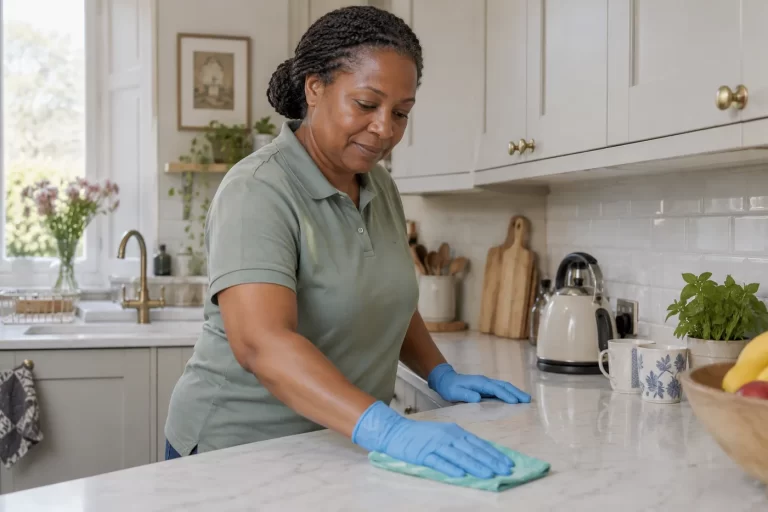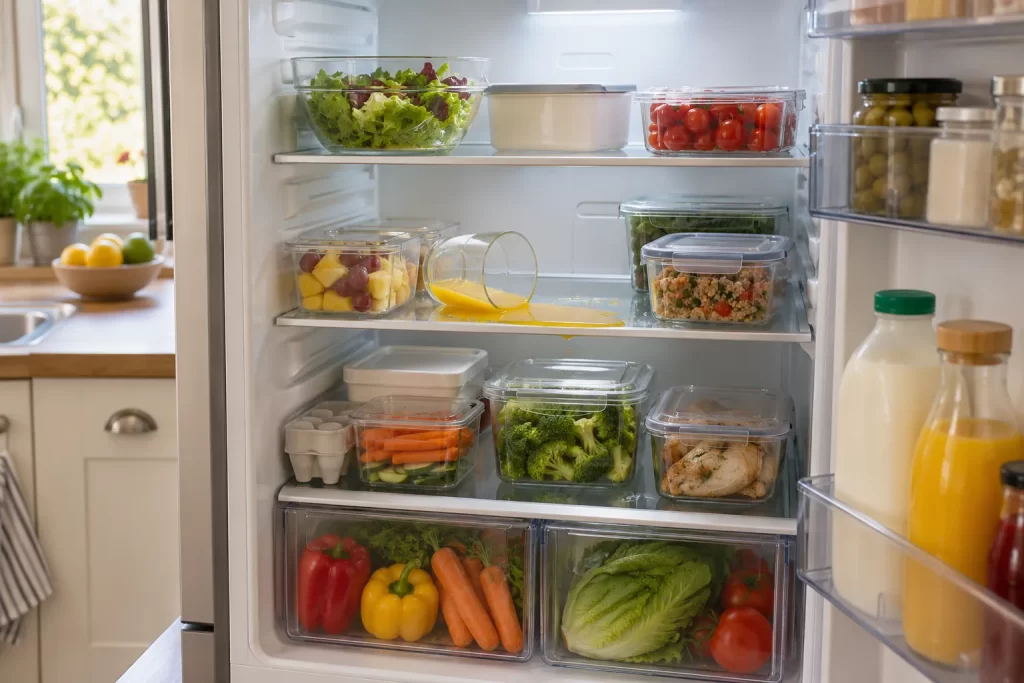
A fridge spill needs a prompt, contained response. Move the affected food aside, absorb the liquid, check whether it has reached the shelf below, and clean the surface using the appliance maker’s instructions. Dry the area before putting food back. If the spill has run into drawer tracks or across several shelves, plan a short, more thorough clean and keep chilled food cold while you work. Do not leave the door open while searching for an old jar or scrubbing a stubborn mark.
The fridge is both an appliance and a food-storage space. Work in a sequence: protect the food, identify removable parts, clean the spill, rinse where required, dry everything and restock safely. Disassembly and permitted cleaners vary by model, so the manual takes priority.
Decide whether you need a spot clean or a full empty-out
For a few drops from a sealed bottle, you need not empty the whole appliance. Remove nearby items, blot the liquid, then clean and dry that surface. Check the underside of the shelf and the food packaging. Widen the clean if liquid entered a drawer rail, door pocket or lower level.
A leaking raw meat package is different. Keep its liquid away from ready-to-eat food and remove any food it may have contaminated. The Food Standards Agency’s guidance on stocking a fridge says raw meat, fish and poultry should be sealed and stored on the bottom shelf so they cannot drip onto other food. Wash your hands and clean any food-contact surfaces and utensils that touched raw liquid before using them for other jobs.
If a sticky drink has run behind several parts, allow time to remove the relevant shelves and drawers. Gather supplies, clear worktop space and arrange cold storage first. This is distinct from the normal wipe-down in the site’s kitchen routine between cleaning visits.
Keep chilled food chilled while you work
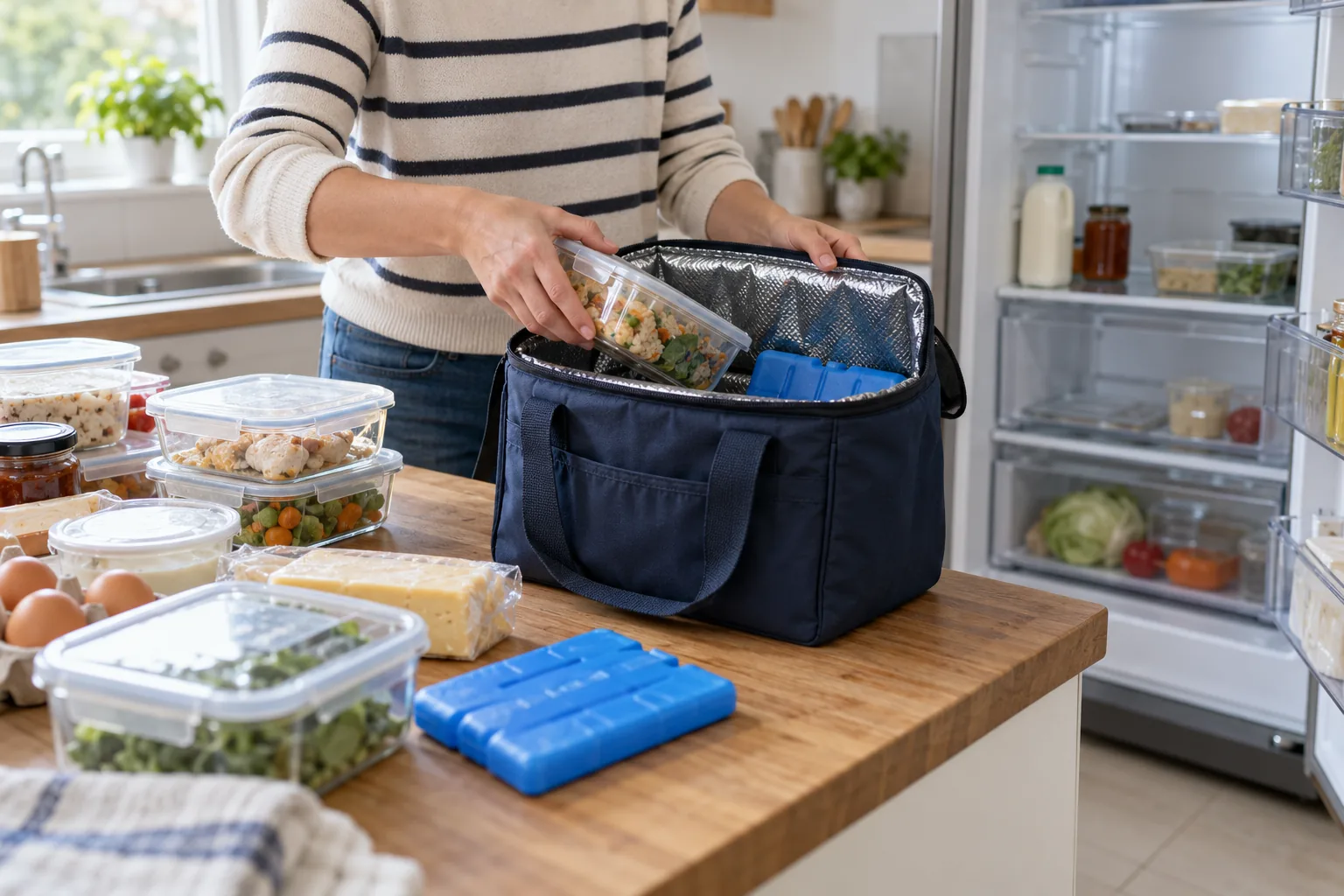
Before a larger clean, put perishable food in another working fridge or a clean insulated cool bag with suitable cold packs. Keep raw food sealed and separate from food ready to eat. Do not put unpackaged food on a worktop that is about to hold a dirty shelf. If you have no way to keep food cold, clean one small section at a time and close the door between sections rather than emptying the entire fridge for an extended period.
The FSA recommends a fridge temperature of 0–5°C and keeping chilled food out for the shortest possible time. A cool box or second fridge helps when a thorough clean will take longer than expected. Follow the storage instructions on individual food packages too.
Check use-by dates without leaving chilled food waiting during a long sort. Do not rely on smell to decide whether food past a use-by date is safe. Return food promptly and check that the appliance is operating at its normal setting. A fridge thermometer can verify the temperature.
Remove shelves and drawers as the manual directs
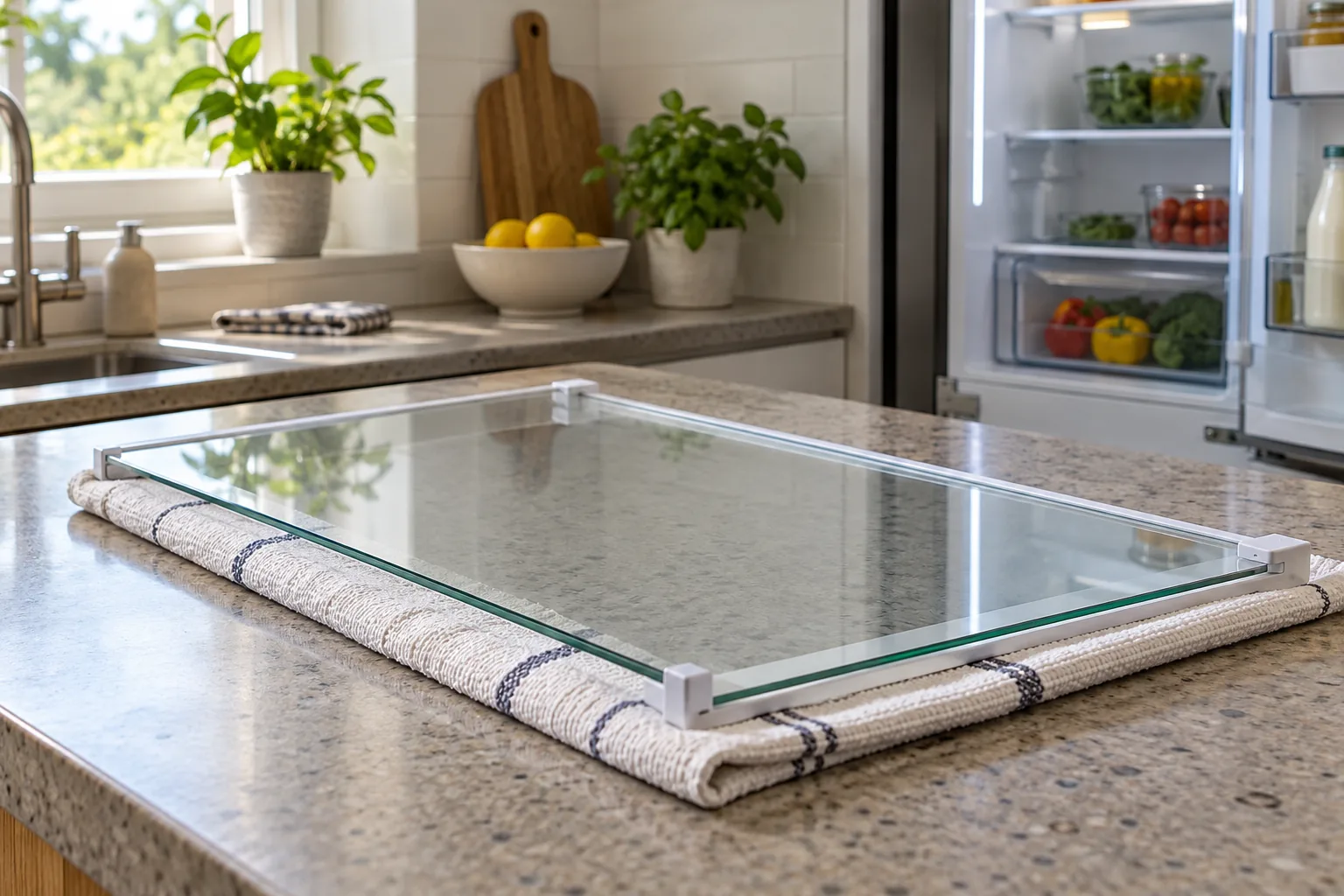
Do not force a shelf because it appears to be a simple lift-out part. Some models have clips, stops, split shelves or humidity-control drawers. Look up the exact model’s instructions before removing a part you have not handled before. Empty heavy door pockets and support a glass shelf with both hands. Place each component on a towel or other stable protected surface where it cannot slide or be knocked into the sink.
Temperature matters for chilled glass. Bosch’s UK fridge-cleaning advice warns against putting its cold glass shelves straight into hot water because they may crack; it advises allowing them to reach room temperature first. The same caution is sensible when the construction of another shelf is unknown, but its own manual remains the authority. Do not use a dishwasher for a shelf or drawer unless the maker expressly says that part is dishwasher-safe. Heat or a wash cycle may distort plastic or damage coatings and fittings.
Keep removable clips and dividers together. Do not dismantle lights, controls or electrical parts. Replace or repair a cracked shelf or broken drawer runner; cleaning cannot make it sound.
Clean the removable parts gently
Once parts have reached a suitable temperature, wash them according to the appliance instructions with a soft cloth or sponge and an approved cleaner. Work around ridges and drawer corners. Avoid abrasive pads and sharp scrapers that can damage plastic or glass.
Rinse off any cleaner where the label or manual requires it. Dry the shelf and drawer thoroughly with a clean cloth or allow them to air dry in a clean place. Pay attention to the lip under a shelf and the underside of a drawer handle, where water can remain hidden. Wet parts returned to a cold fridge may leave drips, frost or unwanted moisture around food.
Do not combine products to make a stronger cleaner. The Health and Safety Executive advises users to read chemical labels and never mix cleaning products. A home-made mixture is not automatically food-safe or compatible with fridge materials. Use an approved product, rinse as directed and keep its bottle away from food.
Wipe the fixed interior without flooding it
Clean accessible interior walls, shelf supports and the spill path with a soft cloth and the method in the manual. Spray a cloth rather than directing liquid towards a lamp, fan, control panel or seam, if the product instructions permit application that way. Avoid pushing crumbs into the drain channel or behind a panel. If a drain is blocked, follow the maker’s specific maintenance directions; do not probe an unknown hole with a sharp object.
Drawer tracks can hide thin lines of sticky residue. Open the space only as far as the drawer design allows, and use a folded cloth or a soft tool that will not scratch the runner. Do not yank out a fixed rail. Clean the top of the track, the corners and the point where a spill may have flowed below it. Check the door pocket and gasket if the bottle that leaked was stored there.
For the seal, use the maker’s recommended method and dry the folds carefully. Bosch’s cleaning guidance advises clear water and thorough drying for its door seal. That is an example, not an instruction to apply water indiscriminately to every model. A split or loose seal needs attention because it may affect closing and cooling; do not try to solve it with a stronger cleaner.
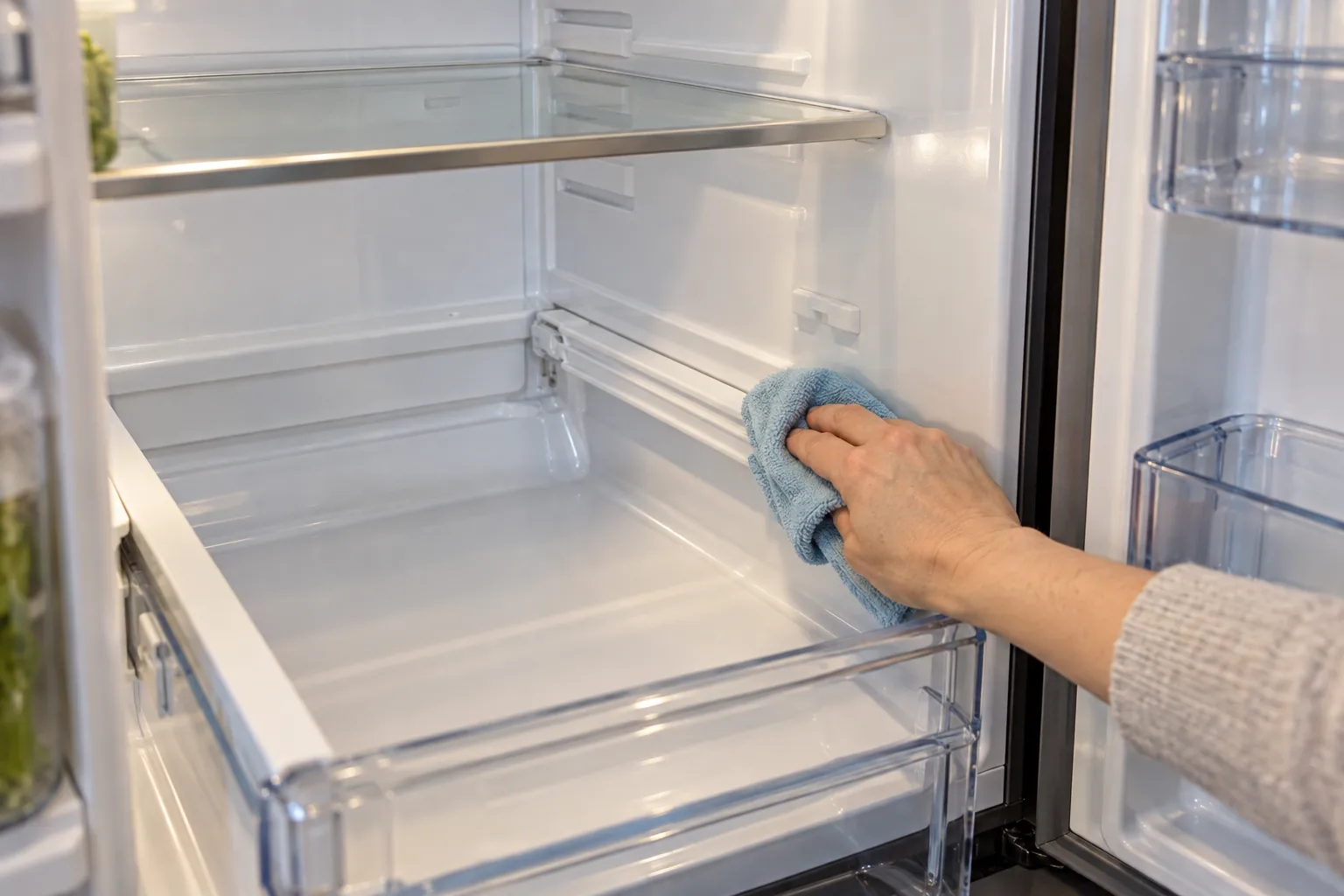
Reassemble and restock with a quick safety check
Only return a shelf when it and its supports are dry. Seat it fully and check that it is stable before putting a heavy container on it. Slide drawers in gently and confirm that the door closes without obstruction. If you switched the fridge off in line with its manual for a full clean, switch it back on as directed and allow it to return to the recommended temperature before relying on it for chilled food. Follow the model’s instructions rather than assuming the same cooling time for every appliance.
Put sealed raw meat, fish and poultry low enough that they cannot drip onto ready-to-eat items. Keep cooked and ready-to-eat food separate from raw packages. Do not overfill the appliance so completely that air cannot circulate as its manual requires. Check whether a container lid is secure before it goes back; a clean shelf will not stay clean if the original leak is returned unchanged.
Record a recurring problem. A puddle that reappears without an obvious food spill may be condensation, a blocked drain or a fault, and should be assessed rather than repeatedly wiped away. A warm fridge, damaged door seal or unexplained temperature change calls for appliance advice. A cleaner can clear ordinary residue; they cannot repair a cooling fault or decide that compromised food is safe to eat.
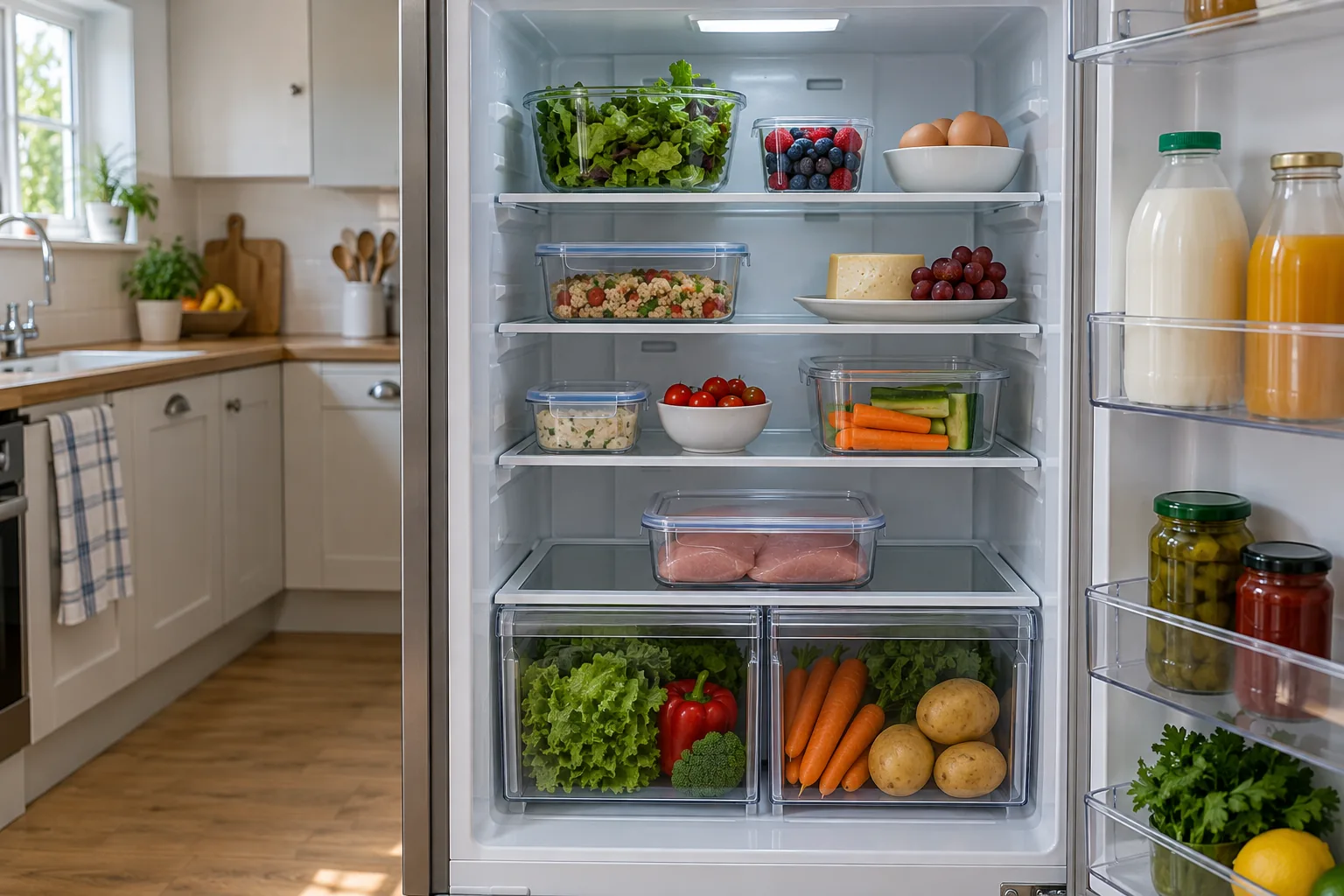
Prevent the next spill without overcomplicating storage
Use containers that close properly and stand upright. Put items likely to leak on an easy-to-clean tray only if it does not block the fridge’s airflow or conflict with the maker’s instructions. Check bottles before returning them to the door. Wipe a small spill when it happens instead of allowing it to dry beneath a row of jars. A brief look before a food shop can also reveal an old container that needs a decision.
Do not turn this into a daily full-fridge task. The normal upkeep may be a quick check of the shelves, food dates and visible drips. Give a drawer or the whole appliance more attention when its condition calls for it. A weekly household cleaning plan can leave room for this occasional job without suggesting that every component must be removed each week.
If a kitchen has a wider backlog of grease, cupboards and appliances, discuss what is included in a one-off deep cleaning visit before booking. Explain the fridge model, whether it is empty, any delicate or damaged parts and whether food needs to be moved. The service scope needs to be agreed; ordinary cleaning does not replace food-safety decisions or appliance repair.
The best finish is straightforward: food kept cold and correctly separated, the spill removed from every place it reached, components dry and secure, and the fridge cooling normally again. That sequence is more useful than a strong-smelling product or a spotless photograph of an appliance that has been left open too long.