
After Builders Cleaning Hammersmith

If one room has been plastered while the rest of the home remains occupied, describe both the finished area and its route. Tell us what dust and belongings remain at your Hammersmith property. We can discuss a focused after builders request without assuming every room needs the same work.
- Affected room and routes distinguished
- Belongings considered in access planning
- Cleaning tools and products supplied
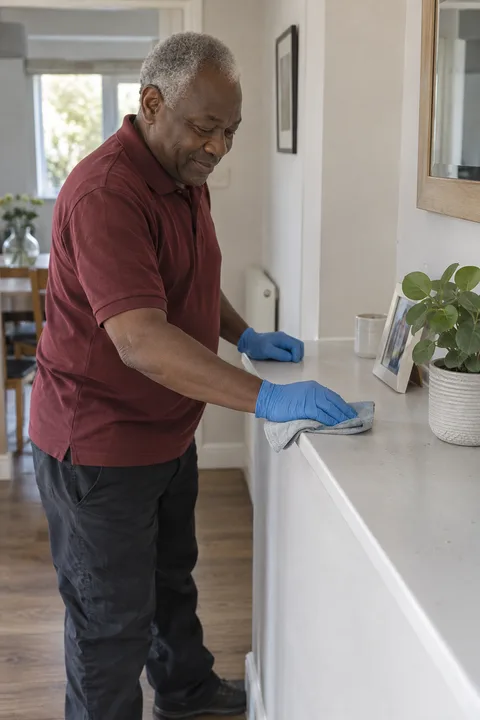
Choose the project areas rather than the whole home by default.
Name the plastered room and any adjoining space you want considered for settled dust. Explain what work took place and whether sanding or decorating remains. A single-room renovation can leave a detailed cleaning job, but it should not silently become a request for every household surface. Identify unaffected rooms separately if you also want tasks there discussed.
Ordinary project residue is different from weekly housekeeping. For other lived-in spaces needing a broader refresh, ask about one-off domestic cleaning. For ongoing household tasks after the project, discuss regular home visits with their own room list rather than treating them as equivalent to post-plastering cleaning.
Describe where ordinary plaster dust has settled.
Look at accessible ledges, skirting and room surfaces as well as the middle of the floor. Show dust around the doorway or on nearby surfaces along the trades’ route if those tasks are wanted. Label photographs so the affected room and adjoining request remain clear. Tell us whether more dust-producing work will take place before the proposed appointment.
Raise any concern about an unknown material before an ordinary clean is arranged. Do not disturb it to check what it is. After builders cleaning should not be presented as hazardous-material clearance or a health-testing service; the enquiry needs the actual project and known surface condition described.

Explain which belongings are still in the room.
Furniture, shelves and stored items can restrict access to the surfaces that collected dust. Show what remains and state what you can safely clear. Ask about accessible cupboards or shelving expressly if wanted. Leave fixed panels and unfamiliar fittings assembled rather than assuming that concealed spaces are part of the request.
Share care instructions for newly painted surfaces or coatings, and identify any damaged finish. A dust-covered surface needs cleaning discussed for its actual material. Do not try abrasive treatment on a new finish simply because the project room is small.
Give the affected floor and the route their own details.
Identify timber, laminate, tile, vinyl or another finish and share relevant care guidance. Explain dust separately from paint, adhesive or hardened residue. An adjoining carpeted route needs its condition described too. If deeper treatment is wanted, ask about cleaning that carpet instead of inferring extraction or stain treatment from the renovation room request.
Show paint or residue close to the material.
If decorating followed the plastering, locate splashes or adhesive in photographs and explain any product already tried. Cleaning deposits is different from repairing scratches or restoring a changed finish. Ask about the particular mark before choosing scraping, solvents or another removal procedure. Keep difficult residue questions visible alongside ordinary dust tasks rather than promising all construction traces will disappear.

Arrange a visit once the affected work is finished.
Tell us when plastering, sanding and other work in the requested areas will end. Explain any trade returning to make adjustments and how that affects room availability. Identify tools, building materials or waste still occupying the route and confirm their separate clearance arrangements. A cleaning visit should not be expected to transport rubble or move every bulky item.
Clear relevant small personal belongings after access is discussed, keeping fragile objects safe. Tell us who will receive the cleaner and which rooms remain in use. We bring the tools and products for agreed cleaning; ask about utilities and other practical property arrangements before assuming they are settled.
Agree a focused list around the occupied layout.
We discuss the project room, adjoining tasks, material condition and access while preparing the booking. Use current photographs showing the belongings expected for the visit. Ask for an estimate based on complexity and the surfaces wanted rather than a fixed duration for one room.
Give the receiving person the final affected-area list and note existing condition concerns. If room use or furniture placement changes after the enquiry, update the arrangement. Keep tasks in unaffected spaces separately identified so the quotation follows the work actually requested, not a general expectation that the whole home is included.
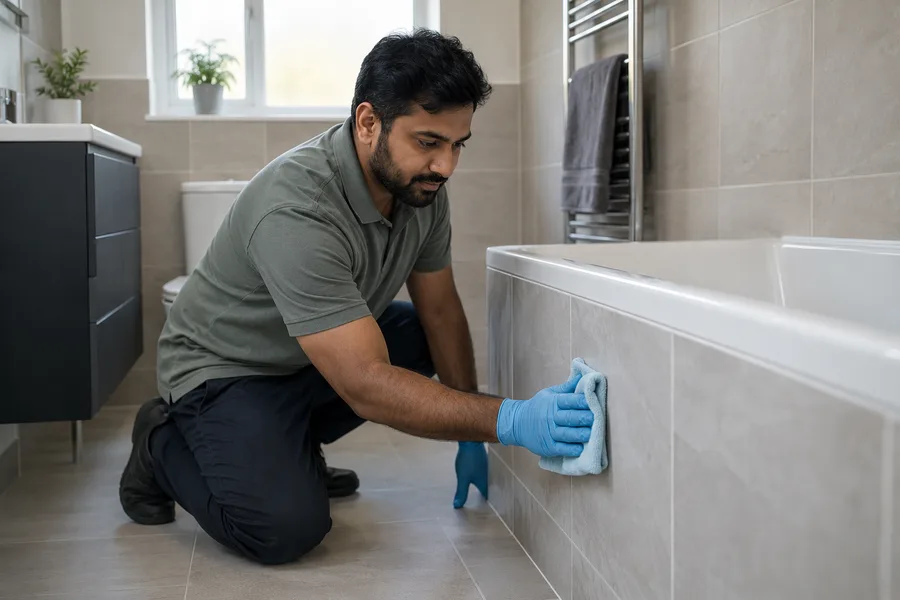
Confirm cleaner hours for the room and route.
| Service | From |
|---|---|
| After builders cleaning | £25 per hour per cleaner |
Starting rates depend on availability and are published for areas within the M25. Applicable congestion charges are extra. Ask for the full quotation for the agreed work.
The starting rate is £25 per hour per cleaner. Ask for the applicable rate, estimated hours, cleaner numbers and total for the agreed tasks. One plastered room can differ from another in dust, materials and accessible surfaces. Availability needs checking, and applicable congestion charges are additional. State separate carpet or household requests before the complete quotation is confirmed.
Send the Hammersmith affected-area photographs.
Include your postcode, preferred dates and entry contact with views of the room and routes wanted. Explain the remaining work and occupied spaces. We can discuss availability and the full request using the home as it will be during the appointment.
One-room plastering and occupied-home questions
Does one plastered room mean the whole home is requested?
Name the project room and any adjoining areas wanted. Keep other household tasks separate so the quotation follows a clear affected-area list.
Should ordinary dust in the doorway be mentioned?
Add the doorway or route expressly if it needs attention, with its surfaces and floor material. A room photograph alone may not show that adjoining priority.
What if belongings remain beside dusty surfaces?
Show the restrictions and explain what can be cleared safely. Ask about accessible tasks before expecting heavy moving or dismantling as part of the clean.
Can cleaning happen before the final sanding stage?
Explain when that stage will finish and discuss the visit after dust-producing work ends. Cleaning immediately before another affected task may leave the same areas needing attention again.
Is a carpeted route automatically given deeper treatment?
Describe the carpet concern and ask about separate treatment if wanted. A general post-work floor request does not define extraction, stain work or drying arrangements.
Can regular housekeeping replace this project enquiry?
Describe the plastering residue and affected surfaces first. Routine household tasks and a renovation clean need their requested work discussed distinctly.
Which areas need the post-plastering clean?
Call with the affected room, adjoining dust and occupied layout at your Hammersmith property. We can discuss access, expected cleaner hours and the complete quote.
Illustrative generated photographs show post-renovation cleaning situations, rather than actual staff or customer jobs.