
After Builders Cleaning Kentish Town

Look beyond the centre when describing the finished room. Dust on accessible ledges, skirting and surrounding surfaces may be the main priority at your Kentish Town property. Show those edges and the route to them so we can discuss the requested after builders tasks.
- Edge priorities shown in photographs
- Reachable surfaces named explicitly
- Cleaning tools and products supplied
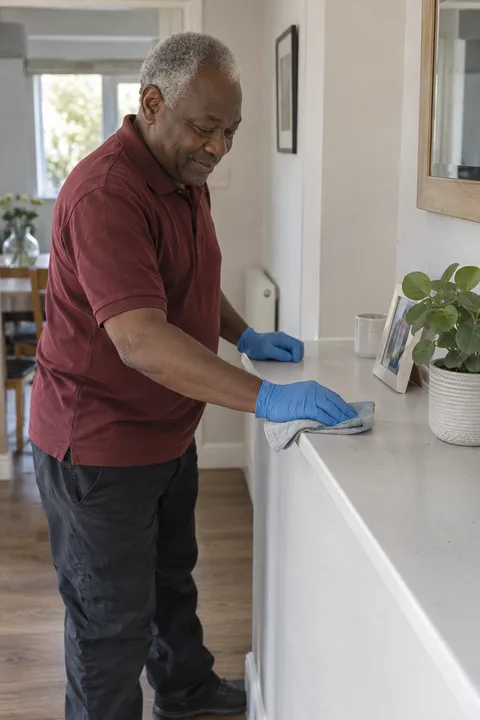
Use edge views as well as the doorway photograph.
A wide view can make a renovated room look ready while ordinary dust remains along skirting, ledges and reachable surfaces. Include photographs locating those priorities and identify the rooms wanted. Describe where sanding, cutting or plastering took place and whether it has finished. Adjoining routes should be named if you want their surfaces considered too.
Keep specific unknown-material concerns separate from the ordinary dust enquiry. Do not disturb a substance to investigate it. If material safety or health assessment is the concern, seek specialist advice separately from ordinary surface cleaning. Explain the project and accessible surfaces actually wanted.
Show the approach to each requested edge.
Tell us about furniture, fixed fittings or stored belongings close to the dusty surfaces. Explain what can safely be cleared and leave unfamiliar panels assembled. Ask about accessible shelves or cupboard areas expressly if wanted, saying whether they are empty. An edge behind a fixed unit needs its restriction described before cleaning is agreed.
If a higher or difficult ledge concerns you, show its position safely and ask about feasibility. Do not choose access equipment or attempt a new reach route yourself. A room request should name the actual accessible work rather than imply every high-level or concealed surface is covered.
Describe the affected rooms and separate household priorities.
After builders cleaning concerns ordinary dust and residue left by the project in agreed areas. Say what was refurbished and which rooms and routes need attention. If an unaffected space mainly needs older household dirt addressed, ask about a one-off home refresh. Keep those different tasks named so the project’s edge priorities do not silently become a whole-home request.

Give the material where dust gathers.
Identify the floor finish in each requested room and route. Share care instructions for new surfaces or coatings. Explain paint, adhesive or hardened residue separately from ordinary dust. If a carpet near the skirting needs deeper treatment, discuss separate carpet cleaning rather than expecting extraction or stain work from the general edge-cleaning list.
Keep residue questions attached to their surface.
Show paint splashes or adhesive on the actual material and explain products already used. Point out damage or changed finishes separately. Cleaning suitable deposits does not repair scratches or renew paint. Ask about the specific proposed treatment before trying scraping, solvents or abrasives yourself, particularly near newly decorated edges.
Include kitchen ledges and units where wanted.
If a kitchen is part of the project, name accessible worktops, fronts and cupboard surfaces with dust on them. Say what is empty or occupied and share finish-care notes. The kitchen’s room name alone may not explain the edges and interiors you want considered. Dust outside an appliance and grease inside it should be described as separate concerns.

Clear agreed approaches after the last dusty task.
Tell us when affected construction work finishes and whether trades return for further dusty adjustments. Identify tools, packaging or building materials and confirm their separate clearance arrangements. Discuss substantial obstructions before moving belongings, then clear your own small items from the agreed routes and keep fragile objects safe.
We bring tools and cleaning products for the agreed after builders work. Give the entry contact and ask about utilities or other practical property arrangements if needed. Show the room layout expected for the visit rather than an earlier view before storage or furniture returned.
Agree the edge priorities using a clear room list.
We discuss surfaces, material care, deposits and access before arranging the appointment. Give the receiving person the final edge and room list with existing concerns noted. Ask for an estimate based on project size and complexity, including different floors and restricted approaches, instead of assigning one duration to every room.
If glass or its surrounds also need attention, name the panes and sides. A broader window-cleaning enquiry can clarify separate surfaces and access. Confirm included glass work rather than extending a ledge request to every outside window face.

Ask for hours for the detailed surface request.
| Service | From |
|---|---|
| After builders cleaning | £25 per hour per cleaner |
Starting rates depend on availability and are published for areas within the M25. Applicable congestion charges are extra. Ask for the full quotation for the agreed work.
Prices start from £25 per hour per cleaner. Confirm the applicable rate, expected hours, number of cleaners and full quotation for work agreed. A room with several accessible edges and residue concerns can differ from one with lighter decoration dust. Availability needs checking and applicable congestion charges are additional. Add any new surfaces before the total is settled.
Send the Kentish Town edge and access views.
Include your postcode, dates and receiving contact with room photographs. Label the dusty surfaces wanted and explain remaining work or access restrictions. We can discuss availability and the quotation using the actual project priorities at your property.
Skirting, ledges and accessible-edge questions
Why add close edge views to a wider room photograph?
They can show ordinary dust on ledges or skirting that is not obvious from the doorway. Label those surfaces so their location and requested work remain clear.
Does naming a room include every high ledge?
Show difficult positions safely and ask about feasibility. Agree the actual accessible surfaces rather than extending the room name to all high-level work.
Can furniture close to skirting change the task?
Describe the approach and what can safely be cleared. Ask about accessible priorities before expecting heavy moving or dismantling to reach hidden edges.
Should old paint damage be treated as edge dirt?
Identify damaged or changed finishes separately from deposits. Ordinary cleaning should not be expected to repair or repaint those surfaces.
Does an edge-focused request include deeper carpet treatment?
Name the carpet concern expressly if wanted and discuss separate treatment. General dust tasks around skirting do not define extraction or stain work.
What should be checked before choosing the date?
Explain the last dusty trade tasks and expected room access. Discuss the visit after affected work is complete, with the requested surfaces and finishing guidance available.
Which edges still need attention after the work?
Call with the ledges, skirting and accessible surfaces at your Kentish Town address. We can discuss the detailed room request and complete hourly quotation.
Illustrative generated photographs show post-renovation cleaning situations, rather than actual staff or customer jobs.