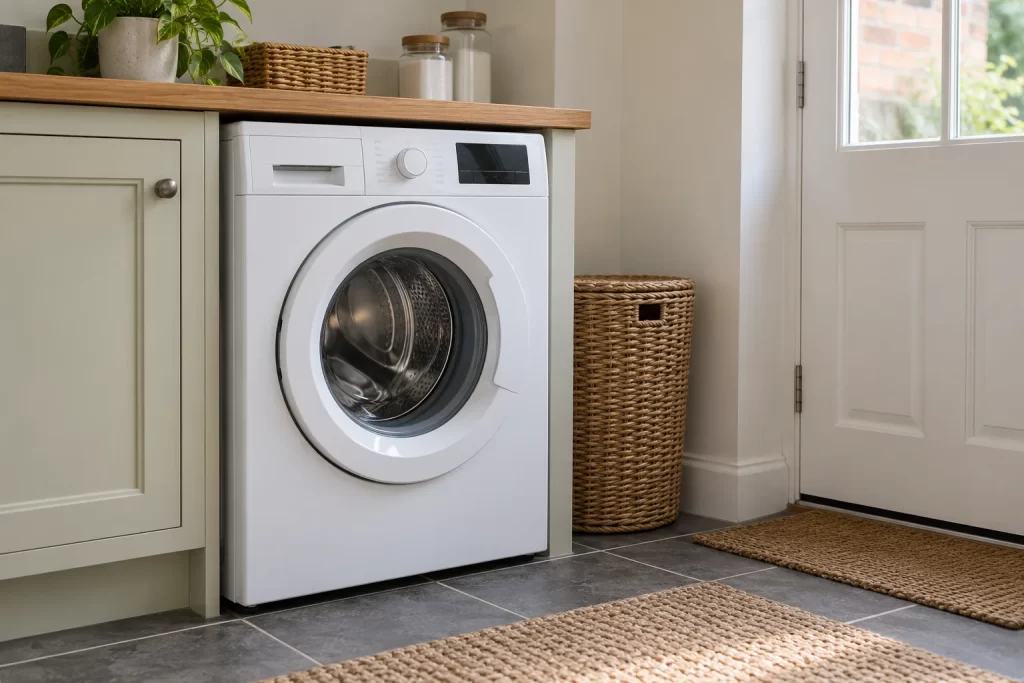
Before handing back a rental with a washing machine, check the model’s manual and clean only the user-accessible parts it describes. Switch the appliance off and isolate it as directed. Remove the detergent drawer using its release catch if permitted, rinse or wipe the removable components, and dry them before refitting. Inspect the accessible door-seal fold for hair, coins and detergent residue, then wipe gently and dry. Leave the door and drawer open for airing only as the maker recommends and where safe. Record a leaking drawer, torn seal, broken latch or persistent fault for maintenance rather than trying to scrub it away.
A washing machine can look clean from the front while residue sits in the drawer recess or water remains in the rubber gasket. These details are easy to miss in a general move-out sweep. Bosch UK guidance describes removing and drying its detergent drawer, while Samsung UK’s maintenance advice covers both drawer residue and small objects caught in the seal. The exact release catch, parts and cleaning cycle still depend on the machine in the property.
Identify the model and separate cleaning from a fault
Find the model number on an accessible label or in the property appliance pack. Look up its manual before you pull the drawer or run a programme. A standard detergent drawer differs from an automatic dispenser with caps, pumps and refill containers. Samsung’s instructions for its auto dispenser, for example, warn not to use a brush on a particular part and not to spray water into the recess. A generic “take everything apart and scrub” method can damage a model you do not own.
Make sure the drum is empty and the machine has finished any programme. Switch it off and unplug or use the isolation method the manual specifies if safe and accessible. Do not reach behind a fitted appliance to tug a plug or hose. Place a towel below the drawer in case a little residual water drips, and keep electrical controls dry. Gather a soft cloth, small soft brush for permitted surfaces, warm water and a dry towel. Avoid a stiff scraper, steam cleaner or spray aimed into the housing.
Inspect the machine before cleaning. A drawer that leaks during operation, a torn door seal, water under the appliance, a loose door or an error display is a maintenance issue. Photograph and report it. Cleaning ordinary residue may improve appearance and smell, but it does not repair a leak, pump fault or damaged gasket. If the property contact has asked for a filter or hose clean, treat that as a separate model-specific task rather than adding it to this drawer-and-seal routine.
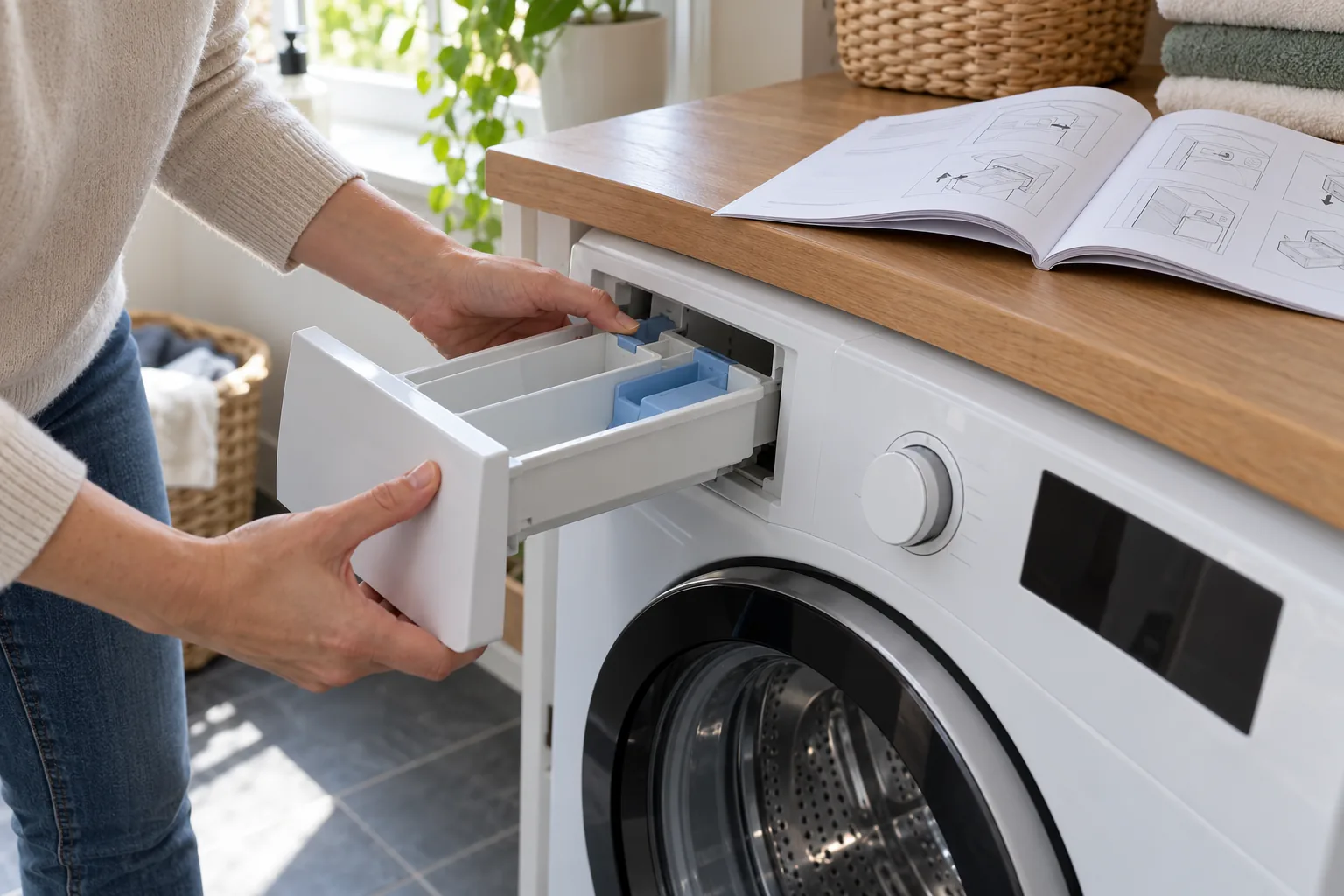
Remove and clean the drawer without forcing it
Pull the detergent drawer to its normal stop and locate the release shown in the manual. Press or lift it exactly as instructed while supporting the drawer. If it does not slide out easily, stop and check the model again. Do not lever it with a tool. Photograph the compartment arrangement before removing any permitted inserts so each part returns to the right place. If it is an automatic-dosing system, follow its separate cleaning directions and do not immerse components that contain electronics or pumps.
For a standard removable drawer, rinse away loose detergent and conditioner residue as the maker allows. Bosch UK describes soaking its drawer and lifting stubborn deposits with a cloth or small brush, then drying thoroughly. Samsung UK describes rinsing drawer components and brushing the recess for its models. These are examples, not a universal method for every automatic dispenser or material. Use the instructions for the machine in front of you.
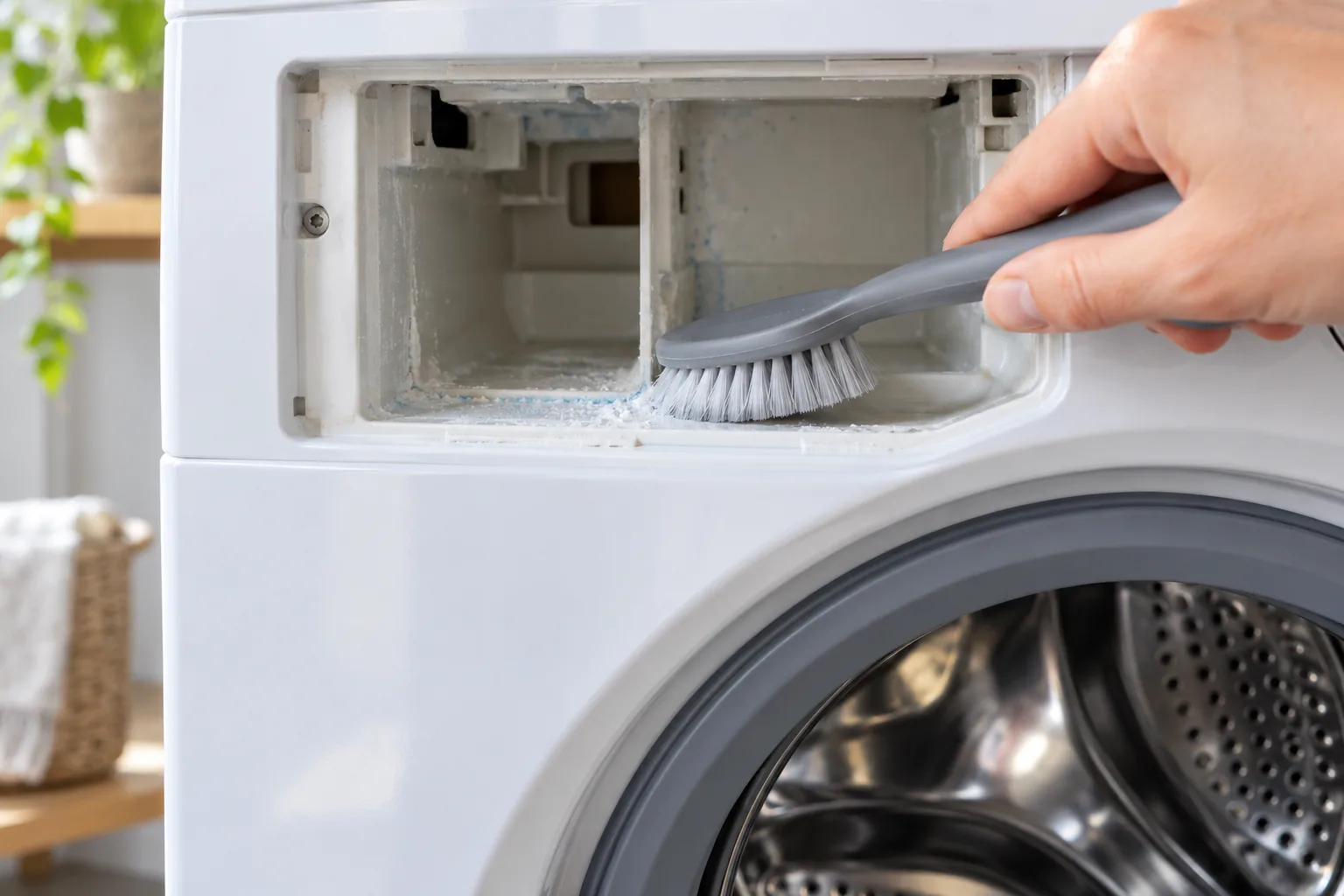
Look into the accessible drawer recess with a light. Wipe visible residue with a soft damp cloth or permitted brush, taking care not to push dirt deeper. Do not pour or spray water into the housing. Samsung explicitly warns against spraying its auto-dispenser recess because of electrical risk. Wipe the underside of the drawer lip and front panel if the finish permits. Dry the drawer, inserts and recess completely before refitting them. Push the drawer in gently until it seats as the manual shows.
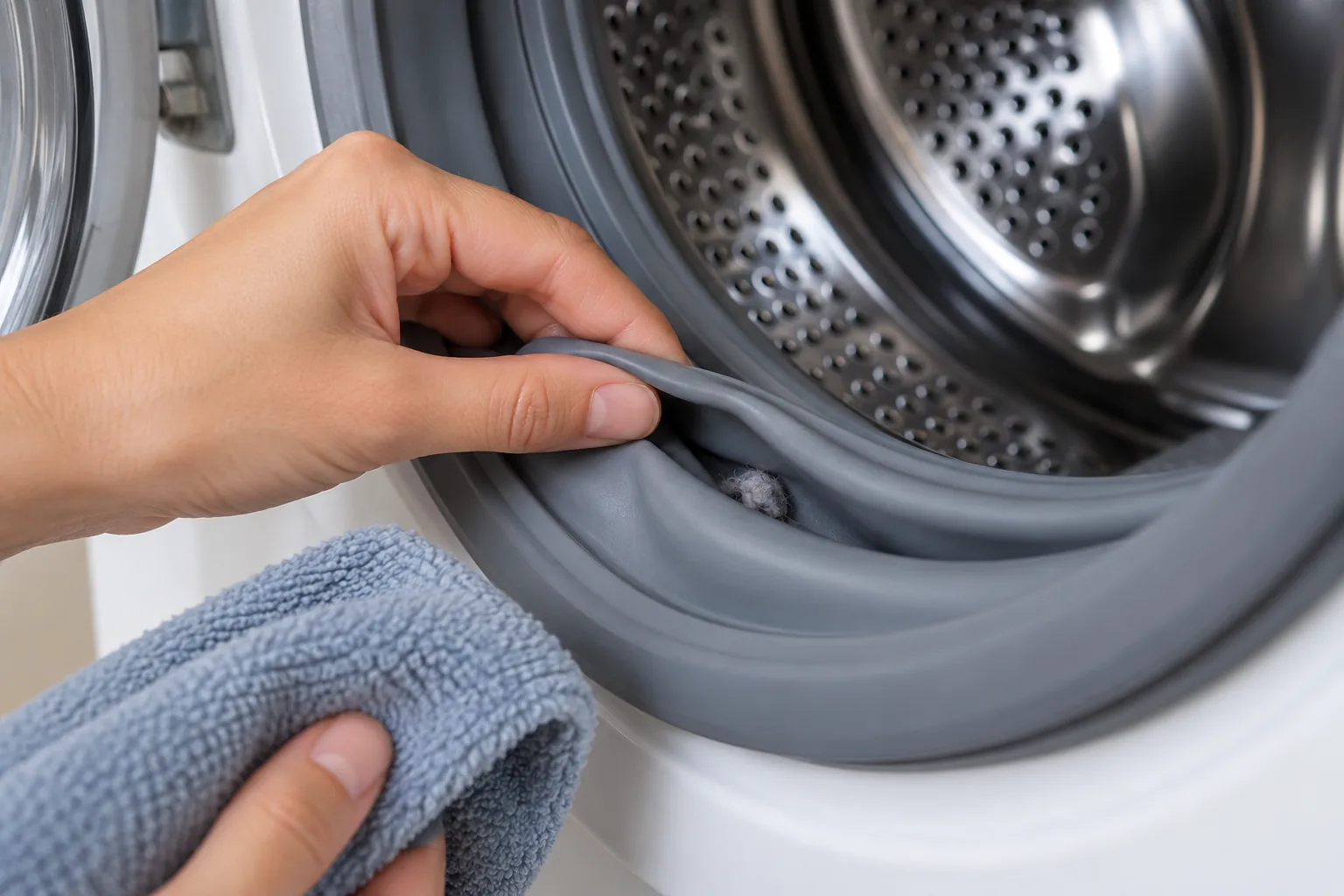
Check the door seal for trapped items and residue
Open the door and inspect the rubber seal around the whole opening. Small items from pockets can sit in the fold, and detergent or lint may collect at the bottom. Gently part an accessible fold with your fingers as the manual allows, without pulling the gasket away from the drum. Remove loose debris by hand or with a soft cloth. Do not use a pointed tool that could puncture the rubber. If you find a coin or hair clip, check that it has not torn the seal.
Wipe both visible faces of the gasket with a clean, damp cloth, then dry with a separate cloth. Bosch’s door-seal guidance recommends a damp cloth around the inside and outside of the seal. Samsung advises checking for trapped objects and wiping residual detergent from the rubber. If the manufacturer specifies a particular cleaner, dilution or maintenance cycle, follow that exact model instruction. Avoid applying concentrated bleach or an arbitrary mould-removal mix to rubber; Samsung notes that some cleaners can damage a door seal.
Look at the glass and the mating edge where the seal contacts the door. Wipe accessible residue without loosening the gasket. A black mark that remains within the rubber may be staining rather than dirt that can be removed safely. If the seal is split, distorted, loose or leaking, record it for repair. A clean surface does not restore an intact water seal.
Air the machine and leave a useful handover note
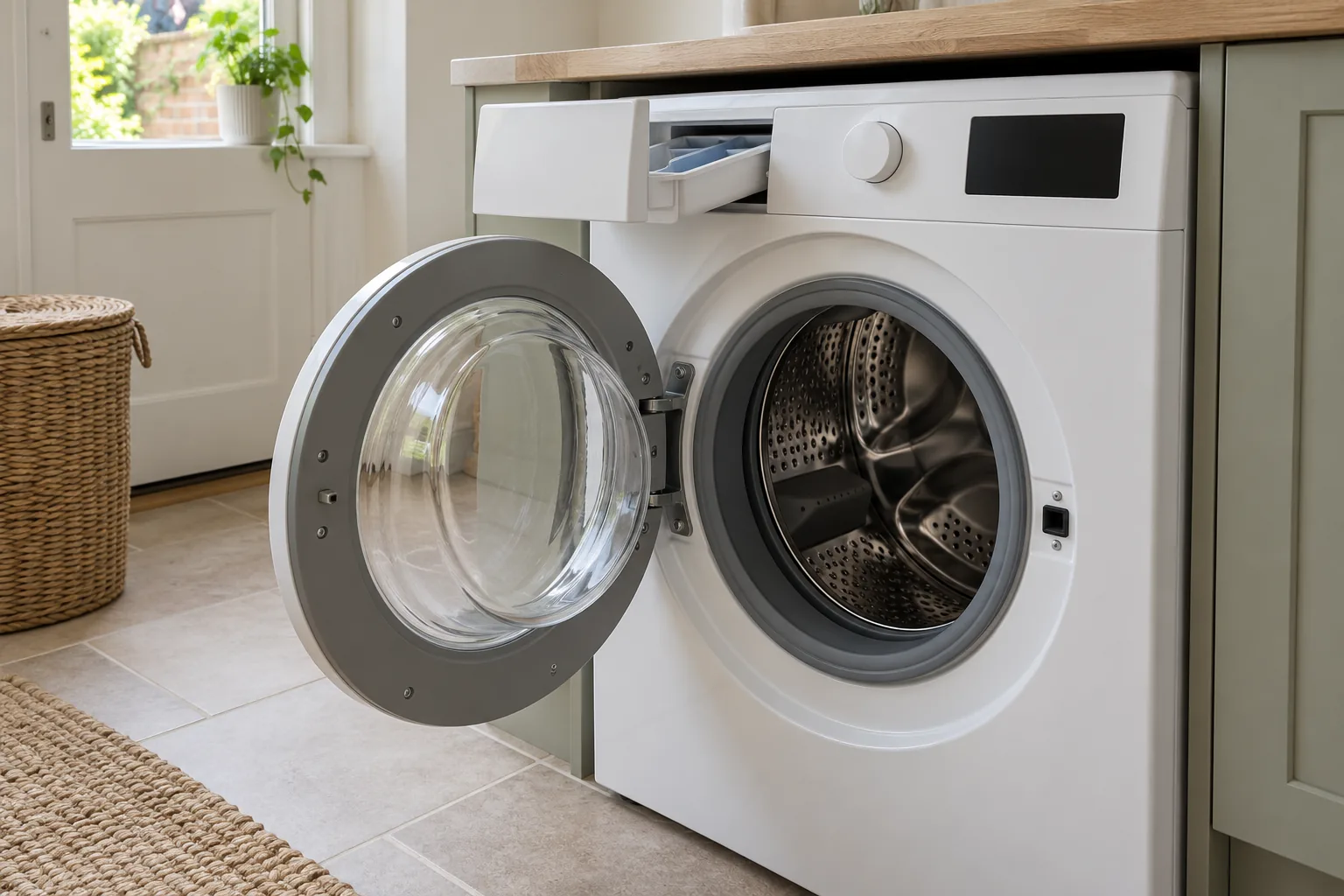
Once the accessible parts are dry, leave the door and drawer slightly open for airflow if the manual recommends it and the property can be left safely that way. Miele Great Britain recommends leaving both slightly open after use to help them dry; Samsung gives similar advice for its machines. Do not leave a door projecting into a narrow walkway or where children might play with the empty appliance. Follow property access instructions at handover.
If the model requires an empty maintenance programme and it can be run safely with water and power available, follow the manual’s exact product and cycle directions. Do not start a high-temperature cycle merely because the drawer has been wiped, and do not leave it running unattended if handover is imminent. A machine with a leak, unusual noise or error needs assessment rather than a cleaning cycle. Keep the task within the booked scope and the time available.
Write a short note of what was done: drawer removed and cleaned, recess wiped, seal checked, parts dried. Add any limitation, such as “auto dispenser not removed; manual unavailable” or “seal split at lower edge; reported”. A photo of the clean, dry accessible parts can help a later check, but it does not prove the appliance works. The end-of-tenancy handover checklist helps you keep this appliance task in the larger property record.
Keep future drawer and seal care straightforward
The same small checks are useful during ordinary occupancy. Remove wet laundry promptly, inspect pockets before washing and wipe visible residue from the seal when the machine is not in use. Airing the drum and drawer according to the manual reduces trapped moisture. Our kitchen-cleaning-between-visits guide offers broader routine context, while the appliance manual remains the source for the actual cleaning method.
If you are arranging end-of-tenancy cleaning, identify the washing-machine model and whether the drawer and seal are in scope. Tell the team about automatic dosing, existing damage and any lack of water or power. Routine cleaning of accessible parts can be planned; dismantling, hose work and repairs need a separate competent service.
The goal at handover is an appliance with visible residue removed, accessible parts dry and defects clearly reported. That is more useful than hiding a torn gasket with a strong cleaner or leaving a damp drawer shut immediately after washing it.
Common questions
Can I pull out every detergent drawer?
No. Release methods and auto-dosing parts vary. Find the exact model manual and remove only the parts it identifies for user cleaning. If a drawer resists, do not force it.
Is a dark mark inside the rubber seal always removable?
No. Some marks may be surface residue, while others are staining or sit in a damaged gasket. Wipe gently using the maker-approved method. A split, loose or leaking seal needs repair advice.
Should the door and drawer be left open after cleaning?
Many manufacturers recommend airing them, but follow the machine’s manual and consider safe access to the property. Leave both fully dry and do not create a trip or child-access hazard.