Star Domestic Cleaners
Menu
SURFACES THAT REMAIN ON THE INVENTORY · KENSINGTON

End of Tenancy Cleaning Kensington

The furniture and fittings staying in a property deserve a clear cleaning brief. Identify the Kensington inventory surfaces, explain their condition and distinguish ordinary room work from fabric or specialist treatment.

  • Remaining inventory reviewed
  • Surface care discussed
  • Optional treatments identified

Scope and price agreed before booking

Mopping a clear hallway floor after removals

List the items that will still be there at handover.

For a furnished tenancy, identify landlord beds, cabinets, tables, chairs and seating, with their condition and access around them. Distinguish those items from possessions being removed. An inventory entry should help describe the room; it should not be treated as proof that every part of a furniture item receives the same method.

For an unfurnished property, fitted storage, appliances and floor coverings may remain. Describe actual contents and dimensions. Both arrangements can be assessed for tenancy cleaning, but neither gives a fixed duration or universal access to interiors and areas behind substantial furniture.

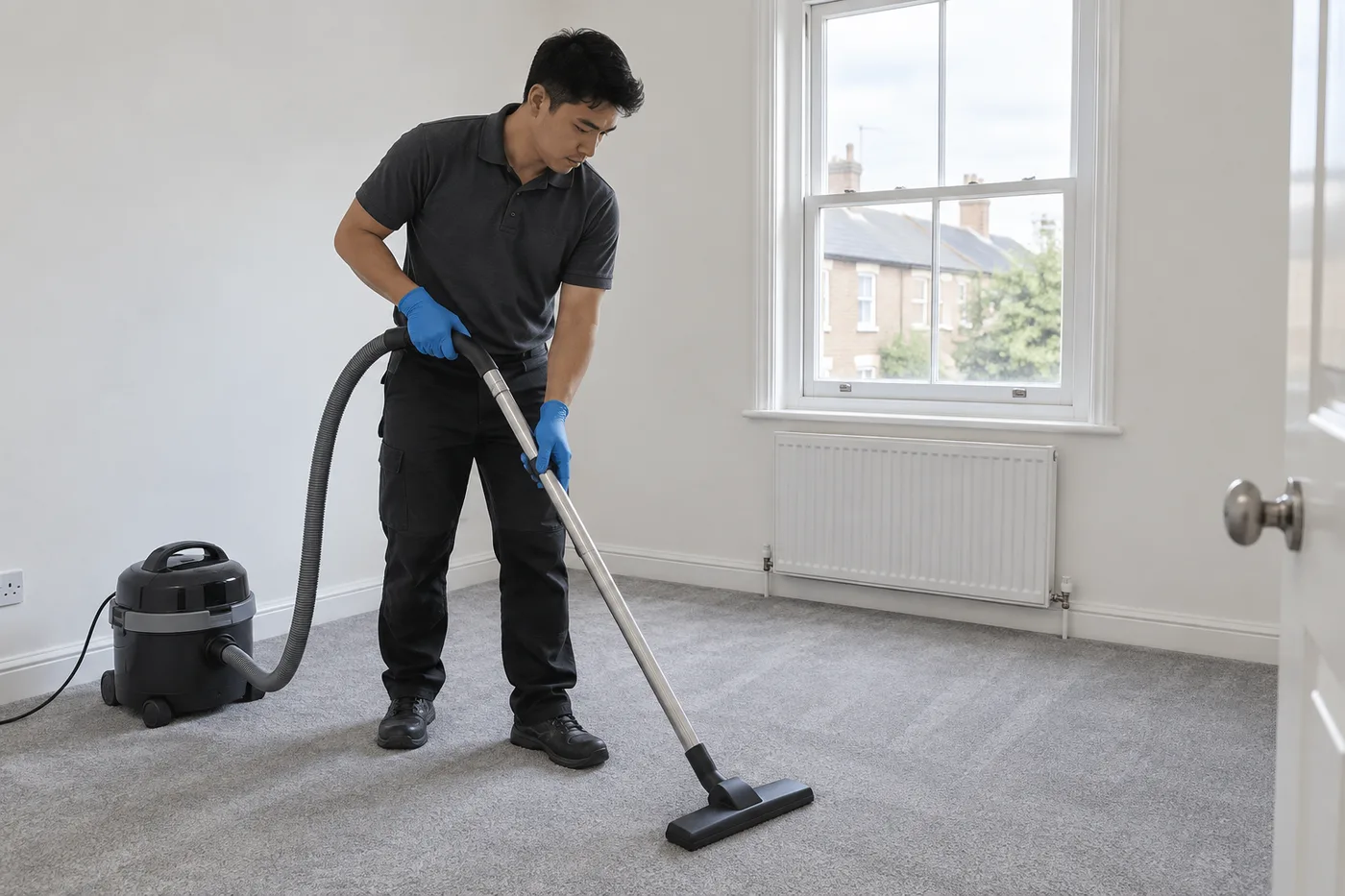
Cleaner vacuuming the floor of an empty bedroom

Separate furniture surfaces from fabrics and damaged finishes.

Explain accessible wood, glass or other furniture surfaces and any manufacturer care instructions. Fabric marks need a specific treatment discussion, while scratches and worn finishes are not repaired by cleaning. Do not assume stronger scrubbing is the answer to every inventory concern.

Share landlord or agent cleaning requirements with rooms, fittings and appliance details. Interior storage, appliance dismantling, high surfaces and heavy furniture movement need explicit agreement. Cleaning prepares requested areas for handover; it cannot guarantee inspection approval or deposit decisions controlled by another party.

Review the fixtures alongside the furniture.

Living rooms and bedrooms

Discuss reachable furniture, doors, skirting, fittings, internal windows and floors. Explain fragile objects and spaces blocked by remaining items. Carpet vacuuming differs from treatment; furniture surface cleaning differs from upholstery work. Request the relevant options directly, without assuming an inventory checklist creates unrestricted access behind beds or wardrobes.

Kitchen appliances and storage

Identify cupboard fronts, worktops, splashbacks, sink, hob and extractor surfaces. Request accessible interiors explicitly, with preparation discussed. Tenancy prices advertise free oven cleaning; confirm appliance type, compartments and the applicable offer in your quote. Fridge interior work and handling contents should be raised separately rather than assumed from the cooker promotion.

Bathroom fittings and tiles

List taps, basin, toilet, bath or shower and suitable tile surfaces. Explain deposits and delicate finishes, including previous products. Cleaning does not replace worn seals, repair grout or correct an ongoing moisture source. Persistent discolouration needs realistic assessment rather than a promise that every inventory mark will disappear.

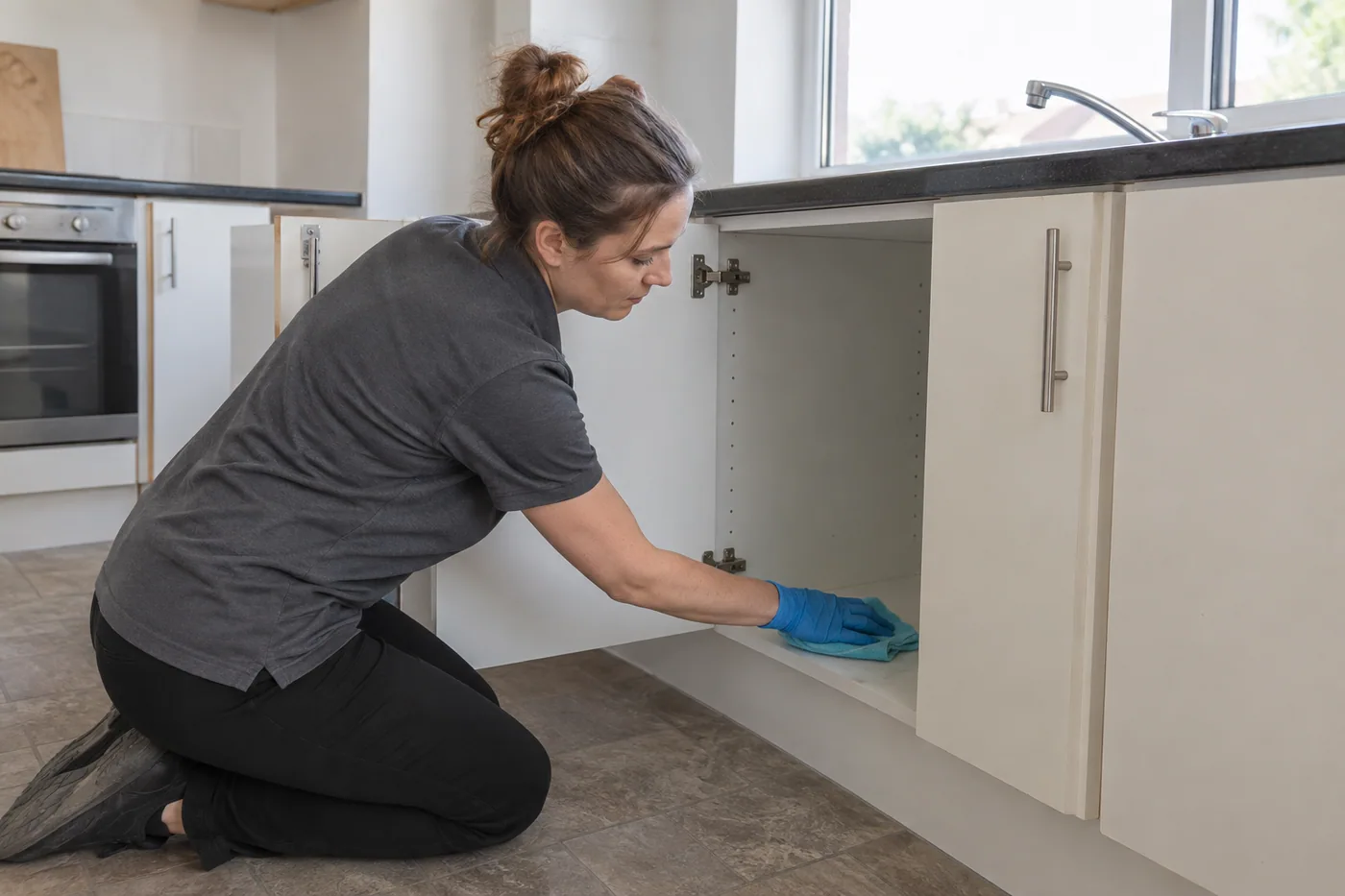
Wiping the inside of an emptied kitchen cupboard
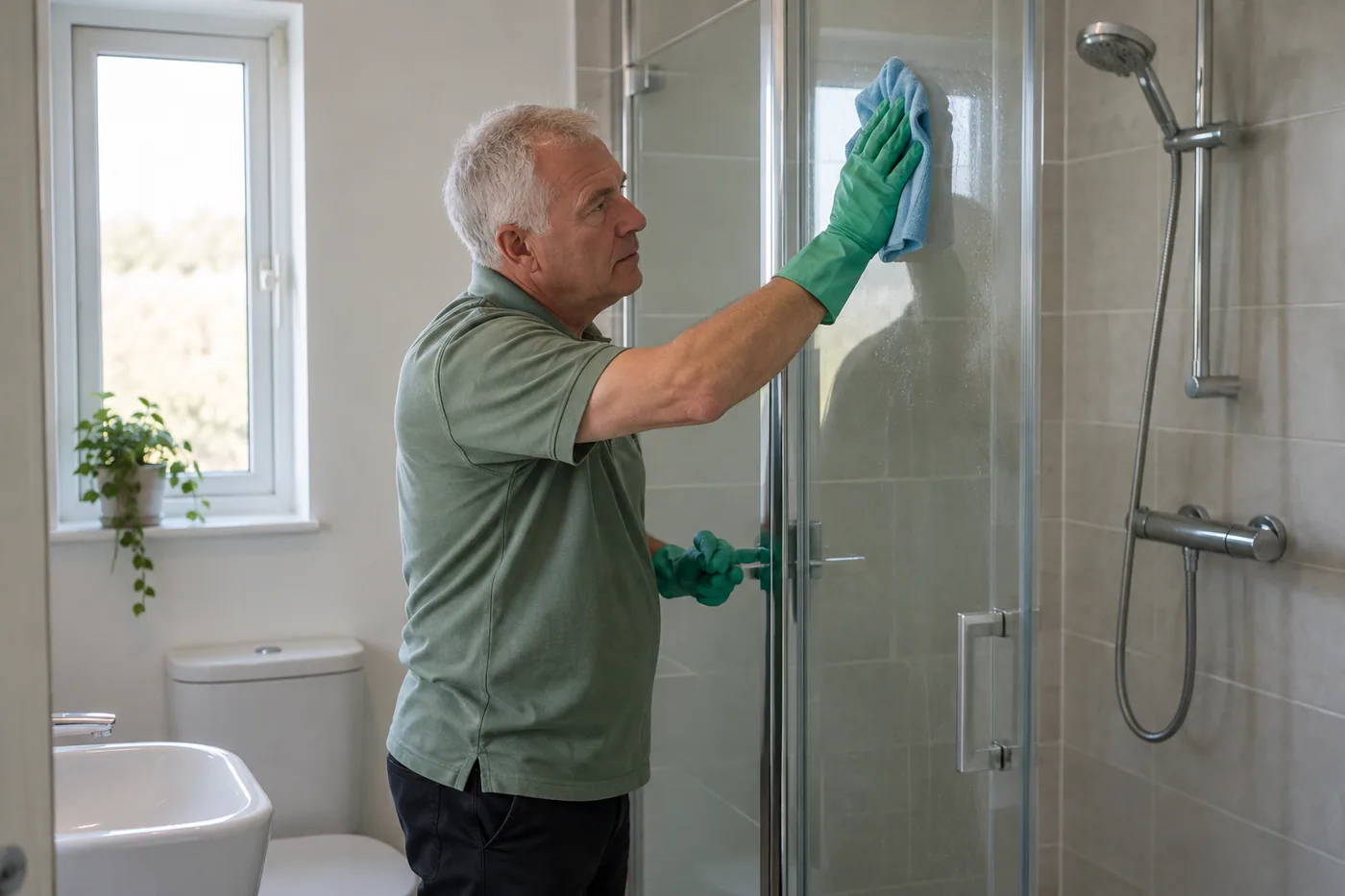
Wiping a shower screen in a cleared bathroom
Keys and cleaning equipment at an empty property entrance

Leave the remaining inventory accessible and protected.

Remove personal possessions and rubbish from requested areas. Secure private papers and fragile objects. Prepare agreed storage or appliance interiors as discussed, identifying contents that will remain. Explain items awaiting collection so the quote reflects the property on the cleaning date.

Share material instructions and restricted products, and confirm product and equipment arrangements for special finishes or access. Avoid unsafe lifting or improvised platforms. Clearing should make the agreed work practical, not create an unplanned furniture-moving or storage-sorting task.

Coordinate collections before the cleaning stage.

Give the final removal and handover dates, including landlord furniture changes or repair visits. Plan cleaning after relevant movement and before keys are returned. Work arranged before dusty repairs or substantial furniture collection may not fit the handover sequence.

If a landlord is preparing the property between occupants, explain the next arrival too. Availability needs confirmation, especially at short notice. Expected duration depends on size, condition, furnishing and tasks rather than a fixed allowance attached to the inventory count.

Send the condition details with the access contact.

Provide the Kensington address, rooms, bathrooms, layout and desired date. Photos can illustrate retained furniture, deposits and obstructed areas alongside written material information. Keep private documents out of view. Ask about duration for the actual workload instead of assuming a standard bedroom estimate.

Attendance throughout is unnecessary, but authorised entry, keys, alarms and securing afterwards need agreement. Explain shared doors and relevant parking restrictions. Identify who receives completion information and who can approve the scope if a landlord or agent is organising the visit.

Assess retained fabrics and additional glazing separately.

Request upholstery assessment for remaining seating with material and marks described. Choose the appropriate carpet-cleaning option for floor coverings beyond vacuuming. Additional panes or exterior sides can be discussed through window cleaning, specifying access. Confirm preparation, methods, scheduling and charges before those treatments become part of the booking.

Confirm a property quote that names the chosen options.

Published one-bedroom tenancy cleaning starts at £208 excluding carpets or £238 including them. Two-bedroom prices start at £245 or £275 respectively. These are property-based starting amounts; size and specified areas affect the quote. Extra spaces or an unusual layout require assessment rather than a calculated extension of the category.

Minimum charges, terms and availability apply; applicable congestion charges are additional. Confirm the Kensington total, inclusions, carpet basis and advertised oven offer. Check separate upholstery or glazing costs, and do not assume different promotions can be combined.

Check the remaining inventory before releasing access.

For Kensington, confirm which furniture and fittings stay, including items awaiting replacement or collection. Identify accessible surfaces and separate fabric requests in the handover brief. Give the key contact the final inventory description so the cleaner finds the property that has been discussed.

Inventory surface questions for a Kensington tenancy clean

Does every inventory item receive fabric treatment?

No. Describe the surfaces and materials requiring work. Accessible furniture cleaning and upholstery treatment are distinct tasks to agree and quote.

Should I include landlord furniture that is being replaced?

Explain what will actually remain at the appointment and the collection or delivery timing. The scope should match the cleaning date, not an outdated inventory.

Can damaged veneer be restored by cleaning?

Cleaning does not repair damaged finishes. Identify wear and damage separately from dirt and provide care information for the material.

What photos are useful for furniture access?

Show the item and surrounding space, with written details about the material and obstruction. Avoid private information; photos support assessment without guaranteeing access or outcome.

Does an unfurnished label mean no inventory surfaces?

Fitted storage, appliances and floor coverings may remain. Describe the actual contents so the workload can be assessed accurately.

How are cleaning complaints dealt with?

Use the booking contact and confirmed terms. Before booking, check the applicable reporting window, covered cleaning issues, remedy and any premium fee.

Match the inventory surfaces to an agreed cleaning brief.

Describe what stays in the Kensington rooms, its condition and any separate fabric needs. We can discuss practical work, authorised entry and the complete quote.

Illustrative photographs with generated models; these are not records of local customer jobs or actual staff.