Star Domestic Cleaners
Menu
BEYOND THE BEDROOM CATEGORY · STANMORE

End of Tenancy Cleaning Stanmore

Extra living space, bathrooms and storage can make a tenancy brief larger than the bedroom number suggests. Describe the actual Stanmore layout and condition so the property quote reflects the areas wanted at handover.

  • Extra spaces included in the brief
  • Layout assessed before pricing
  • Handover access planned

Scope and price agreed before booking

Mopping a clear hallway floor after removals

List the spaces that a bedroom count leaves out.

Include additional reception rooms, bathrooms, halls, landings and storage where cleaning is wanted. Explain floor materials, levels and access between them. A published price category helps start the enquiry, but it cannot show the condition or every area of a larger or unusual property.

Share landlord or agent instructions and identify appliances and furnishings remaining. Requested interiors, high access, heavy furniture moving and appliance dismantling require explicit discussion. Point out material restrictions and damage; cleaning does not repair worn finishes or guarantee removal of every persistent mark.

Request assessment instead of extending the price table.

Published three-bedroom tenancy cleaning starts at £307 excluding carpets or £337 including them. Two-bedroom figures start at £245 and £275 respectively. These are property-based starting amounts. There is no four-bedroom tariff in the reviewed tenancy subsection to extend arithmetically for another layout.

Size and specified areas affect the quotation. Minimum charges, terms and availability apply, and applicable congestion charges are additional. Confirm the Stanmore total, inclusions, carpet basis, advertised oven offer and separate options. The starting figure is not an hourly cleaning allowance.

Break the larger request into practical room work.

Several living and sleeping spaces

Discuss reachable furniture, doors, skirting, fittings, internal glass and floors across the requested areas. Explain what belongings leave and where landlord furniture stays. Describe blocked edges or fragile objects. Carpet vacuuming differs from treatment, and furniture surfaces differ from upholstery work; identify the required options before the quote is settled.
Kitchen fittings and appliances

List cupboard fronts, worktops, splashbacks, sink, hob and extractor surfaces, including grease and prior products. Request accessible interior storage and appliance tasks clearly. Free oven cleaning is advertised with tenancy bookings; confirm cooker type, compartments and applicable scope. Fridge interiors or preparation should be discussed directly rather than inferred from the oven offer.

Bathrooms with different condition

Identify each basin, toilet, bath or shower, tap set and suitable tile area. Explain deposits and material restrictions rather than treating all bathrooms as identical. Cleaning cannot replace worn seals, repair grout or correct ongoing moisture. Damage and persistent discolouration should be separate from removable dirt in the brief.

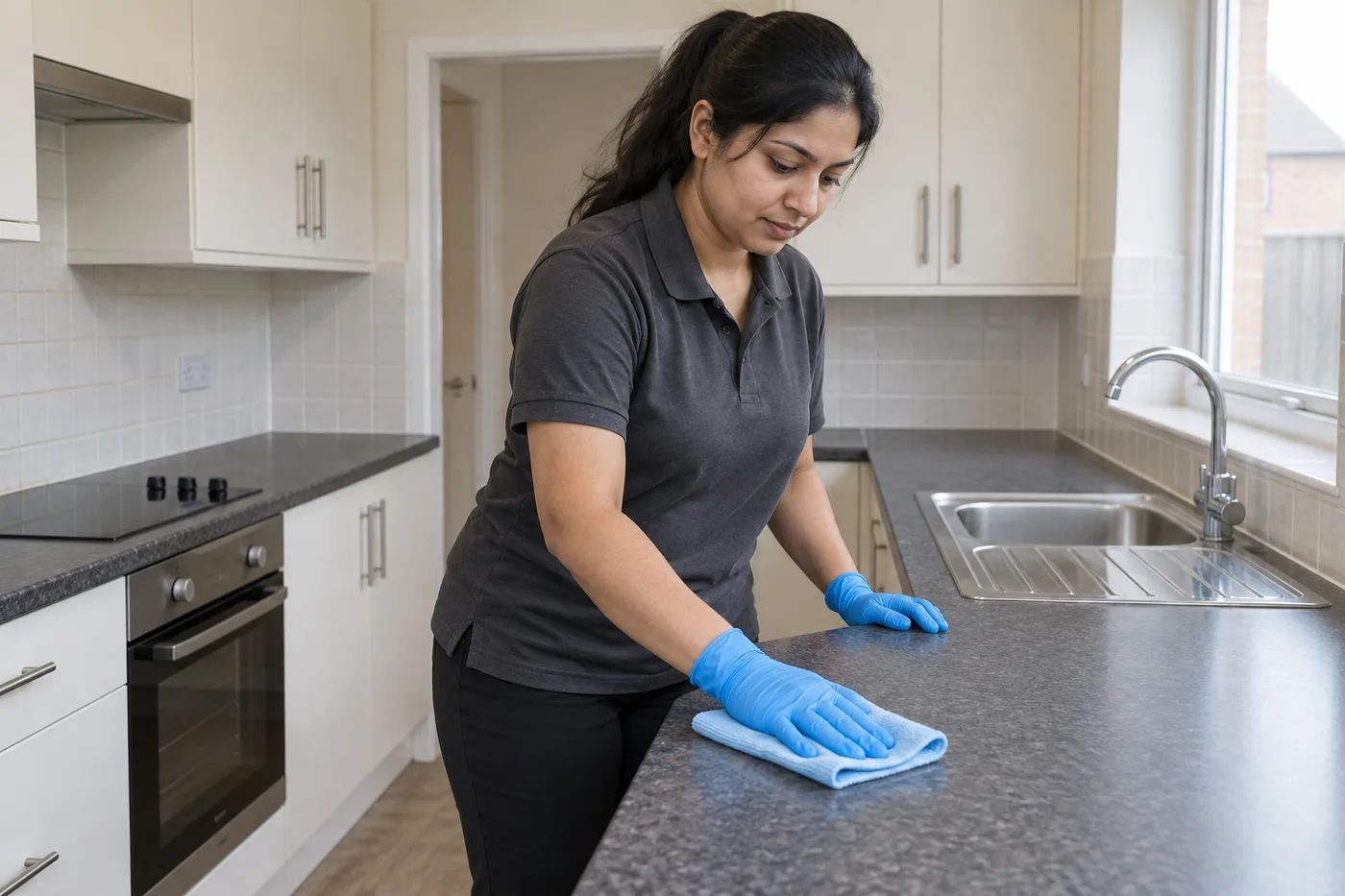
Cleaner wiping the worktop of an empty kitchen
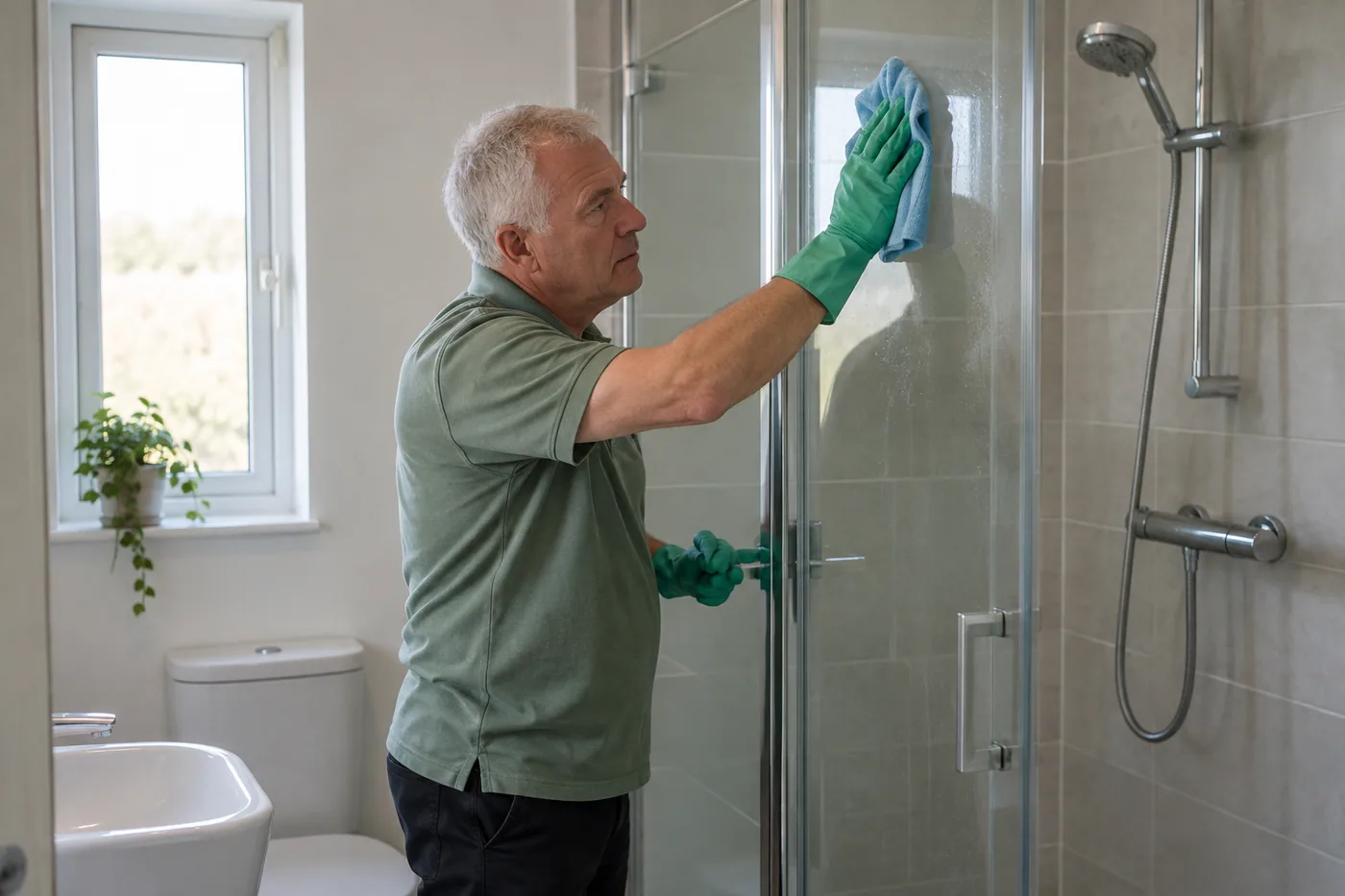
Wiping a shower screen in a cleared bathroom

Describe what remains throughout the property.

For a furnished home, list landlord beds, cabinets, tables and seating by area, with condition and access. Identify items awaiting collection or rooms still occupied. Ordinary surface cleaning does not establish fabric treatment or unrestricted movement of substantial furniture.

An unfurnished property can still have fitted storage, appliances and floor coverings. Both arrangements can be assessed for tenancy cleaning. The label does not establish duration, and a spacious unfurnished layout should still be described accurately rather than assumed a simpler job.

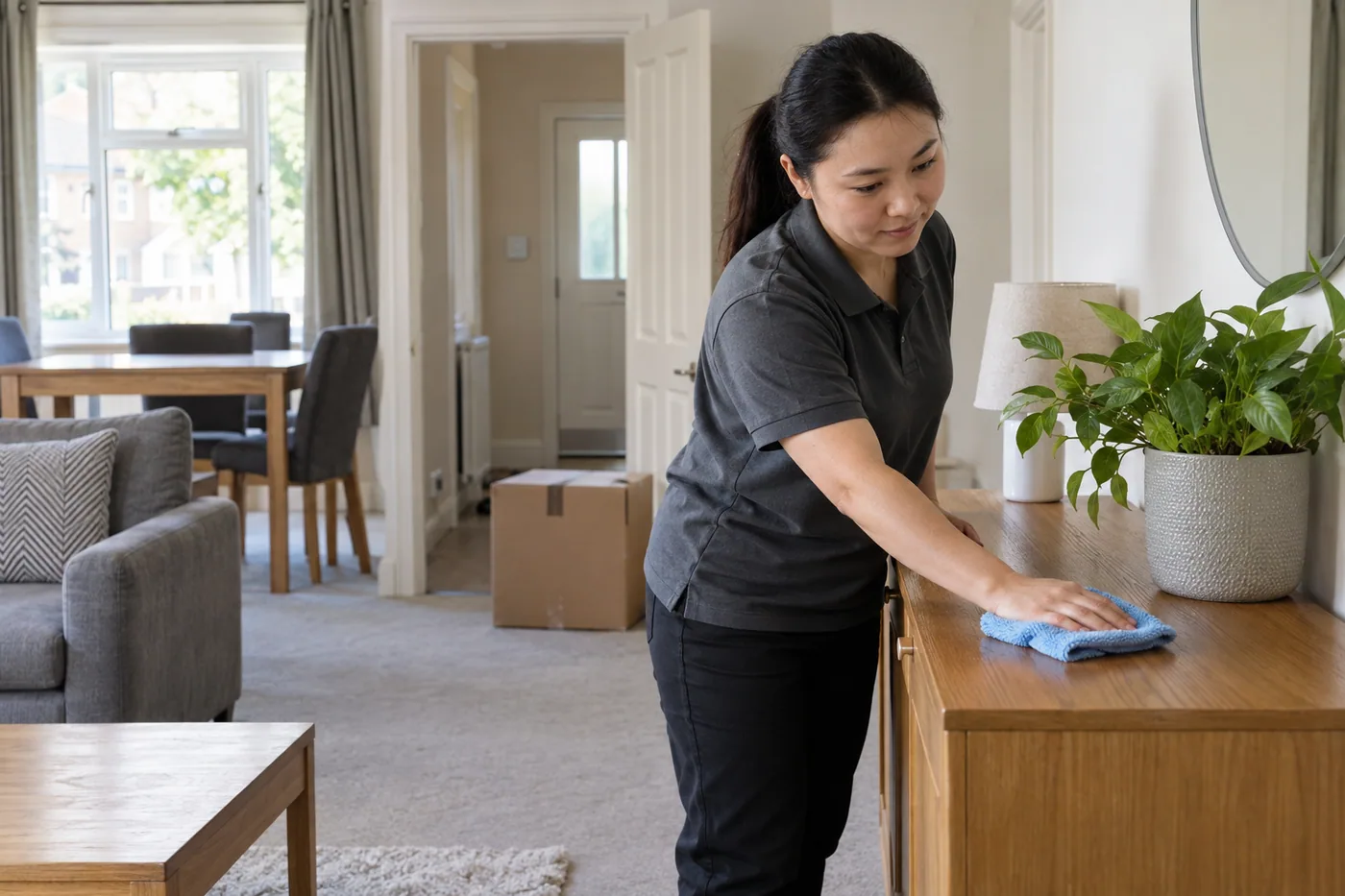
Cleaning surfaces around furniture remaining in a rental flat

Confirm the final removal stage across all rooms.

Plan cleaning after relevant belongings leave and before keys are returned. Include furniture collections, repairs or deliveries that may overlap. A few cleared rooms do not establish whole-property access if other areas remain in use or packed with boxes.

Give the checkout or next-arrival date early and check availability. Expected duration depends on size, condition, furnishings and tasks. Cleaning prepares agreed areas but cannot promise deposit return or a landlord’s inspection result; keep repair and inventory matters separate.

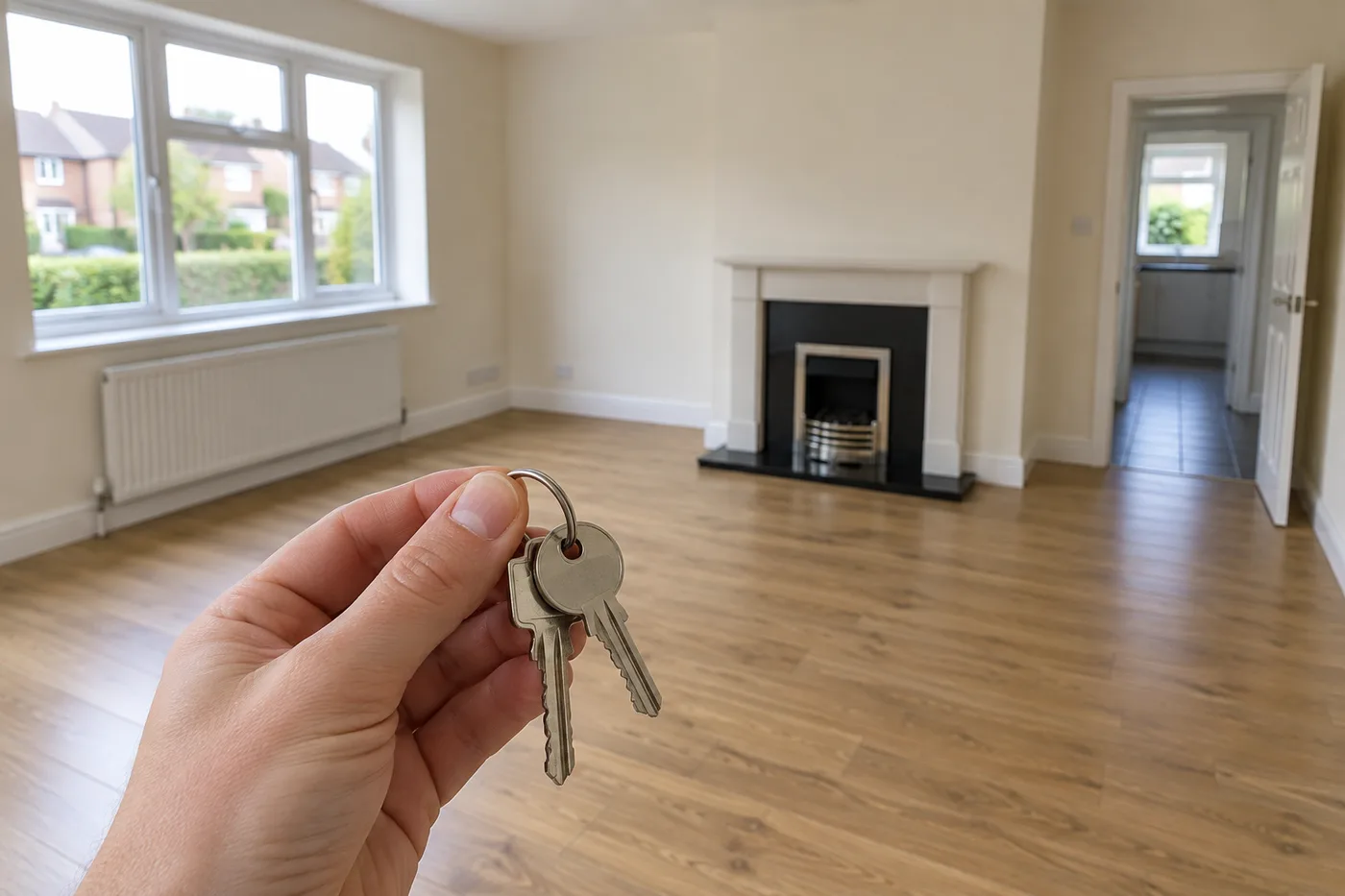
A hand holding house keys in a clean empty living room

Prepare the agreed areas without unsafe clearing.

Arrange removal of possessions and rubbish, with preparation for requested storage or appliance interiors agreed beforehand. Secure fragile items and private papers. Describe rooms or surfaces that cannot be cleared in time so the scope reflects the appointment date.

Share material instructions and restricted products. Confirm cleaning supply and equipment arrangements for unusual finishes or access. Do not shift heavy furniture unsafely or improvise platforms. Preparation supports the accepted tasks; it does not make organising, removals or unrestricted high work automatic.

Show the layout before confirming the appointment.

Give the Stanmore address, dimensions or useful layout description, rooms, bathrooms, furnishing and condition. Photos can illustrate deposits, extra spaces or obstructions alongside written material information; avoid personal details. Discuss duration from the workload rather than a fixed bedroom allowance.

Agree authorised entry, keys, alarms and securing afterwards. You need not remain throughout. Explain shared entrances and relevant parking restrictions, naming the access contact and completion recipient. Early enquiries are recommended; a short-notice date still needs confirmed availability.

Describe treatment needs for each relevant area.

Request carpet cleaning for areas needing more than vacuuming, with materials and marks explained. Remaining seating may call for upholstery treatment. Additional panes or exterior glass can be assessed through window cleaning, specifying access. Confirm preparation, scheduling and separate charges rather than assuming a larger-property quote covers every specialist method.

Check access to the additional rooms.

For the Stanmore property, include extra living areas, bathrooms and storage in the handover list. Explain furniture or belongings still blocking them and when these leave. Identify the contact who can confirm the final layout so the appointment follows the full property requirements.

Larger-layout questions before a Stanmore handover

Should I include extra reception rooms?

List every area where cleaning is wanted, alongside bedrooms and bathrooms. A bedroom category alone cannot establish the complete workload.

Is there a published four-bedroom tenancy rate?

The reviewed price subsection does not state one. Request a property-specific assessment rather than extending the three-bedroom figure by calculation.

Does an unfurnished property take a standard time?

No fixed duration should be assumed. Size, condition, fittings, access and requested tasks affect the planned work.

Can some rooms still contain packed belongings?

Describe them before quoting and agree practical access. Do not present a partly cleared layout as fully available for the appointment.

Does the carpet option cover every carpeted area automatically?

Identify the rooms, stairs or other areas requested and confirm the quote basis. The scope should name the actual property requirements.

Can a larger layout guarantee a larger cleaning team?

Discuss the appointment arrangements for the assessed workload. No team size or duration should be inferred solely from the property label.

Describe the spaces beyond the bedroom count.

List the Stanmore rooms, fittings and remaining inventory being handed over. We can review practical access, carpet choices and the complete property quotation.

Illustrative photographs with generated models; these are not records of local customer jobs or actual staff.