A guest bedroom does not have to look like a hotel room to feel ready. Visitors need a clean place to sleep, a clear route to it, enough space for their belongings and a few things that work without explanation. If the room is usually an office, storage area or occasional bedroom, that basic preparation is more useful than an elaborate display. This guide helps you prepare one guest bedroom in a sensible order, with attention to bedding, reachable surfaces, storage and access. It also shows which jobs can wait when time is short.
Start by thinking about the guest’s first few minutes. Can they open the door fully, put down a bag, switch on a light and reach the bed? Does the bedding smell fresh and feel dry? Is there a clear place for a coat or folded clothes? These are practical checks. A polished windowsill will matter less if the guest has to step over boxes in the dark.
Set the room’s purpose before cleaning it
Remove items that do not belong in the room during the visit: parcels awaiting return, spare appliances, loose paperwork and laundry. Put them in a deliberate storage place rather than pushing them beneath the bed. You may need access to the floor and furniture edges for cleaning, and your guest should not have to guess which belongings are theirs to move. If the room doubles as a workspace, cover or put away private documents and make one area clearly available to the visitor.
Check the room for maintenance issues before you begin detailed dusting. Open and close the door; test the window, curtain or blind; check that the radiator can be adjusted and the bedside light works. Notice any loose handle, unstable shelf or damp patch. Cleaning will not repair these problems, and a guest should not discover them at bedtime. If something cannot be fixed in time, remove the hazard where possible and tell the guest plainly about any limitation.
Decide how much of the room will be used. If a wardrobe contains household storage, clear one section or provide a separate rail rather than implying the whole wardrobe is free. A small, uncluttered bedroom can be comfortable when its available space is obvious. The weekly cleaning plan for busy households can help you keep the rest of the home on a manageable routine while you concentrate on this room.
Prepare the bed and bedding first
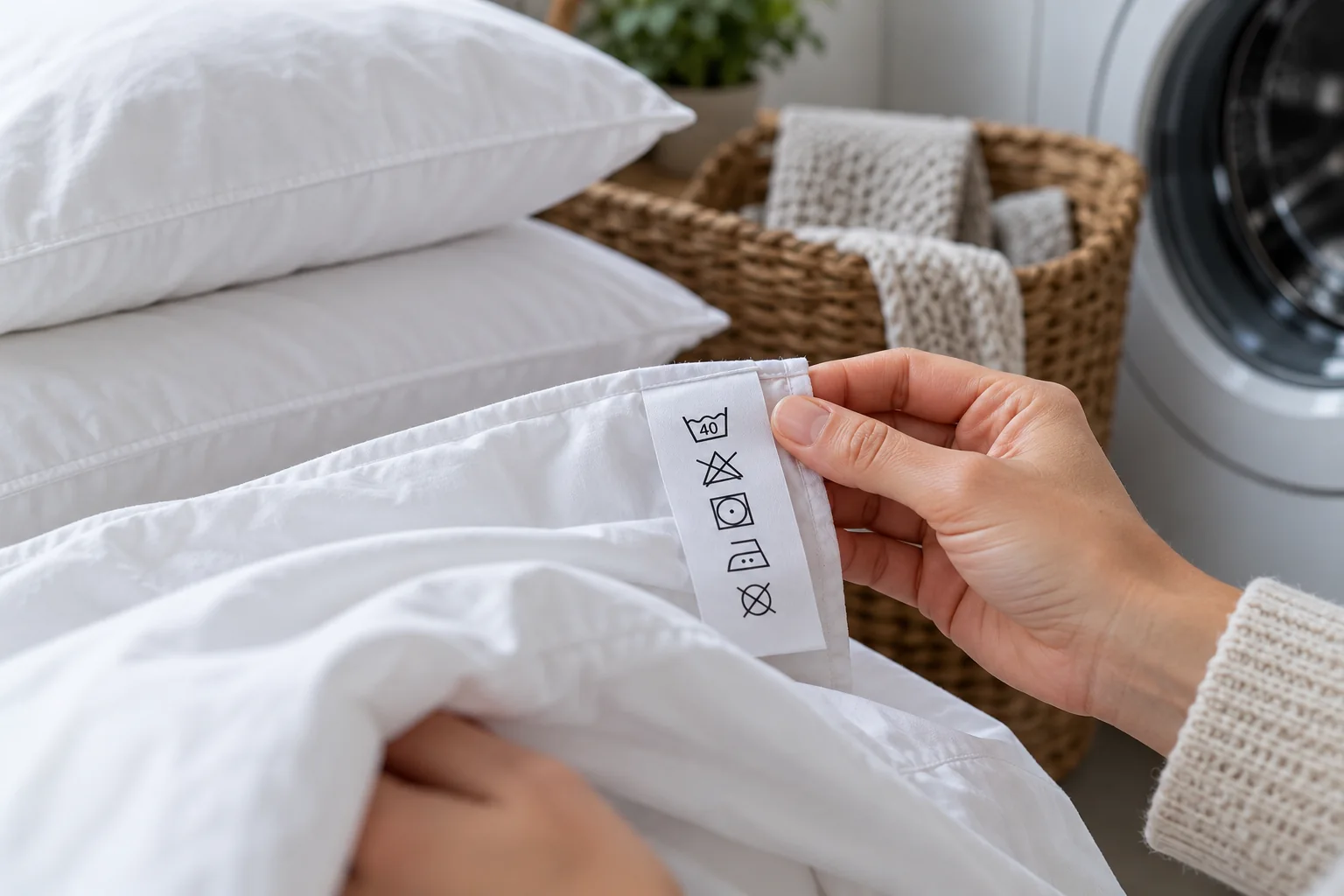
Strip used bedding and check the care labels on the duvet cover, sheets, pillowcases and any washable protector. Wash and dry them in line with those labels. Do not assume every pillow, duvet or decorative throw can go through the same cycle. Give items enough time to dry completely before making the bed. Damp bedding is unpleasant for a guest and can introduce moisture into a room you have just cleaned.
Inspect the mattress and protector before replacing the sheets. Look for visible marks, damage and any reason the bed should not be used. Clean only as the mattress maker directs; soaking a mattress or spraying it heavily shortly before arrival may leave it damp. If a protector is washable, follow its label and use a clean one when the bed is made. Air the room while working, subject to the weather and safe window access, and let the mattress surface dry if it has been treated according to its instructions.
If a guest has told you about a dust-mite allergy, ask what arrangements work for them rather than promising an allergen-free room. Cambridge University Hospitals’ dust-mite advice describes bedroom-focused measures such as cleaning, appropriate bedding covers and ventilation, while noting that allergens cannot be removed completely. For an ordinary visit, fresh bedding and a clean, uncluttered sleep area are a sensible baseline. Do not introduce fragranced sprays or unfamiliar products simply to create a “fresh” smell; the visitor may prefer a neutral room.
Make the bed only once the nearby dusting and floor work is finished, or protect clean bedding while you work. A simple set of comfortable pillows, a duvet suitable for the season and an extra blanket within reach are enough. Avoid piling the bed with cushions that the guest must find somewhere to store. If bedding differs from the room’s usual arrangement, leave a note explaining where spare covers are kept.
Clean the surfaces a guest will touch
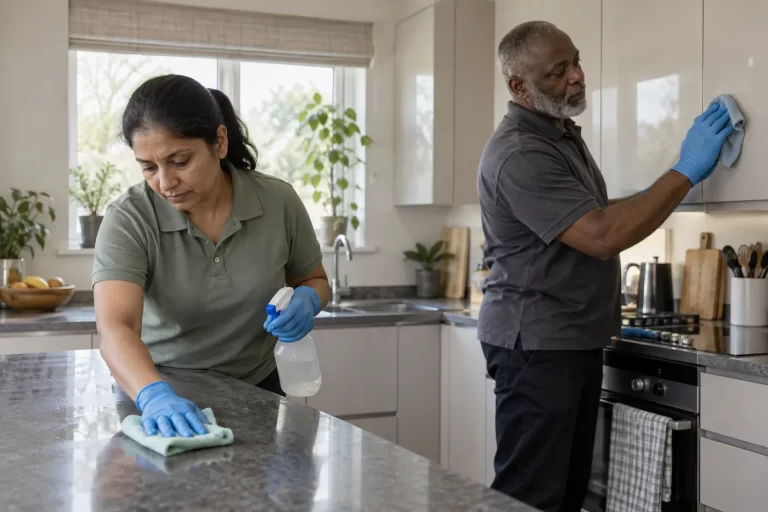
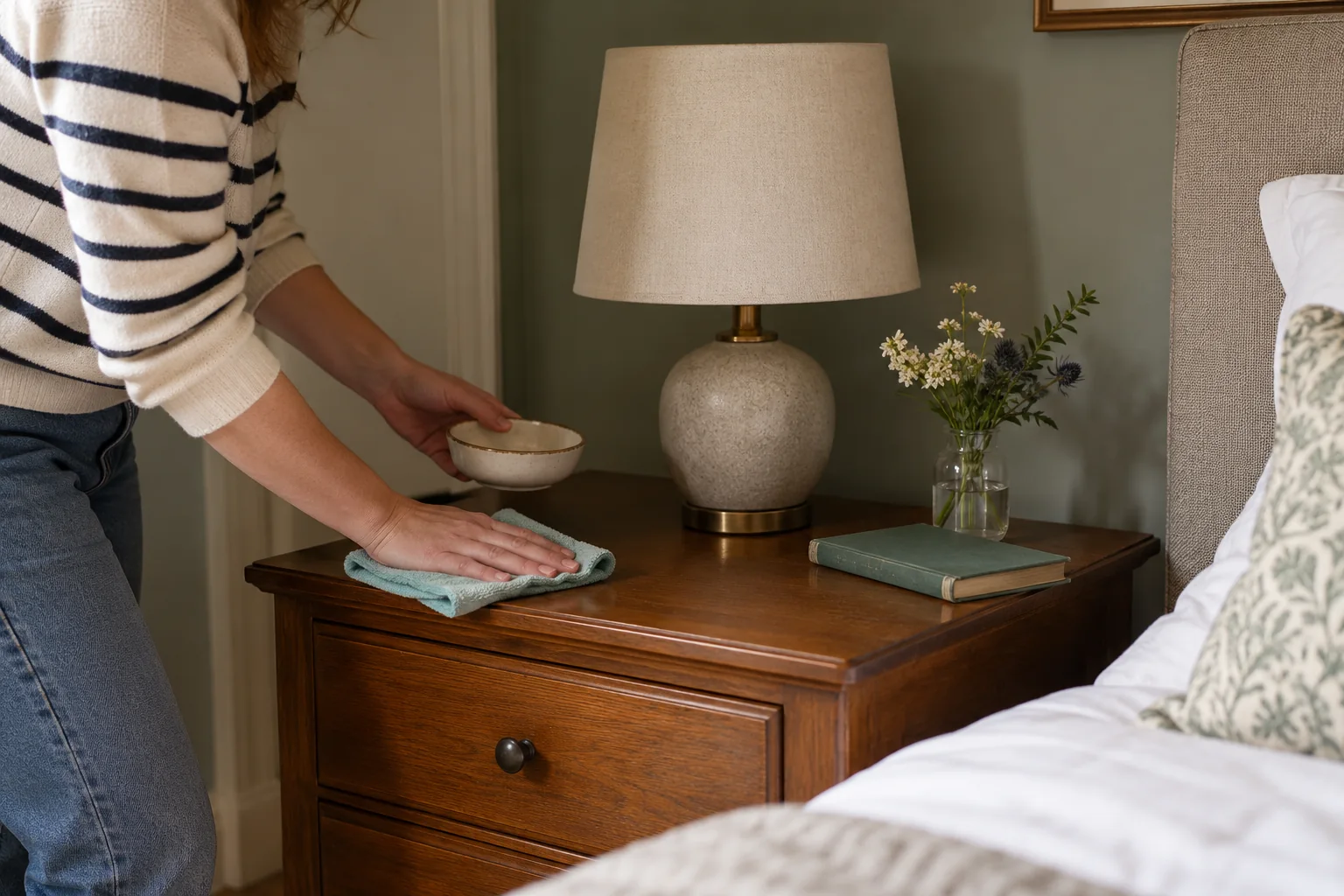
Work from higher accessible surfaces downwards so dust does not fall onto a freshly cleaned floor. Start with the bedside table, shelf, accessible light switch area, door handle, window ledge and any desk or dressing surface that the guest will use. Remove small objects before wiping; do not sweep dust around them. Choose a cloth and product suitable for each finish, and apply liquid to the cloth rather than directly onto sockets, lamps or electronics. Follow manufacturer directions for painted furniture, natural wood and delicate coatings.
If the room has been unused for months, look at the less obvious but reachable places: the headboard edge, skirting near the bed, top of a low chest and the area under a movable bedside table. Vacuum or damp dust as appropriate to the surface. Avoid vigorous dry brushing that puts settled dust back into the air. Do not climb onto a chair to reach high shelves or fittings; leave inaccessible work for equipment and a method that make it safe.
Clean mirrors and interior glass only if needed, using a suitable product and a clean cloth. Inspect for smears in daylight, but do not let repeated polishing consume the time needed for bedding or floor access. If there is a persistent stain, worn finish or damaged item, note it rather than rubbing harder. For a broader decision about which detail jobs merit occasional attention, the deep cleaning frequency room plan can help you defer nonessential work.
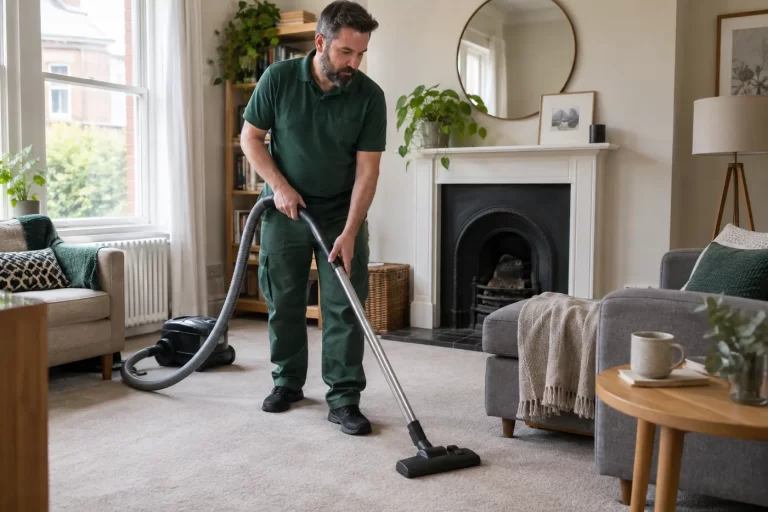
The floor comes after surfaces. Vacuum the accessible carpet or rug, including the clear strip beside the bed where the guest will walk. On hard flooring, remove loose debris first and use only a method suitable for the floor’s finish; do not leave excess water at the edge of boards or under furniture. Let the floor dry before replacing bags or inviting the guest in. A loose rug corner or cable across the route matters more than a small amount of dust behind a heavy wardrobe.
Give the guest space for their belongings
Choose a specific place for a suitcase. A clear section of floor, sturdy luggage stand or low bench is more useful than assuming the guest will balance a bag on the bed. Make sure the chosen position does not block the door, radiator, socket or route to the bathroom. Check that a chair is stable and free of household belongings if it will be used for clothes.
Clear a few hangers and a short length of wardrobe rail, or empty one drawer. Wipe the accessible interior, then let it dry before putting anything back. Do not offer storage in a cupboard that smells damp or contains cleaning chemicals. If there is limited space, be honest and show the guest the area that is available. A hook behind the door can help, provided the door still opens and closes freely and the hook is secure.
Put useful items where they can be found without searching: a spare blanket, tissues, a waste bin with liner and perhaps a small tray for keys or glasses. Keep drinking water away from electrical equipment and finishes that could be marked by a spill. Do not overfill the bedside table with decorative objects. The aim is to give the visitor control over a small personal space, not to make the room appear fuller.

Check the route, lighting and practical details
Walk through the room as a guest would, carrying a bag. Is there a clear route from the door to the bed, light switch, window and any storage? Move boxes, trailing chargers and loose shoes out of that route. Check that the bedside light can be switched on without stretching across furniture. The Health and Safety Executive’s slips and trips guidance identifies obstructions, walkway condition and lighting as factors in trips. The same simple observation is useful at home, especially in an unfamiliar bedroom at night.
If the guest is staying overnight, show them the route to the bathroom and any step or change of level outside the room. Make sure they can find a light for that journey. Avoid leaving freshly mopped flooring wet before arrival. Check whether the guest can control ventilation and temperature: a window that opens safely, an accessible radiator control or instructions for the room thermostat may matter more than a scented candle. Do not leave candles burning in a prepared room.
Provide the practical information that reduces awkward questions. Share the Wi-Fi details if appropriate, explain whether the bathroom is shared, and show where spare towels are kept. A short note is helpful when arrival is late, but it should not replace a quick personal explanation of anything unusual. If there are pets, mention whether they enter the room and keep the door closed if agreed.

Choose what to leave for another day
When time is limited, prioritise the bed, clear floor, reachable surfaces, usable storage and working light. Washing heavy curtains, reorganising every cupboard or moving large furniture can wait unless they are necessary for the guest’s comfort or safety. If an obvious problem such as damp, a broken bed frame or a strong odour remains, do not cover it with decoration; address it or arrange a different sleeping space.
Do a final five-minute check after the room is dry and the bed is made. Stand at the door, switch the light off and on, check the route to the bed, sit briefly on the mattress edge if safe, and look for anything that would be inconvenient to reach. A guest room is ready when it is clean, usable and easy to understand. If a larger reset is needed before visitors arrive, send a room-specific brief when enquiring about a one-off deep cleaning service and state which tasks in the bedroom are most important.
How early should I make the guest bed?
Make it after nearby dusting and floor cleaning have finished and all bedding is fully dry. If the room will stand unused for several days, keep it closed to household traffic and check it again shortly before arrival.
Do I need to empty the entire wardrobe?
No. Clear and clean a usable section, tell your guest which space is theirs and keep household items out of that section. A drawer or sturdy luggage spot may be enough for a short stay.
What matters most if I have only half an hour?
Use clean, dry bedding; clear the path to the bed; wipe the bedside surface and handle; remove obvious floor debris; and test the light. Leave decorative styling and inaccessible detail for later.