Pet hair is easier to manage when it is treated as loose debris rather than a stain. Pick it up regularly from the places where your animal rests, use a floor tool suited to your flooring, and check upholstery care instructions before drawing a vacuum or lint tool across fabric. Wash removable pet bedding according to its label and keep the animal away from any wet or chemical cleaning until the area is safe to use again. This simple routine prevents a small amount of hair from becoming a whole-room job.
There is no single interval that works for every household. Shedding, favourite sleeping places and the amount of carpet change the work. Aim for a repeatable route through high-use areas. A sudden change in coat condition, bald patches or irritated skin calls for veterinary advice.
Follow the hair to the places that matter
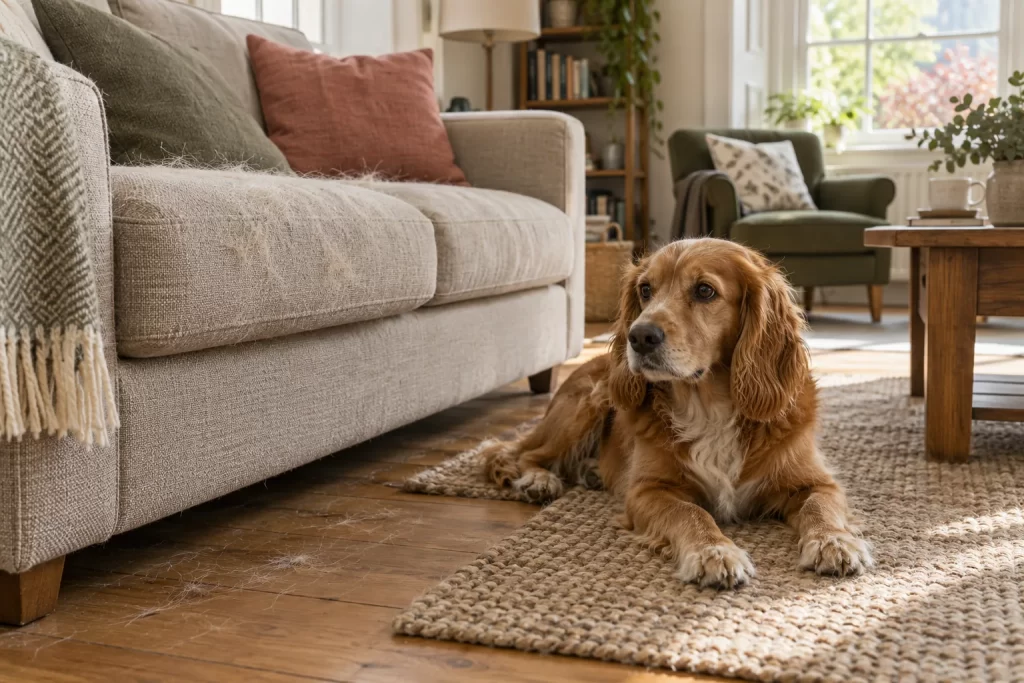
Spend a minute observing where the hair actually lands. A dog may shake after a walk in the hallway and sleep beside one chair. A cat may choose a sunny cushion and a window ledge. Hair also collects at the edges of hard floors, under furniture, around chair legs and on throws. Cleaning those places first gives a better result than passing a vacuum over every open square metre while leaving the resting spots untouched.
Make a route that fits your home: pet bed, sofa or chair, nearby floor, skirting edge and the path to the door. Add stairs or a car seat if needed. A washable sofa throw can make upkeep easier if it is safe, comfortable and kept out of walking routes.
Separate hair from odour and stains. A dry lint tool may lift fur from a cushion but cannot clean a drink spill, urine mark or persistent smell. Those problems need the fabric’s care information and a different decision. The site’s older article on dog smell in carpet tackles a separate odour question; it should not be used as a reason to apply a liquid mixture to a dry hair problem.
Choose tools that the surface can tolerate
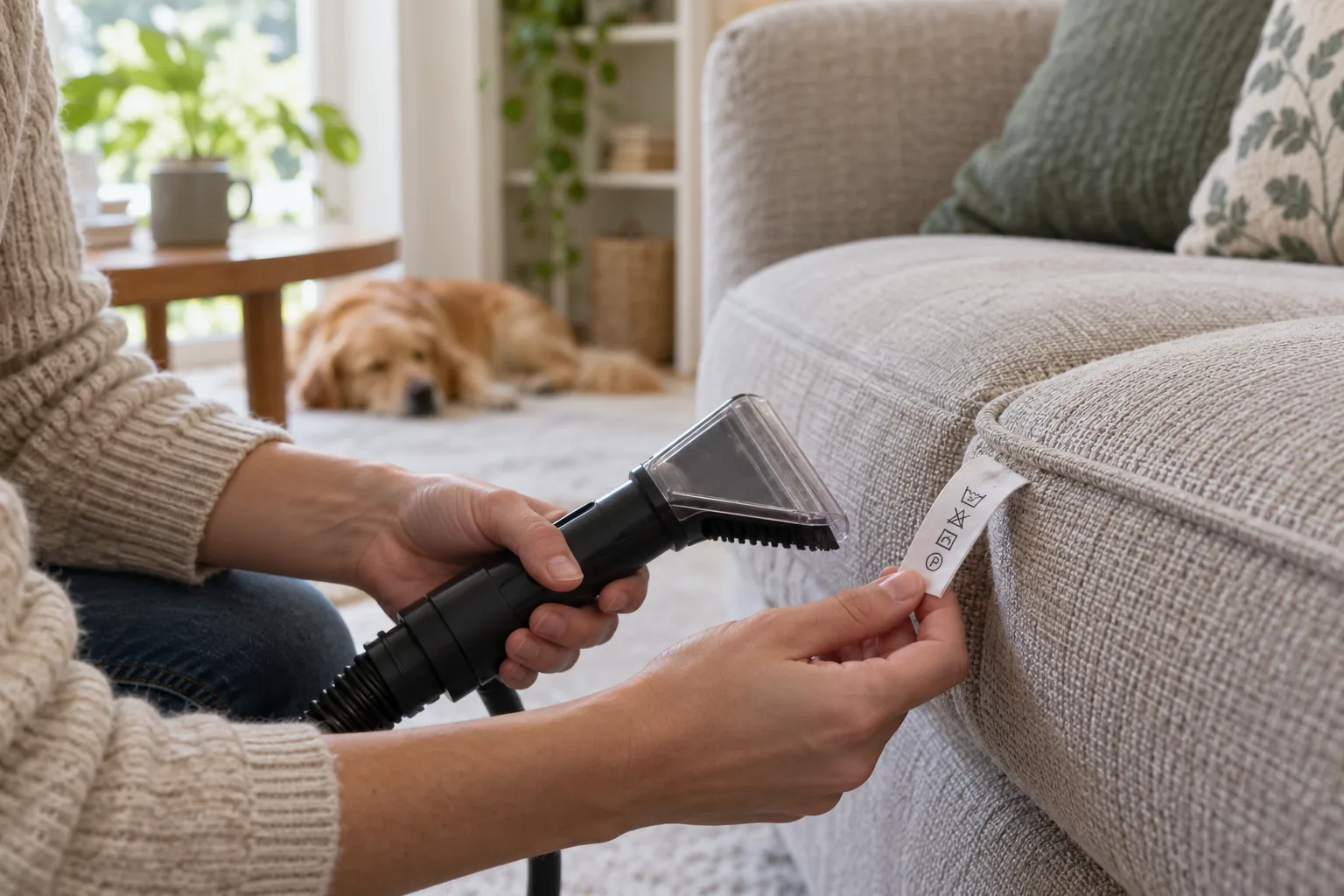
Start with the lowest-effort tool that captures hair without rubbing the finish. On a hard floor, a soft vacuum head or dry microfibre tool can collect loose hair. On a fabric cushion, a suitable upholstery attachment or reusable lint tool may be enough. Smooth finished furniture can often be wiped with a clean cloth appropriate to its finish. Check the manufacturer’s care instructions before using a powered brush on a delicate or loosely woven fabric.
The Dyson UK guide to vacuum attachments describes why different heads are designed for crevices, floors and upholstery. That does not mean every motorised brush is suitable for every sofa. The tool’s own instructions and the furniture care label come first. If suction pulls a seam or a loose thread, stop and choose a gentler approach. Do not use a stiff brush on velvet, aged fabric, leather or a surface that marks easily just because it gathers hair quickly.
Keep a clean, dedicated tool for soft furnishings; a floor attachment that has collected grit can scratch or soil a sofa. Empty the vacuum and clear wrapped hair from its brush head as the instructions require. Switch it off and unplug it before clearing an obstruction.
Lift hair from sofas and chairs in small sections
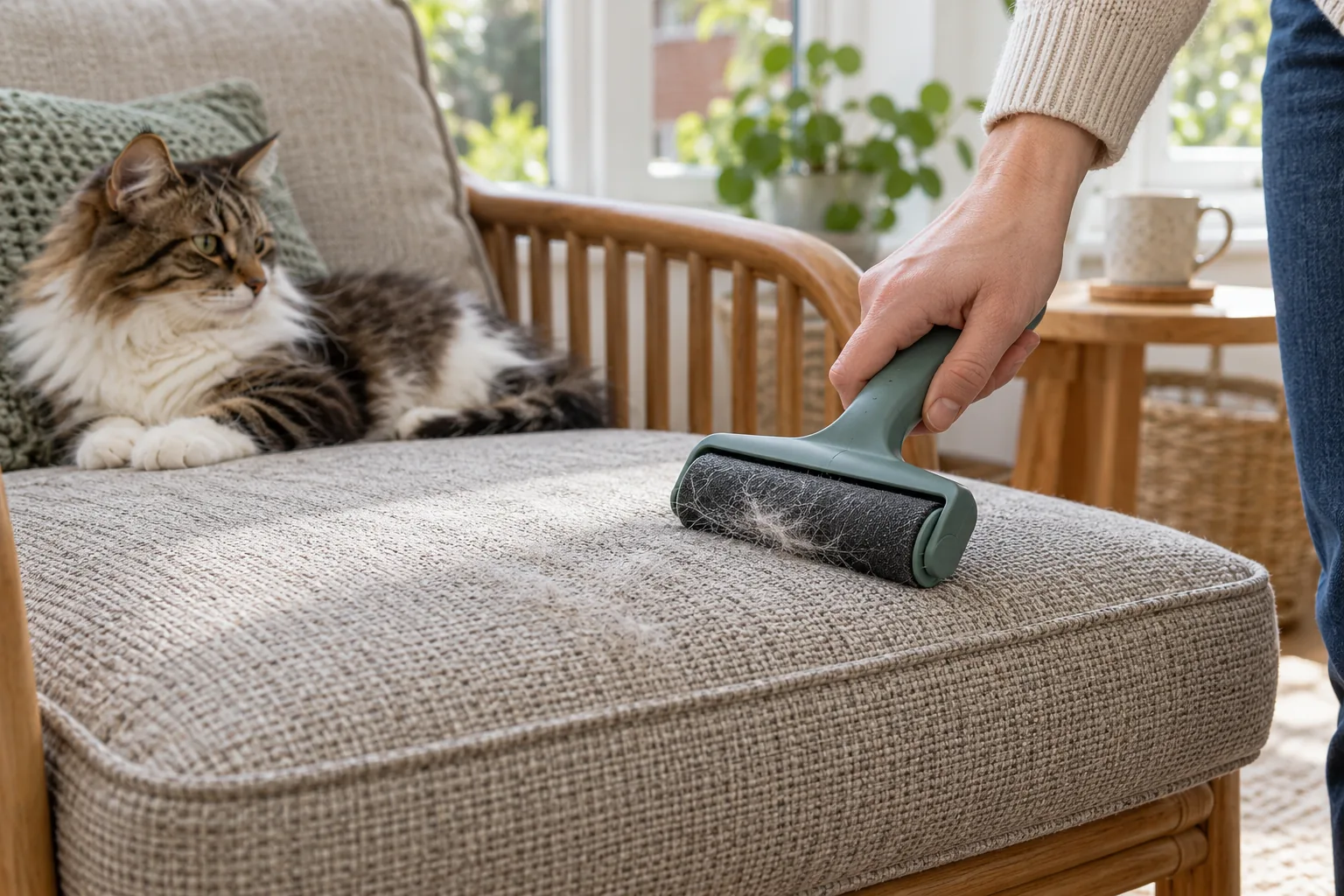
If the furniture instructions permit it, remove loose cushions. Begin with the sitting area and arms, then check seams and gaps. Use an upholstery tool with light, steady passes. Keep the hard edge of a crevice attachment away from delicate piping and loose threads.
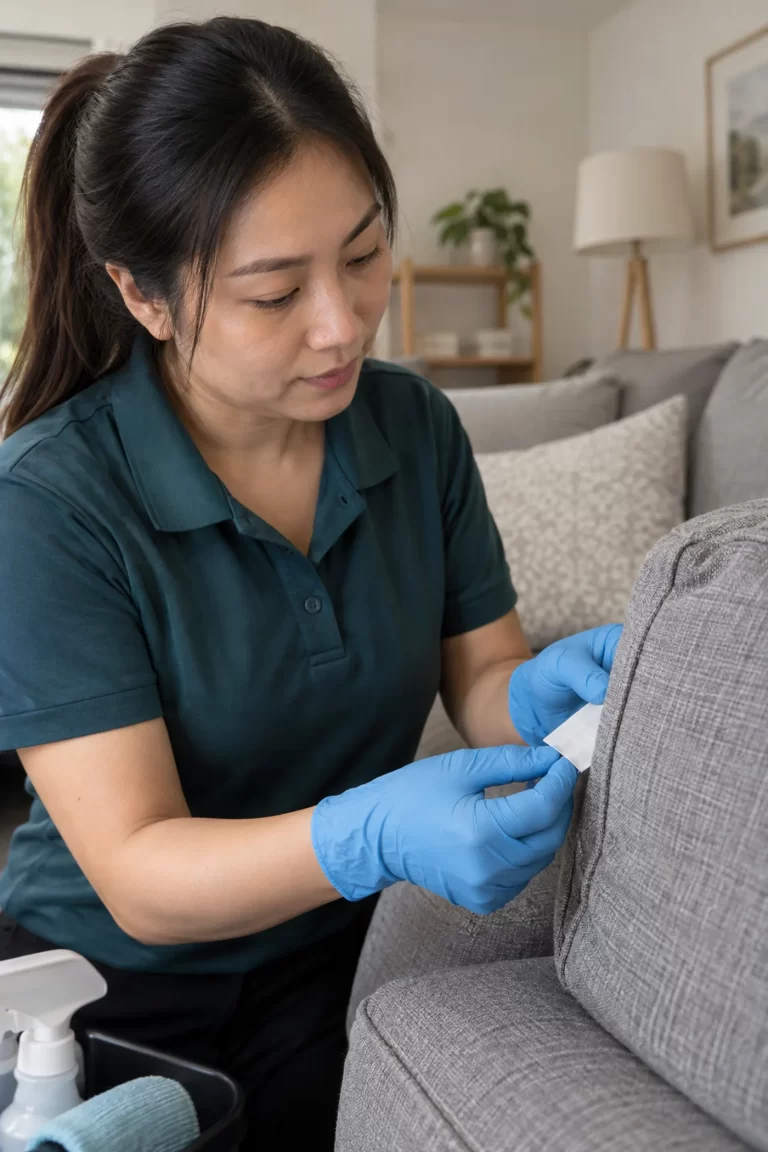
For a small patch of hair, a reusable lint tool can be more convenient than bringing out the vacuum. Test it on an inconspicuous part of the fabric first. Some adhesive rollers can catch a fragile weave or leave residue, and a rubber tool used with too much force can roughen a pile. The site’s sofa-care guide explains why the care label and fabric construction matter before a treatment is chosen. Hair removal is a dry surface task; it should not turn into an unplanned wet clean.
Removable covers are not automatically machine washable. Read the label and follow the maker’s directions. Where washing is permitted, lift loose hair before the load and clean the machine filter afterwards according to its instructions.
Collect hair from hard floors without spreading it
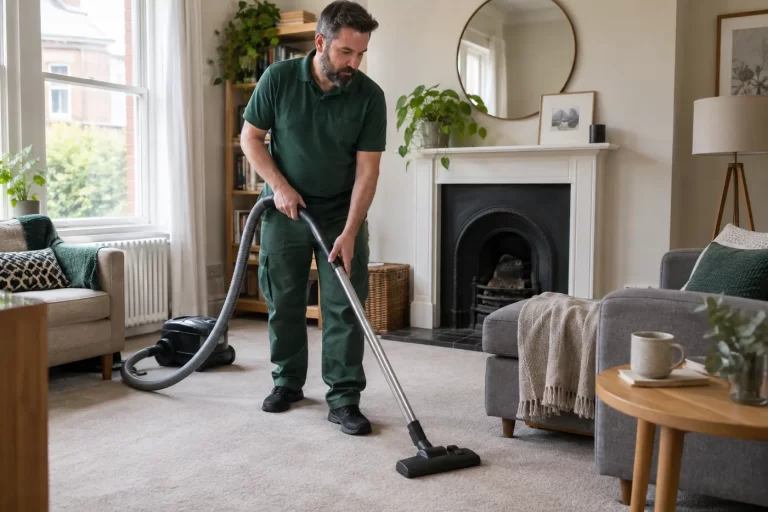
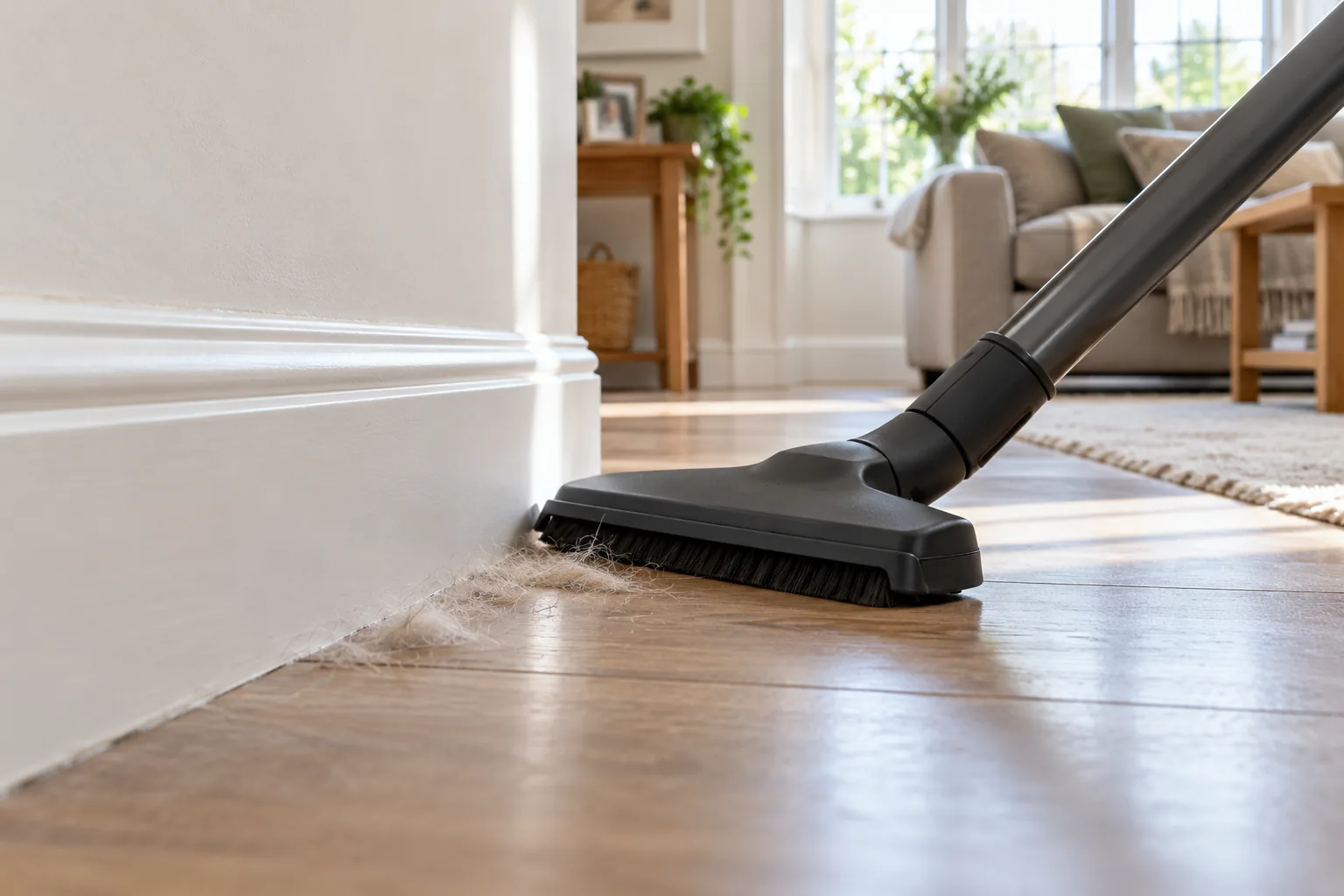
Hair can float ahead of a broom, especially across a smooth floor. Use a soft vacuum floor head or a dry tool that holds the hair, working towards the room edge and under accessible furniture. Pay attention to the skirting line, where a visible band can remain even after the middle of the room looks clean. Avoid pushing a hard nozzle over grit; remove larger debris gently before it is dragged across the finish.
Floor care varies by material. A manufacturer’s guidance may specify soft wheels, a suitable brush and limits on moisture. Quick-Step’s UK laminate instructions recommend regular dry maintenance with appropriate equipment. That example does not make all laminate identical, so use the instructions for your actual floor. Hair itself seldom requires wet mopping. If you also need to clean muddy paw marks, treat those as a separate spot-cleaning task with the right method and dry the area before the pet returns.
Do not assume that a scented spray makes a room cleaner. It may mask an odour without removing its source and can leave residue on a surface the pet touches. Keep the focus on physically collecting hair, laundering items that are designed to be washed and addressing any real spills promptly.
Make pet bedding part of the routine
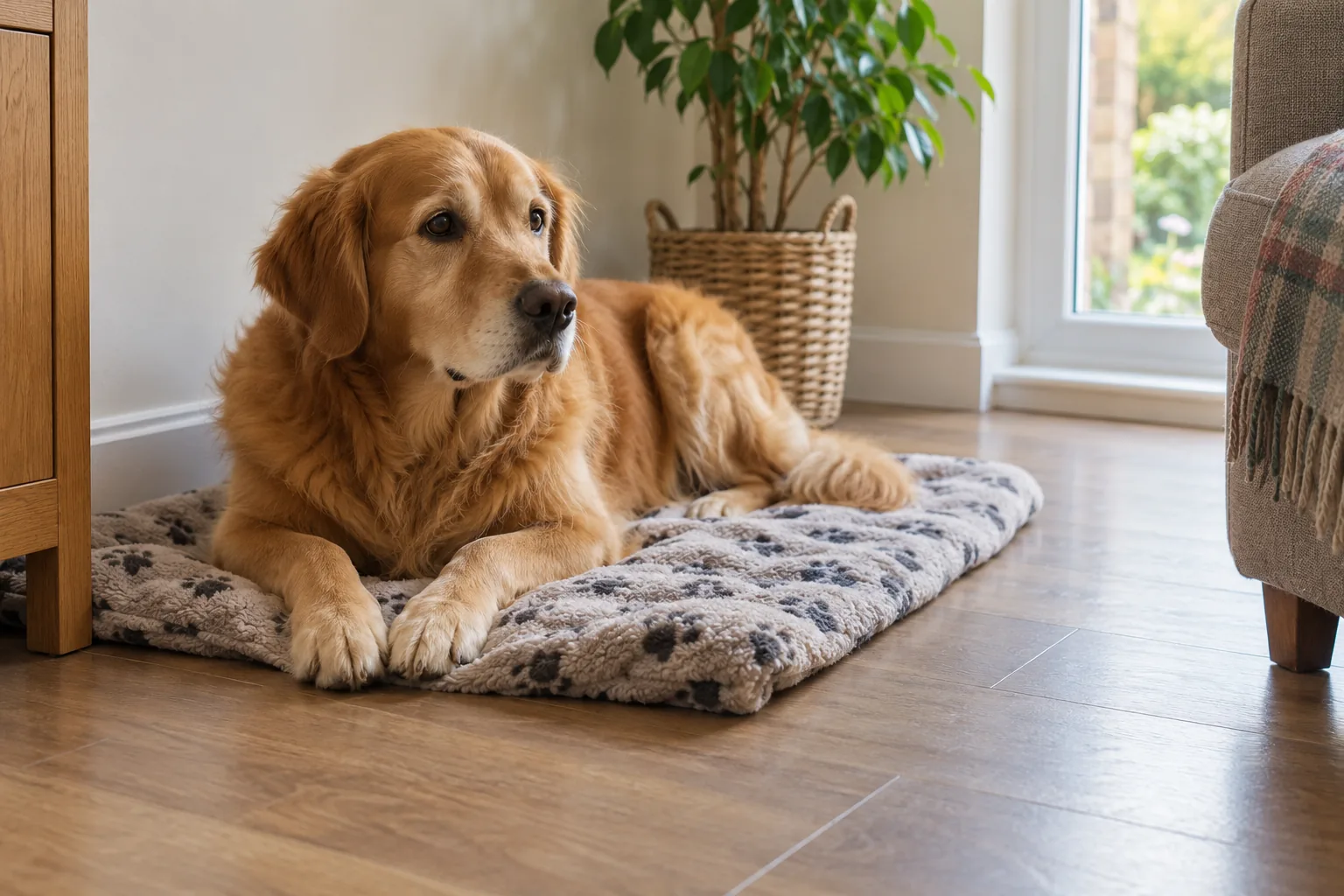
Pet beds and blankets often hold more loose hair than the floor around them. Take a removable blanket outside or to an appropriate place for a gentle shake only where this will not send debris onto neighbours or into another room. Lift hair with a suitable tool before laundering, then follow the care label for temperature, detergent and drying. Make sure bedding is completely dry before returning it. A damp cushion can be uncomfortable and may develop an odour.
Check the bed as well as its cover. A worn seam, exposed filling or damaged fastener may be unsafe for a pet that chews or paws at it. Repair or replace the bed. A second washable cover can maintain a familiar resting place while one is in the wash.
Grooming can reduce the amount of loose hair available to shed, but it should be comfortable and suitable for the animal. The RSPCA advises regular cat grooming with short, positive sessions and attention to changes in coat condition. For dogs, coat needs vary; ask a vet or qualified groomer if you are unsure which brush is appropriate. Do not turn household cleaning into forced grooming or use a furniture tool directly on an animal.
Keep cleaning safe for the animal
Settle the pet somewhere comfortable if the vacuum worries them. Check where the animal is before moving furniture or starting a motorised tool. Keep the cord out of its path.
Store cleaners securely and follow product labels for ventilation, rinsing and drying. The RSPCA warns that common household cleaners can harm pets if they are ingested or contact the skin, and recommends keeping animals away from newly cleaned surfaces until they are dry and aired. A product described as “natural” is not automatically safe for pets; do not put essential oils or improvised mixtures on their bedding. For dry hair collection, no chemical is needed.
If you find fleas, persistent scratching, unexplained hair loss or a change in grooming behaviour, contact a vet. Vacuuming and washing bedding may be part of a plan, but they do not diagnose or treat an animal’s health problem. Similarly, if someone in the home has an allergy, follow their healthcare advice rather than assuming that removing visible hair removes all allergens.
Keep the daily reset small
On an ordinary day, a few minutes around the pet’s favourite places may be enough: lift hair from the resting cushion, collect it from the adjacent floor and check the entry path. Give the more thorough sofa and under-furniture pass a separate place in the week’s routine. The existing weekly cleaning plan for busy households can help keep that larger job from displacing essential daily tasks.
If hair has built up across several rooms, explain the animals, floor types and upholstery when arranging regular domestic cleaning. A sofa with ingrained soil or a separate stain may warrant a discussion about upholstery cleaning, with its material and care label identified first. Do not assume that a specialist fabric service is needed for loose hair alone or that every mark can be removed.
A workable pet-hair routine is one the household can repeat without frustrating the animal or damaging the furniture. Capture loose hair where it accumulates, keep tools matched to each surface, and reserve wet cleaning for a genuine spill or soil problem. That leaves more time for living with the pet and less time chasing the same fur from room to room.