Star Domestic Cleaners
Menu
LOOSE RUGS · KENTISH TOWN

Rug Cleaning Kentish Town

The front and back of a rug can tell different stories. Describe what is visible on both sides where safely accessible. We can discuss suitable work, handling and a quotation for your Kentish Town enquiry.

  • Two sides described
  • Separate layers identified
  • Included border work checked

Describe more than the visible pile.

Give dimensions, shape and care information, together with an overall photograph. Include an accessible corner or label if possible. A rug may have a woven base, attached coating or a separate mat underneath, and these should not be assumed to share the care requirements of its face. If the underside cannot be reached safely, explain that restriction instead of guessing.

The fitted flooring service addresses another surface. A loose piece over a carpet needs its own description and quotation discussion, even if both appear to be made from similar fibres.

A person lifting a rug corner to look at its backing

A separate mat is another item.

Mention underlay, an anti-slip layer and the floor type. If a spill reached below the pile, say what is known about the affected surfaces. Ask which can be included rather than treating them as one rug. Cleaning does not rebuild a separating base or repair the supporting floor.

Describe brittle coating, stiff areas or loosened layers and show accessible damage. Avoid peeling the backing or turning a heavy item for a photograph. Furniture restriction is useful handling information and should be discussed before movement.

Consider the construction around each fibre.

Cotton flatweaves

A thin weave can contain mixed threads or attached trims. Share washing guidance and colour restrictions rather than assuming it is machine washable. Silk, antique or valuable pieces need suitability discussed separately; an ordinary cleaning enquiry is not a restoration promise.
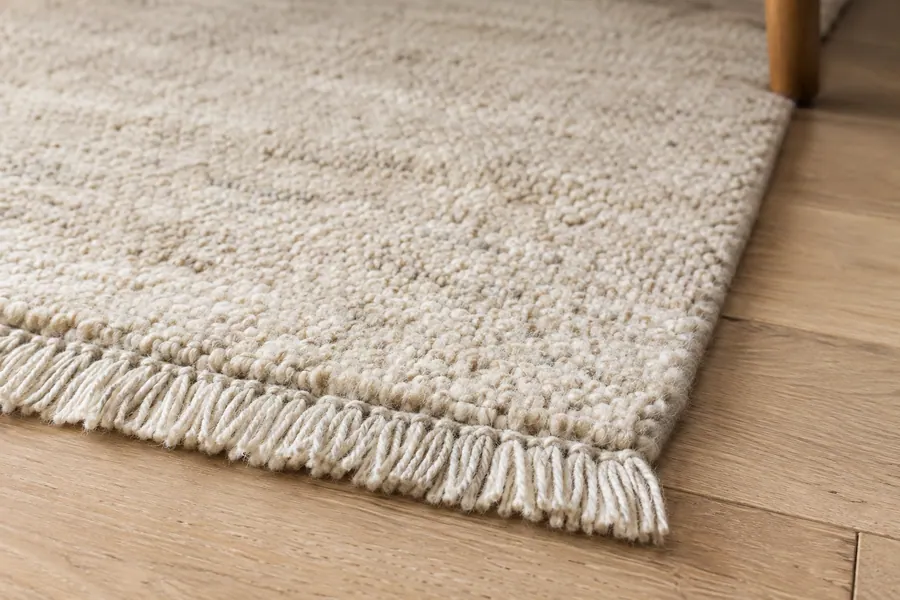
Wool rug fibres and short plain fringe at an edge

Wool

Give the label and any blend details. Wool can be used with different dyes and backing constructions. Explain previous cleaning and texture changes. A familiar fibre name cannot determine suitable care for every layer or border.

Synthetic fibres

State the material where known, including any finish guidance. A synthetic face can have a different base or trim. A hard-wearing look does not establish that every chemical or process is suitable, particularly where coating has deteriorated.

Border material may differ from the main weave.

Show tassels, binding and seams alongside the whole item. Identify dirt separately from fraying or missing threads, and mention previous repairs. Ask what suitable edge cleaning is included. Avoid cutting loose fibres to tidy it first; replacement and stitching are different work from addressing soil.

Describe changes on the face and around the edge.

Explain fading, dye transfer and pale patches after a product or spill. Show the neighbouring colours and say when changes appeared. Ask how sensitivity affects proposed work. Do not expect cleaning to restore missing dye, and avoid home wet tests which can alter another section without proving suitability for the complete piece.

Mark history helps identify the scope.

Give the likely cause and age of drinks, food or greasy spills, with details of previous products and rubbing. Some stains may remain after appropriate care. Burns, worn pile and colour loss are separate condition concerns rather than guaranteed removable marks.

Pet incidents can reach hidden layers, so describe repetition and underside involvement. A rug-only treatment cannot promise every smell will disappear. For affected seating, fabric furniture care needs its own enquiry rather than being silently included.

Ask what is suitable for all the relevant parts.

The proposed treatment should relate to fibres, colours, base and present condition. Extraction and dry cleaning are carpet and upholstery categories; neither is established for every loose rug by that listing. Ask what can reasonably be attempted and how unknown or weakened areas affect suitability.

Confirm where the piece would be treated and the handling plan. Discuss any collection and return for the item and address, checking inclusion in the quote. Do not assume automatic home treatment, a workshop arrangement or a fixed return interval.

Cleaner checking a small mark on a loose rug with a cloth

Readiness concerns the full thickness.

Ask when the rug can be used, covered or returned to its floor after the agreed work. Thickness, backing, fibres and conditions affect the guidance. A dry-looking face does not necessarily establish that every layer is ready. Avoid rolling or storing the item while further drying is needed, especially before returning it to a sensitive surface.

Make the request clear without lifting heavy items.

Clear accessible belongings and retain labels, photographs and measurements. Describe furniture standing on the rug and ask about movement before rolling it. General room tasks belong in a separate discussion, such as a regular household clean, rather than within the rug quote automatically.

Quote the item and requested parts of the work.

Rates vary with rug type and condition. Provide dimensions, material information and photographs of the areas wanted, including edge concerns. Confirm the total, handling and any applicable extra charges. Carpet-room and sofa figures are not a tariff for a loose rug or its separate underlay.

Check Kentish Town access and availability.

Give the postcode, preferred date and entry arrangements. Explain restricted access where it affects handling, and confirm practical details for the booking. Nearby pages help with other addresses but do not establish a booked visit or collection route.

Rug care questions for Kentish Town

Does the rug face identify its backing?

No. Describe an accessible underside or label, and identify any separate mat rather than assuming all layers share one material.

Can I book work for the underlay too?

Explain it as a separate surface and ask which suitable work can be included. Do not assume it is in a rug quotation.

What if only the underside smells?

Say where the smell seems to come from and describe previous incidents. Treatment of the visible pile is not a guarantee for every affected layer.

Should I turn the entire rug over?

Only provide safely accessible information. Leave heavy or awkward pieces in place and discuss handling before movement.

Can a border need different care from the pile?

Its fibre, colour and condition can differ. Photograph it and ask what suitable work is included.

Is a dry face enough for storage?

Ask about readiness of the whole item after treatment. Avoid rolling or storing it while further drying is required.

Describe both sides where accessible.

Call with your Kentish Town postcode and rug photographs. Discuss suitable work for the item and the complete arrangements.

Generated photographs illustrate rug materials and handling. They are not photographs of actual staff or customer projects.