
Sofa Cleaning Barking
A mark on the cover and a smell from the filling are different concerns. Describe your Barking sofa, where the incident happened and any treatment already used before asking about a clean.
- Pet incident details discussed
- Cover and filling limits explained
- Sofa-only costs made clear
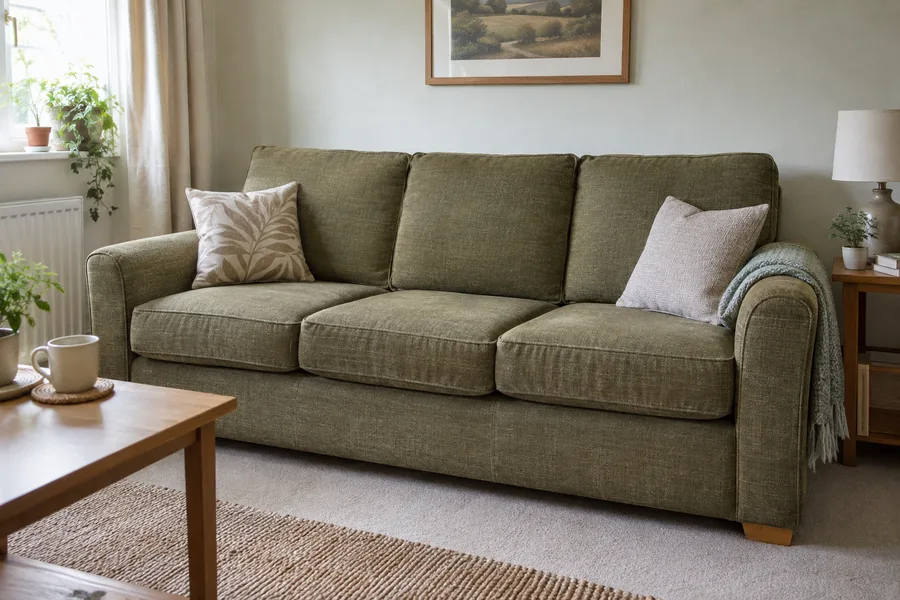
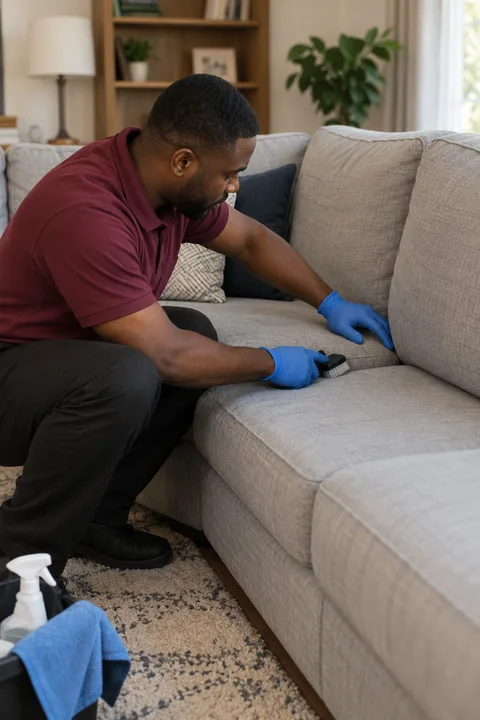
Identify where the problem starts.
Say which cushion or fixed seat is affected and whether the incident was recent or has happened several times. A smell noticed underneath deserves a different explanation from a surface paw mark. Do not assume deodorising means every internal layer will be treated. Describe the location and history so the enquiry starts with the actual problem.
Keep a photo showing the whole sofa as well as the affected seat. It helps to explain its configuration and the surfaces involved. For matching upholstered chairs with separate marks, consult the broader furniture cleaning service. A sofa enquiry should not silently include all soft furniture in the room.
Find care information for the actual cover.
Look for manufacturer instructions beneath an accessible cushion or in the purchase paperwork. Fabric described simply as “soft” or “velvet” is not enough to determine treatment. Different fibres, backing and construction can limit what is suitable. Explain any re-covering or protective coating, with photographs of the label if available.
If there is no label, make that clear at the outset. Tell us how it was cleaned before and ask which method suits the fabric now. Flag fading, weak stitching and areas where texture has changed. Those details prevent a stain enquiry from being confused with restoration of the original colour or surface.

Tell us what went onto the fabric.
Pet sprays, household disinfectants, soaps and rented machines can all be relevant history. Name a product if you still have the container, and mention repeated wetting. Do not add a fresh treatment shortly before the appointment merely to improve the smell. A factual account is more useful than guessing whether the previous product was strong enough.
Distinguish discolouration caused by a product from a remaining stain. Cleaning will not reverse every colour change. If there is a torn seam or foam visible through the cover, raise that too. Fabric care does not repair damage or guarantee treatment throughout the filling.
Describe loose seats and fixed sections separately.
Give the number of removable seat cushions, back cushions and scatter cushions. Mention different textiles on their reverse faces. Ask exactly which sides are included, rather than assuming every loose piece is priced the same. Leave covers in place until the care guidance and agreed plan make removal appropriate.
A corner sofa may have a fixed chaise alongside loose cushions. Describe that arrangement and any heavily used pet sleeping spot. Do not dismantle the base to reach underneath without suitable advice. General room cleaning can be discussed through one-off household cleaning, separate from treating the sofa fabric.
Ask what can reasonably be treated.

Hot water extraction and dry cleaning for delicate fabrics are listed for sofa items. Discuss the appropriate method using the material and condition. A pet-related concern does not justify applying the same wet process to every cover. Ask whether the proposed work addresses the fabric surface, any separate cushions and the particular marks you described.
Professional cleaning products and equipment are used. Stain treatment and deodorising can be discussed, but some marks or smells may remain. Where protection is offered, confirm suitability and the price. Protection does not prevent every future pet mark.
Plan for the treated pieces to stay unused.
Keep alternative seating available. Working duration and drying are separate; the service’s general one-to-two-hour work guide changes with the sofa size and condition. Drying depends on the selected method, fabric, filling and room. Ask when each treated piece can be used and how to arrange cushions during that period.
Follow the aftercare about ventilation, returning throws and replacing cushions. Keep pets away from a treated surface until the advice for it permits use. If a pet mark on the carpet is also involved, explain that separately so the floor and sofa have their own treatment and aftercare discussion.

Get a quote for the sofa, not a promised outcome.
Specify the size, seat layout and loose pieces, plus the incident history. Two-seat and three-seat starting prices below help you compare published options, but they do not set a price for every corner sofa or cushion interior. Ask for a total for the agreed work and any applicable extras.
| Sofa | Hot water extraction | Dry / delicates |
|---|---|---|
| Two-seater | £36 | £42 |
| Three-seater | £102 | £114 |
Starting figures depend on size, condition, area and availability. Applicable congestion charges are extra. Ask for the total for your sofa and the method suitable for its fabric.
Booking details for Barking.
Give the full postcode, access route and preferred dates. Availability needs checking for the address and job. Explain who will provide entry and whether the sofa can be reached without moving heavy furniture. Remove personal objects and small clutter before the visit, with larger movement requests discussed in advance.
Questions about pet incident history
Does deodorising guarantee that a pet smell disappears?
It does not. A smell may involve material beneath the cover, so describe where it seems strongest and ask what work can realistically address it.
Should I apply another pet spray before the visit?
Avoid adding treatments just before the appointment. Share the products already used and ask for preparation advice for the agreed work.
Is an old accident different from a recent one?
Its age and any repeated incidents are useful information. Some marks may remain, including recent ones. Describe the fabric and what happened so realistic treatment can be discussed.
Can the pet’s favourite cushion be quoted on its own?
Identify that cushion and its material, then ask about the requested scope and total. Do not assume a per-cushion figure from the sofa table.
Will fabric cleaning repair damaged seams?
Cleaning does not mend seams. Point out weak or split stitching before treatment is discussed.
Can I include a marked carpet?
Mention the carpet and sofa as separate items. Ask which methods and appointment arrangements are appropriate for both.
Talk through the pet incident history.
Call with the sofa size, affected pieces and pet incident history in Barking. Discuss realistic treatment, the total quote and a suitable date.
Generated photographs illustrate sofas and cleaning situations. They are not actual staff or customer-job photographs.