
Sofa Cleaning Cricklewood
A dark seat edge can contain soil and show wear at the same time. Explain your Cricklewood sofa’s condition and specific marks so the cleaning request stays useful and the expected result is realistic.
- Seat-edge condition discussed
- Wear separated from stain work
- Actual cushion scope confirmed

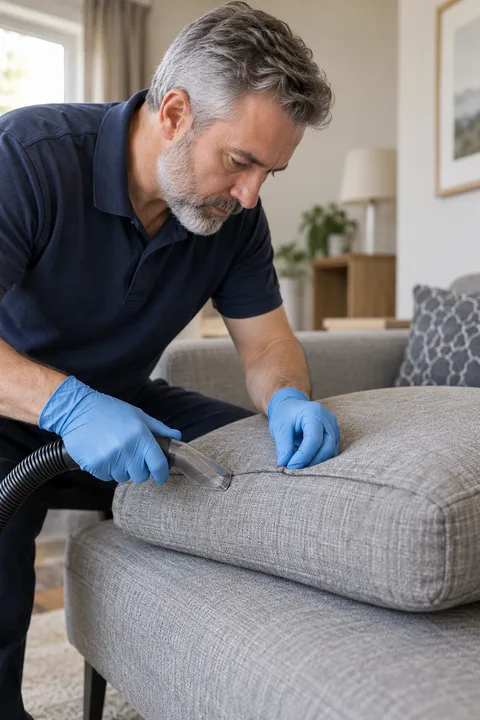
Describe the edge people use most.
Look at the front edge of a seat, arm and back where the fabric is touched regularly. Explain dark patches, rough texture or visibly thinner areas without assuming they are all removable dirt. A cleaner can discuss soil treatment, but a clean cannot replace missing fibre. Give photographs showing the affected area and its relationship to the whole sofa.
Say how long the change has been noticeable and if a particular spill was involved. Earlier home cleaning may also have altered the texture or colour. Keep those facts separate from a general wish for the sofa to look new. The useful enquiry is about the fabric in its current condition, with limitations acknowledged.
Make the seating construction part of the description.
State the seat size, dimensions and any corner or chaise sections. Explain whether seats and backs are fixed or loose. Count decorative cushions separately and ask which faces or edges are included. A whole-sofa photograph helps describe the arrangement, but it does not replace an item list where other furniture is visible.
For an armchair or stool beside the sofa, see care for other upholstered pieces. Name those as separate items. A badly compressed cushion needs more than fabric cleaning, and worn zips or seams should be raised before treatment rather than assumed to be repairs within the booking.
Find the care guidance for the worn cover.
Use manufacturer instructions or purchase information where available. Woven, velvet-looking and smooth fabrics do not all have the same limits. Explain replacement panels, contrast backs and protective products. If the label is missing, give the information you have instead of identifying fibres from appearance alone. Current damage should also be made clear.
Do not remove zipped covers or machine wash them on the assumption that an older sofa needs less careful handling. Check care instructions even when the cover can be taken off. Mention any earlier treatment and whether colour or texture changed afterwards. Fabric guidance and condition should be considered together when discussing the method.

Discuss suitable care without a restoration promise.
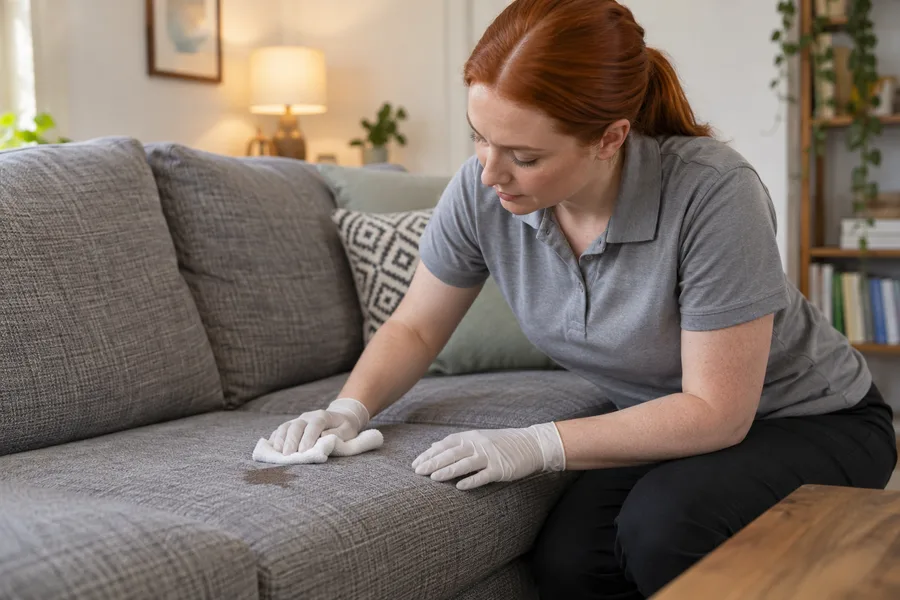
Hot water extraction and dry cleaning for delicate materials are available sofa options. Ask which suits the actual cover, instructions and condition. A worn area is not a reason to select one process automatically. Confirm the surfaces, cushions and mark work included in the quote. Professional products and equipment are used.
Share the earlier spot treatments or protective coating. If protection is proposed, ask about suitability and whether it is included or extra. It does not repair worn fabric or prevent every future mark. Ask about cleaning the remaining soil without expecting a guaranteed new finish.
Explain spills and pet-related concerns separately.
A drink stain on a worn arm deserves its own history: cause, approximate age and products used. Food marks, pet incidents and an unknown dark patch need not have identical explanations. Avoid adding another cleaning product just before the appointment. A clear history is more useful than repeated rubbing that changes the surface further.
A smell from below a cushion can involve more than the cover. Not every stain or odour can be removed, and treatment of visible fabric is not a promise about every internal layer. If dust and household surfaces also need attention, compare regular cleaning for the home as separate work.
Use the aftercare for the treated surfaces.
The general working guide of one to two hours depends on size and condition. Drying is separate and affected by method, textile, filling and the room. Ask when the sofa can be used, covered or have cushions returned. Keep alternative seating rather than treating the end of the appointment as proof that every surface is ready.
Follow the guidance on suitable ventilation and cushion placement. Do not rely on the sofa’s age or a thin-looking patch to guess a drying interval. If the surrounding carpet is also treated, discuss working access and keep its aftercare separate from that of the sofa.
Quote the cleaning scope for the actual condition.
Published two- and three-seat figures below are starting comparisons. Describe dimensions, material, layout and requested loose pieces, then ask for the complete amount. The table is not a furniture repair tariff or universal corner-sofa rate. Clarify applicable extras and optional work rather than inferring the total from the seat count alone.
| Sofa | Hot water extraction | Dry / delicates |
|---|---|---|
| Two-seater | £36 | £42 |
| Three-seater | £102 | £114 |
Starting figures depend on size, condition, area and availability. Applicable congestion charges are extra. Ask for the total for your sofa and the method suitable for its fabric.
Arrange access at the Cricklewood address.
Use the postcode and preferred dates for an availability check. Explain the route to the room, who receives the cleaner and any obstacles around the seating. Remove small belongings, with larger movement discussed before the appointment. Give the care and condition information to the receiving person so the worn areas remain clearly identified.
Questions about seat-edge condition
Can cleaning replace fibre worn off a seat edge?
No. Fabric care can address soil, but missing or worn fibre needs to be kept separate from the expected cleaning result.
Is a dark arm always a stain?
It may include soil, wear or colour change. Describe the appearance and history instead of assuming one explanation.
Should an old cover be washed before the appointment?
Follow its actual care guidance and the agreed preparation. Age and a removable zip do not automatically permit machine washing.
Can protection fix existing wear?
A protective treatment is not a fabric repair. Discuss suitability and cost without expecting it to rebuild the surface.
Will crushed padding improve with a fabric clean?
Cleaning does not rebuild the filling. Mention the condition separately so it is not confused with a surface-soiling request.
Can I ask about marks and wear in one enquiry?
Yes, identify both clearly. That helps discuss useful cleaning work while keeping damage and unrealistic restoration expectations separate.
Talk through the seat-edge condition.
Explain the Cricklewood sofa’s used edges, fabric and spill history. Ask what can be cleaned sensibly and what the complete work costs.
Generated photographs illustrate sofas and cleaning situations. They are not actual staff or customer-job photographs.