

Upholstery Cleaning Worcester Park
Matching furniture does not always wear evenly. The favourite armchair may have darker arms while the sofa has one food mark on a cushion. Describe the pieces separately and we can discuss the treatment each one needs.
- Individual chairs and suites quoted
- Contact marks and spills discussed
- Return to use explained for the fabric
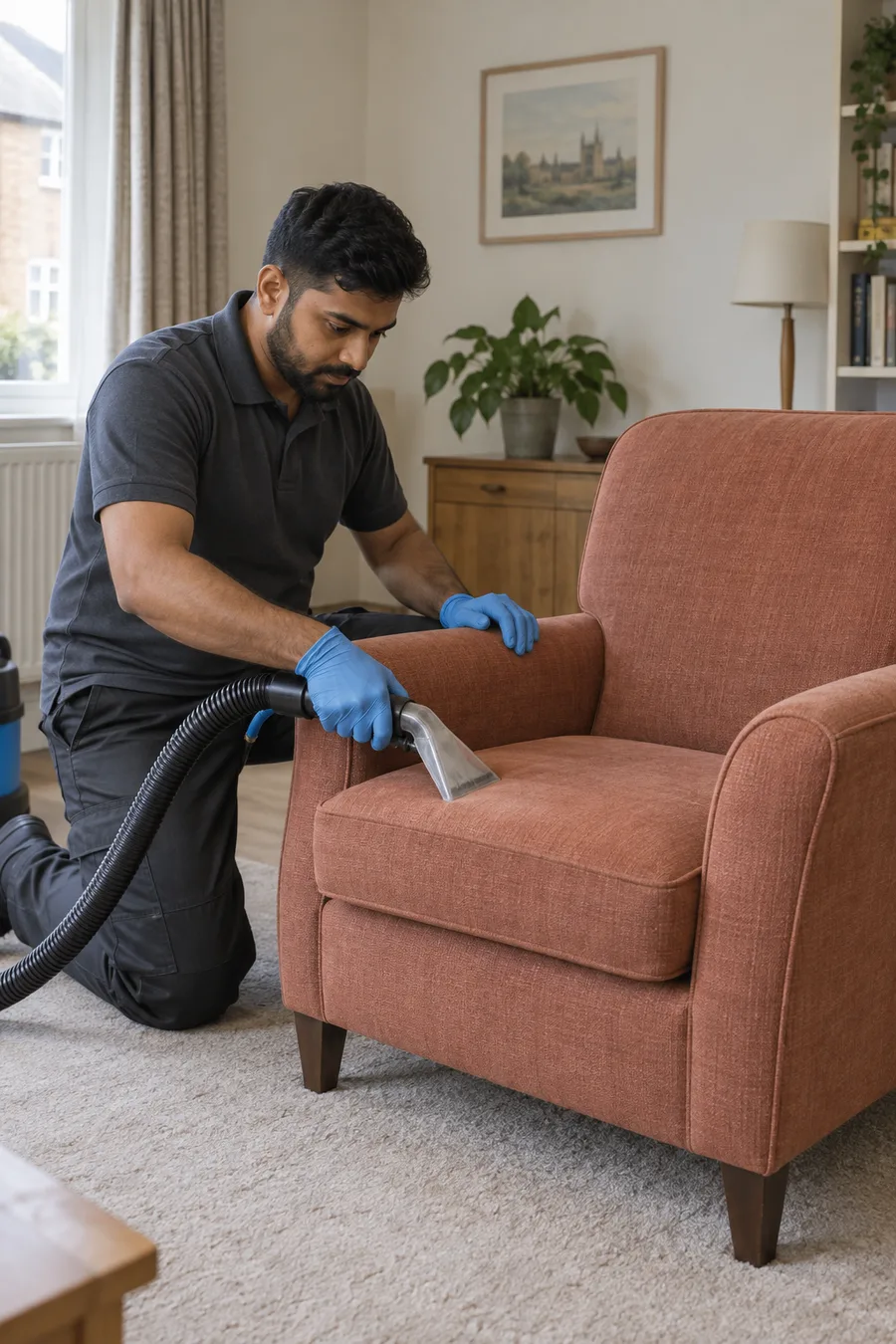
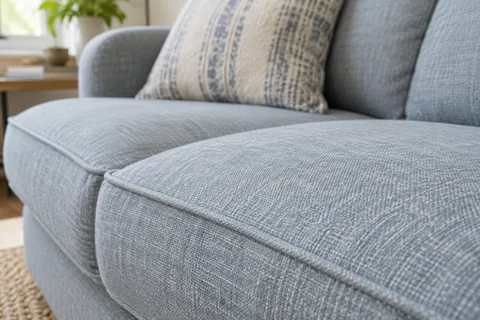
Start with the chair used most.
Look at the armchair beside the sofa rather than treating the whole suite as a single cleaning request. Hand contact on the arms, a head resting against the back and everyday use of the same seat can create a different pattern of soiling. Explain what you have noticed and whether you want the chair alone or all the pieces assessed.
Arms, headrests and the seat front.
Photograph the chair in normal light and add closer views of darker areas. Soiling, flattened pile and wear can look alike. Show the boundary of the affected patch; cleaning cannot replace worn fibres.
Mention recliners, footrests and any fabric hidden when the chair is upright. Do not assume a movable mechanism means every panel is accessible or included. Explain which positions you normally use and leave unfamiliar fittings alone until the visit arrangements are clear.
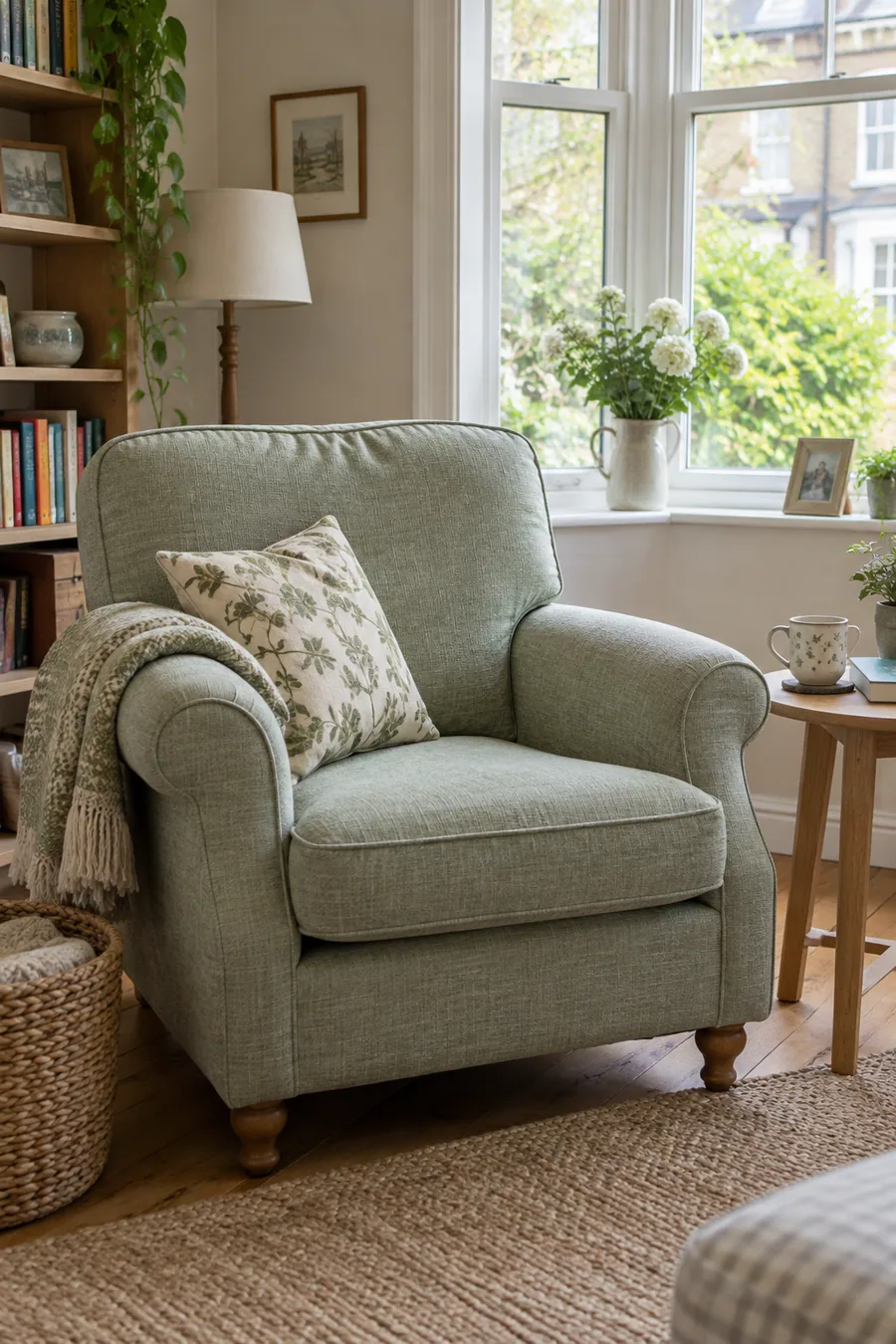
Tell us about the spill and the response.
A food mark needs a different history from gradual darkening on an arm. Name what was spilled, how long it has been there and whether you blotted, scrubbed or sprayed it. If the original packaging or product name is available, keep that information. Avoid another round of household treatment just to make the photo look better.
For pet-related odours, say if a chair was affected once or repeatedly and if liquid reached beyond the cover. The smell and visible mark may have different causes. We can discuss treatment, but some staining or odour may remain, particularly when the filling is affected. Fading and damaged fibres cannot be repaired by cleaning.
Check the information on each piece.
A replacement chair can look similar to the original sofa while using a different cover. Find labels or purchase records for each piece when possible. Mention trims, contrasting panels and a cushion reverse made from another material. Instructions restricting moisture or particular products help determine whether a proposed treatment is appropriate.
An unlabelled cover needs that uncertainty stated. Include any repaired patch, loose seam or damaged fabric in the photographs.

Extraction or dry cleaning is a decision to discuss.
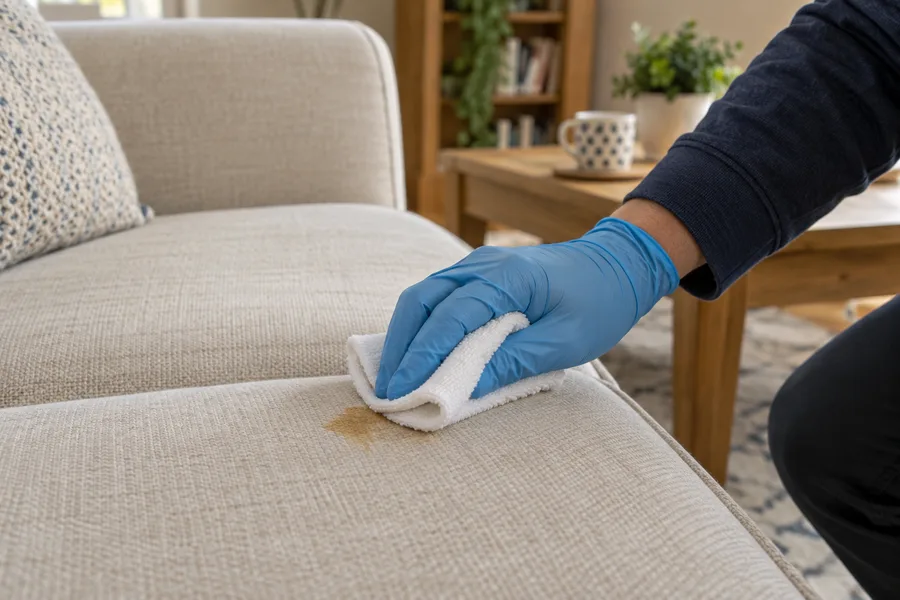
Hot water extraction is offered for suitable upholstery, and dry cleaning for delicates is another published option. The right choice depends on the actual cover and its condition. Ask which option is proposed for the chair and whether the sofa requires the same approach; membership of a suite does not settle that question.
Agree the treatment area and exclusions in the quotation. Cleaning fabric cannot repair padding, recolour a faded panel or service a recliner.
Describe loose cushions without stripping them.
List seat and back cushions and note whether they are fixed or loose. For reversible cushions, explain if both faces are affected and whether the undersides match the tops. Leave covers fitted unless you receive other preparation advice. Machine washing a zipped cover is not automatically suitable, and a clean cover alone does not resolve every problem in the filling.
Keep a usable chair aside.
If the most-used chair is being treated, arrange somewhere else to sit while following the cleaner’s aftercare. The duration of treatment does not tell you when the cover and cushion are ready for normal use. Drying varies with the method, material and room conditions, so ask about your particular pieces.
Follow advice about ventilation and loose cushion positioning. Check before putting a throw or fitted cover back on. For any optional fabric protection, confirm suitability, inclusion and price; neither its name nor cleaning itself guarantees that a future spill will leave no trace.
Separate the chair price from the sofa price.
Published starting figures for hot water extraction are £15 for an armchair, £36 for a two-seat sofa and £102 for a three-seat sofa. Dry cleaning starting figures for those pieces are £19, £42 and £114. Quote the actual seating layout and dimensions if the furniture does not fit those descriptions.
Use the item price guide to prepare the enquiry and confirm a complete quotation, including requested cushions and additional pieces. Area, material, size and condition can affect cost. Congestion charges apply separately where applicable, and available times need confirming before booking.
Clear belongings, not the construction.
Remove personal items, loose blankets and objects around the seating. Give details of stairs, lifts, entrance restrictions and parking at the Worcester Park address. Help with lightweight furniture is available; moving heavy seating needs discussing in advance. Do not take apart a chair or remove fixed panels on the assumption that cleaning requires it.
Include the rest of the room only if needed.
For a mark that extends onto flooring, describe the carpet treatment required as well as the seat. A furnished property handover may also need a tenancy clean, with furniture work agreed separately. If dust and residue from renovations are the wider issue, explain that in an after builders cleaning enquiry rather than assuming upholstery cleaning covers every room surface.
Give the address and the pieces together.
Send your postcode, preferred dates and photographs, explaining how the room is reached. We will discuss the quotation and appointment options. For furniture elsewhere, give its actual location.
Questions when one piece needs more attention
Can I ask for the armchair without the matching sofa?
Describe the chair on its own and request the complete quotation for that work. A matching sofa does not have to be treated simply because it belongs to the same suite.
Why does the arm look darker in one direction?
The way fabric lies or reflects light can change its appearance, as can wear and soiling. Send views from more than one angle; cleaning cannot promise to correct every colour difference.
Should I open the recliner for the photographs?
Show the positions you use normally if it is safe to do so. Avoid forcing the mechanism or opening fixed panels. Mention which fabric surfaces need attention in each position.
Do both pieces need the same cleaning method?
Not necessarily. Different labels, replacement covers or contrasting panels can alter suitability. Supply the care information for the chair and sofa separately even if they look alike.
Is treatment time the same as drying time?
No. Time spent cleaning a piece does not establish when it can be sat on again. Ask for return-to-use advice based on its cover, treatment and the conditions in the room.
Will cleaning remove a worn patch on the headrest?
Point out the patch before arranging the work. Removable contact soiling may be treated, but damaged fibres, fading and wear are material changes rather than dirt that can simply be washed away.
Which piece needs the most attention?
Tell us about the chair, sofa or suite, the areas affected and any care restrictions. Add the Worcester Park address and we will discuss the work and quotation.
Illustrative generated photographs show furniture and cleaning situations, rather than actual staff or local customer jobs.