

Upholstery Cleaning Willesden
An older chair can have both removable soiling and areas where the cover has worn. Show the difference you are concerned about, with any care information you have. We will discuss suitable cleaning and the changes it may not resolve.
- Wear distinguished from cleaning concerns
- Sofa and chair condition discussed
- Method and aftercare agreed for the cover
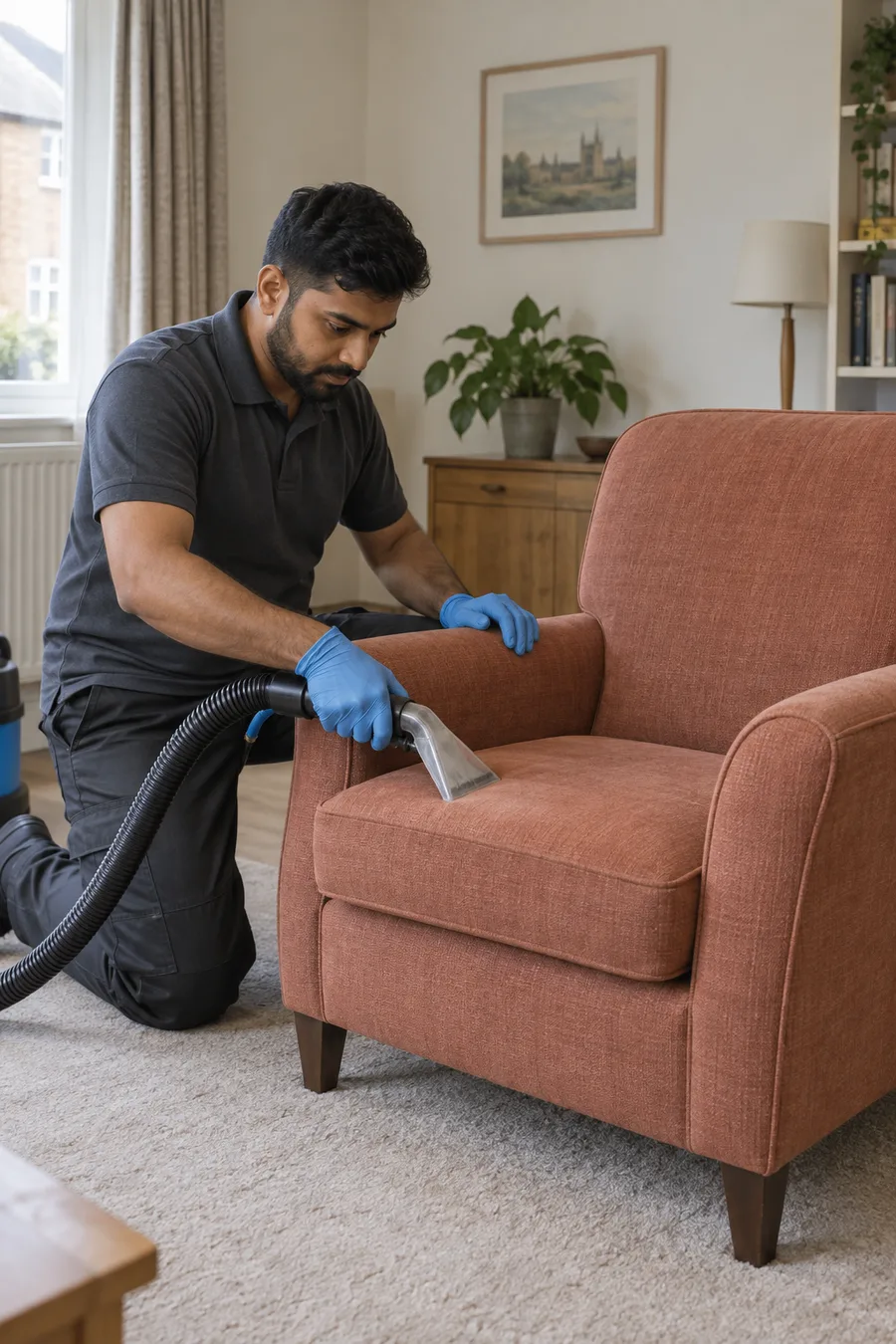

Is the concern a mark, texture or colour?
Explain what has changed on the furniture rather than calling every uneven area dirty. A spill has an incident behind it; a headrest gradually becoming pale has a different history. Include photographs from ordinary viewing distance and closer detail. Tell us when you first noticed the concern and if the look changes when the fabric is brushed or viewed from another angle.
The favourite chair can show its use.
Arms and the top of a backrest receive contact from hands, heads and clothing. A chair used often may look different from the matching sofa across the room. Describe those areas and whether you want the whole chair assessed or have a particular cleaning concern. Do not assume every appearance difference will disappear through treatment.
Mention thinning fabric, loose piping or a repaired patch. These affect expectations and may limit suitable handling. Cleaning cannot replace lost fibres, mend upholstery or restore colour to a faded panel. Show damaged areas openly so they can be considered before the work is agreed.
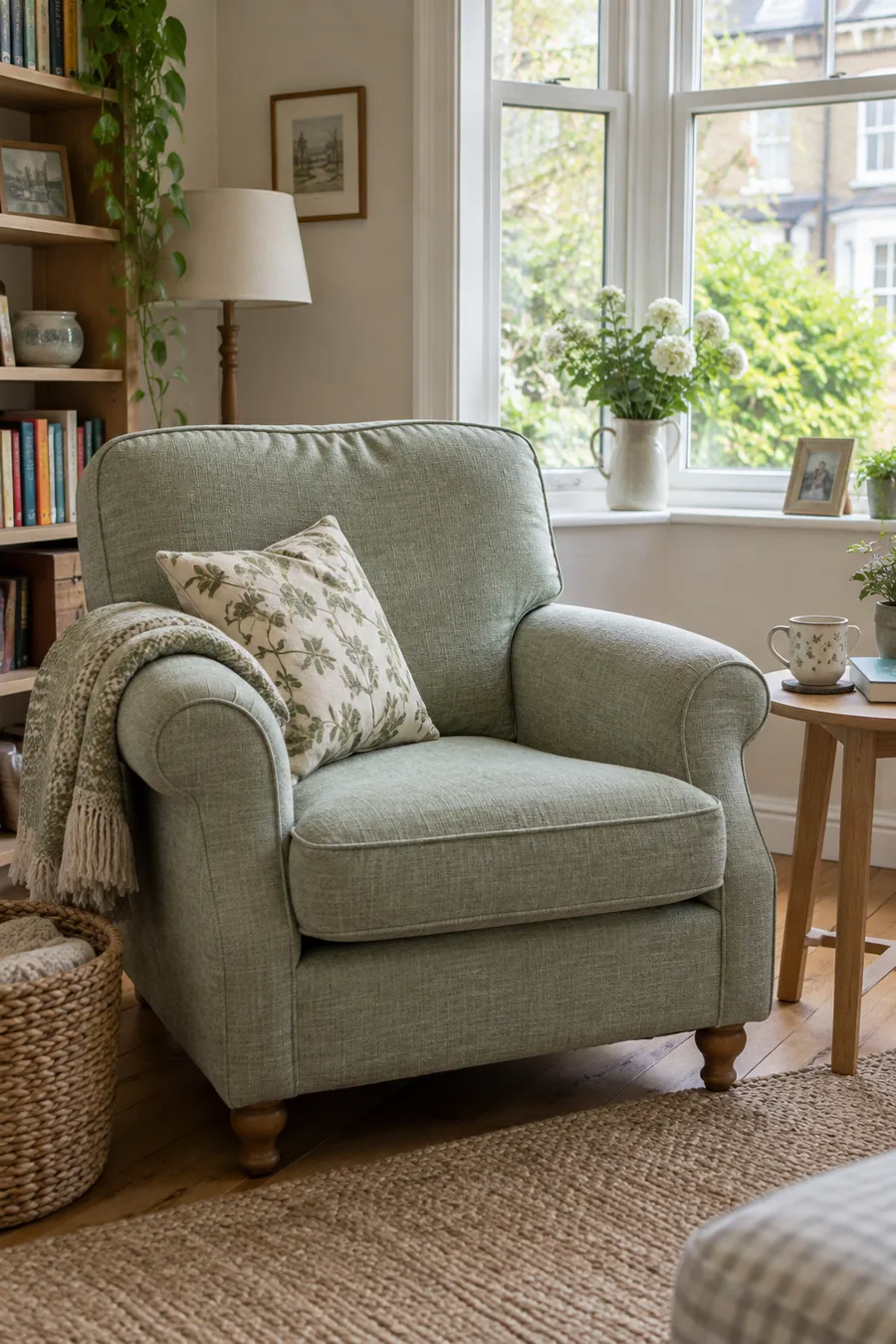
A cleaning option is not a repair method.
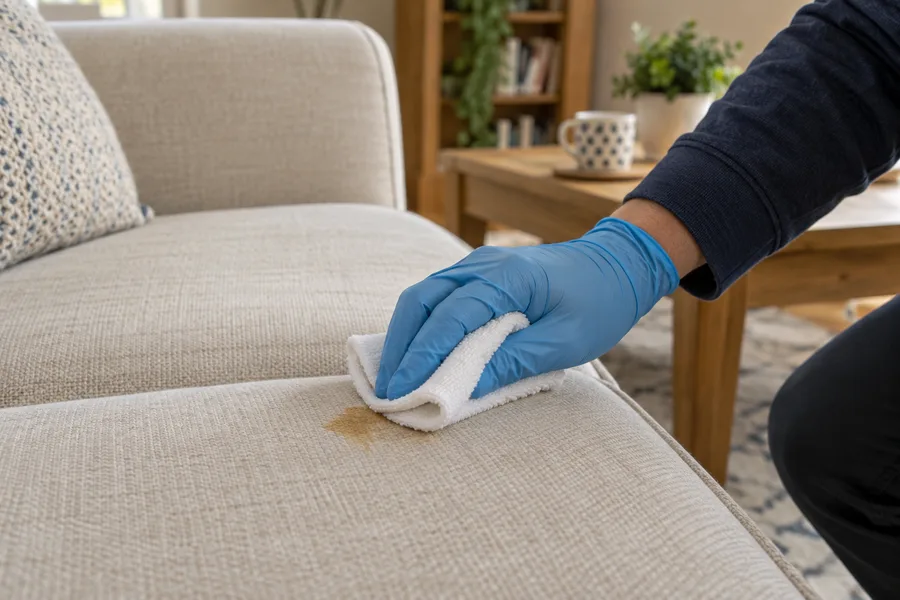
We offer hot water extraction and dry cleaning for suitable delicate upholstery. Discuss the furniture’s material, instructions, condition and earlier treatment when deciding which option is appropriate. These methods do not establish that every older fabric can be cleaned or that every colour difference is removable.
Agree the requested surfaces and any exclusions before booking. If your main concern is damaged padding or a faulty chair mechanism, explain that too so it can be distinguished from the fabric-cleaning request.
Send what is known about the cover.
Find the manufacturer’s instructions or purchase information where possible. Explain if a cover was replaced, dyed or cleaned previously; the original furniture description may no longer describe it accurately. Different trims or panels need mentioning too. When material composition is unknown, state that instead of deciding from how the surface feels.
Keep any product names from earlier spot treatment. Avoid making a new test patch to demonstrate suitability. Photographs and actual care guidance are more useful than a guess that a pale fabric must require a particular method.
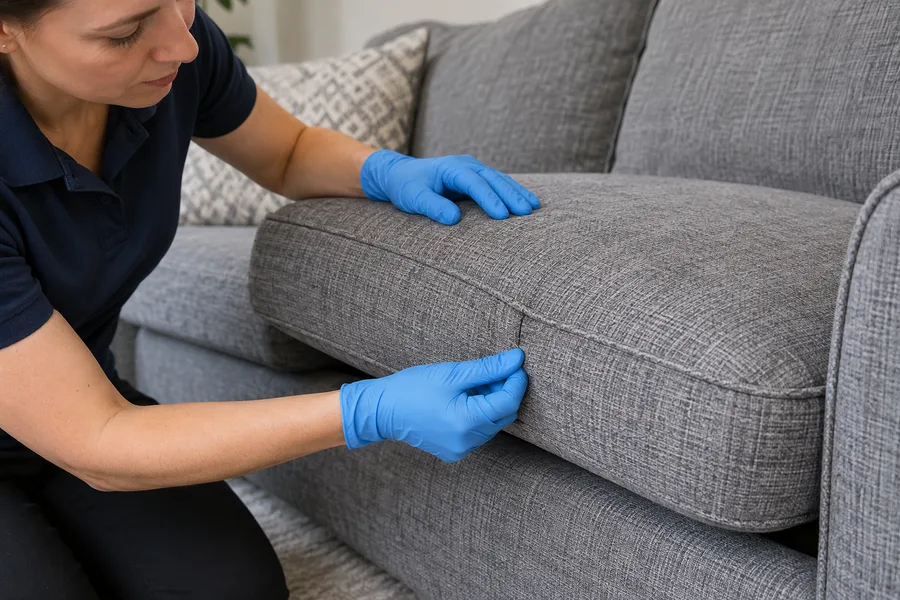
A fresh incident on an older piece.
An older sofa can still have a specific food or drink stain worth discussing. Give its cause and approximate age, and explain any blotting or product use. Include where it lies on the furniture, especially near seams or a cushion edge. Do not keep scrubbing the patch while waiting for advice; this can create a further change in texture.
For pet marks or odours, describe recurrence and whether liquid entered the cushion. Surface cleaning cannot guarantee removal of every smell held in filling. A stain, a worn patch and a product-related colour change may sit beside one another but have different limits.
Describe removable parts without taking them apart.
Count loose seat and back cushions and state which faces need attention. Explain different underside materials and any fixed cushions. Scatter cushions or a footstool should be named separately. Leave covers and fillings assembled unless the preparation advice says otherwise, and confirm the requested surfaces in the quotation.
Arrange another comfortable seat.
Ask when the chair or sofa can be used following the proposed treatment. Drying is affected by material, method and room conditions, not simply the time spent cleaning. Follow advice about ventilation and the position of loose cushions. Wait for the appropriate aftercare guidance before putting throws or personal belongings back.
Optional protection needs a separate conversation about suitability, scope and any charge. It is not a way to repair wear or guarantee that future stains will never occur. Describe what you expect from it before adding it to the work.
Use starting prices as enquiry information.
For an armchair, the published starting figures are £15 with hot water extraction and £19 with dry cleaning. Two-seat sofas start from £36 or £42 respectively; three-seat sofas from £102 or £114. Show unusual shapes, detachable sections and footstools rather than assuming a seat count gives the entire price.
The price list helps frame the request. Confirm the total, surfaces and appointment availability for your items; material, size, condition and area are relevant. Congestion charges are additional where applicable. Clear loose belongings and describe access, discussing heavy furniture separately from the included help with lightweight pieces.
Add other cleaning only where it is needed.
If nearby flooring has a related mark, include the carpet concern in a separate description. For other surfaces in the room, discuss a one-off cleaning visit. A furnished property handover can involve tenancy cleaning, with furniture treatment clearly agreed rather than assumed.
A postcode and a clear furniture list.
Give the Willesden address, preferred dates and access arrangements with the photographs. State which pieces are there and which concerns matter most to you. We can discuss suitable cleaning, the available appointments and a quotation for those pieces.
Questions about older fabric and uneven appearance
Can cleaning put the colour back on a faded arm?
Colour lost from the material is not dirt waiting to be removed. Show the area so its condition can be discussed, but do not expect fabric cleaning to recolour it.
Why does the backrest look different from the seat?
Usage, light exposure, fabric direction and soiling can affect appearance differently. Describe the history and show both areas rather than assuming they share one removable cause.
Is a repaired panel a reason to mention the fabric separately?
Yes. The replacement panel or repair may have different instructions or condition from the surrounding cover. Include it when explaining the item.
Should I brush a patch until it matches before the visit?
Do not keep working the area to force a match. Explain the texture change and any earlier brushing; additional friction can affect an already worn surface.
Can I request the sofa even if the chair looks worse?
Specify the pieces you want considered and their concerns separately. The condition of the chair does not decide the sofa’s scope or suitability.
Will cleaning tighten loose stitching?
No. Loose stitching is a repair concern to point out before booking. The cleaner needs to know about it when considering suitable work around the seam.
Explain what has changed on the cover.
Send the furniture’s care information and photographs of the areas worrying you. Include your Willesden postcode so we can discuss appropriate cleaning and its limits.
Illustrative generated photographs show furniture and cleaning situations, rather than actual staff or local customer jobs.