Star Domestic Cleaners
Menu
MOULD & MOISTURE · EARLSFIELD

Mould Removal Earlsfield

Explain dampness or a concern that is difficult to show as well as any visible marks. We inspect accessible areas and investigate moisture questions. Discuss appropriate next work for Earlsfield.

  • Observed concerns recorded
  • Accessible condition considered
  • Assessment and treatment distinguished
Visible affected wall corner beside a freestanding cabinet
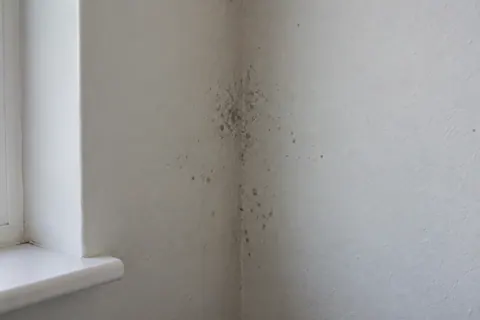
Dark surface speckles along a painted wall corner

Describe the concern even if the photo shows little.

Name the room, say what you have noticed and explain when it happens. Include any visible surface change, water mark or known incident, with a wider view where safely accessible. Do not assume an unexplained smell or damp observation proves hidden mould or a particular source. Identify uncertainty honestly. Explain furniture or fittings restricting the view without moving heavy pieces or opening construction. An inspection enquiry can start with a clear account rather than a chosen diagnosis.

Ordinary household dirt can be discussed through a separate home cleaning service. It is not assessment of an uncertain damp or mould concern.

Use assessment to establish suitable next steps.

Send observations

Provide the postcode, room context and available photographs with a brief history. Explain what is visible and what remains uncertain. Mention previous products or repairs and access limits so the enquiry reflects the actual concern.

Consider accessible findings

We inspect agreed areas and relevant moisture observations. Ask what findings support suitable treatment, what needs further professional assessment and which source questions remain. Limited visibility should not become an assumed concealed diagnosis.

Agree appropriate work

Check the named inspection, surfaces and treatment in the quotation. Discuss preparation and occupant arrangements. If findings change what is needed, ask for revised tasks and amount before additional scope is assumed included.

Inspection and treatment are different parts of the request.

Surface tasks

We discuss suitable cleaning and treatment of agreed accessible surfaces after considering material, condition and extent. Explain weak or damaged finishes. An uncertain concern does not establish that every area needs treatment or automatic replacement.

Moisture investigation

An unexplained smell or occasional dampness belongs in the account with its location and timing, even when the photograph shows little. We use accessible inspection and the reported history to discuss what needs checking next. Establish whether the enquiry calls for further assessment before commissioning treatment of material whose condition has not yet been seen.

Separate property work

Clarify repairs, installation, material replacement and decoration separately if required. Ask who will perform further tasks and what is quoted. A treatment amount does not automatically include resolving every property defect or renewing all surfaces.

Give each location a material and history.

Condensation on a window with dark marks near the inner frame

Window-side areas

Show frames, reveals and surrounding walls with condensation or wetness observations. The position alone cannot decide the source. Identify current changes and uncertainty so accessible condition and moisture can be considered together.

Bathrooms

Name paint, tile joints, grout or sealant and show wider fittings. Mention known water or extraction concerns. Damaged seals and weakened finishes may need different work from treatment of retained surfaces.

Kitchens

Describe accessible walls, joints or cupboard areas with known plumbing history. Leave panels and heavy appliances in place while explaining access limits. Ordinary kitchen residue cleaning has a separate scope from moisture and mould assessment.

Observations need assessment rather than a guess.

Condensation, leaks and water entering the building can need different responses and may combine. Report timing and known incidents without deciding the explanation from a smell, colour or room alone. Removing visible mould does not necessarily address moisture. Repeated, extensive or suspected hidden concerns need appropriate professional assessment. If you rent, report the problem to the landlord or managing agent too, keeping dates and safely available evidence.

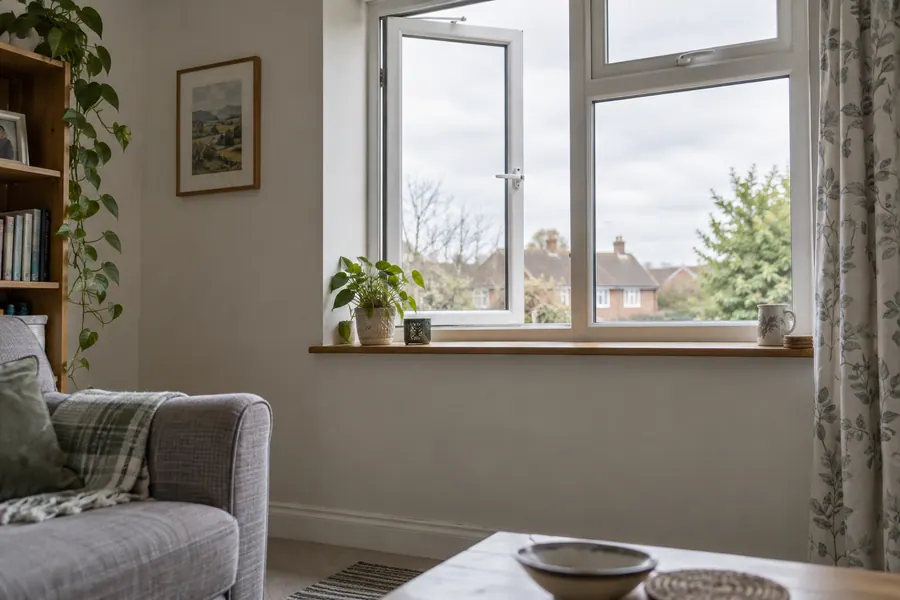
Partly open window in an ordinary sitting room
Dark marks at a bathroom ceiling and window corner

Keep records without trying to expose a hidden problem.

Have dates, available photographs and earlier product or repair details ready. Describe belongings, furniture and fittings restricting access, and ask what needs clearing. Do not disturb material or move heavy pieces for the enquiry. Discuss suitable arrangements for people and pets. If planning a separate clean before handover, give the date without replacing appropriate assessment with ordinary cleaning.

A concern about the room is not a medical diagnosis.

Damp and mould can affect health. Speak to a healthcare professional about symptoms that concern you; an enquiry or a room observation cannot diagnose them. Government guidance on damp and mould explains risks and underlying-cause concerns. Do not mix products or improvise treatment while gathering details. Share relevant occupant circumstances when preparation and access for the agreed work are discussed.

Check findings and remaining questions, not only appearance.

Follow instructions for agreed work and clarify any further moisture investigation or separately needed tasks. Record and report continuing dampness or new visible marks. A clearer surface does not establish hidden condition or complete source repairs. Regular home cleaning for ordinary tasks may have a separate role after appropriate treatment and moisture work; it is not a hidden-mould diagnosis or guarantee of permanent prevention.

Quote the appropriate scope established for the concern.

Material, condition, extent, access, inspection and suitable treatment define the requested work. Confirm the total and any separately quoted further assessment, repairs or replacement. Normal room-cleaning figures are not a mould tariff. Limited visible growth should not be used to assume either no work or unlimited treatment; ask for the actual tasks and boundaries to be explained before agreeing the amount.

Use the Earlsfield postcode and current observations.

We serve Earlsfield. Availability and arrangements need checking for the actual property and concern. Give entry details and explain who can approve additional work if relevant.

Limited-visibility questions

Can I enquire when a photograph shows very little?

Describe the observation, location and history honestly. Available context can start an inspection enquiry even when the visible extent or source is uncertain.

Does a damp smell prove concealed mould?

Do not choose a diagnosis from that observation alone. Explain it with timing and known incidents so appropriate assessment can be considered.

Should I open furniture or walls to find more?

Leave construction and fittings undisturbed for the enquiry. Explain access restrictions and discuss appropriate authorised assessment first.

Does limited visibility mean no assessment is needed?

Describe the concern and ask what is appropriate. A photograph alone cannot settle every moisture or concealed-condition question.

Will every room be treated after inspection?

Check the findings and named scope. Inspection does not automatically establish that every area needs treatment or that all tasks are included.

Can routine cleaning diagnose the concern?

It has a separate household-task scope. Request the moisture or mould assessment directly rather than treating it as ordinary dirt.

Explain the observation and what cannot be seen.

Call with the Earlsfield postcode and available history. Discuss accessible inspection, moisture questions and suitable next steps.

Generated photographs illustrate affected surfaces and room conditions. They are not customer cases or evidence of treatment results.