A kitchen needs attention when it is used, not just when the cleaner is due. A small daily reset keeps food preparation areas usable and stops the next appointment being spent on a week’s washing-up. The aim is a workable kitchen, with separate time for grease, cupboards and appliances.
The most useful starting point is to clear and clean the food preparation area after cooking, deal with spills promptly and leave the sink ready for its next use. Then choose one or two less frequent jobs for the week. You do not need to empty every cupboard each evening or keep the whole room looking unused. This routine is for ordinary domestic upkeep, rather than a disinfection plan for a food business or a replacement for advice about illness in the household.
Decide what a usable kitchen looks like
Write a short finish line that everyone can understand: dirty plates dealt with, food put away, the preparation worktop wiped and the floor free of dropped food. Those four jobs are easier to share than the instruction to clean the kitchen. If the dishwasher is full, someone also needs to empty it before the next load arrives. Otherwise dishes migrate to the worktop and wiping the surface becomes a separate tidying project.
Keep the daily baseline small enough for a tired evening. A polished extractor hood is optional at that point; a spill beside the hob is not a sensible job to leave for several days. When you arrange regular help with household cleaning, explain what you normally do between visits. It makes the agreed priorities more realistic and avoids assuming that a short kitchen appointment also includes the fridge, cupboards and oven interior.
Reset the cooking area while the meal is being cleared
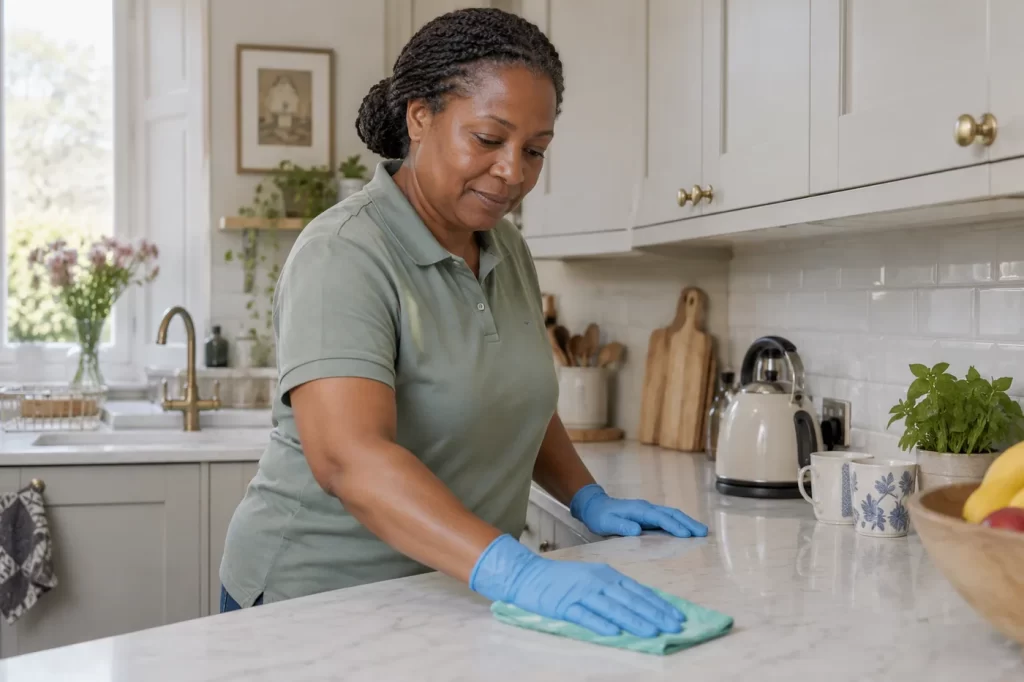
Put food away according to its storage instructions, remove scraps and collect the washing-up. Clear the section of worktop you used before applying a suitable cleaner. Work around one area at a time so clean utensils are not placed back onto an uncleaned surface. Follow the product label for the surface, amount, contact time and any rinsing needed. A quick wipe with a nearly dry cloth is not the same process as using a disinfectant correctly.
The Food Standards Agency’s domestic cleaning advice explains why food preparation areas and cleaning cloths need attention. Keep equipment used for raw food separate from clean or ready-to-eat tasks. Do not use the cloth from a floor spill to wipe a worktop. Store cleaning products away from food and follow their instructions rather than combining products to make a stronger mixture.
Wait until the hob is cool enough to clean safely and follow the appliance instructions. Move pans rather than pushing debris behind them. Check the edge of the hob and the adjacent worktop, where splashes are easy to overlook. If your surface has a specialist finish, establish the approved cleaning method before an accident gives you a reason to guess. The existing guide to stainless steel worktops and splashbacks covers that particular material; it should not be treated as instructions for stone or painted furniture.
Give each cloth a clear job
A small, organised set of tools is more useful than a cupboard full of partly used sprays. Keep separate cloths for food surfaces, general cupboard fronts and floor spills. Different colours can make the arrangement easier to follow, but the colour itself does not make a cloth clean. Wash reusable cloths as directed and replace damaged or heavily soiled ones. Let equipment dry between uses instead of leaving a wet bundle beside the sink.
Put the everyday tools somewhere accessible to the adults using the kitchen, while keeping chemicals secure from children and pets. Have a designated place for the washing-up brush and check that its holder is not filling with dirty water. Keep an appropriate soft cloth for finished surfaces and a separate tool for stubborn residue where the manufacturer permits it. Scratching a glossy cupboard door with a scourer creates damage that more cleaning cannot remove.
Match the method to the surface
Cleaning the whole room with one product may seem simpler until it reaches a surface that cannot tolerate it. Check the care information for worktops, cupboard fronts, splashbacks and appliances. New kitchens often contain several materials that look similar but have different care requirements. If you rent, ask for the appliance manuals and any worktop care instructions rather than relying on the appearance of the finish.
| Area | Useful routine | What to establish first |
|---|---|---|
| Worktop | Clear, clean and leave ready for food preparation | Material and approved product; whether rinsing is required |
| Cupboard fronts | Remove fresh splashes with the approved gentle method | Finish, handles and edges that should not be soaked |
| Hob | Attend to cooled spills before the next cooking session | Glass, enamel or metal surface and the appliance instructions |
| Sink and taps | Remove food debris and leave the area tidy | Sink material and the tap finish before treating deposits |
Use a test on a discreet area only when the care guidance permits the intended product. A patch test does not overrule an explicit warning. Avoid flooding joins, edges and electrical controls. Treat a lifted worktop joint, peeling finish or leaking tap as a maintenance concern, rather than trying to hide it with a more aggressive clean.
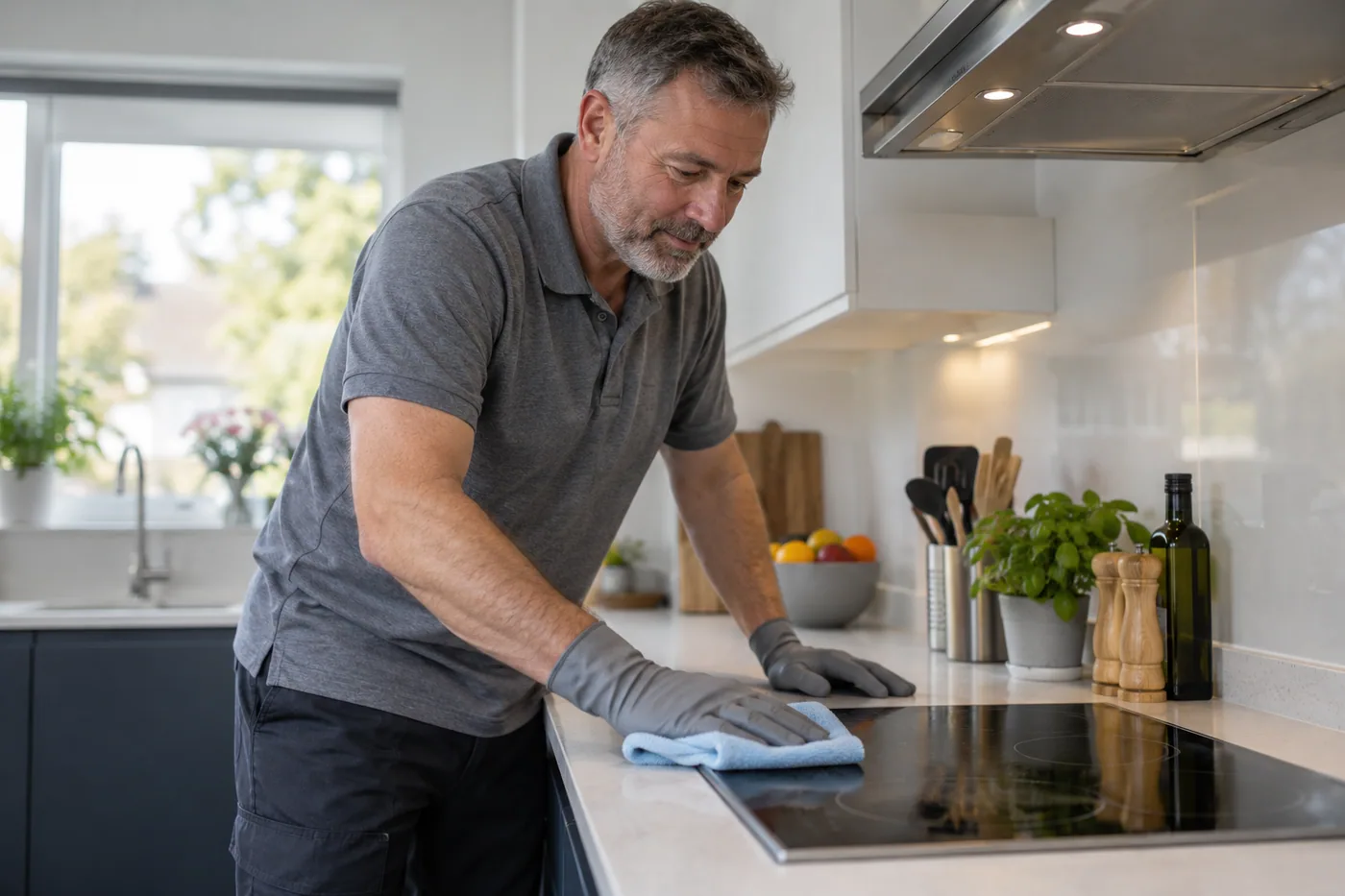
Keep the sink available rather than using it as storage
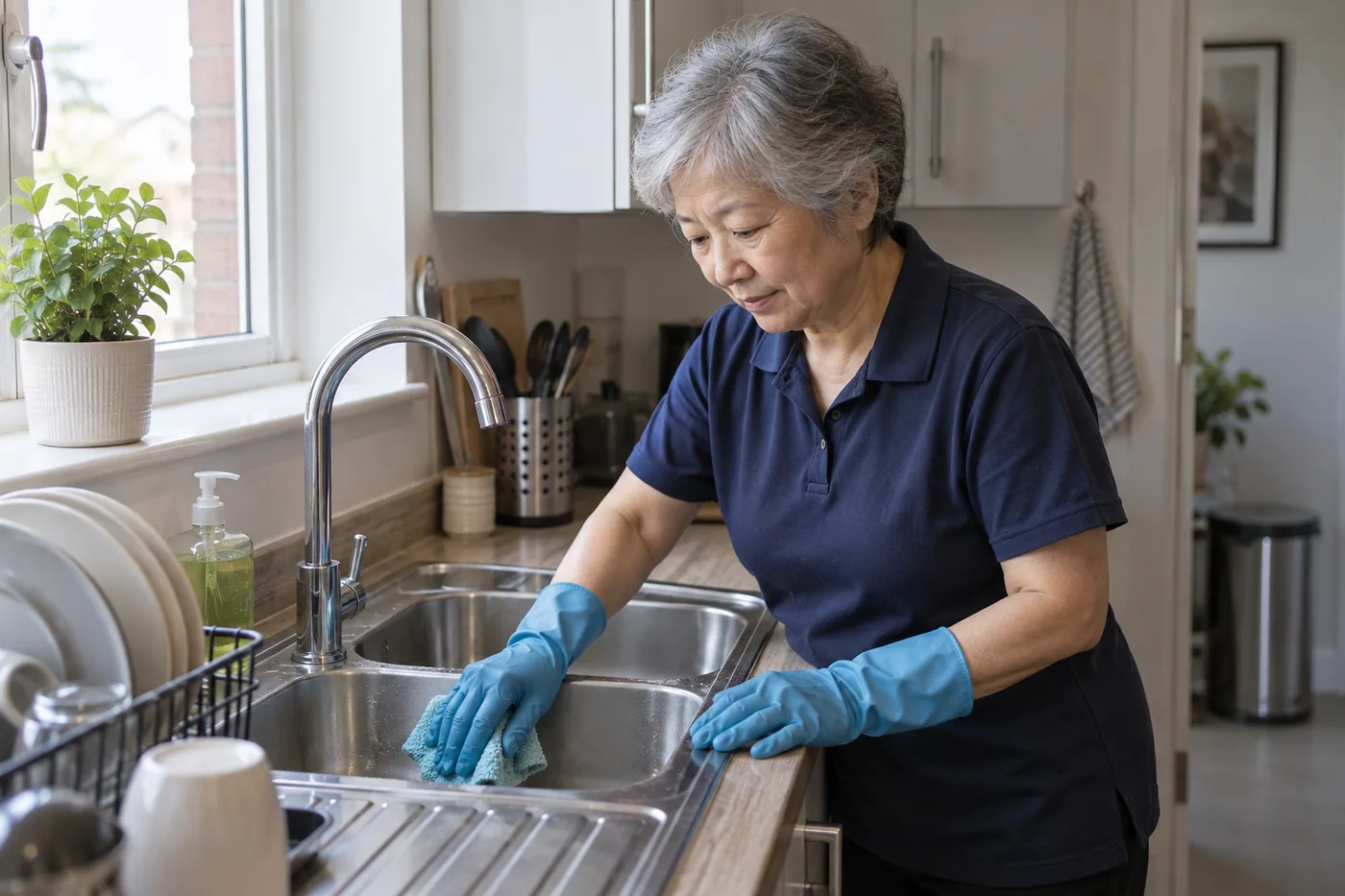
Deal with the washing-up often enough that the sink can be used when you need it. Remove food scraps into the appropriate waste container, clean the accessible sink surfaces with a suitable method and tidy the surrounding area. Check under the washing-up bowl and around the tap base. A clean bowl does not mean the sink beneath it has been cleaned. Rinse or wipe equipment according to the instructions for the product used.
Do not turn a slow drain into an experiment with several drain products. Follow the instructions for any single product and seek help if a blockage or leak remains. Do not remove plumbing fittings unless you know how to do the work safely. If the cupboard beneath the sink is damp, clear access and identify the leak; repeatedly wiping the cupboard floor does not address the source of water.
Put the less urgent jobs into a short weekly plan
Choose a time when the kitchen is quiet and spread the jobs across the week if that suits you. This is an example, not a hygiene standard or a promise that every household needs the same interval. A home cooking several meals a day may need more attention than a kitchen used mainly for breakfast. Increase the frequency of a task when there is visible soil or a spill, rather than waiting for its allocated day.
- Check the fridge for spills and food that needs using or discarding. Follow food labels and appliance instructions.
- Wipe cupboard handles and accessible fronts with the appropriate method.
- Look at the extractor’s accessible surfaces and check its filter maintenance instructions.
- Clean the floor using a method suitable for its material, after removing loose food and debris.
- Clean the bin and its surrounding area as needed, including the lid and any removable parts that can be washed.
If a task keeps being missed, reduce its size. Clean two cupboard fronts properly rather than promising to wash every door and then doing none. For a wider household plan, use the weekly cleaning schedule for busy households. Keep the kitchen’s food-related jobs on the daily list instead of burying them in a weekend catch-up session.
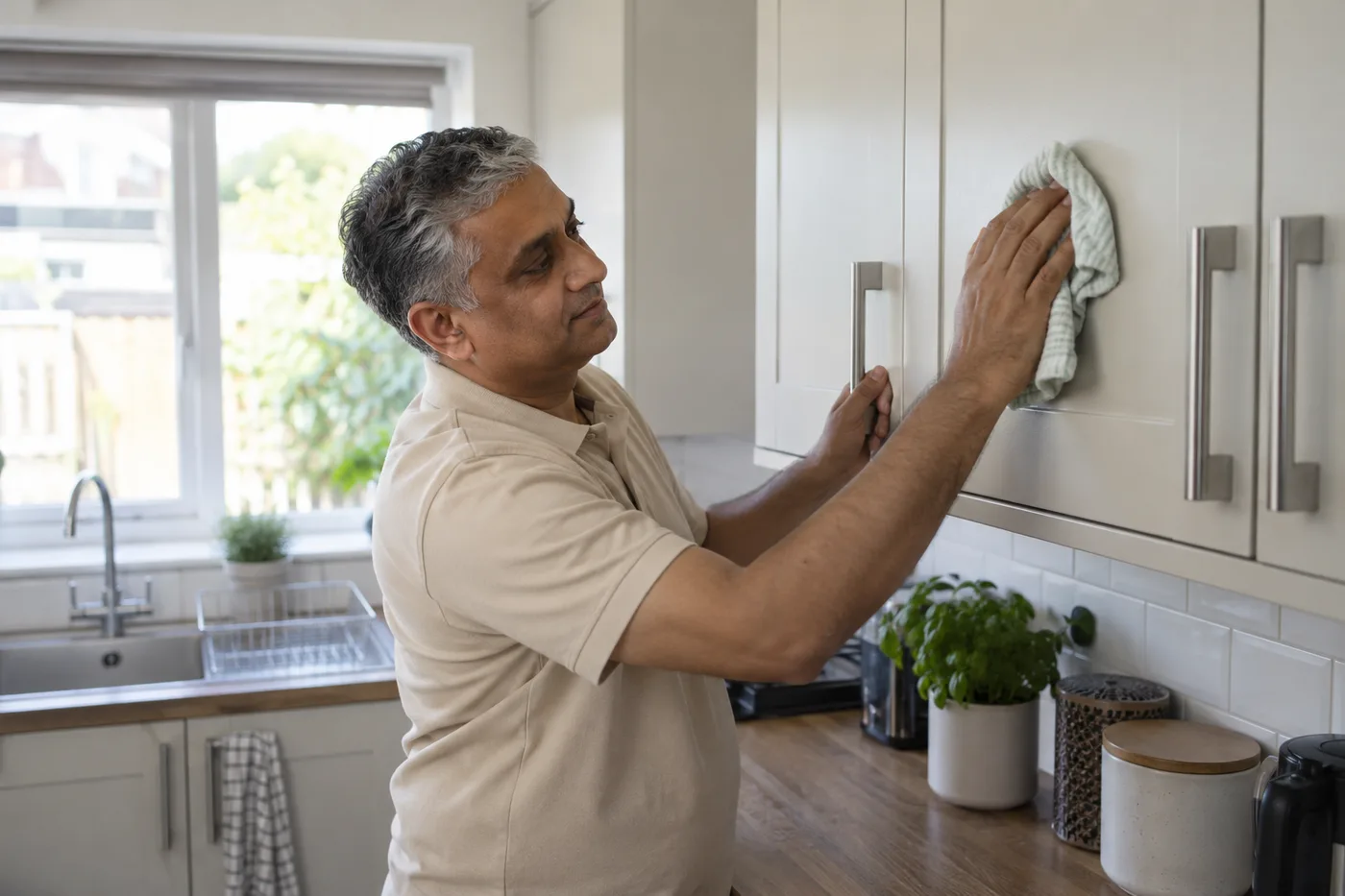
Keep appliance maintenance separate from a quick wipe
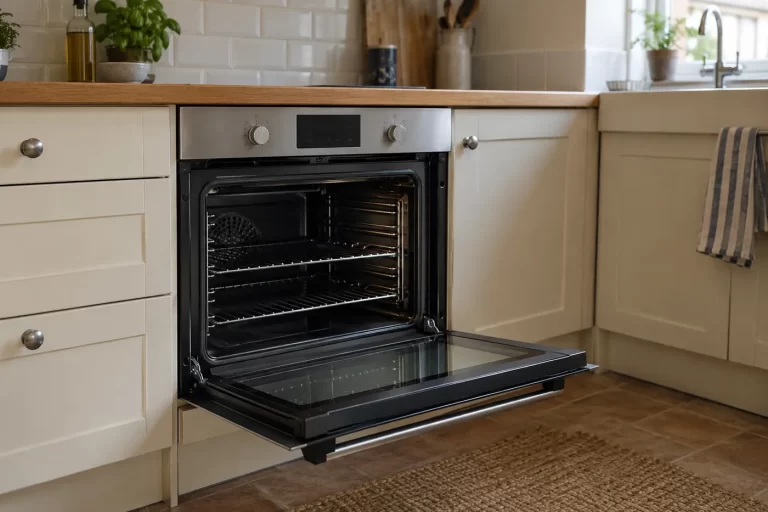
Accessible grease around cooking areas deserves regular attention, but an oven interior is a different job from wiping its control panel. Check which parts can be removed, which cleaners are permitted and whether the appliance has special liners or a cleaning programme. Do not spray into vents or dismantle a door because a video makes it look straightforward. A task that needs unfamiliar tools or access to electrical parts belongs outside an ordinary kitchen reset.
Ask about a separate oven cleaning appointment if built-up residue is beyond the upkeep you can manage. Tell the team the make, model, number of cavities and any previous product treatment. Our guide to oven cleaning mistakes and materials explains the decisions to make before choosing a product. A cleaner needs the same material information as the person using the appliance at home.
Prepare priorities before the next visit
A cleaning visit works best when the agreed surfaces can be reached. Move papers, chargers and unrelated household items from the preparation area. Put fragile belongings away and explain any surfaces that should be left alone. If washing-up or tidying is part of the requested work, include it in the time discussion. It takes time and should not silently reduce the time available for the actual cleaning priorities.
Make a note of the work you want covered and the jobs you will keep doing yourself. For example, you might handle the daily sink and food surface routine while the appointment covers cupboard fronts, the splashback and the floor. If the whole kitchen has accumulated heavy grease, explain that before booking a more thorough one-off clean. Do not describe a large backlog as an ordinary weekly wipe.
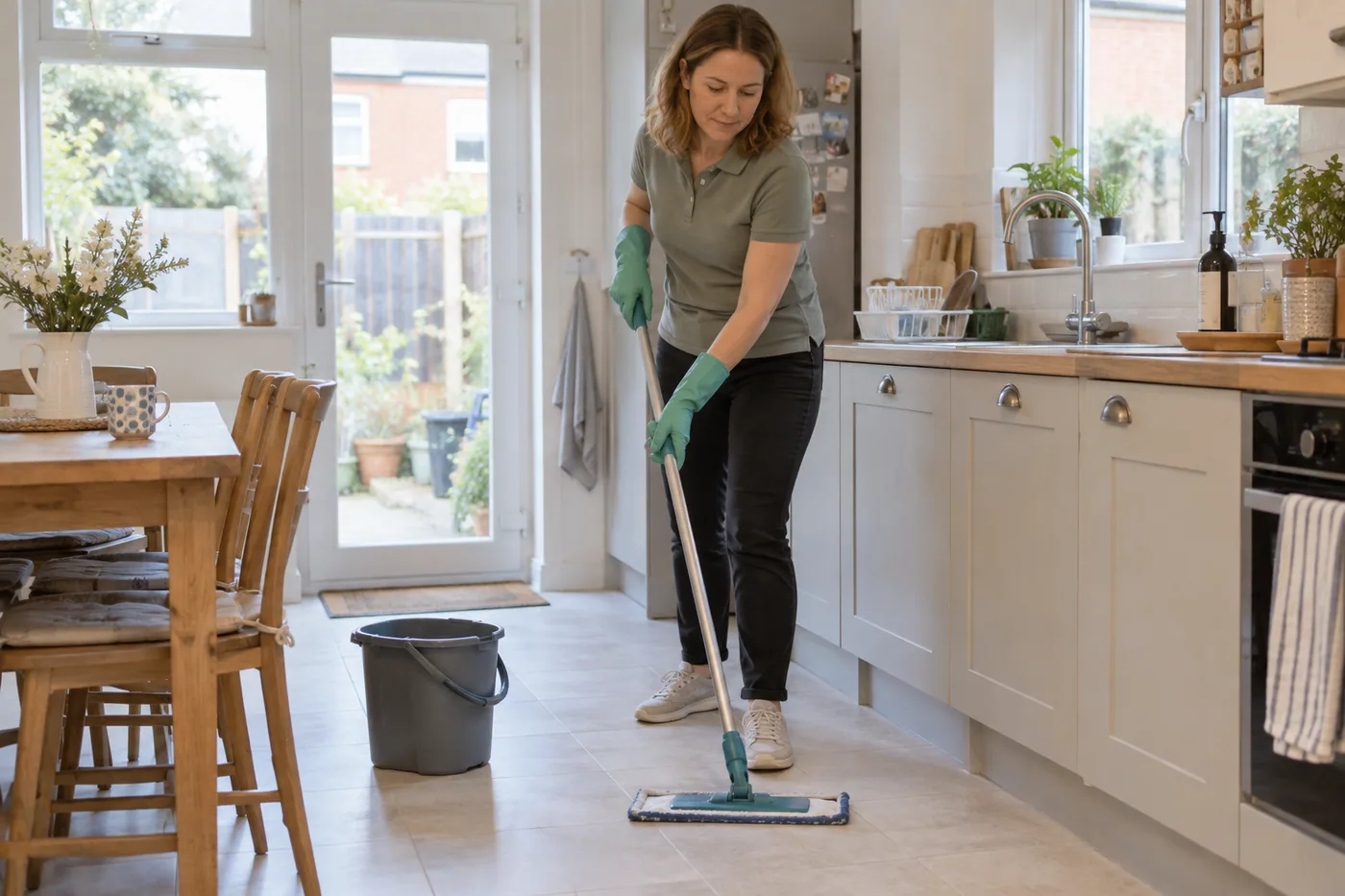
Use a smaller reset on difficult evenings
When there is little time, prioritise safe food storage, the preparation surface you will need next and obvious spills. Leave a clear note or agreed job for the next person using the kitchen. A basket for unrelated objects can help, provided it is emptied rather than becoming another permanent pile. Do not leave chemical-soaked equipment where children can handle it or where it may contact food.
In a shared home, allocate complete jobs rather than vague assistance. One person can manage the dishwasher from loading through to emptying; another can handle the worktop and hob area. Agree what happens if someone misses their turn. A simple arrangement that survives a busy week is more useful than a detailed chart that assumes everyone finishes work at the same time.
Change the routine when the kitchen changes
Extra cooking, visitors, a new pet or building work can change the amount of cleaning needed. Review the arrangement instead of treating the original timetable as permanent. If grease, smells or damp keep returning, identify which part of the routine or maintenance needs attention. A smell is not enough to diagnose its cause, and cleaning cannot fix a faulty extractor or a leaking connection.
Keep a short list of repeat problems for the next appointment or maintenance enquiry. Record the location, what you can see and when it returns. That gives the conversation a useful starting point without promising that every mark is removable. The kitchen does not need to look like a photograph every evening. It needs to be safe to use, manageable to clean and clear about which larger jobs still need arranging.