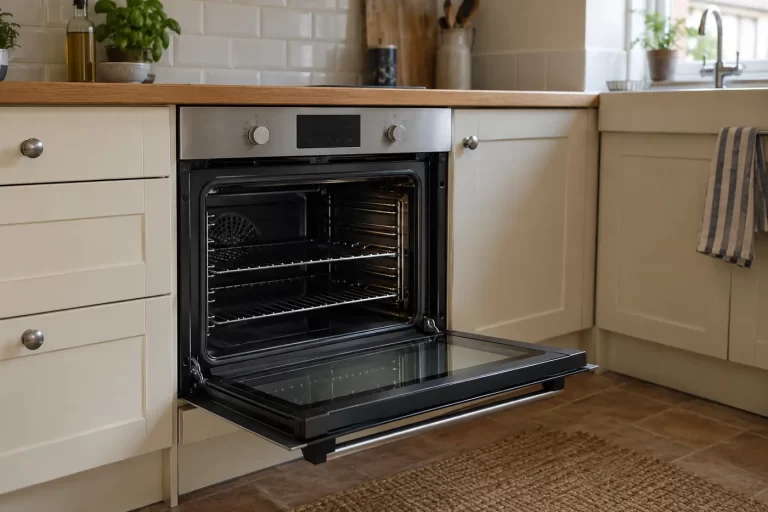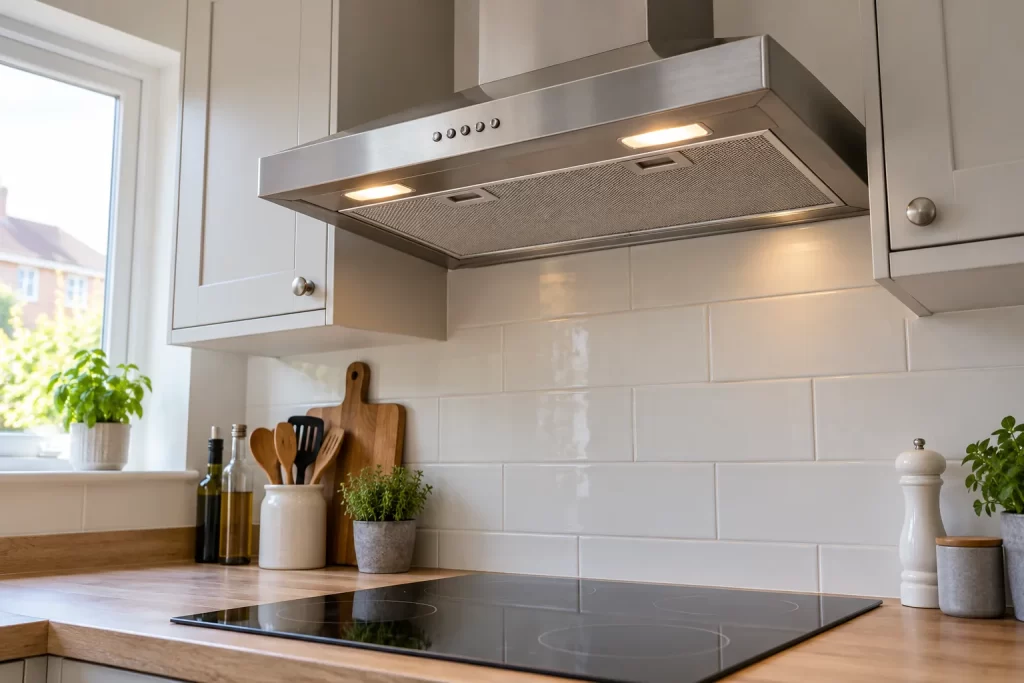
Before washing a cooker hood filter, identify what it is. A removable metal grease filter may be washable, while a paper, charcoal or other odour filter may need replacement or a model-specific regeneration process. The hood’s manual decides which applies. Turn the appliance off and isolate the power as instructed, let the hob and hood cool, remove only the parts intended for user maintenance, and keep water away from the motor and controls. Refit a washable filter only when it is completely dry and securely seated.
Kitchens have extraction hoods that send air outdoors and recirculating hoods that return it to the room. Their filter arrangements differ, and similar-looking filters may have different care rules. Begin with the model and filter specification, then choose the method.
Find the manual and identify the filter type
Find the model number on the hood’s rating plate or paperwork, following the maker’s directions. Do not remove a cover or reach near wiring to find it. If the manual is missing, check the manufacturer’s support pages or ask the owner, landlord or installer. A similar-looking hood may have different latches or filters.
Read the manual’s sections on filter removal, cleaning, replacement and reinstallation. Note whether the hood uses a metal grease filter, disposable grease medium, odour filter or a combination. NEFF’s explanation of extraction and recirculation gives background, but your hood’s instructions decide its care.
Check any maintenance display. A filter reminder may be based on running time, and the reset procedure varies by model. Note which filter came from which position. Never run the hood without a filter if its manual requires one.
Make the appliance safe before handling the filter
Finish cooking first and allow the hob, pans and hood surfaces to cool. Switch the hood off and isolate it from the supply in the way the appliance instructions specify. If it has a plug, use dry hands and follow the maker’s direction; if it is hard-wired, use the relevant accessible isolation control. Do not touch exposed wiring, remove the motor housing or attempt electrical repair. Electrical Safety First advises switching off extractor fans at the isolator or mains before cleaning and following the manufacturer’s instructions.
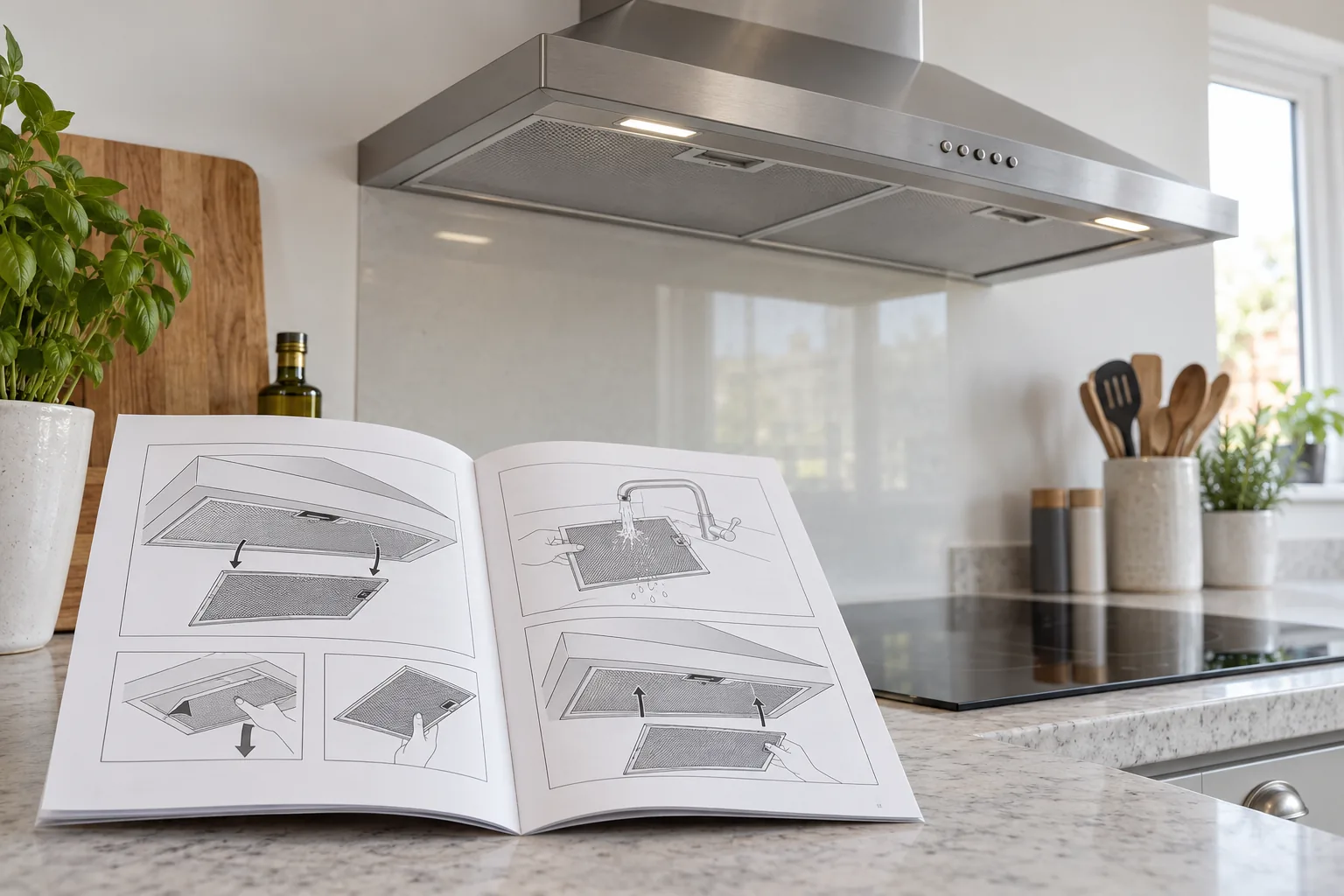
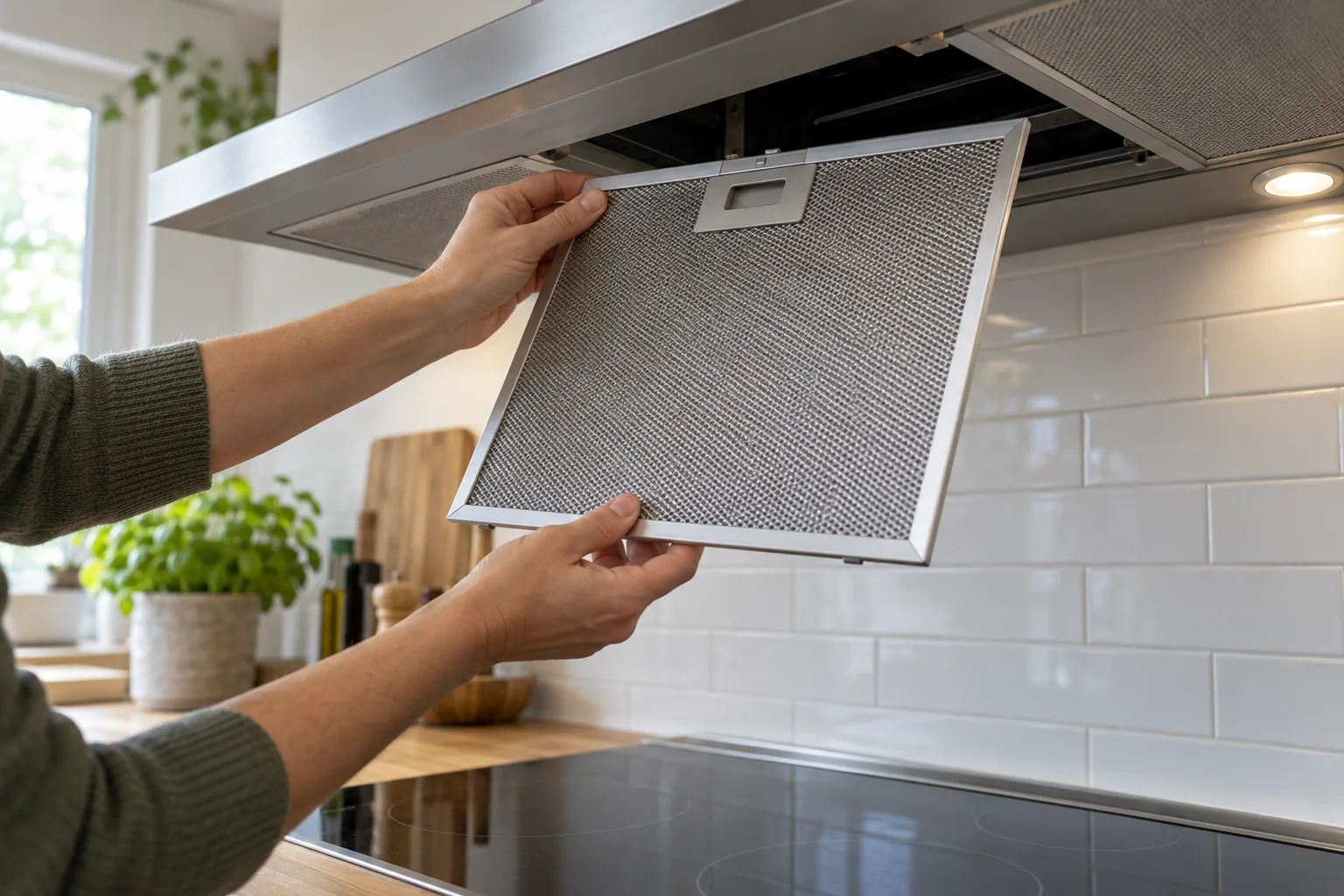
Protect the cool hob below with a towel if the manual permits. Support the filter with both hands; some drop when their spring catch opens. If a part resists, recheck the diagram rather than bending its frame or breaking a clip.
If reaching the hood requires standing on a chair or stretching over the cooker, stop and arrange safe access. A filter clean is not urgent enough to justify an unstable position. Tell a professional about the hood’s height and model when asking whether the work can be included in a visit. The equipment and scope should be agreed before anyone starts.
Remove and assess a washable metal grease filter
Release the filter as shown in the manual and place it on a protected work surface. Look at the frame, mesh and latch. Heavy grease is a reason to clean it according to the manufacturer’s schedule; a bent frame, torn mesh or broken catch is a reason to seek the correct replacement part. Do not try to straighten a damaged filter by force or put it back where it cannot lock securely.
For models that permit hand washing, a mild detergent in warm water and a soft brush or sponge may be suitable. NEFF’s cooker-hood cleaning instructions describe that approach for its applicable products and stress checking the user manual. Work through the mesh gently rather than scrubbing it with steel wool. If a degreaser is allowed, follow both the appliance and product labels, including dilution, contact time and rinsing. Do not mix it with another cleaner or use a home-made caustic solution.
Some metal filters are dishwasher-safe, but that is a model-specific permission. Check the manual before using a dishwasher and follow any instruction about positioning, cycle or keeping the filter separate from dishes. A change in appearance after dishwashing may be noted in a maker’s instructions, but it is not a reason to assume that every metal mesh filter can be washed that way. A painted, coated or unusually shaped filter may have different requirements.
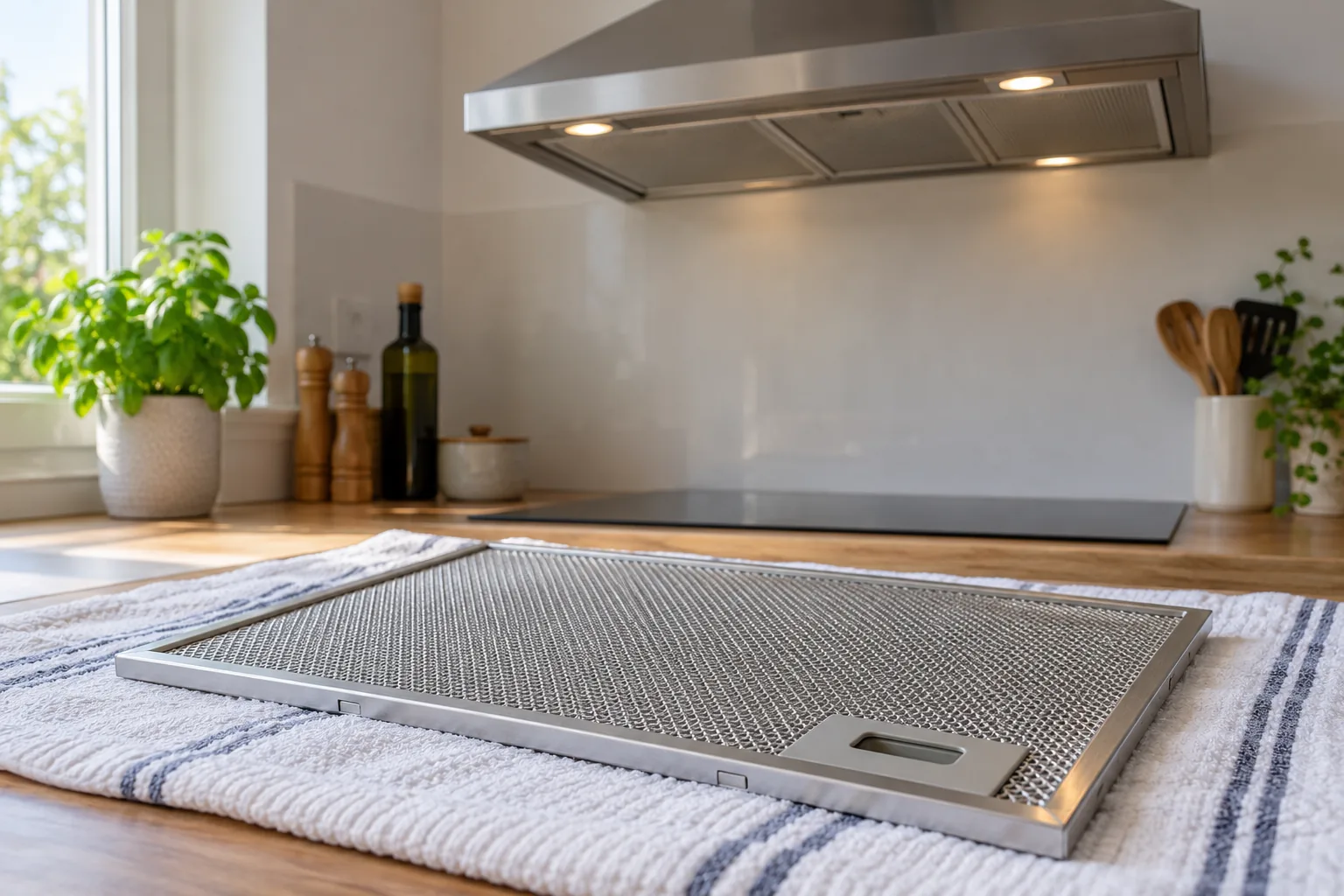
Rinse as directed, shake off excess water over the sink and let the filter dry on a clean towel in a safe place. Do not put it back while water remains in the mesh or frame. Avoid a hairdryer, radiator or direct flame as a shortcut. Refitting a wet part above an electrical appliance is an unnecessary risk.
Treat carbon and other odour filters differently
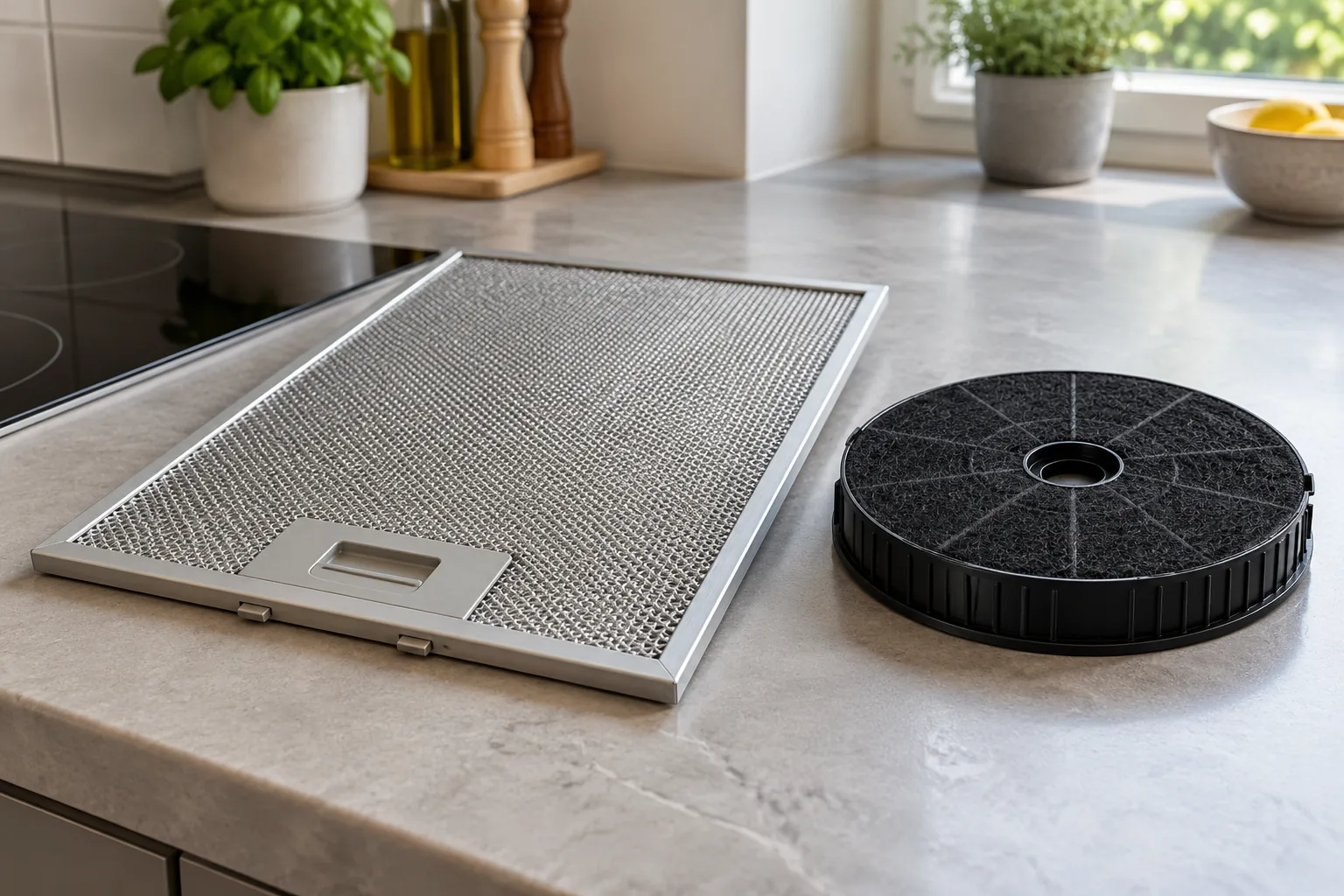
A recirculating hood may have a separate odour filter behind the grease filter. Do not soak it because the metal filter was washable. Many carbon filters need replacement; some specialised long-life filters have a manufacturer-approved regeneration process. The correct part and method are in the manual. NEFF’s filter guide shows both variants within one brand.
Do not try to regenerate an ordinary disposable carbon filter in an oven. Likewise, do not put a paper or fibre grease medium in water unless the manufacturer specifically allows it. A filter that has lost its shape or coating may no longer work as intended even if it looks less dirty. Order a compatible replacement using the model number; “close enough” dimensions can leave gaps or prevent the cover closing.
If the manual gives a replacement interval, use it together with actual usage and any indicator. A household that rarely cooks and one that fries food most evenings may load the filter differently. Do not claim that a fixed number of months works for all models. Persistent odour or weak airflow can also have causes outside the filter, including installation or ducting problems. Cleaning a filter is maintenance, not a guaranteed repair for poor extraction.
Clean the accessible housing without wetting electrics
With the filter removed and the appliance isolated, inspect the accessible rim and seating area for grease. Use a soft cloth and only a cleaner permitted for the surface. Apply liquid to the cloth where its label allows, not into a vent, light or control panel. Keep the task to parts described as user-accessible. The interior motor area, fixed duct and wiring are not ordinary wipe-down surfaces.
Cooker hoods may combine stainless steel, painted metal, glass and plastic. A cleaner suitable for one can dull or damage another. Wipe with the grain only if the actual stainless steel finish and maker instructions call for it; do not use abrasive pads on glass or printed controls. Remove product residue as directed and leave the area dry. The site’s existing guide to oven cleaning mistakes and materials makes a similar point about identifying a surface before choosing a product, but the cooker hood has its own manual and electrical boundaries.
Do not treat heavy grease inside the duct as a reason to dismantle it yourself. If the hood is noisy, leaks grease, trips an electrical circuit or stops extracting despite correct filter maintenance, stop using it and seek appropriate appliance or electrical advice. NEFF’s support page on weak extraction notes that filter build-up is only one possible cause; duct and installation issues may also matter.
Refit, test and record the next check
When the washable filter and seating area are completely dry, refit the filter exactly as the manual shows. Make sure its latch engages and the frame sits flush. Replace an odour filter only with the specified type and fit it in the stated orientation. Close any user-access panel before restoring power. Run the hood briefly to check that it operates normally and that no part rattles or moves. If something sounds wrong, switch it off and inspect only the user-serviceable fitting again; do not reach into a running fan.
Reset a filter indicator only after completing the maintenance and according to the manual. Note the date and the filter type you cleaned or replaced. A small note inside the kitchen cupboard, away from heat, is more reliable than remembering an approximate season. Inspect the filter sooner if you notice visible grease or reduced performance, but do not invent a universal weekly stripping schedule.
Keep filter care separate from the rest of the kitchen clean
Wiping the exterior of a hood, cleaning its metal grease filter and servicing an odour filter are three different tasks. So is cleaning the oven below it. The site’s kitchen routine between cleaning visits helps with ordinary surfaces and appliance planning. For built-up kitchen grease, discuss the scope of a one-off deep clean. If the oven itself needs specialist attention, the site separately offers oven cleaning. Ask specifically whether accessible hood filter work is included; do not assume it is part of either service.
The safe decision is simple to remember: identify the model, isolate the hood, separate washable metal from replacement or regenerative media, follow the manual, and dry and refit everything correctly. If a part is damaged or the extraction problem remains, seek the right repair rather than escalating the cleaner or dismantling the appliance.