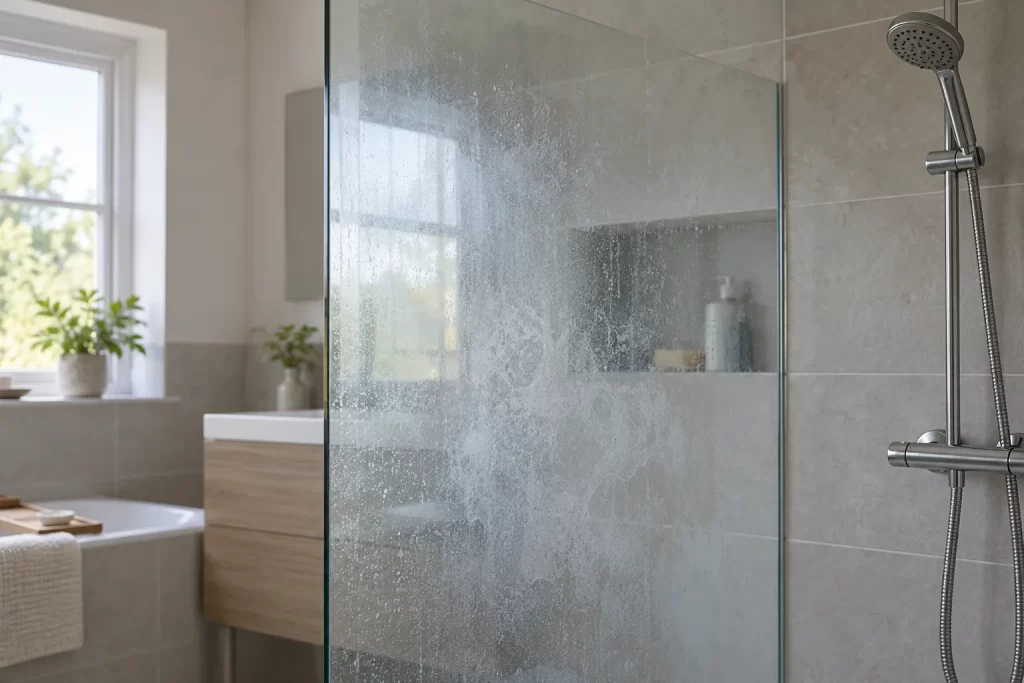
To remove shower soap film, begin with the screen’s care instructions and a gentle wash of a small area using warm water, a soft cloth and mild washing-up liquid if the manufacturer permits it. Rinse and dry the patch, then look again. A cloudy smear that lifts with this approach is likely to be surface residue from soap, body products or oils. Pale marks that stay in the pattern of dried droplets may include mineral scale. Both can occur together, so the first clean is a useful test rather than a definitive diagnosis. Only consider a scale treatment if the screen, its coating, frame, seals and surrounding materials all permit it.
Some screens have protective coatings, so even a gentle product must suit the exact enclosure. A small, compatible test shows whether some of the haze will lift. If it remains cloudy after appropriate cleaning, scratching, coating wear or etched glass may be involved; scrubbing harder will not restore the surface.
Why shower glass turns cloudy
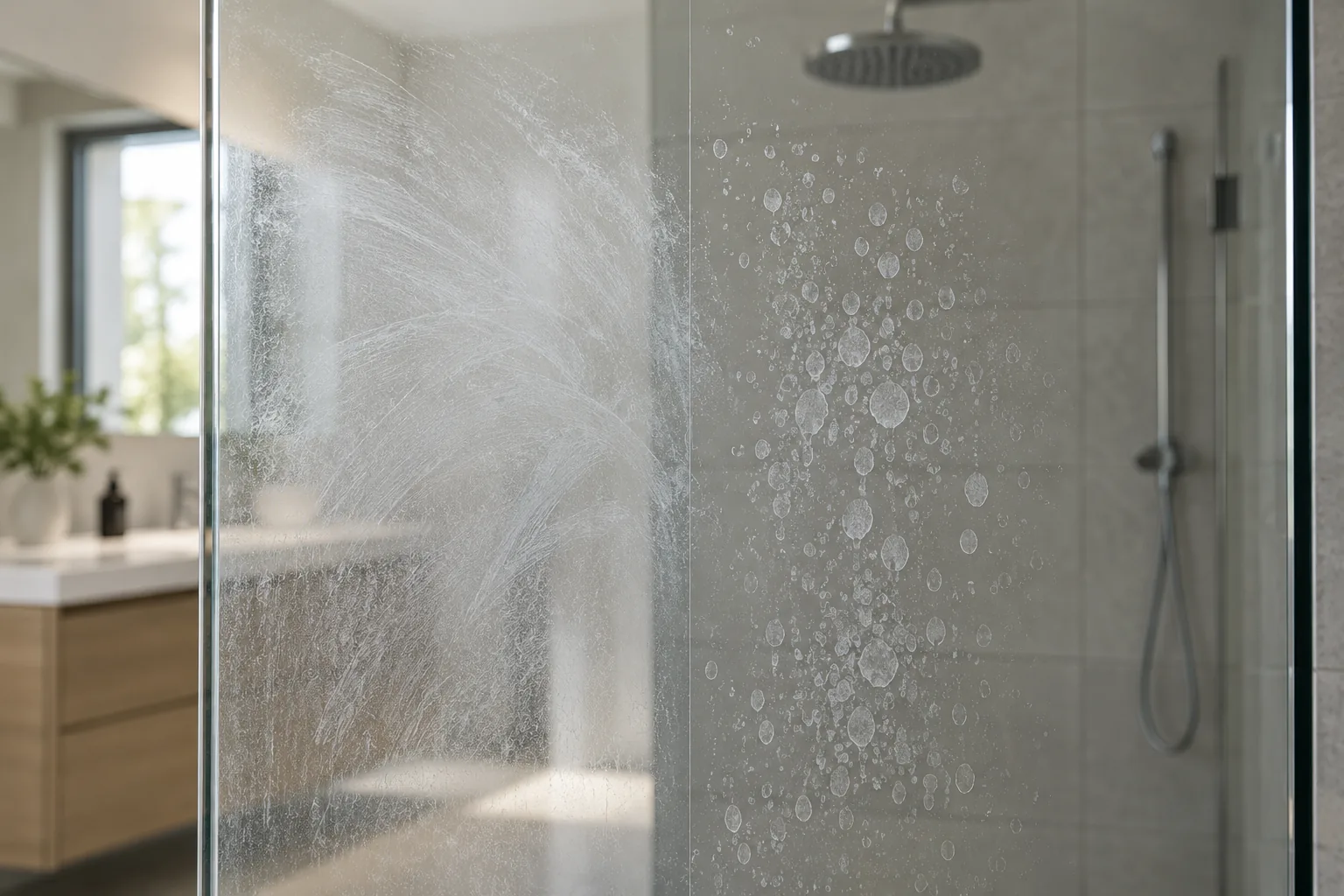
There is no single substance called “shower haze”. Bathing leaves behind water, soap or shower gel, shampoo, conditioner and skin oils. As drops dry, dissolved minerals in hard water can remain on the surface. Traditional soap can also react with calcium and magnesium in hard water to make an insoluble deposit commonly called soap scum. The US Geological Survey’s explanation of hard water describes this reaction. A screen may carry a mixture of mineral marks, product residue and ordinary dirt, especially towards the lower edge where water collects.
Appearance gives clues, not proof. Soap or product residue may form a broad, smeary film. Mineral marks may follow the shape of dried droplets or leave a pale crust. Avoid rubbing a gritty patch. The clearest household check is a cautious wash and dry of one small area: if the film lifts, use the same gentle method on the rest; if a white deposit remains, assess it separately.
Check the screen, coating and nearby finishes first
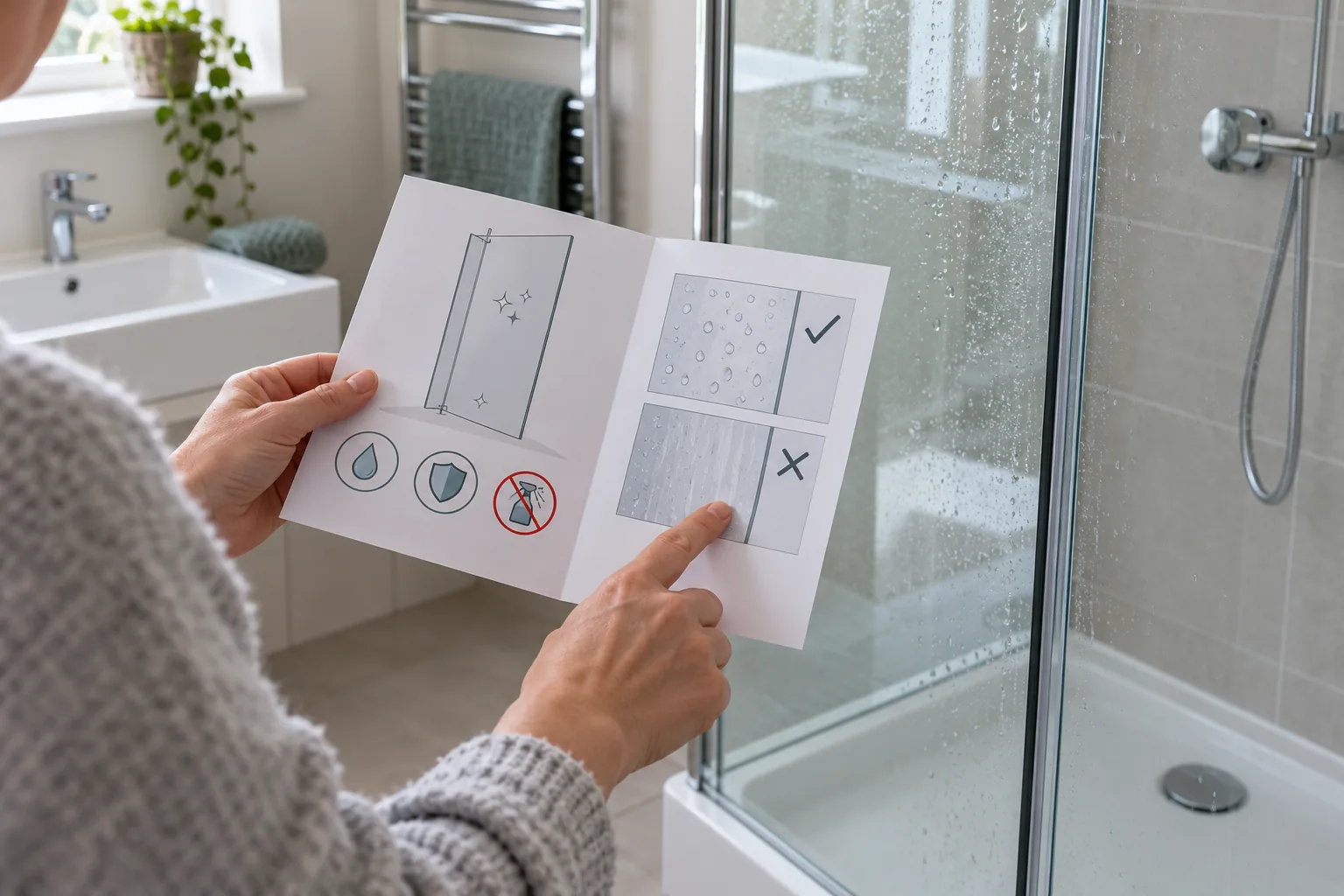
Find the enclosure brand and model in your records, on a label or on the maker’s website. Check whether the glass has an easy-clean coating and which mild cleaner the maker permits. The frame and seals may need separate care; avoid letting liquid run onto them.
Manufacturer advice is not uniform. Crosswater’s enclosure guidance specifies soapy water and a soft cloth and says not to use solvents, abrasive materials or chemicals for that enclosure. MERLYN’s general care advice also starts with soapy water and a soft cloth; it mentions a diluted vinegar solution for water marks but warns about acid-sensitive chrome and says all vinegar residue should be removed. That is permission for certain MERLYN surfaces under its directions, not a universal recipe for every screen.
If you cannot identify the coating, ask the manufacturer before using an acidic product. Follow the cleaner’s label for compatibility, application and rinsing. Never mix it with another product, especially bleach.
Use a small wash-and-dry test to identify film
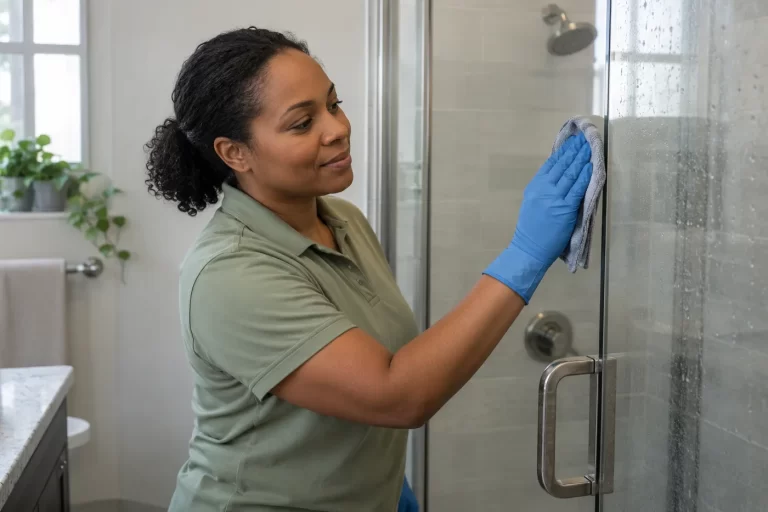
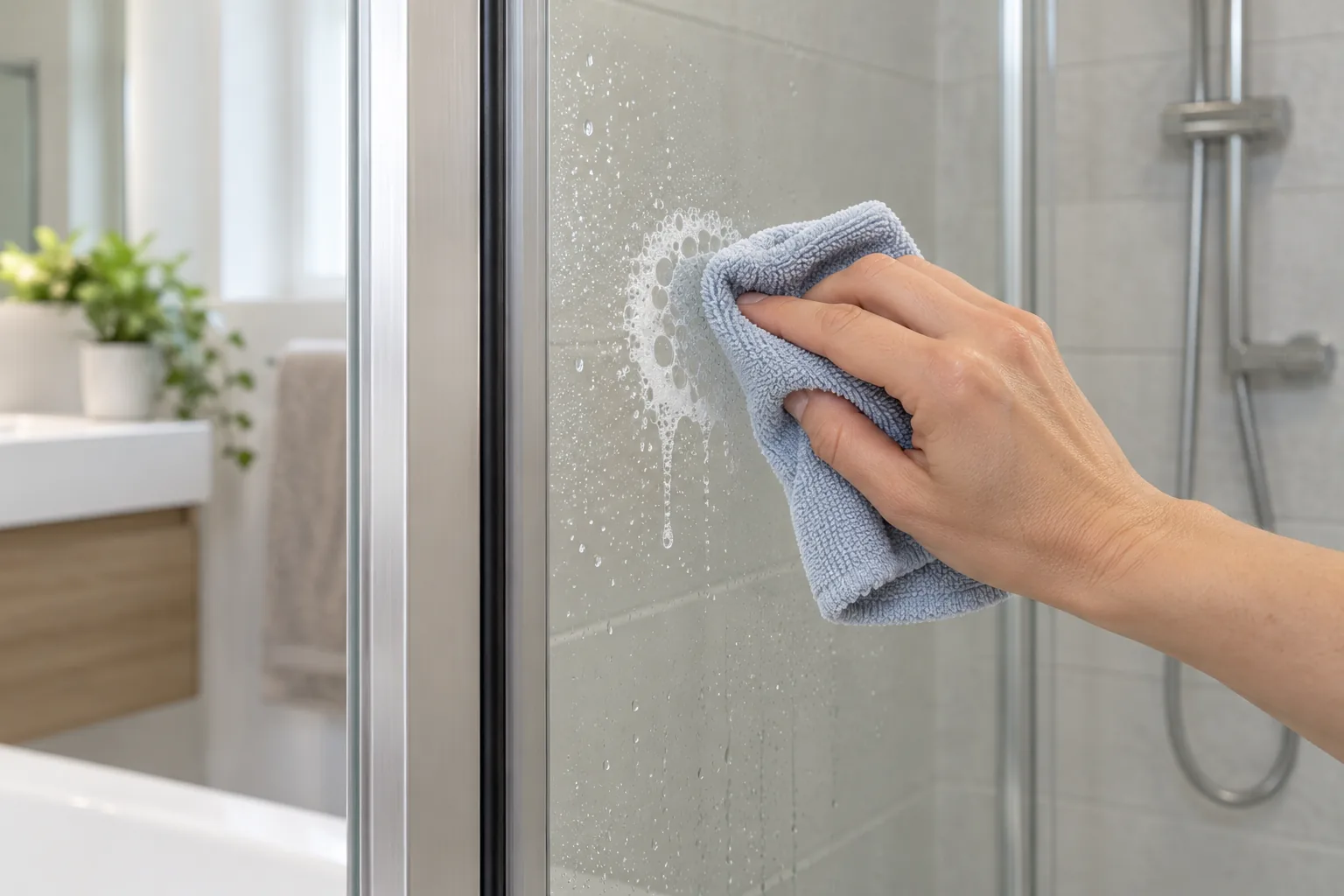
Choose a patch away from vulnerable metalwork, seals and natural stone. Remove loose hair or grit with water so it cannot be dragged over the glass. Wet a clean, soft microfibre cloth with warm water; add a small amount of mild washing-up liquid only if the screen’s instructions allow it. Wipe the patch gently in overlapping strokes. Do not press harder on a stubborn speck or reach for the abrasive side of a sponge. Rinse the cloth, wipe away all suds with clean water and dry the patch fully with another soft cloth.
Inspect the dried patch in daylight from more than one angle. When the haze has lifted, work across the screen in small sections, rinsing the cloth often. Remaining droplet rings may reveal a separate mineral deposit beneath the film. A patch that stays unchanged may indicate coating wear, scratches or etching. Greater force will not answer that question.
Keep the cloth on the glass and avoid pooling soapy water in tracks or behind hinges. Follow the enclosure instructions for cleaning those components separately. If a seal is lifting, brittle or allowing leaks, treat it as a maintenance issue, not a reason to scrub harder. A squeegee or dry cloth after the test makes the result easier to judge because fresh rinse water can leave new spots as it evaporates.
Work across a larger area gently
For a broad film, clean from the top of the panel down in narrow sections. Use a fresh part of the cloth as it picks up residue; otherwise you may spread the softened layer back over glass you have already wiped. Use only a little washing-up liquid, because excess detergent can leave its own streaks and make the result hard to judge. Rinse each section with a separate clean cloth, changing the water when it becomes cloudy, then dry immediately. Check the lower edge last: shampoo and body wash can run down and collect there even when the centre has cleared. Keep your cloth out of a sliding-door track that contains grit, and clean that track only by its own care instructions.
If the marks are mineral scale, choose a compatible treatment
If a white droplet pattern remains after the film has gone, use our separate guide to bathroom limescale and material-safe cleaning. The screen’s coating, frame and nearby materials determine whether an acidic treatment is suitable. Follow the exact enclosure guidance and product label; do not leave cleaner to dry on the surface.
For example, MERLYN’s general guidance mentions a 50:50 water-and-vinegar mix for water marks and complete residue removal. The cited Crosswater enclosure instructs soapy water only. Follow the exact screen’s manual; vinegar is still an acid and can affect nearby finishes.
Avoid blades, powders and stiff brushes that can damage a coating or frame. If a model-approved treatment does not clear the deposit, ask the manufacturer for advice. Our article on how descalers remove limescale explains the chemistry, while the screen’s manual remains the practical guide.
Rinse, dry and prevent the next layer
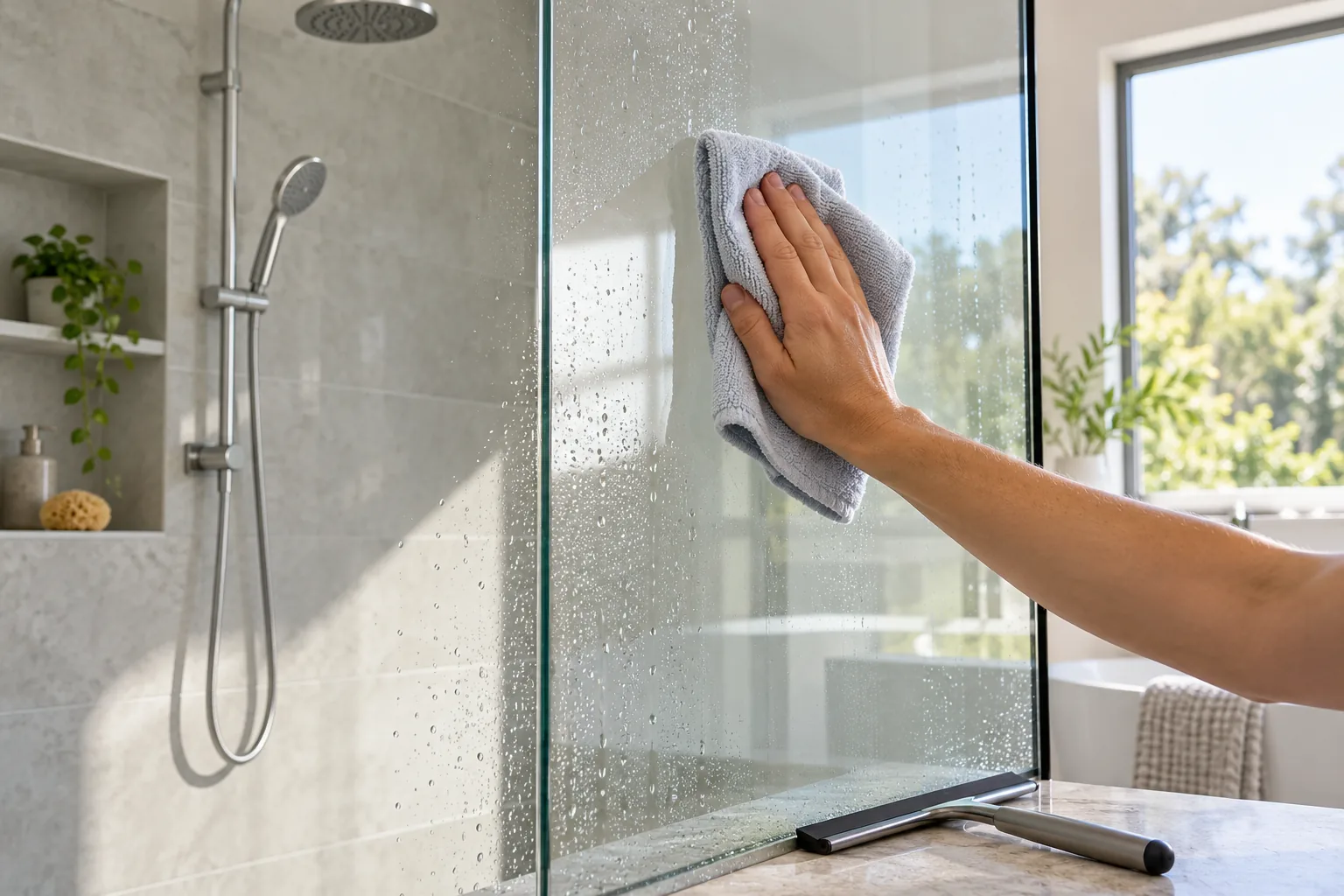
After cleaning, remove all residue in the way the screen and product instructions require, then dry glass and accessible edges with a soft cloth. Drying matters because a clear wet screen can look cloudy again when water evaporates. Crosswater’s maintenance advice recommends using a rubber squeegee after showers and wiping moisture from seals and frames. MERLYN likewise recommends removing residual water after each use and regular gentle cleaning.
Make that routine realistic for your household. A quick squeegee after a shower, followed by a soft cloth on the lower edge and frame, reduces the water left to dry. Rinse away visible product splashes before they set. Keep the bathroom ventilated as the enclosure maker recommends. Inspect seals and the tray periodically, because a clean screen will not fix water escaping through a worn seal or an installation fault.
How often you need a full clean depends on use, water hardness and the screen finish. A small, regular wash is usually easier on the surface than allowing a thick layer to form and then reaching for a harsh product. If you are arranging broader bathroom care, our one-off deep cleaning service covers ordinary accessible cleaning. Damaged coatings, failed seals and glass repair need separate assessment.
Common questions
Can soap film and limescale be present on the same screen?
Yes. Water, soap and body products reach the same panel, and hard water can contribute both soap scum and mineral marks. Start with the gentle wash-and-dry test. It may remove the film and reveal separate water spots underneath, which can then be assessed against the manufacturer’s cleaning instructions.
Is vinegar safe on every shower screen?
No. Some manufacturers permit a specified diluted solution for water marks, while others instruct soapy water only. Coatings, frames, fittings and adjacent materials also vary. Follow the exact enclosure’s guidance and protect any acid-sensitive surfaces. Never mix vinegar or descaler with another cleaning product.
Why is the screen still cloudy after cleaning?
It may still carry a deposit, but a persistent haze can also reflect scratches, coating wear or surface damage. Allow the panel to dry completely before judging it. If a correct, gentle clean and a model-approved scale treatment do not help, seek product-specific advice instead of increasing pressure or contact time.