Limescale removal is a material-care decision as well as a cleaning task. A method allowed on one shower panel may damage the tap beside it or the stone below. Begin with the surface instructions, then choose a controlled approach instead of a stronger universal recipe.
Identify the finish before choosing a descaler
A white deposit on a tap and a cloudy shower panel may look like the same cleaning job, but the surfaces underneath can need different care. Before applying a product, find the fitting or surface instructions. The useful question is not which household ingredient is strongest. It is whether the proposed cleaner, concentration, tool and contact time are suitable for this material.
Start with accessible care information: the tap brand, shower enclosure model, tile specification or installer’s notes. Photograph an unfamiliar finish and ask the supplier if you cannot identify it. A stone-effect surface may be ceramic, natural stone or a composite; appearance alone is not a reliable way to select an acid-based product.
If deposits have built up alongside soap residue and ordinary bathroom dirt, describe each problem when enquiring about a more detailed household clean. A cleaner needs to know the surfaces and condition, not simply that you want every white mark removed.
Check whether the mark is scale, residue or damage
Hard-water deposits often appear where water dries, such as around a tap base or along a shower screen. Soap and personal-care products can leave other films nearby. A rough crust, a greasy smear and a dull patch may therefore need different assessment. Do not assume all bathroom marks should be attacked with the same descaler.
A dull area can also be a changed finish, rather than a deposit sitting on top. Tell the supplier or cleaner whether the mark appeared after a product was used, whether the colour changed or whether a coating seems damaged. Repeated stronger treatment may make the distinction harder to assess and can harm the material further.
Take an overall photograph as well as a close-up. The wider view shows nearby joints, seals, metals and stone that could be affected by a spray or run-off. Include previous products and how long they were left on. This is useful information even if you cannot remember exactly what caused the original mark.
Use a surface decision table
| Surface | First check | Reason to pause |
|---|---|---|
| Tap or shower fitting | Brand instructions and finish-specific exclusions | Unidentified coating, peeling or permanent discolouration |
| Shower glass | Glass protection, seals and enclosure care guide | Coating uncertainty or a product likely to reach sensitive fittings |
| Natural stone | Stone type and supplier’s approved cleaner | Unknown stone, etched finish or an acid-based proposal |
| Tile and grout | Tile finish, joint material and product compatibility | Loose grout, damaged glaze or unclear installation details |
| Bath or shower tray | Exact material and manufacturer instructions | Scratches, cracks or an abrasive method |
The table is a set of checks, not a universal treatment chart. Two taps in one bathroom can have different finishes. A shower screen and its frame may need different products or application methods. Keep the most sensitive neighbouring material in mind when considering splashes and rinsing.
Taps and metal finishes: follow the fitting’s instructions
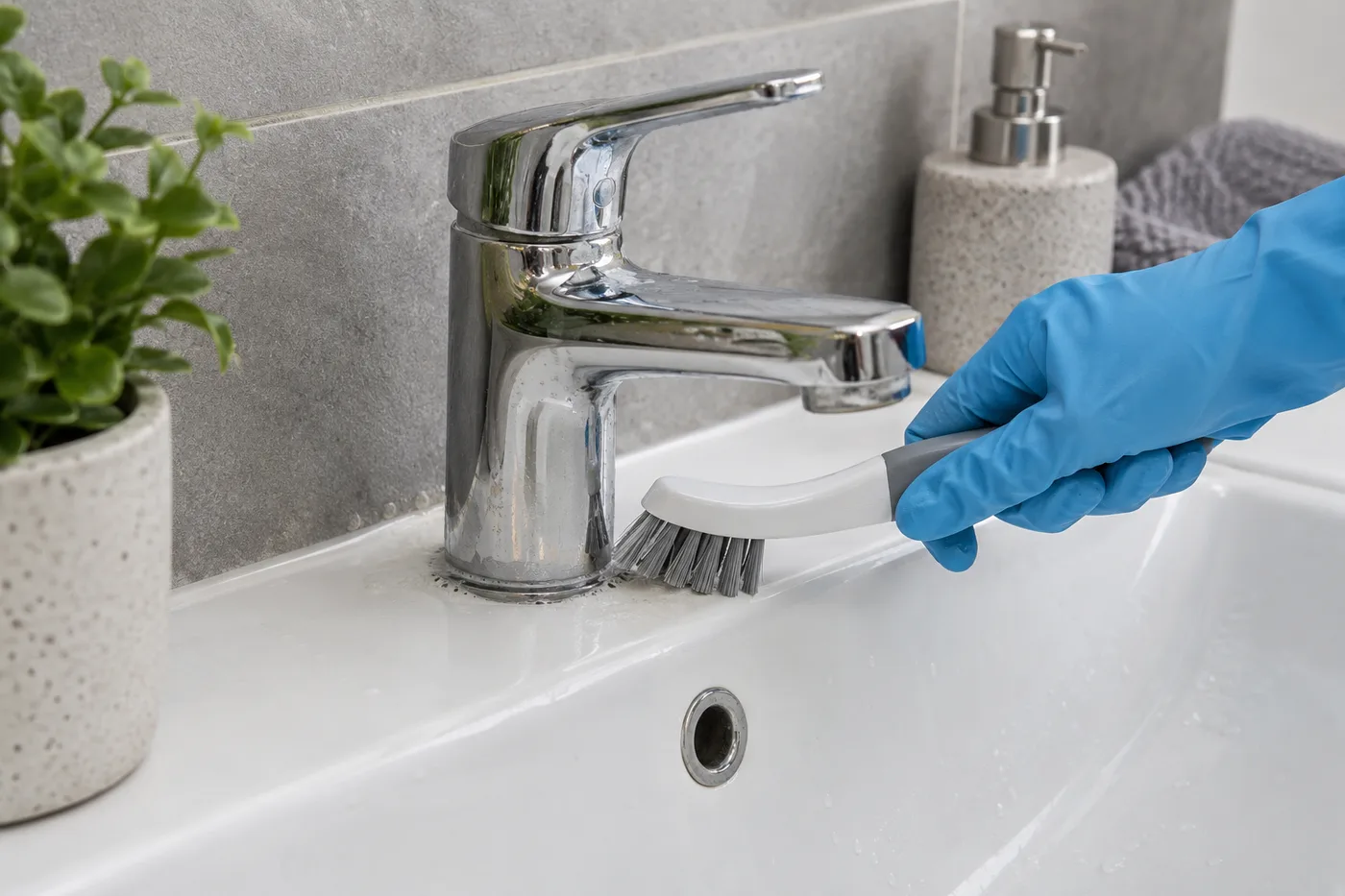
Do not assume vinegar is suitable because it is widely suggested online. hansgrohe’s cleaning guidance recommends a mild citric-acid-based cleaner for its products and excludes several other agents, including vinegar-based cleaners. It also directs application onto a suitable cloth rather than spraying the fitting directly. Those are product-specific instructions, not permission to use citric acid on every bathroom material.
Check the specified cloth or tool as well as the cleaner. A harsh pad can damage a finish even when the liquid itself is compatible. Work within the instructions for the actual fitting, remove residue as directed and dry it where appropriate. If instructions are missing, ask before using an abrasive or an unfamiliar chemical.
A removable aerator or shower component is a separate task from wiping the exterior. Do not force a stuck part, dismantle concealed fittings or assume every model comes apart in the same way. Ask which maintenance is intended for the user and which should be left to an appropriate professional.
Shower glass: remember the coating and nearby parts
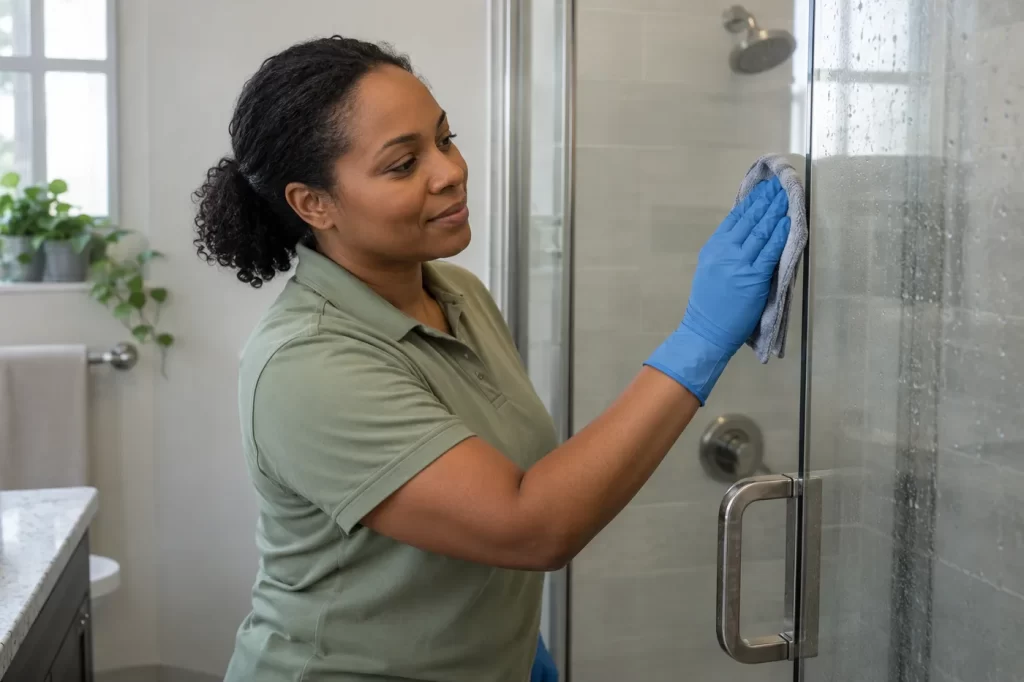
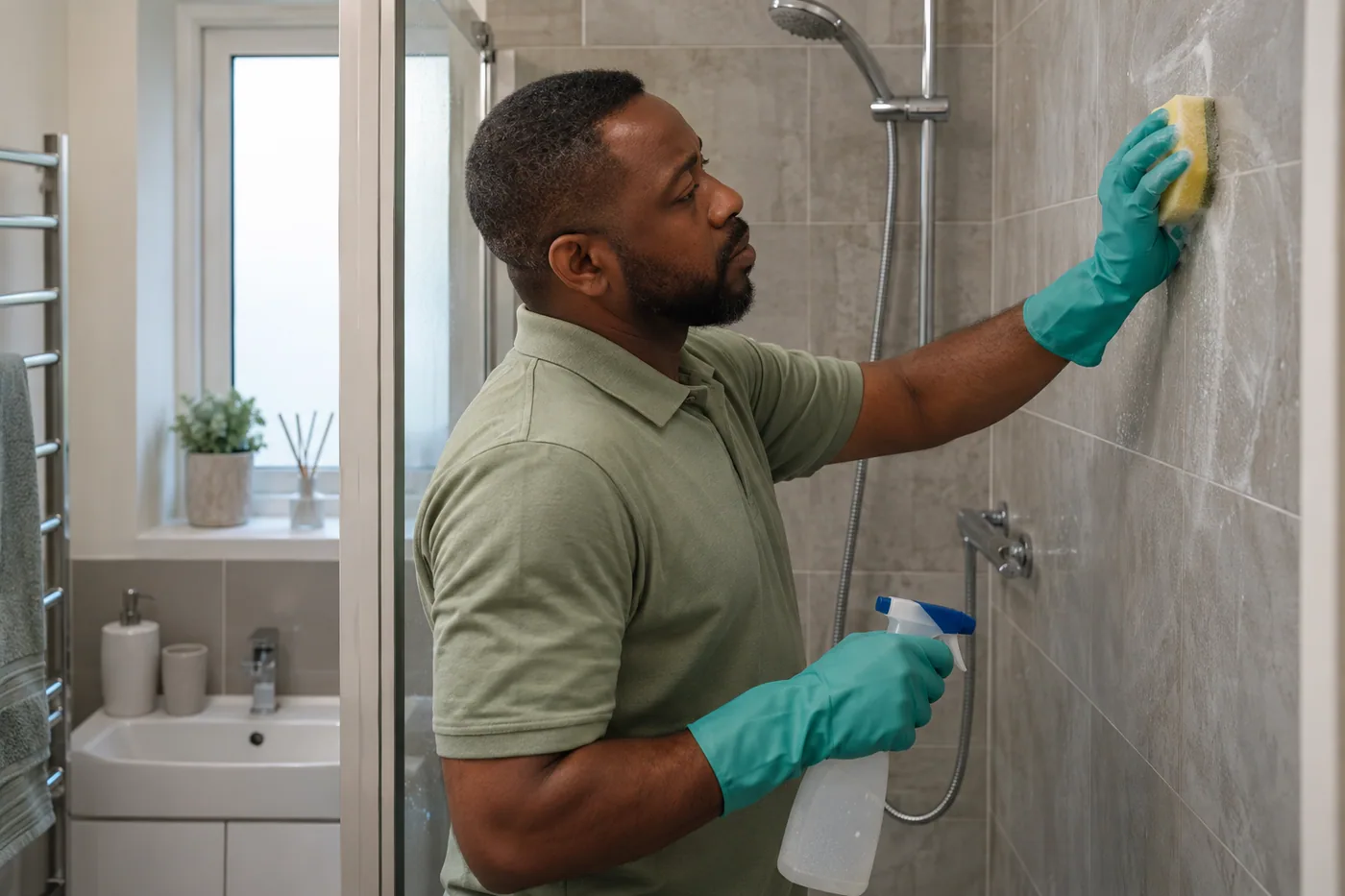
Some shower glass has a protective treatment. Find out what is fitted and how it should be maintained. A screen can include glass, frame finishes, seals, rollers and a tray within a very small area. A product allowed on one part can be unsuitable for another, especially if it runs down or is sprayed widely.
MERLYN’s cleaning advice describes regular care and avoiding abrasive products for its enclosures. Its guidance differs from some tap manufacturers’ advice. That difference is precisely why an internet recipe for shower glass should not automatically be used on adjacent metal fittings or on another manufacturer’s coated panel.
Use accessible wiping or water removal only where the instructions permit it. Do not lean heavily on an enclosure, climb into an awkward position or scrape deposits with a blade without appropriate product guidance. If a panel is loose, a roller damaged or a seal failing, discuss that fault separately from the cleaning.
Natural stone needs a different approach
Acid-sensitive stone is a clear reason to stop before using a standard limescale remover. The Natural Stone Institute’s care guidance explains that acidic products can dull or etch calcareous stones and that abrasive products may scratch surfaces. A pale bathroom tile is not enough information to establish acid resistance.
Ask the stone supplier for a method suitable for the identified stone and finish. Keep any sealing information available, but do not assume a sealer makes the material proof against every cleaner. If the surface is already dull or etched, cleaning and restoration are different tasks. An appropriate stone specialist may need to assess the finish.
Describe the whole installation when asking for advice: vanity top, splashback, shower wall or floor, along with nearby grout and sealant. A product suitable for an isolated piece in a demonstration may not be suitable where it can reach several other materials. Avoid trying progressively stronger products on an uncertain surface.
Check joints, trays and sealant before scrubbing
Tile glaze, grout, silicone and the shower tray are not interchangeable materials. Read both the surface care advice and the cleaning product’s exclusions. Do not use the fact that a cleaner is sold for bathrooms as evidence that it is suitable for every joint and finish in yours.
Loose grout, missing sealant, cracks or movement need a separate explanation. A brush cannot put missing material back, and a descaler cannot stop a leak caused by a failed joint. Photograph the fault and mention it before booking cleaning. This helps avoid turning a repair question into a demand for a stronger cleaning method.
A recurring dark patch should not automatically be treated as scale. If mould is suspected, explain recurrence, moisture and the affected surface. Read the information for a mould enquiry rather than treating every dark mark with a general bathroom product.
Follow a controlled cleaning sequence
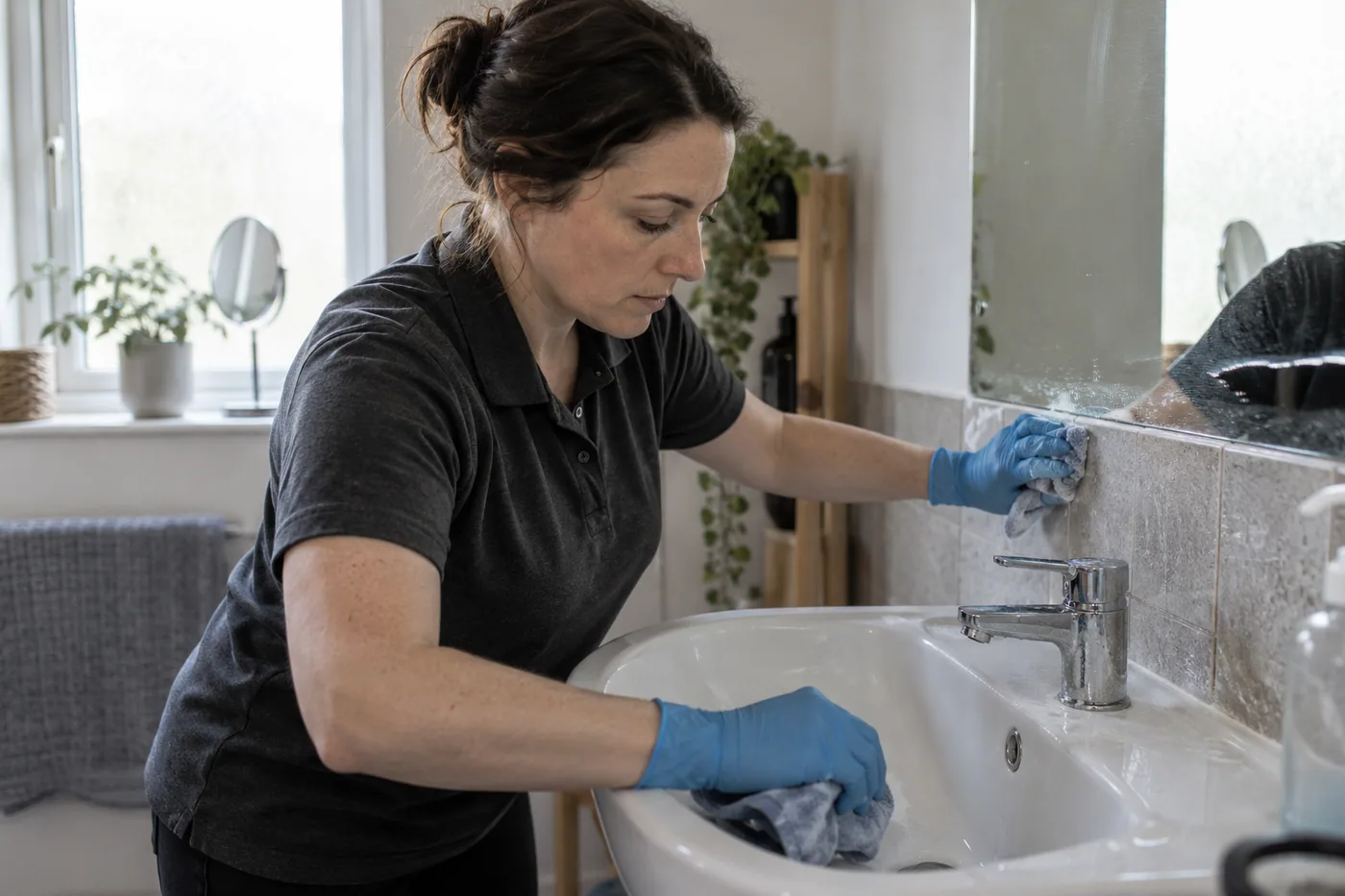
- Identify the material and read its care instructions.
- Choose a compatible product and tool; check exclusions, protection and ventilation requirements.
- Clear personal items and make the work area safe and accessible.
- Follow any test-area instruction before treating the visible deposit.
- Use the stated amount and contact time, keeping the product off excluded surfaces.
- Remove residue, rinse and dry only as the instructions direct.
- Check the result before deciding whether further treatment is appropriate.
A test does not cancel an explicit exclusion. If the fitting instructions say not to use a product, applying it behind the tap does not make it suitable. Equally, leaving a cleaner overnight is not a substitute for following a shorter labelled contact time. More liquid, heat or force can create a different problem.
Work on a manageable area instead of coating the whole bathroom and trying to rinse it all at once. Keep track of the product used and do not bring another cleaner into the task because a mark remains. If the result is unclear, stop and ask for suitable advice rather than escalating the treatment.
Do not mix cleaning products
Do not combine bleach, acidic descalers, vinegar or other cleaners to make a stronger solution. HSE’s surface-cleaning guidance warns against adding chemicals to bleach concentrates because dangerous gas can be released. Use products only under their own instructions, including any stated dilution.
Keep products in labelled containers and follow the required precautions. If a previous cleaner is still present or you are unsure what someone applied, explain that uncertainty before adding anything else. Ventilation and gloves do not make an incompatible chemical mixture acceptable.
If a product causes a reaction, irritating fumes or an unexpected surface change, stop the task and follow the product’s emergency guidance. Do not lean over the area to inspect it closely or attempt to neutralise a mixture with another household chemical. Seek appropriate help for exposure or symptoms.
Reduce the next build-up with ordinary care
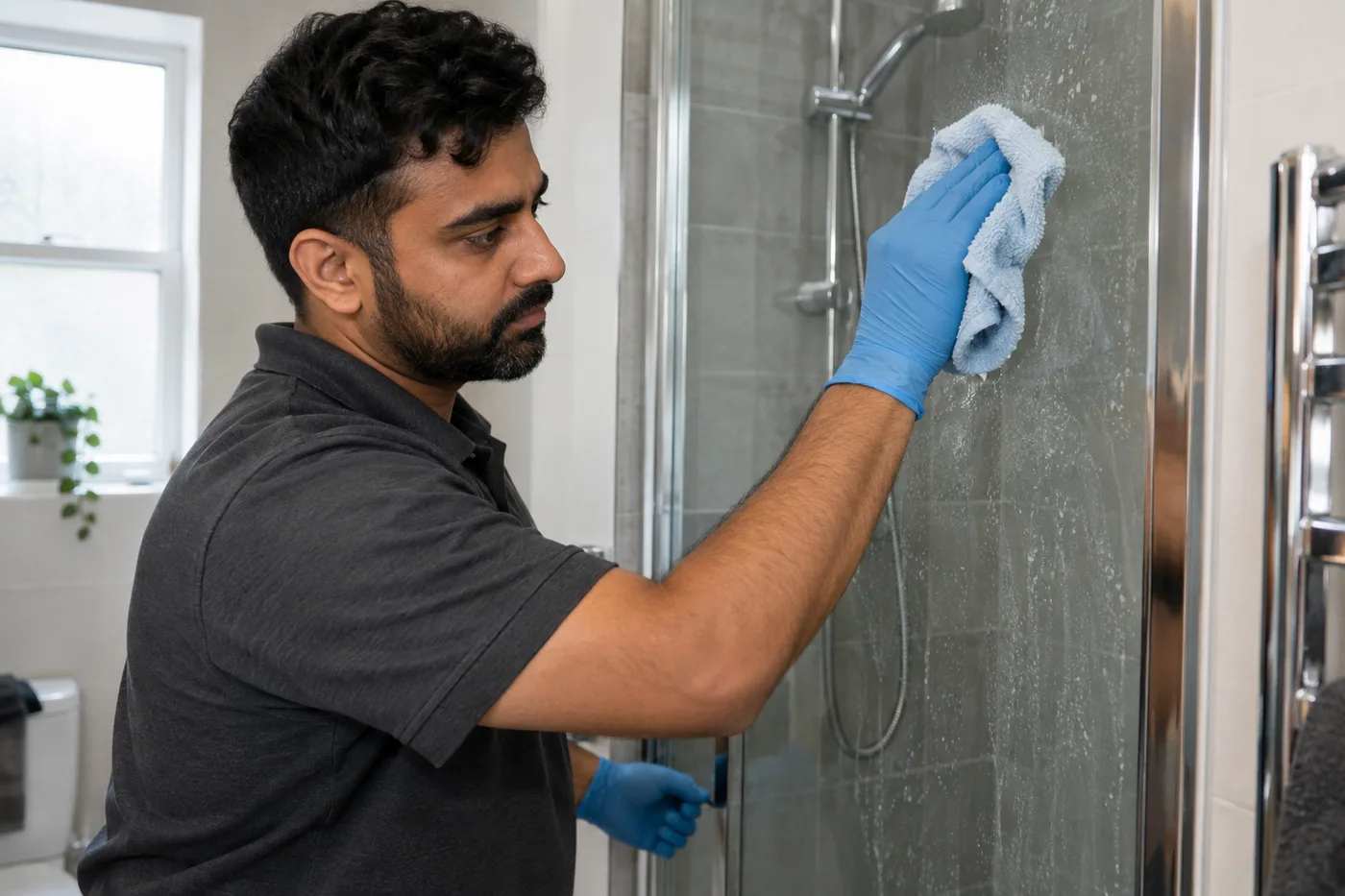
Where permitted, remove residual water from accessible fittings and glass after use. Regular appropriate care can make the next task smaller, but it does not guarantee that mineral deposits will never return. The amount of water exposure and the instructions for the surface still matter.
Keep the bathroom cleaning list realistic: accessible tap exterior, basin edges, shower glass and floor, with separate notes for unfamiliar marks. A regular room-cleaning arrangement can cover agreed upkeep; heavily accumulated scale or a sensitive finish needs to be described instead of assumed to fit a short routine visit.
If the bathroom windows also need cleaning, list them separately and describe which sides are accessible. Window-cleaning scope and access differ from maintaining a shower enclosure. Do not assume every glass surface receives the same product or forms part of the same appointment.
Know when to ask for advice or specialist assessment
Pause where the material is unknown, the finish has changed, deposits remain after a permitted method or the work is not safely reachable. Send the care information, photographs and product history. State whether the concern is an appearance change, restricted water flow or a visible defect; those are not identical requests.
Our existing descaler comparison article discusses different product types. The older vinegar guide covers broader household uses, but it should not override the instructions for a sensitive bathroom finish. Use material-specific advice before choosing a treatment.
The toilet-cleaning checklist addresses another bathroom task. Keep that work separate from taps, stone and coated screens, and do not carry a toilet product onto those surfaces simply because it removed a deposit elsewhere.
Can every cloudy mark be cleaned away?
No. Deposits, residue, scratches and changes to the finish can look similar. A cleaner can assess suitable removal work, but cleaning does not restore lost coating or repair etched material. Give a clear history before a result is discussed.