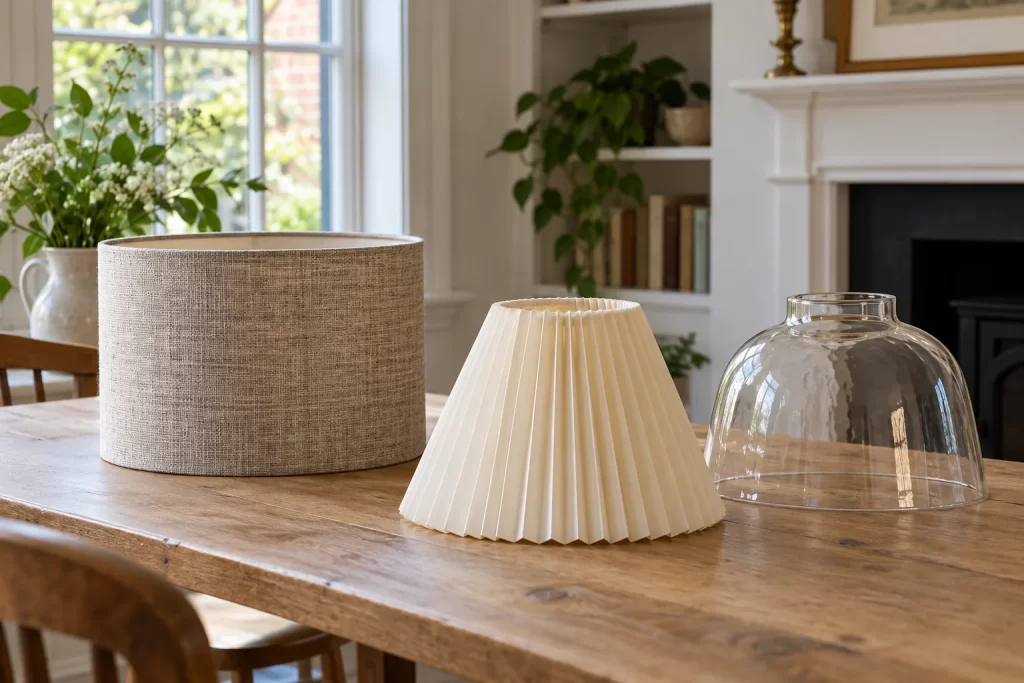
To clean lampshades, switch the light off, isolate a portable lamp at the plug and let the bulb and fitting cool. Check the shade’s material and care instructions before choosing a method. Fabric and paper shades often need dry dusting; some glass shades permit a damp cloth, while others specify a dry cloth only. Support the shade gently, keep water away from wiring and holders, and stop if the material is fragile, glued, stained or difficult to remove safely. A single method will not suit every fabric, paper and glass design.
Lampshades collect dust on their outer surface, along seams and at the top rim. Cleaning that visible dust can improve appearance without taking the light fitting apart. The challenge is that a shade may contain several materials: fabric over a plastic lining, paper on a metal frame, or glass held by a ring. Moisture, pressure and removal can affect each component differently. Start with identification and the safest accessible surface, then decide whether anything more is justified.
Make the lamp safe and inspect the attachment
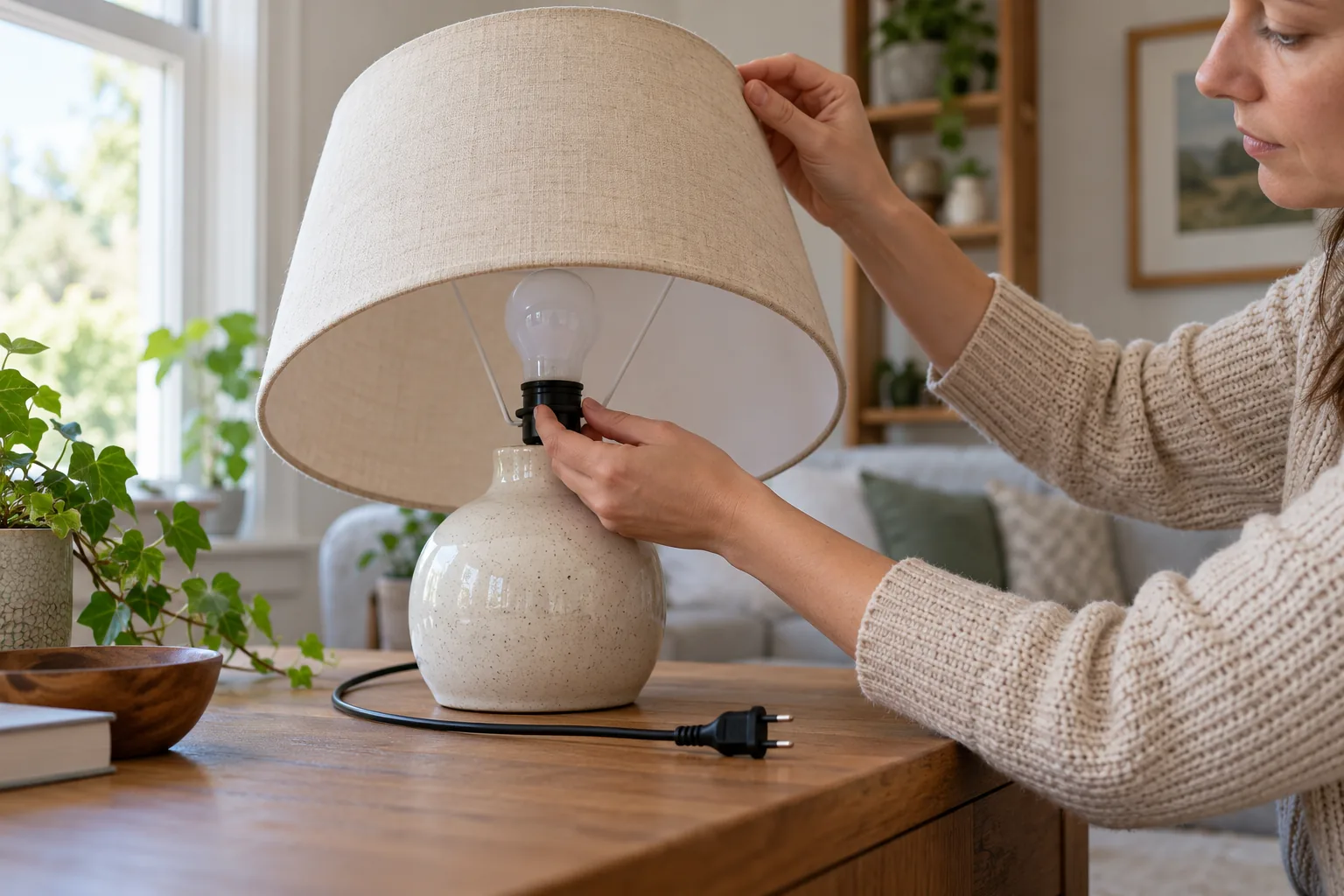
Turn the lamp off and unplug a table or floor lamp before handling it. For a fixed ceiling light, follow its manual and isolate the circuit if cleaning or removal requires touching the fitting. Wait until the bulb and shade are cool. Electrical Safety First’s lamp guidance advises switching off, unplugging and allowing a bulb to cool before changing it, and warns against using damaged lamps. The same separation from power and heat is sensible before cleaning the shade.
Look at how the shade is held. It might sit on a harp, clip over a bulb, screw into a holder or hang from a ceiling fitting. Some glass shades are heavy; some paper shades tear when gripped by one edge. If the attachment is unclear, clean only the accessible outside while it remains in place, provided you can reach it safely. Do not twist a shade against resistance, pull on the cable or remove electrical parts. A loose fitting, cracked glass, scorched fabric, damaged plug or exposed wire requires repair advice before use.
Choose a stable position. Put a portable lamp on a level table where you can support both shade and base. If a ceiling shade is above comfortable reach, use a suitable stable platform on a dry floor or arrange help; do not stand on a sofa or stretch from a chair. Place a clean towel under a removable shade so a glass rim or delicate frame does not strike a hard surface.
Fabric shades: lift dust without wetting the lining
Read the product label or maker’s page. A woven shade may look washable but be glued to a lining that is not. For example, IKEA’s MYRHULT fabric shade lists a duster as its care method, while John Lewis’s fabric Ambleside shade specifies a dry cloth and no chemical or abrasive cleaner. Those instructions are specific to those products; they illustrate why the label matters.
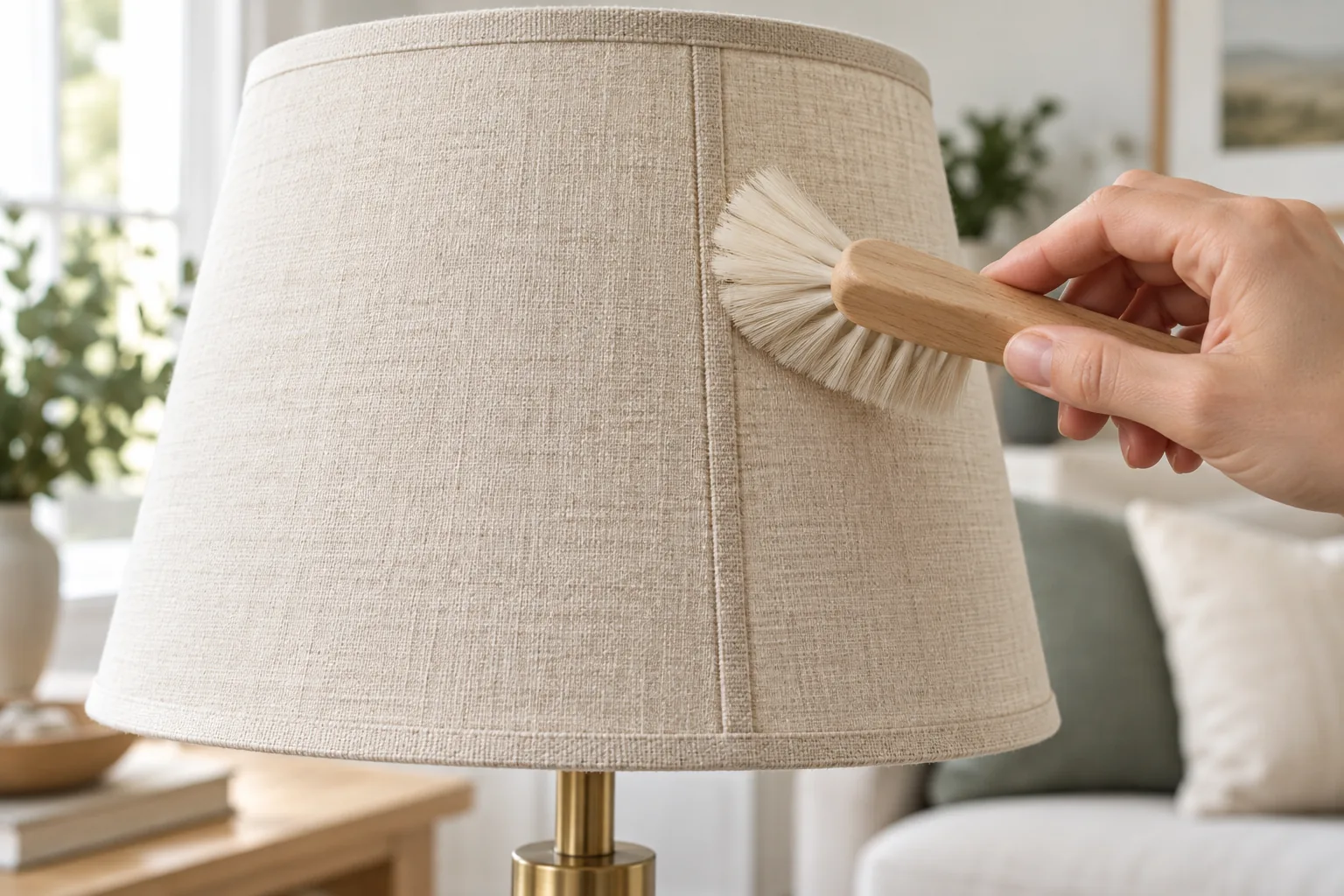
Use a clean soft duster, microfibre cloth or soft brush as permitted. Hold the frame lightly so the fabric does not buckle, and brush from top to bottom with short strokes. Pay attention to the seam and pleats without pulling them open. A dry, low-tack lint roller may be appropriate for some robust fabrics, but test a hidden edge and do not use it on loose weave, velvet, embroidery or old adhesive. A vacuum brush can tug at fabric and trim; use it only if the maker recommends it and at a gentle setting.
Do not soak a fixed fabric shade or spray stain remover across it. Water can leave tide marks, distort the fabric, loosen glue or affect a backing. If a fresh mark is present, consult the maker’s spot-cleaning directions before blotting. A shade with an old stain, yellowing or detached lining may need specialist advice or replacement rather than repeated rubbing. Do not keep using a shade with scorch marks or heat damage.
Paper shades: keep hands and tools dry
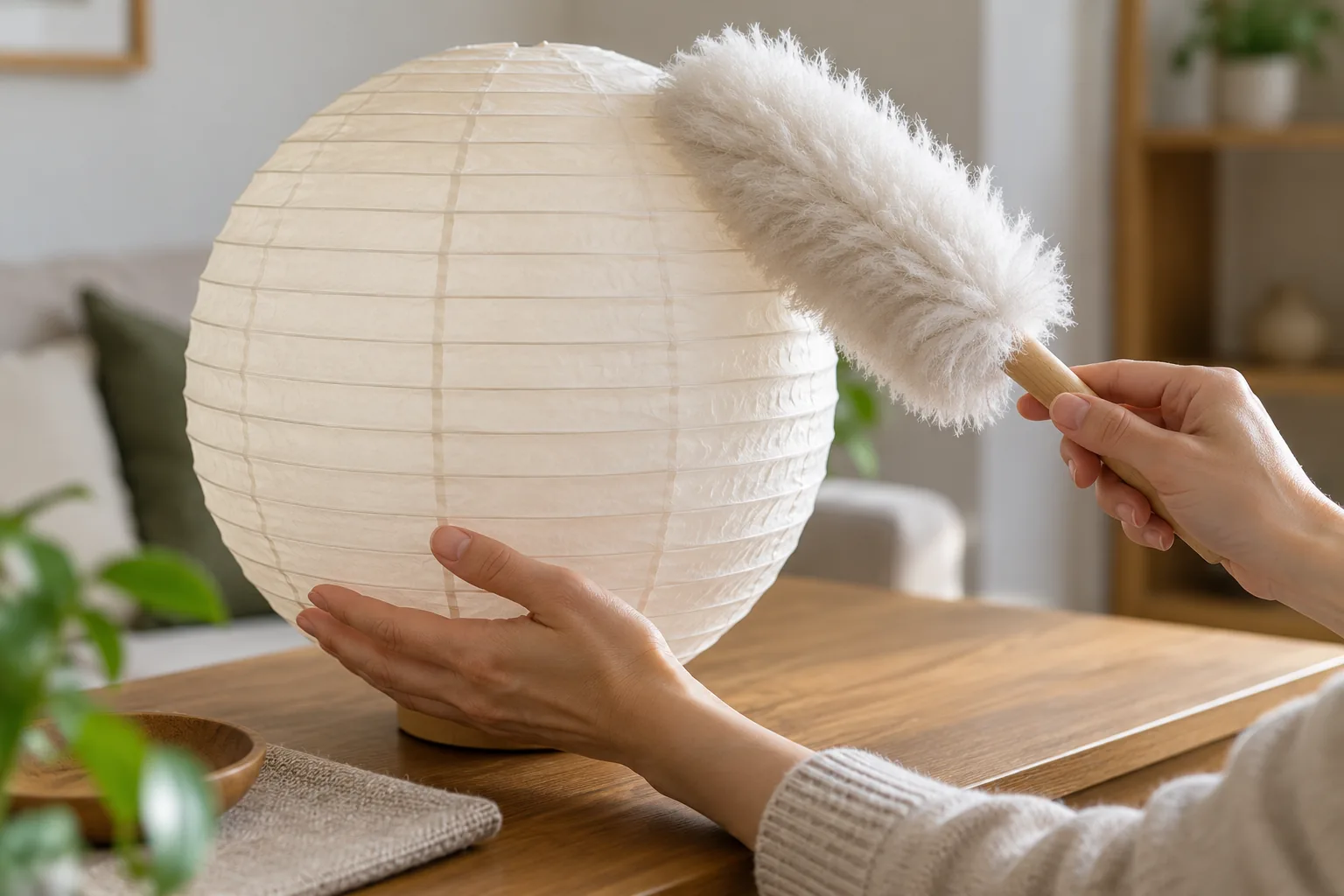
Paper and paperboard shades can crease, tear or lose shape under surprisingly little pressure. IKEA’s STRÅLA paperboard shade specifies a dry cloth, and its BLÅSTÅNG paper-string shade allows a duster or dry cloth. Neither instruction is a reason to wet another paper shade. Use clean dry hands, support the frame and move a very soft duster across the surface without compressing folds.
Do not use a damp sponge, spray cleaner or steam on paper unless the exact maker explicitly permits it. A stain absorbed into paper is often not removable by routine cleaning. Rubbing it may spread the mark or polish one spot differently from the rest. If the shade is pleated, work in the direction of the folds with the least pressure that removes loose dust. Stop if an edge starts lifting or the paper feels brittle.
Check the bulb type specified by the lamp and shade makers while the fitting is off. Electrical Safety First advises keeping lamps away from flammable items. If a shade is brown near the bulb, warped or smells scorched, stop using it and seek advice about the fitting rather than cleaning away the sign of overheating.
Glass shades: follow the finish and removal instructions
Glass is often easier to wipe than fabric, but the exact finish matters. Painted, frosted, textured or decorative coatings may not tolerate a general glass spray. IKEA’s JAKOBSBYN glass shade specifies a dry cloth. Another IKEA glass lamp, JÄRPLIDEN, allows a cloth dampened with a mild cleaner followed by a dry cloth. Choose the instructions for your actual shade.
If removal is authorised and straightforward, hold the glass securely with both hands, release the specified fitting and place the shade on a soft towel. Never balance it on the edge of a sink. Wipe with the approved cloth or cleaner, taking care around painted rims and metal collars. Dry fully before refitting. Keep cleaner off the lamp holder, cable and electrical contacts. Do not immerse a shade unless the manufacturer explicitly says it is removable and washable in that way.
For glass that stays in place, use only the method that can be applied safely without liquid running towards the fitting. A dry microfibre cloth may be the best option even if the glass itself could tolerate moisture. Inspect for chips or cracks before handling. A cracked glass shade should be replaced with a suitable part; cleaning does not make it safe to keep using.
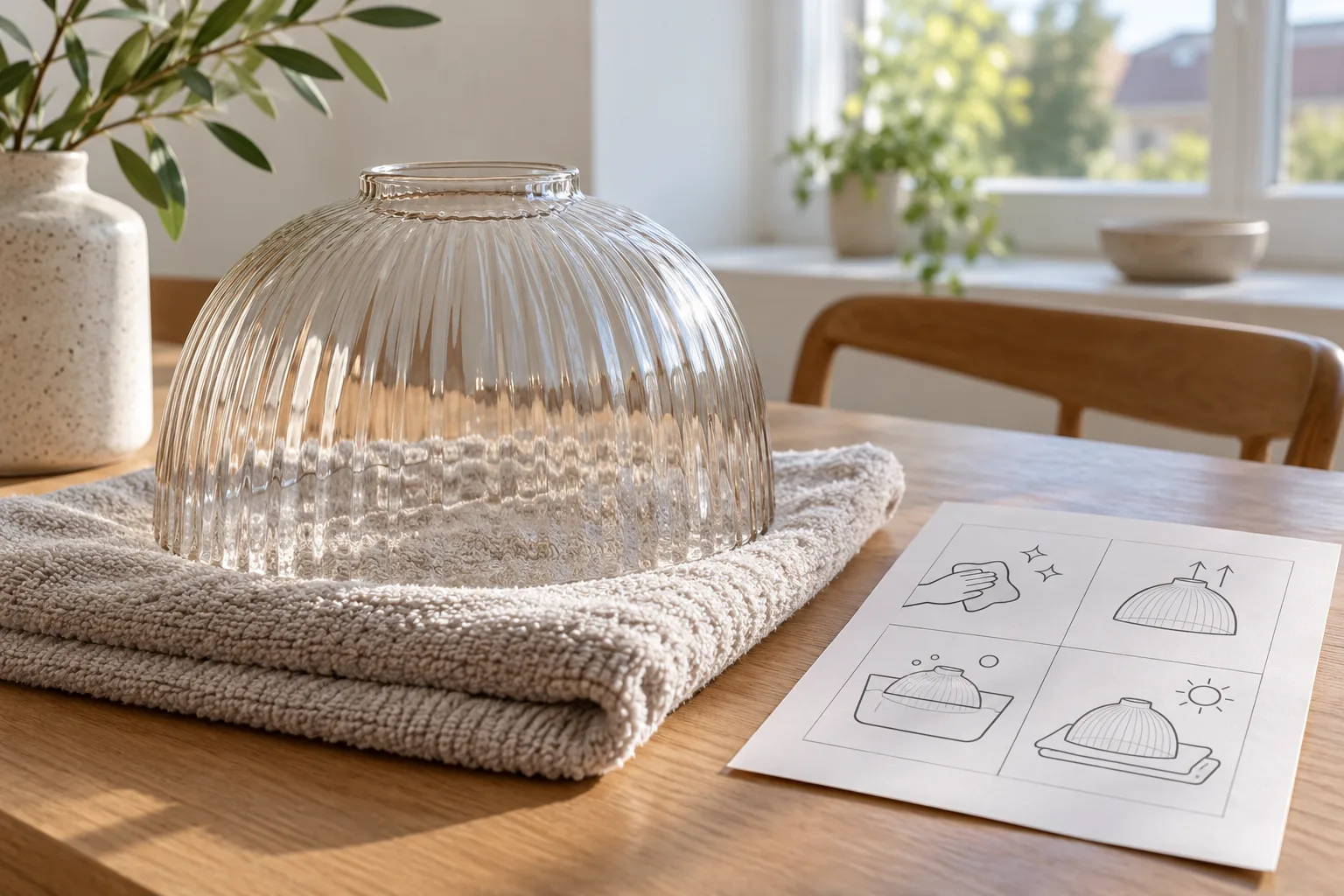
Metal, plastic and mixed-material shades need the same care check
Painted metal, plastic and composite shades may be durable, but finishes can scratch or dull. Check whether the manufacturer says dry cloth only or permits a lightly damp one. A metal-look PET plastic IKEA shade specifies a dry cloth, showing that appearance is not proof of material. Avoid abrasive sponges and chemical sprays without an explicit care instruction. For perforated designs, a soft dry brush can lift dust from holes without pushing debris into the fitting.
Where several materials meet, follow the most restrictive care instruction. A glass panel with glued fabric trim, for example, should not be washed like a plain glass bowl. Keep moisture off decorative seams, adhesives and electrical parts. If the shade has a diffuser, do not pull it away unless the assembly instructions show how. Record how any permitted pieces fit before removing them, and refit only when fully dry and secure.
Make lampshade care part of a gentle regular dusting routine. A quick dry pass prevents a thick layer building up, while keeping pressure and handling low. Our guide to cleaning blinds covers another dust-catching furnishing with material-specific care; how dust affects your health gives wider context. Regular home cleaning can include accessible surfaces, with electrical repair and specialist restoration kept separate.
Common questions
Can I wash a fabric lampshade in water?
Only if its exact maker says it is washable and gives a method. Many fabric shades have a backing or glued seam and are specified for dry dusting. Immersion can cause distortion, tide marks or adhesive failure.
Is glass cleaner safe on every glass shade?
No. Some glass shades specify only a dry cloth, while others allow a damp cloth with mild cleaner. Coatings, paint and metal fittings may have different limits. Check the product care page and keep liquid away from electrics.
Should I remove a ceiling shade to clean it?
Only if the assembly instructions show a safe removal method and you can isolate the fitting and reach it securely. For routine dust, the accessible outer surface may be enough. Stop if the fitting is loose, damaged or difficult to handle.