To clean fabric dining chairs without leaving water marks, begin with the chair maker’s care instructions and any fabric cleaning code or restrictions. For a fresh spill, remove solids gently and blot liquid with a clean dry white cloth; do not rub or pour water into the seat. If the label permits a spot cleaner, test it on a hidden area and use the smallest amount the instructions specify. Work carefully, remove residue as directed and let the fabric and padding dry completely before anyone sits on the chair. If the mark spreads, colour transfers or the seat becomes wet through, stop and seek upholstery advice.
Dining chairs meet food and drink every day, but their construction makes cleaning different from wiping a hard kitchen chair. Upholstery can be stretched over foam, stitched around a shaped seat, attached to wood or metal, and sometimes fixed in place. A small wet patch can travel into padding or leave a ring as it dries. DFS’s fabric-care guidance warns that water marks can be difficult to remove from upholstery and recommends professional help when they persist. The most useful household response is prompt absorption plus careful, label-led decisions.
Read the chair, fabric and frame instructions separately
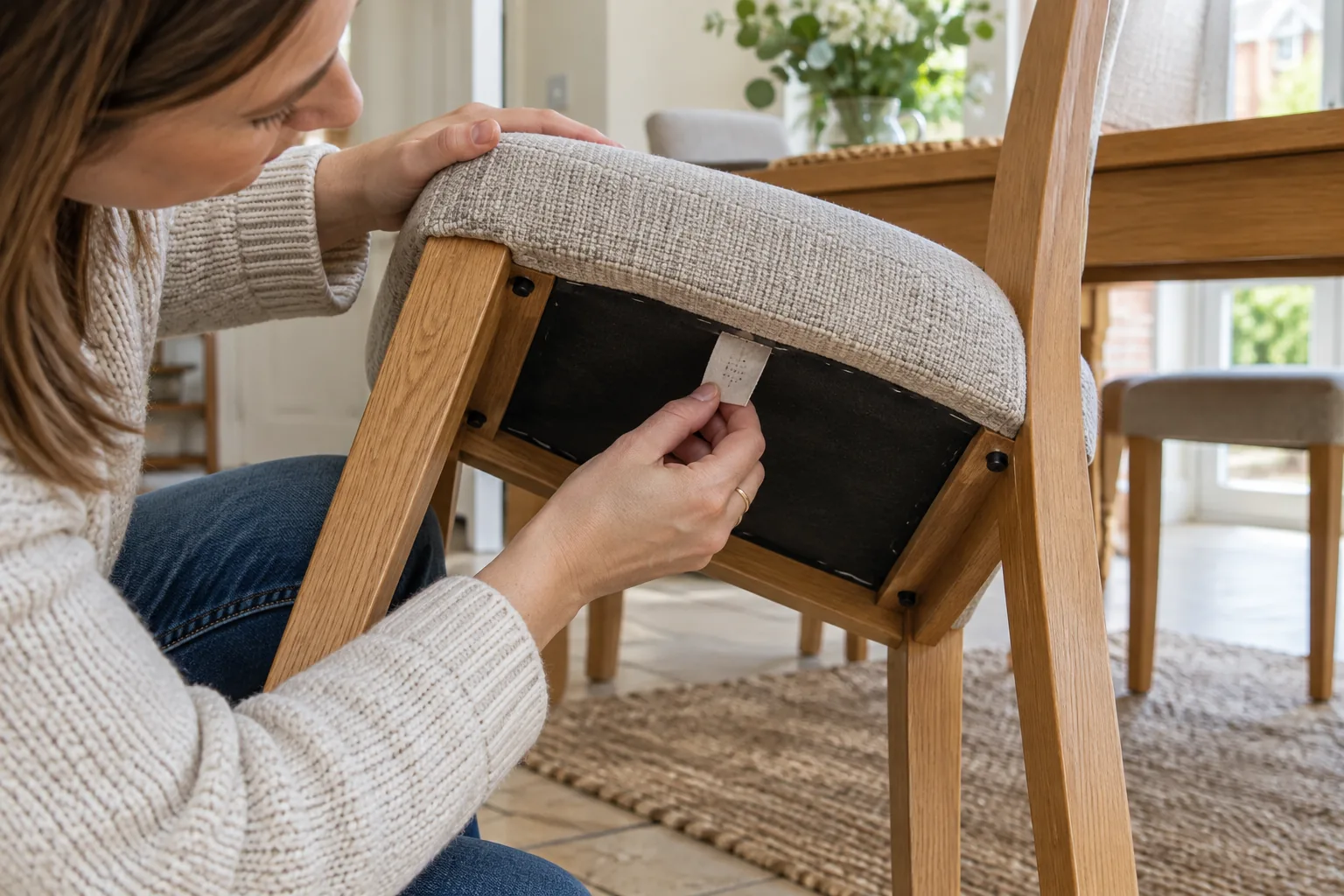
Check beneath the seat for a tag, then look up the exact model and fabric option. The fabric, cushion and frame may each have different rules. A cover that looks removable is not necessarily washable. IKEA’s TOSSBERG dining chair lists vacuuming and damp-cloth care for its non-removable section but says its cushion cover must not be washed. Another IKEA chair, ROSENTORP, has a removable cover with a specified machine wash. Treat those as examples of product-specific variation, not permission to wash an unknown chair cover.
Look for restrictions on water, solvent cleaners, steam, brushing, vacuuming and heat. The frame can also matter: liquid may mark wood, enter a glued joint or pool around metal fittings. If a care code is unclear, ask the retailer or manufacturer before using a product. Keep a photo of the tag and the exact chair model in your household records for the next spill.
Inspect the fabric before treatment. Is it velvet, boucle, flat weave or a delicate blend? Is the mark on a seam, piping or a broad centre panel? Is the seat already discoloured or worn? A cleaning product that is safe on one material can cause pile change or dye bleed on another. If the chair is antique, valuable, handmade or has unstable dye, a specialist assessment may be the safest first step.
Blot a new spill before it spreads into the padding
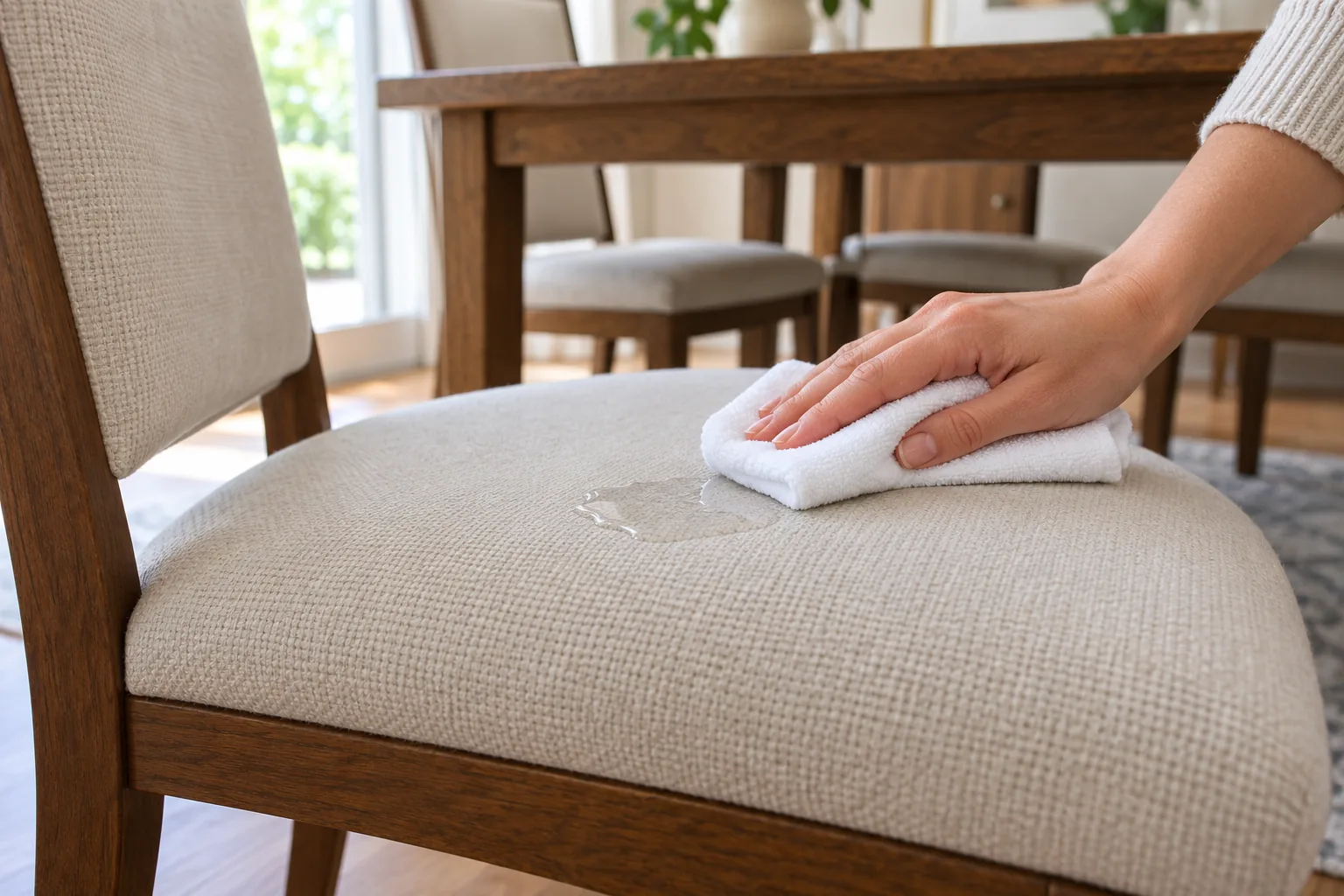
Move the chair clear of the table so you can work without bumping it. Pick up solid food with a spoon or blunt edge, lifting rather than pushing it into the weave. Set a dry white towel on the liquid and press gently. Lift, refold to a clean section and repeat while transfer continues. Work from the outer edge towards the centre to keep the spot small. Do not scrub with a sponge or brush; La-Z-Boy’s upholstery care guide advises dabbing spills and not rubbing them into fabric.
Keep the first response dry, even if the mark looks dramatic. Adding water immediately can spread colour into a larger ring and wet the foam below. A white cloth also reveals whether the upholstery dye itself is transferring. If it does, stop home treatment. Do not place a hot iron, hairdryer or portable heater against the seat to speed it up; heat may affect the fabric, backing or stain. Set the chair aside so nobody sits on the wet patch.
For sticky residue or an older mark, follow the manufacturer’s spot-cleaning advice. A general kitchen spray, washing-up liquid or scented wipe may leave its own stain or residue. The label may specify a maker-approved product or professional treatment. Do not use a cleaning method because it worked on your sofa; the chair’s fabric and padding may be different.
Test any approved product where it will not show
If the chair instructions permit a spot treatment, test it on the hidden back or underside of the upholstery, away from the frame. Follow the product’s dilution and application directions. Use a small amount on a clean white cloth rather than soaking the seat. Allow the test to dry completely before judging it. Look for colour transfer, a changed texture, a ring or a difference in sheen. A wet test may look fine and become obvious only when dry.
Treat only a manageable area. Blot or dab according to the product instructions, keeping moisture out of seams and padding. Work carefully at the boundary of the mark rather than leaving a large wet halo. Remove cleaner residue only by the method the care label permits. Do not repeatedly re-wet a patch to chase a faint outline; the outline may grow with each attempt. Stop if the fabric pills, flattens, bleeds or becomes sticky.
Some chairs have removable covers. If the label specifically permits machine washing, remove and launder them according to the exact temperature, cycle and drying instructions. Never assume a zip alone grants permission. A cover can shrink and then fail to fit the foam again. Keep the chair components dry and refit only when the cover is completely dry, unless the maker specifies a different method. If the seat is upholstered directly onto a board, do not dismantle it to reach foam for a household stain.
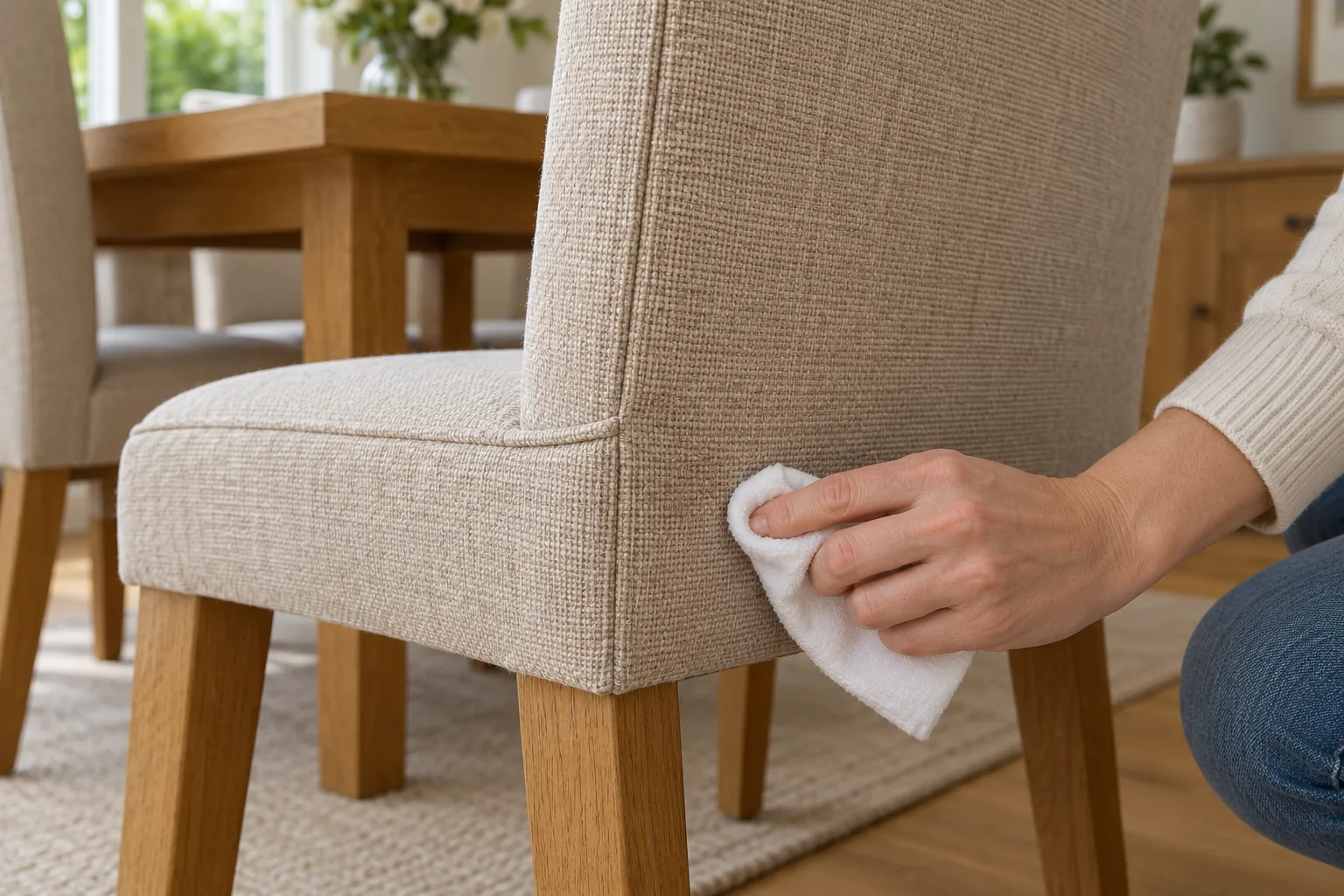
Let the whole chair dry and judge the mark afterwards
Move the chair into a ventilated room and leave space around it for air to circulate. Keep it away from direct heat and do not place cushions or a tablecloth over the seat. Check the centre, edges, piping and underside for dampness before use. Foam can remain wet after the top fabric feels dry. If the chair has a wooden frame, wipe any accidental moisture from it according to the frame’s instructions.
Judge the result in consistent natural light once dry. A faint ring may be residue, dye movement or a difference in pile direction. It is not always something another round of water will fix. DFS says fabric water marks can be difficult to remove and recommends professional upholstery cleaning when the problem persists. A specialist can assess the fibre, colourfastness, previous products and padding before deciding whether a broader treatment is appropriate.
Keep a record of the spill and product used. That helps the next person avoid mixing treatments. If the chair smells damp, has a stain on the underside or remains wet in the padding, stop using it until it has been assessed and dried properly. A cosmetic surface improvement should not hide trapped moisture.
Prevent repeat marks without covering up the fabric
Regularly remove crumbs and dry dust using the method in the chair’s care instructions. A soft brush may suit one weave, while a gentle vacuum attachment may suit another; velvet and loop textures can be sensitive to suction or brushing. Place coasters and use placemats so cups and serving dishes are less likely to drip onto the seat. A washable seat cover can be practical if it fits safely and does not trap moisture, but check that its dye will not transfer to the chair.
Look at the chair legs and the floor when moving it for cleaning. Lift or move it according to the furniture and floor guidance rather than dragging a chair that could scratch the surface. Keep cleaning sprays for the table away from the upholstery; overspray can land on the seat and dry as a mark. Wipe hard chair frames with their own approved method, keeping liquids off the fabric boundary.
Our article on sofa care labels, stains and drying explains the same label-first principle for another upholstered item. The carpet stain first-response guide reinforces prompt blotting, but a chair’s fixed padding changes the drying risk. If the mark remains or the chair needs a deeper treatment, discuss its exact fabric and construction before arranging upholstery cleaning. A sensible assessment sets expectations about possible water rings, dye movement and complete drying.

Common questions
Can I use water to wipe a fabric dining chair?
Only if its care instructions permit a damp method. Some chairs allow it; others have covers or finishes that should not be wet cleaned. Even where water is allowed, use very little and test a hidden area, then dry completely.
Why did a ring appear after the spill dried?
Liquid can move dissolved soil, dye or cleaner residue to the edge of a wet patch. The fabric’s pile or backing may also change appearance. Do not keep adding water without the maker’s advice; a specialist can assess the cause.
Should I wash a removable chair cover?
Only if the exact cover label says it is washable and states the method. A zip does not prove washability. Follow the stated cycle and drying instructions so the cover keeps its fit and finish.