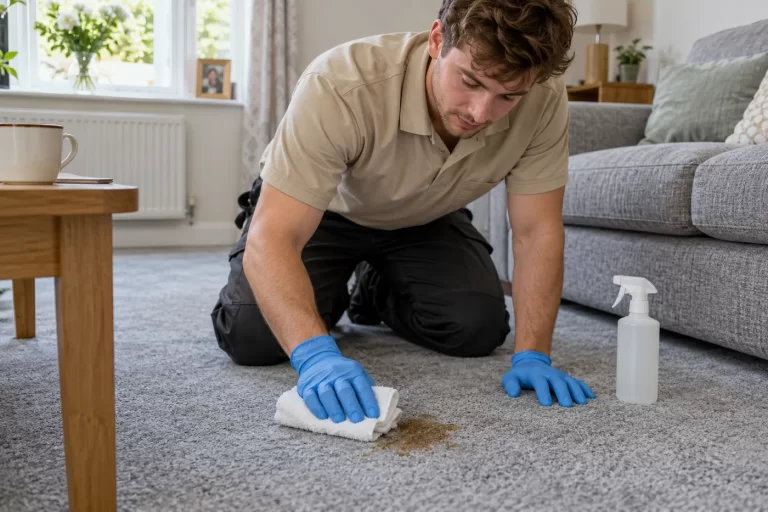
Carpet traffic lanes stay visible for different reasons. Vacuuming can remove loose grit and dust from a frequently walked path. Suitable professional cleaning may lift embedded soil and some oily residue. But a lane may also show flattened pile, abrasion or a change in the direction the fibres lie. Those physical or optical changes can remain after the carpet is clean. To understand the mark, inspect it in good light, compare its texture with a less-used area, follow the carpet maker’s vacuum guidance and avoid promising that a deeper chemical clean will restore the original appearance.
A route from the doorway to the sofa is used far more often than the space beneath a side table. Grit on shoes, repeated pressure and turning feet concentrate in that narrow strip. The result may look like a grey stain even when part of the difference is wear or shading. The Carpet and Rug Institute’s pile-reversal bulletin explains that a change in pile direction can alter reflected light and cannot be permanently removed. Cleaning still has value; the key is to know what it can change.
Read the lane before applying a cleaner
Look at the carpet from both ends of the room and in daylight as well as artificial light. Does the lane look darker from one direction and lighter from the other? That pattern can point to pile shading rather than dirt alone. Run a clean hand lightly over the surface: does the lane feel flatter or rougher than a protected area? Look at a piece under furniture or at the wall edge as a comparison, remembering that sunlight and age may also change colour. Avoid pulling at a tuft to test it.
Dry soil often collects most where people enter, turn or stand. If the lane looks dull and you can see grit at the base of the pile, careful vacuuming may help. If the fibres are flattened, fuzzy, frayed or visibly thinner, the change may be wear. The Carpet and Rug Institute’s primer defines pile crush as thickness lost through compression and notes that it can be irreversible. A lane can contain all three: removable soil, changed pile lay and wear. No single glance proves which is dominant.
Photograph the area before treatment in consistent light. If you later discuss cleaning with a professional, show them the lane and the less-used comparison patch. Tell them the carpet fibre, construction and any products previously applied. A clear record helps set a realistic expectation and avoids repeated unnecessary treatment if the visible difference is structural.

Vacuum for soil removal, not to force the pile upright
Start with the vacuum method recommended for the carpet’s fibre and pile. Use a clean head at the right height or suction so it moves smoothly without snagging loops or dragging the backing. Make slow overlapping passes along and across the lane, then cover the rest of the room so the contrast is judged fairly. Empty the vacuum receptacle or change its bag as directed; a blocked machine may perform poorly. A suction-only head may be suitable for some loop or delicate piles, while other carpets allow a brush. Follow the maker, not a universal setting.
Repeated gentle vacuuming lifts dry particles before they abrade the pile. WoolSafe’s fine-fibre guidance says vacuuming frequency should reflect how heavily an area is used and advises suction-only vacuuming for loop pile as a general rule. The aim is to remove soil, not to grind a stiff brush over the lane until it looks fluffed. If the pile catches, unravels or sheds unusually, stop and ask the carpet maker or a suitable specialist.
After vacuuming, compare the area again when the pile has settled. A lane that looks less grey probably contained removable soil. A stripe that changes dramatically as you walk around it may be shading. A flattened texture that stays low suggests compression or wear. Do not use a wet product to “test” the diagnosis; a water mark can create another problem.

Understand pile shading and permanent appearance change
Cut-pile carpets can reflect light differently depending on the direction their tufts lean. In a busy path, feet can alter that direction locally. The effect is often called shading, pooling or watermarking, even though water is not necessarily involved. The Carpet and Rug Institute bulletin says vacuuming or brushing may alter the surface appearance temporarily, but traffic can return the pile to its reversed direction. WoolSafe’s residential guide likewise describes pile reversal as an optical effect in some carpets.
That does not mean every dark lane is permanent. A route can be soil-laden and shaded at the same time. Professional cleaning may improve its cleanliness while a directional pattern remains. Assess the carpet after it has dried fully and the pile is groomed according to the cleaner’s method, not while it is still wet. If a quote promises complete colour uniformity without inspecting the fibre and pile, ask what evidence supports that promise.
Abrasion and pile loss are different again. If yarn tips are worn, crushed or missing, cleaning cannot put material back. A severe worn strip may need repair or replacement advice from the carpet supplier. Do not aggressively brush to disguise it; that can increase fuzzing and make a patch look lighter for the wrong reason.

Decide when professional cleaning is worth it
If vacuuming removes little and the lane feels soiled, a qualified carpet cleaner can assess embedded dirt and a suitable method for the fibre, backing, dyes and installation. WoolSafe’s wool maintenance guidance distinguishes interim surface cleaning from restorative cleaning that targets more deeply embedded soil. It also cautions against overwetting and unsuitable chemistry. A specialist should identify what can be cleaned and what may remain because of pile direction or wear.
Share the carpet maker’s care instructions, fibre information and any stain history. A cleaner may test an inconspicuous area and discuss realistic results before treating the lane. Avoid applying a supermarket spot remover across the whole path first; residue or colour change can complicate professional work. A traffic lane is not one discrete stain, so a bottle labelled for spots may be the wrong tool. If a spill is also present, our carpet stain first-response guide addresses immediate blotting without rubbing.
Our carpet cleaning service may be relevant for an assessment of removable soil. A sound discussion should separate soil-removal goals from pile restoration claims. If the carpet is fraying, has a loose seam or shows a moisture problem, arrange the appropriate repair or inspection as well. Cleaning does not secure a failing installation.
Reduce the pressure on one narrow route
Catch grit before it reaches the carpet with a suitable entrance mat and regular cleaning of that mat. Remove muddy or wet shoes where practical. Vacuum busy routes more often than quiet corners, using the carpet’s approved method. If room layout allows, shift a small table or chair arrangement occasionally so everyone does not pivot on exactly the same patch. Do not create a trip hazard just to spread traffic; the layout must remain comfortable and safe.
Furniture cups or a suitable rug may protect a particular area, but check the carpet and rug backing instructions so they do not trap moisture or discolour the floor covering. Rotate a loose rug only if its maker permits and you can do so safely. For fixed wall-to-wall carpet, accept that walking paths are part of use and plan maintenance around them. The site’s carpet-under-a-microscope infographic gives a closer look at how soil interacts with fibres; routine removal of grit remains the practical household action.
When judging the result, compare like with like: similar light, fully dry pile and the same viewing direction. A cleaner lane may still show a visible route, and that is not automatically failed cleaning. Understanding the difference prevents repeated wet treatments that cannot reverse a physical or optical change.

Common questions
Why does a traffic lane still show after vacuuming?
Vacuuming removes loose soil, but the lane may contain embedded residue, compressed pile, abrasion or pile shading. View it from two directions and compare its texture with a protected area. A specialist can assess the removable portion.
Can a professional clean remove pile shading?
Cleaning may improve soil and temporarily alter how the pile lies, but true pile reversal is an optical change that the Carpet and Rug Institute says cannot be permanently removed. Ask for a realistic assessment before treatment.
Does more scrubbing help a worn lane?
No. Stiff brushing can distort fibres further, while missing or abraded pile cannot be restored with cleaner. Use the maker-approved vacuum method and seek repair or replacement advice for physical wear.