The first reaction to a carpet spill can affect what happens next. Absorbing a liquid is different from choosing a chemical treatment, and a pale or worn patch may not be removable dirt. Use this decision guide to check the spill, material and limits before doing more.
The first decision is whether to absorb the spill or add treatment
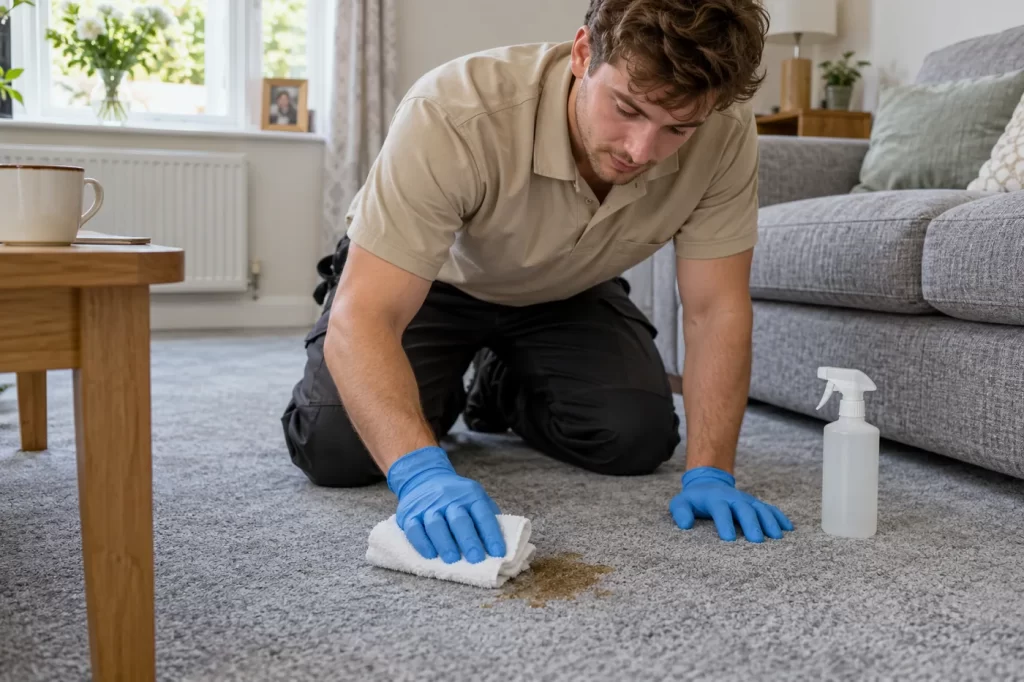
For a fresh liquid spill, start by gently absorbing what you can with clean white kitchen roll or an absorbent cloth. Do not scrub it into the pile. Keep replacing the absorbent material as needed and avoid spreading the liquid into an unaffected area. This first response is different from choosing a stain-removal chemical.
Do not add a product until you know what the carpet permits. Find the fibre and care information, identify the substance if possible and check whether anything has already been applied. If the carpet is delicate, the spill large or the history uncertain, stop at safe absorption and ask for appropriate advice.
WoolSafe’s fine-fibre guidance makes that caution particularly relevant to moisture-sensitive fibres and blends. A product described as suitable for carpet is not automatically suitable for every carpet. A recommendation for one fibre should not be borrowed for an unknown floor covering.
Ask five questions before doing more
- What was spilled, including the actual product rather than only its colour?
- When did it happen, and is it still wet?
- What fibre, construction and care instructions apply to the carpet?
- What has already been blotted, rubbed, sprayed or rinsed?
- Is the change a mark on the fibre, or might it be lost colour, damaged pile or another defect?
Keep this information together if you contact a cleaner. “Coffee with milk, this morning, dry-blotted only” is more useful than “brown stain”. An unknown old patch deserves a different enquiry from a fresh drink spill. Say when you first noticed it if you do not know when it was made.
The carpet-cleaning service information explains the material, area and condition details used to discuss a treatment and quote. A useful enquiry helps assess the actual floor covering rather than promise that one machine or one spray will remove every mark.

Separate a stain from a permanent change
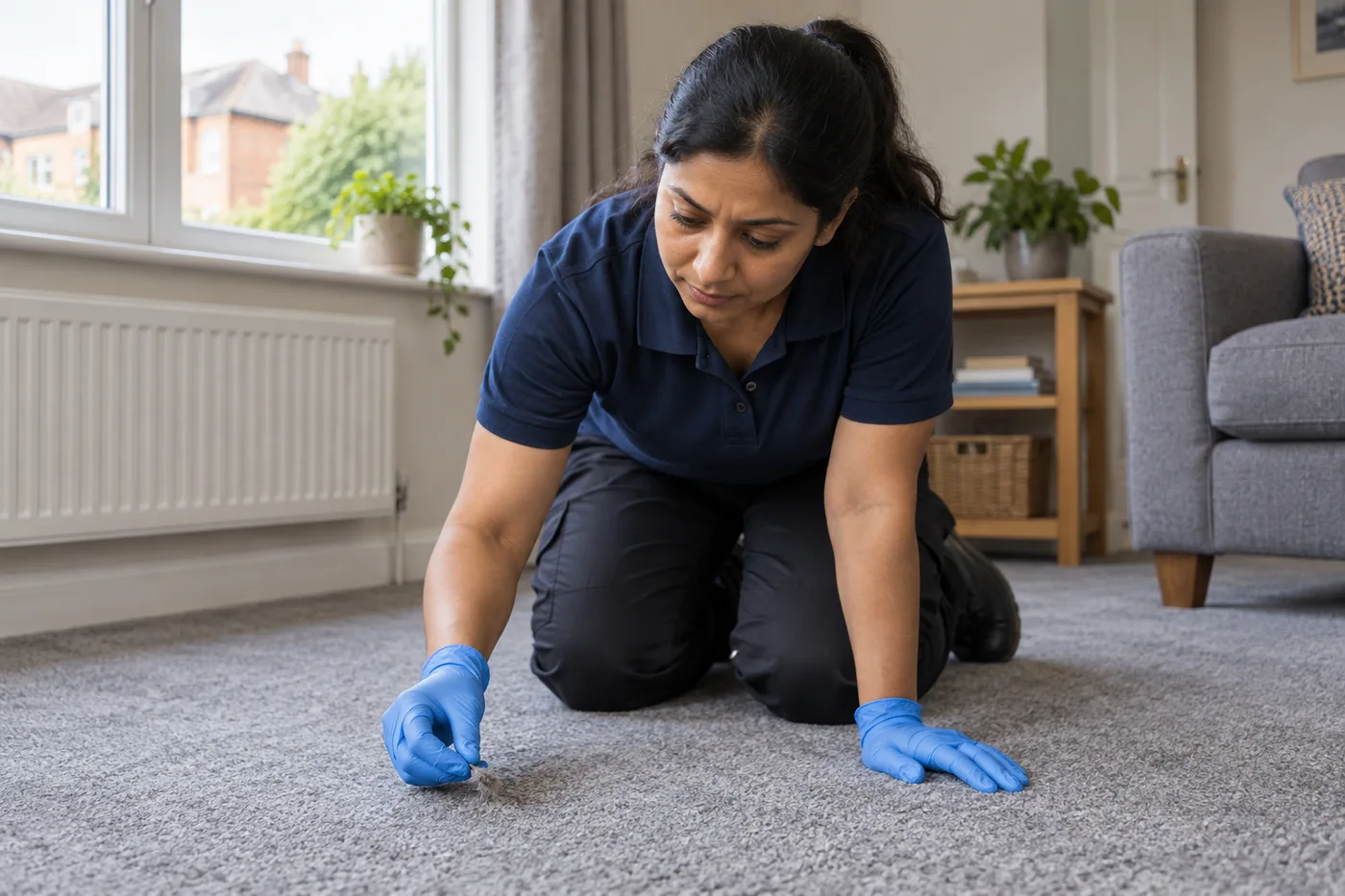
A stain involves a substance changing the appearance of the carpet. Some marks can be treated; others remain. A pale patch after a chemical product, a melted area beside a heat source or worn pile in a busy route may not be removable soil at all. Cleaning cannot replace missing fibre or simply put lost colour back.
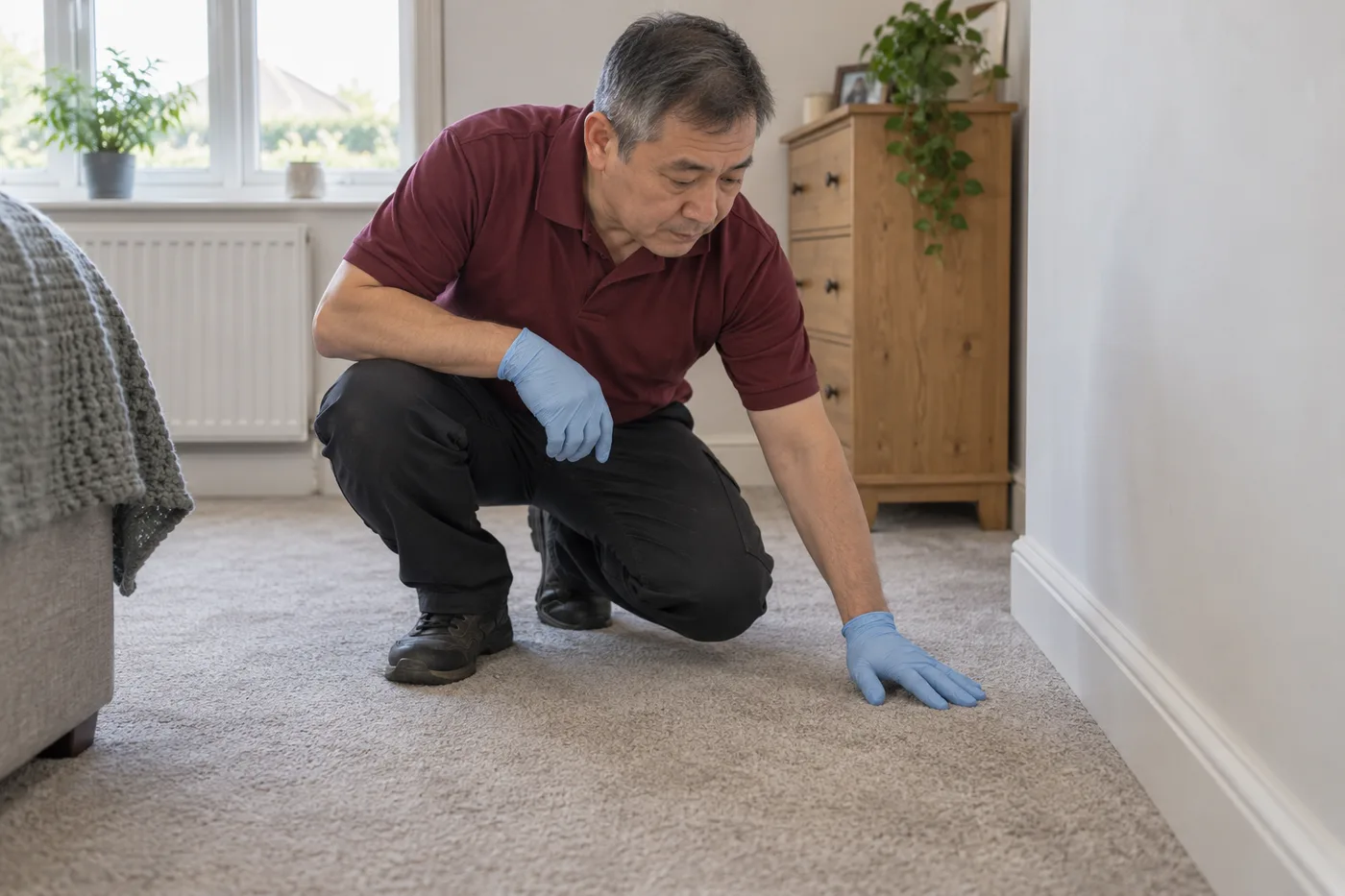
Look at the history as well as the shape. Did the original spill remain darker, or did the carpet become lighter only after a cleaner was applied? Has the texture changed? Does the area look different depending on the direction you view the pile? Record what you see without deciding that every effect needs more liquid.
Keep the care label, purchase information and product packaging available. These can help distinguish a cleaning enquiry from a repair, dye correction or replacement question. Do not cut a fibre sample from the carpet or conceal a damaged area before seeking advice.
The fibre changes the choice
Wool, synthetic fibres and plant-based or regenerated fibres are not interchangeable. A blended carpet also needs the sensitive component considered. The construction, backing, dyes and condition can matter alongside the fibre name, so the label is a starting point rather than a complete permission slip for wet treatment.
Cormar’s carpet-care guidance distinguishes its wool and polypropylene ranges and gives separate care instructions. That is a useful example of why a bleach-related recommendation for a specific identified product must not be applied to wool, another range or an unknown carpet.
Use the manufacturer’s instructions for the actual carpet. If a label is missing, say so. Do not identify the material by feel, colour or the fact that a similar carpet in another room tolerated a household product. Adjacent rooms may have different floor coverings despite matching colours.
A loose rug adds separate questions about backing, edges, fringe and handling. Read about assessing a rug as an individual item rather than pricing or treating it as another fitted carpet area. A rug resting on timber also introduces the need to protect the surface beneath it.
Describe the spill by its group, not a universal recipe
| What you noticed | Useful detail | Reason to avoid guessing |
|---|---|---|
| Tea, coffee or another drink | Ingredients, temperature, quantity and time | Milk, sugar or colour may make two drinks different enquiries |
| Food or grease | Actual food and whether solids remain | A household degreaser is not automatically carpet-safe |
| Ink, paint or nail product | Product type and packaging if available | Solvent choice and fibre compatibility need care |
| Pet-related soiling | Location, repeated incidents, wetness and odour | The visible mark may not describe the affected area below |
| Unknown old patch | When noticed and all previous treatments | Its colour does not establish the cause or a safe method |
Use the table to prepare information, not to combine recipes. Tell the cleaner whether a drink was hot, whether a product dried before you noticed it and whether it affected more than one area. Photographs can support that description but cannot reveal every residue or condition beneath the surface.
Keep the first response gentle
For liquid, use clean absorbent material and gentle pressure rather than vigorous rubbing. Work without pushing the spill across a wider area. Keep coloured cloths, dirty towels and scrub brushes out of the first response. Do not pour water onto an unidentified carpet to chase a mark down into the backing.
Where loose semi-solid food can be lifted without spreading it, remove it carefully with an appropriate non-sharp implement. Do not scrape, pull fibres or work a sticky substance into the pile. If glass, a sharp object or another hazard is involved, deal with safe access before the cleaning question.
The WoolSafe Stain Wizard offers spill-specific information. Read the applicable guidance and the product instructions before trying a treatment. Do not take a method for one identified spill and use it on several unrelated marks because the carpet looks similar.
A test is not permission to ignore an exclusion
If a suitable product’s instructions call for an inconspicuous-area test, follow that direction before treating a visible mark. Observe the specified process and any waiting requirement. A small test can be useful, but it does not make a product suitable where the carpet care instructions explicitly exclude it.
A test also does not prove that every visible area has the same history. Earlier stain protection, household sprays or previous cleaning may differ. Tell the professional what you know, including a patch that became pale, stiff or sticky after a product. Keep uncertainty visible rather than describing an untested method as safe.
Never mix products to make a stronger stain remover. HSE’s chemical-cleaning guidance warns about adding other chemicals to bleach concentrates. Follow labels and material instructions; gloves or an open window do not make incompatible mixtures acceptable.
Previous products and returning marks need their own history
Tell the cleaner about every product used, even if the packaging called it gentle or natural. Include washing-up liquid, a general surface spray, a carpet foam or a home-machine solution. Say whether the area was rubbed, soaked or dried with heat. That record can be more useful than choosing a method by name.
If a mark faded and then returned, record when it changed and whether the area was still damp. Do not assume the same product simply needs a stronger second application. Residue, the spill’s extent and material behaviour may need assessment. A returning mark is a reason to discuss the history before adding more treatment.
Our older article on difficult carpet stains considers particular marks. This guide focuses on deciding what information and limits come first. No general stain list overrides the instructions for your carpet or proves that an old damaged patch can be cleaned away.
Pet accidents and large spills can extend beyond the visible spot
Describe repeated accidents and any smell separately from the visible stain. Explain whether the carpet felt wet over a larger area and whether a loose rug or furniture was also affected. Do not promise yourself that treating the top of one small mark addresses everything underneath.
A large spill, contamination concern or persistently wet carpet needs appropriate assessment. Tell the booking team the approximate area and anything known about underlay or adjacent flooring. Do not pull up fitted carpet or dismantle the floor to inspect it unless a suitable professional advises and arranges the work.
The older dog-odour article covers a related question. Be cautious about treating an odour with fragrance or repeated wetting. Explain the incident and existing products so the proposed work addresses the condition rather than merely changing how the room smells.
Plan drying and access before treatment
Ask which method is proposed and how the carpet should be used afterwards. Working time and drying time are different. Material, treatment, thickness and room conditions can affect drying; a general estimate is not a fixed deadline for every floor covering.
If the carpet is the only route to another room, explain that before arranging the visit. Mention children, pets, visitors and furniture that must remain in place. Follow the aftercare advice for the selected treatment rather than using a heater or another improvised shortcut to make a wet patch appear ready.
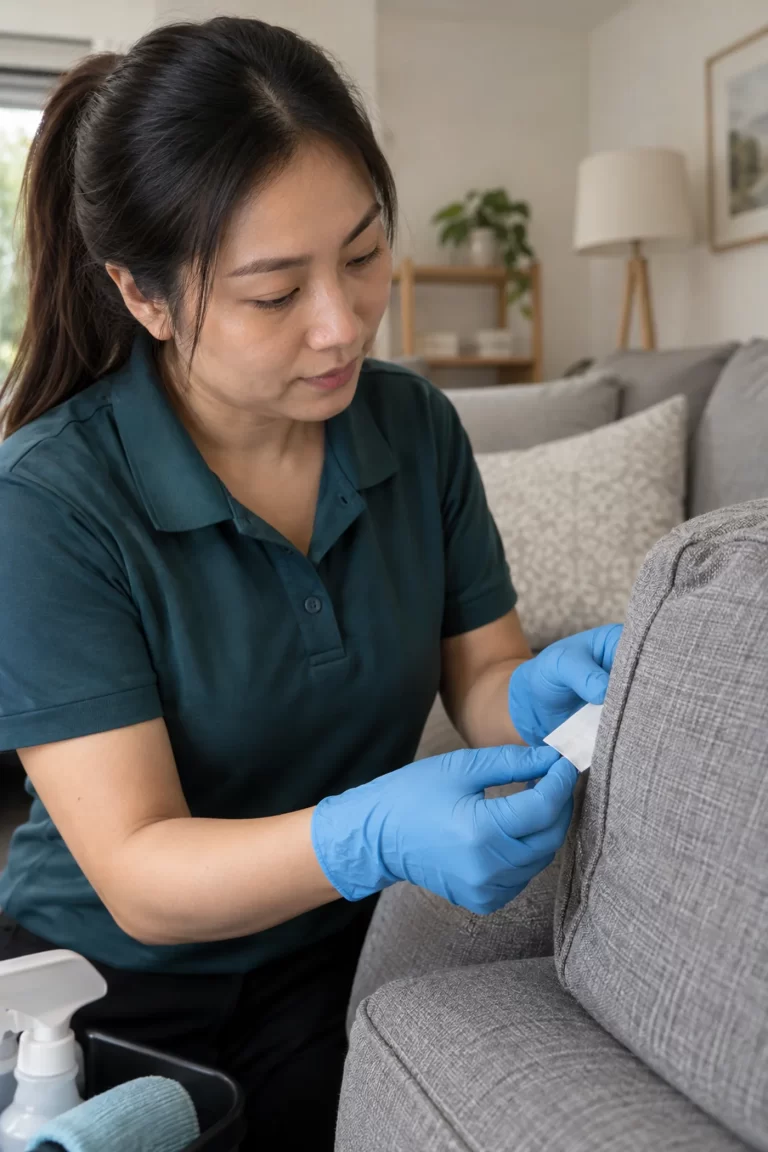
Where a spill also reached seating, list it as a separate item. Sofa fabric and cushion work need their own care information, even if carpet and furniture are discussed in one enquiry. A floor-cleaning quote should not silently include upholstery or its drying arrangements.
What to send when asking for professional help
Provide a wider room photograph, a clear view of the mark and the available care label. Give the postcode, affected rooms or stairs, approximate size and access information. Add the substance, age, previous products and the result of any earlier attempt. Keep the product packaging if you still have it.
Explain whether you want general carpet cleaning, assessment of a particular stain or both. Ask what is included, what limitations are likely and how the complete price is agreed. Do not treat an advertised starting figure or a photograph of another clean carpet as a guaranteed result for your floor.
If the surrounding rooms also need ordinary cleaning, mention a separate household-cleaning brief. Keep fabric treatment and general surfaces distinct. The useful outcome is a suitable plan for the actual carpet, not a promise that every mark disappears.
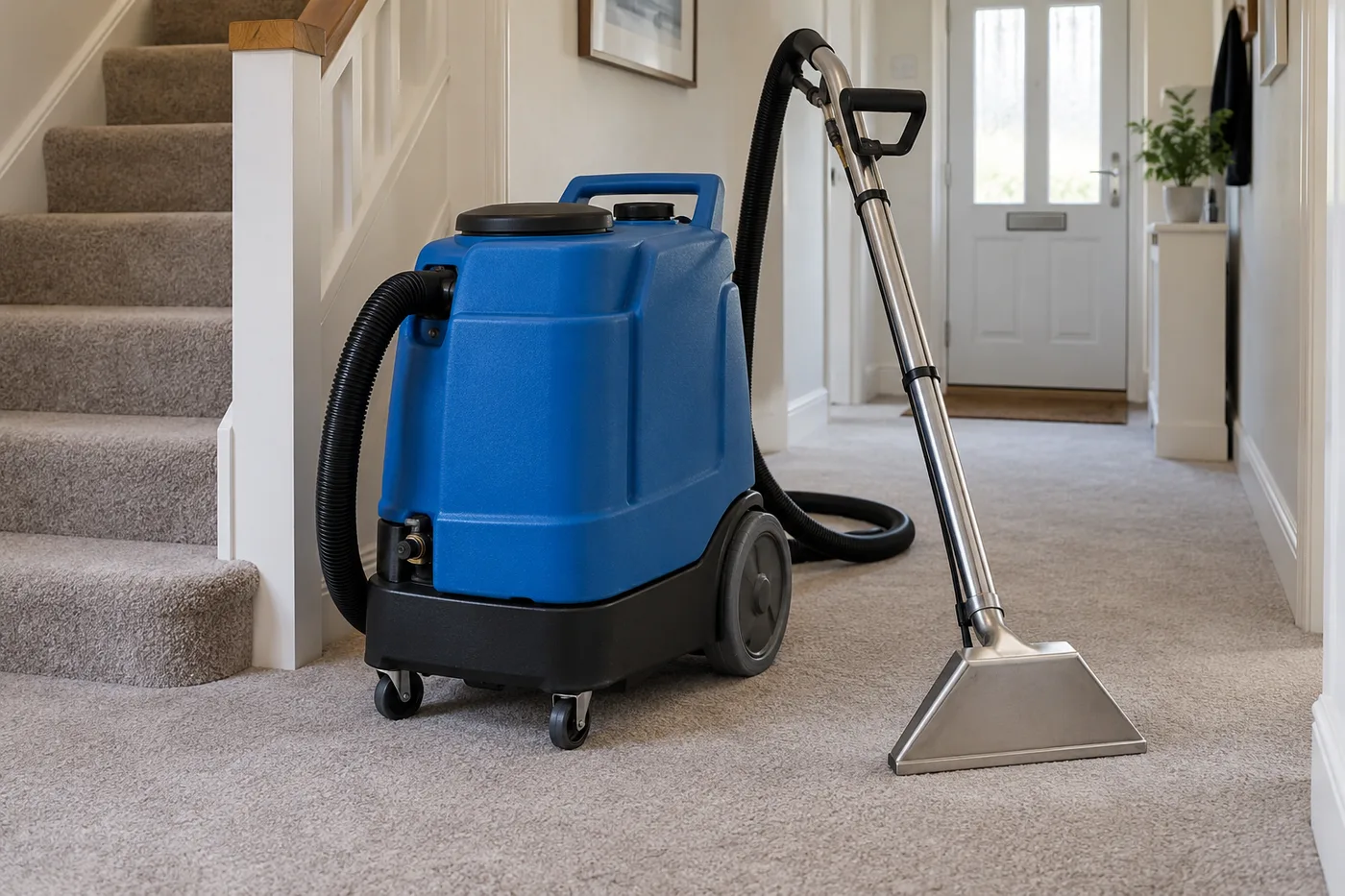
Two questions worth asking before another attempt
Should I keep treating an old stain until it fades?
No. Repeated products can change the condition and make assessment harder. Record what has already been tried and seek material-appropriate advice, especially if colour or texture has changed.
Does professional cleaning guarantee stain removal?
No. Substance, age, fibre, previous products and damage can limit the result. Ask for realistic expectations after the carpet and mark have been assessed.