To dust radiators without sending fluff across the room, turn the heating off and let the unit cool. Move nearby fabrics clear, put a towel or dust sheet underneath, and collect loose dust from the top with a vacuum brush or soft cloth. Use a long, soft radiator brush only in accessible gaps, working downward while a vacuum nozzle catches what falls. Collect dust from the sheet, skirting and floor before wiping the outer panel with a lightly damp cloth if its finish allows. Dry the surface before restoring heat. Do not force a tool through fins, detach a radiator or open an electric heater for routine cleaning.
Dust gathers where warm air passes between panels and behind radiators. A quick swipe across the front can make the room look tidy while leaving a pocket of fluff in the convector fins. Stelrad’s guide to cleaning its Elite radiator recommends cooling the unit, vacuuming, placing a dust sheet below and using a radiator brush. The practical difference is containment: capture the dust as it is loosened instead of blowing it onto curtains, shelves and carpet.
Identify the radiator and give it time to cool
Check whether you have a plumbed hot-water radiator or an electric heater. Their care instructions differ. Turn off the heat by the normal controls and wait until the whole surface is cool enough to handle. A radiator can stay warm after the thermostat is turned down, and an electric unit may have vents, a thermostat housing and electrical parts that must remain dry. Follow its manual before cleaning. BestHeating’s electric heater instructions tell owners to switch it off before maintenance and not to open the unit; those directions are product-specific but show why an electric heater needs an extra boundary.
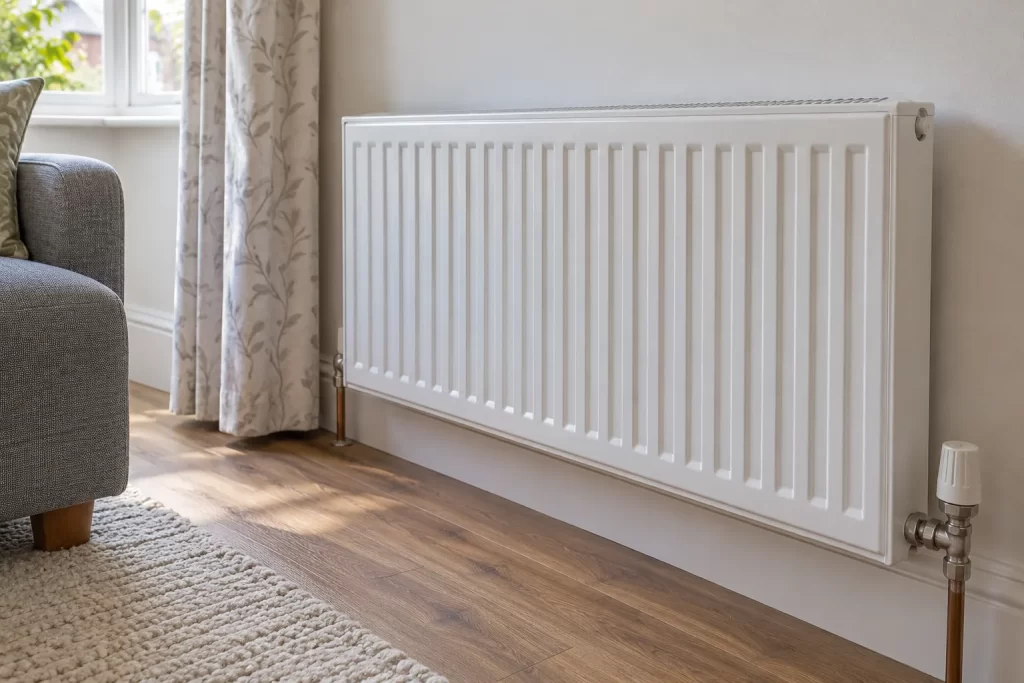
Look at the shape before choosing a tool. A flat panel radiator may have top grilles and narrow convection channels; a column radiator has spaces between sections; a cast-iron model may have a more open shape. Some covers appear detachable but are held by clips or fittings that can be damaged. Unless the manual explicitly shows user removal, clean from the accessible exterior only. Do not tug pipework or adjust valves to create space. If you spot a leak, rust patch or loose bracket, stop cleaning that area and arrange a heating repair.
Pull curtains away and move light furniture or cushions enough to protect them, without straining yourself. Check that the wall paint and skirting are sound. A long narrow brush is useful only if it fits freely; a thick or sharp tool can bend fins or mark paint. Gather a vacuum with a soft brush and narrow nozzle, a clean radiator brush, a dust sheet, and two soft cloths. Avoid a hairdryer or compressed air: they dislodge dust but spread it through the room.
Collect from top to bottom rather than blowing it out
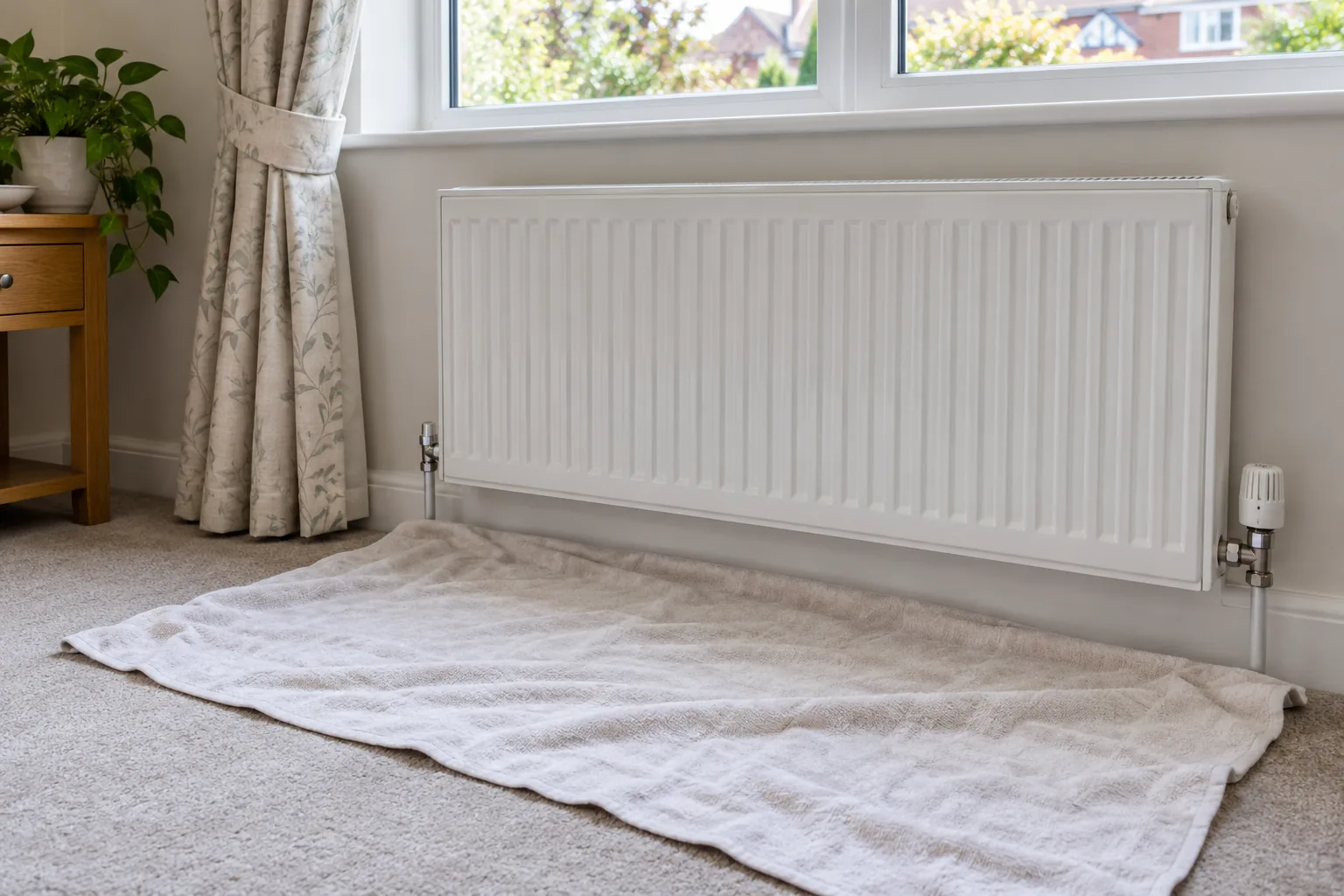
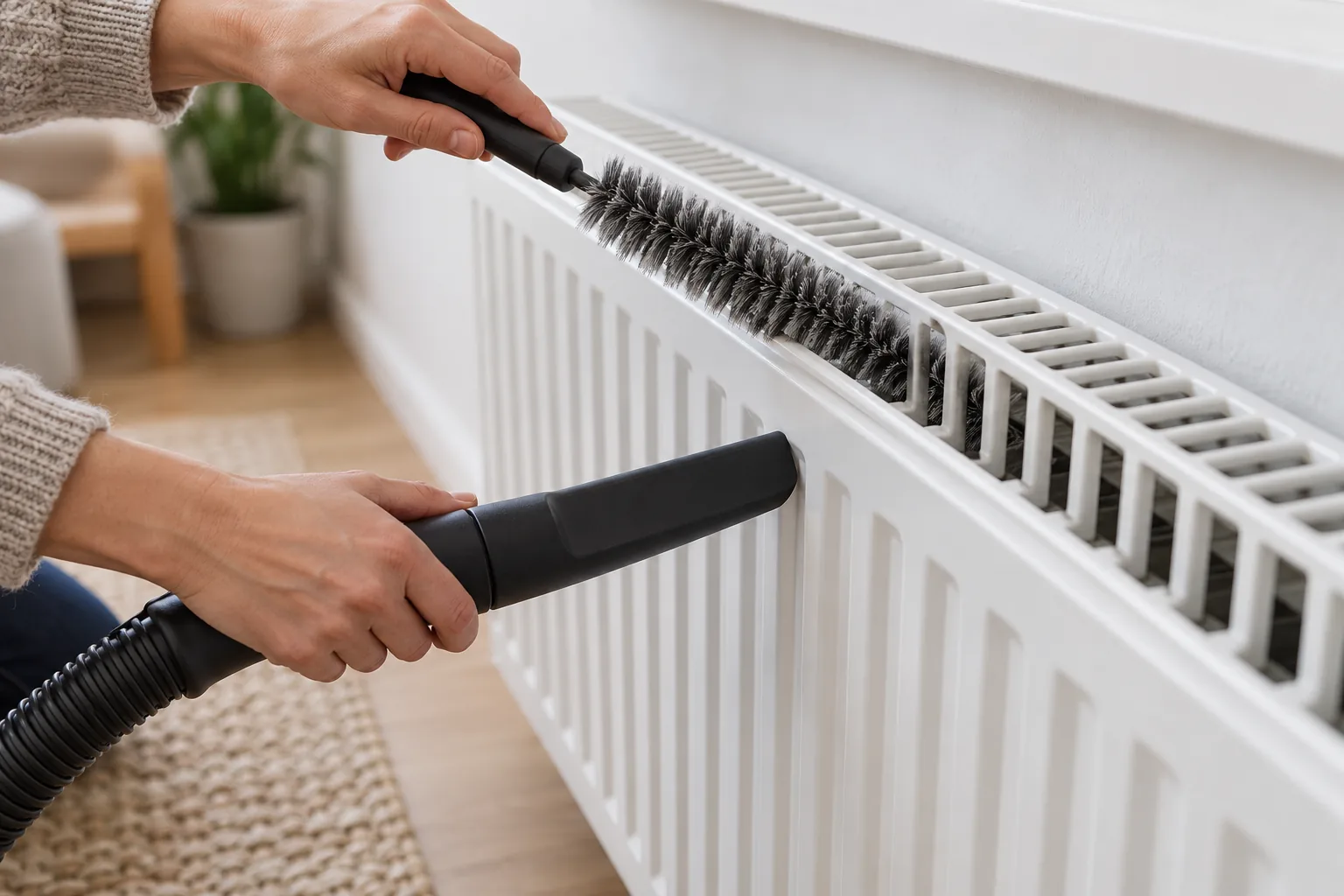
Lay the sheet or towel under the radiator and slightly beyond its front edge. Start with the wall and top edge so falling particles are not deposited on a cleaned lower section. Use the vacuum brush to lift surface fluff, keeping the nozzle off delicate paint or loose trim. If the top grille is fixed, run the brush across its accessible openings without pushing the attachment through. Keep the hose supported so it does not knock valves or ornaments.
Next, pass the long radiator brush gently down accessible gaps. Let the bristles carry dust downward. Hold a vacuum nozzle near the lower opening or pause to collect what lands on the sheet. Work one channel at a time, withdrawing the brush slowly. If it catches, stop rather than forcing it. You may find that a cloth wrapped around a thin, blunt tool is easier for a broad gap, but only if it cannot detach inside and the radiator maker allows the method. Do not insert metal hangers, knives or sharp rods.
For a cast-iron or column radiator, a soft brush between the columns may be enough. For a panel radiator with tight fins, the correct radiator brush can reach dust that a cloth cannot. Stelrad’s care instructions for its cast-iron models describe a damp cloth for exterior dirt and a radiator brush for dust between sections. Use the product’s actual manual for its finish and geometry. The aim is to remove accessible dust, not to dismantle the heating system.
Finish the floor and skirting before wiping the panel
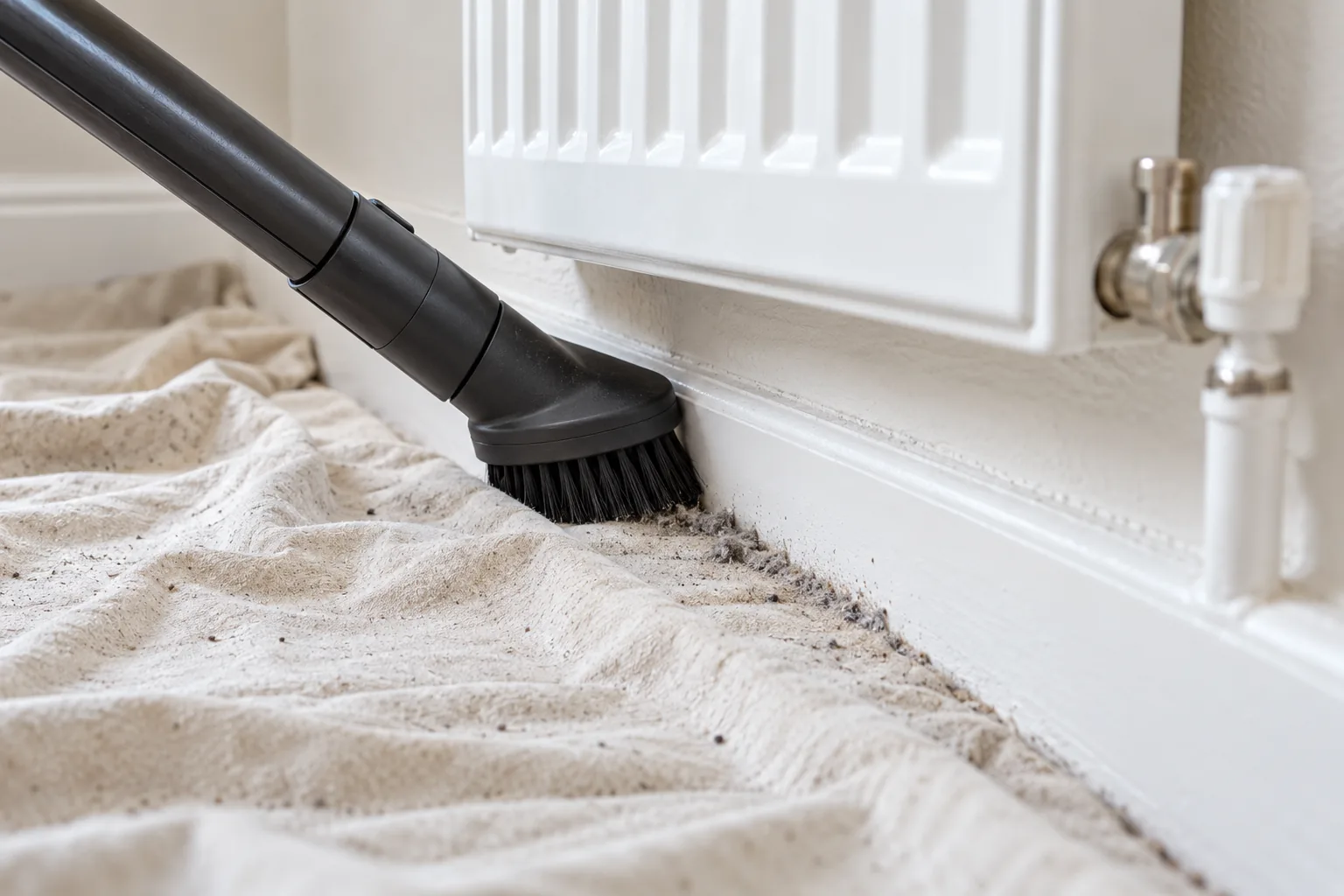
Once brushing is complete, vacuum the dust sheet carefully from its outer edge towards the radiator. Vacuum the skirting and floor below, including the wall gap if reachable without moving the radiator. Roll or fold the sheet inward to contain what remains, then empty or wash it according to its material. This sequence prevents a small draught from carrying loose fluff onto nearby fabrics. If you use a reusable cloth, shake it outdoors only where that is appropriate and does not scatter dust towards another window or person; washing it may be simpler.
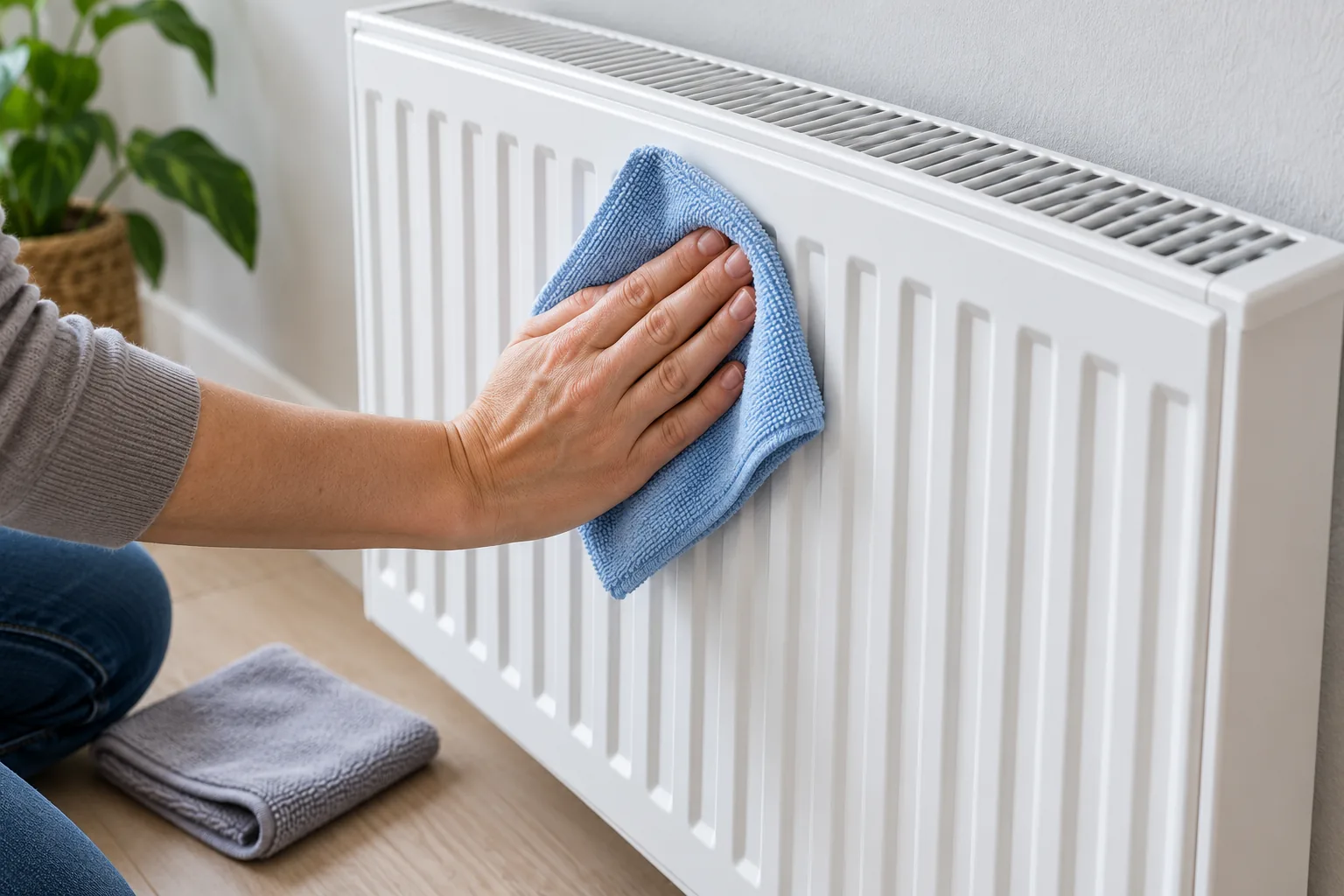
Only after the dry debris is gone should you wipe marks from the exterior. Check the finish guidance. Stelrad’s radiator care sheet permits warm water with a non-abrasive pH-neutral detergent solution for its painted finish, followed by rinsing and a soft cloth; it warns against aggressive cleaners and abrasive pads. BestHeating’s care guide advises a soft damp cloth for its radiator finish and drying afterwards. If your own maker specifies water only, follow that narrower instruction.
Use a well-wrung cloth, not a dripping one. Avoid allowing water into an electric heater’s vents, controls or plug. Do not spray cleaner through a grille or over a thermostat. Wipe the accessible front, sides and top, then dry with a second cloth. A painted radiator should not be scrubbed with a scouring pad to remove a mark; scratches can damage the finish. If you notice exposed metal, bubbling paint or a damp patch, stop and seek maintenance advice before applying a paint or rust product.
Keep nearby fabrics and furniture clean
Curtains can trap dust against a radiator, so make sure they are clear while you work and return them only after the unit is dry. Vacuum or launder them according to their own label if they have caught debris. Wipe the nearby windowsill or skirting after the radiator to pick up particles that settled during cleaning. Avoid parking cleaning products, aerosols or loose cloths against a hot radiator once heating resumes. Restore the room so air can move as the radiator was designed to allow.
If the radiator is hidden behind heavy furniture, do not drag the furniture or pull at the unit to reach every fin. Clean the accessible parts and arrange safe help if the gap genuinely needs more work. A decorative radiator cover may have its own care instructions and can restrict access; do not remove a fixed cover unless permitted. A clean exterior is useful, but a hidden leak or heating fault calls for a heating professional, not a deeper dusting attempt.
Take a moment to check whether the radiator heats normally once it is back in use. Dust removal can help clear airflow through accessible fins, but it will not fix cold spots caused by system issues or a leak. Do not claim an energy saving from a single clean; the practical result is a clearer airflow path and less loose dust around the unit.
Make radiator dusting a manageable routine
Look for visible fluff when you do ordinary room dusting, especially before or during the heating season. A light, regular pass with a soft brush and vacuum is easier to contain than a large build-up. The right frequency depends on the room, pets, fabrics and how often the radiator is used. If you see dust quickly returning, consider the room’s wider dust sources rather than repeatedly scrubbing one appliance.
Our article on how dust affects your health gives wider household context. The room-by-room deep-cleaning frequency guide helps plan occasional overlooked areas. Regular home cleaning can include accessible radiator exteriors as part of ordinary dust control, while leaks, electrical faults and heating-system servicing remain specialist work.
Common questions
Can I blow dust out of a radiator with a hairdryer?
That may move dust quickly, but it scatters particles onto curtains, furniture and the floor. A soft radiator brush with a sheet and vacuum to catch debris gives more control. Stelrad mentions a hairdryer as an option for residue on its Elite model, but it is unnecessary when containment is the priority.
Should I remove the radiator cover or top grille?
Only if the exact model’s instructions allow user removal and explain safe refitting. Routine dusting can usually focus on accessible surfaces. Do not detach a plumbed radiator or open an electric heater to reach hidden dust.
Can I wash the whole radiator with detergent?
Follow its finish instructions. Some painted radiators permit a pH-neutral solution; others specify warm water or a damp cloth. Use little moisture, rinse or wipe residue as directed and dry fully. Keep water out of electrical vents and controls.