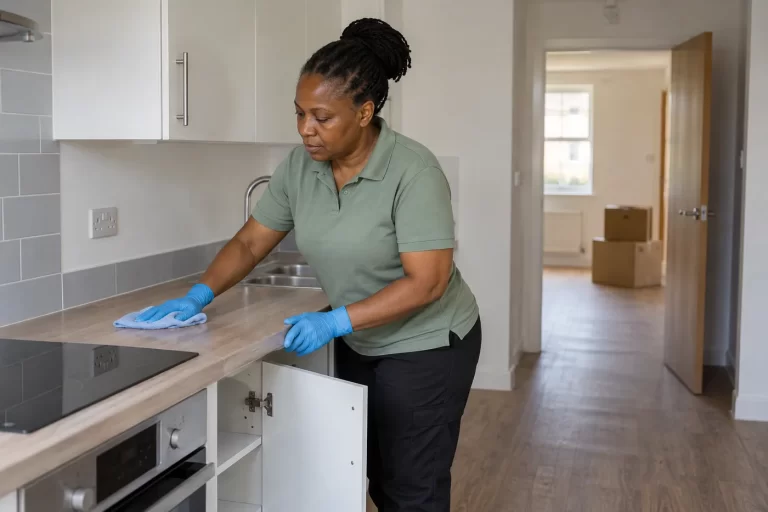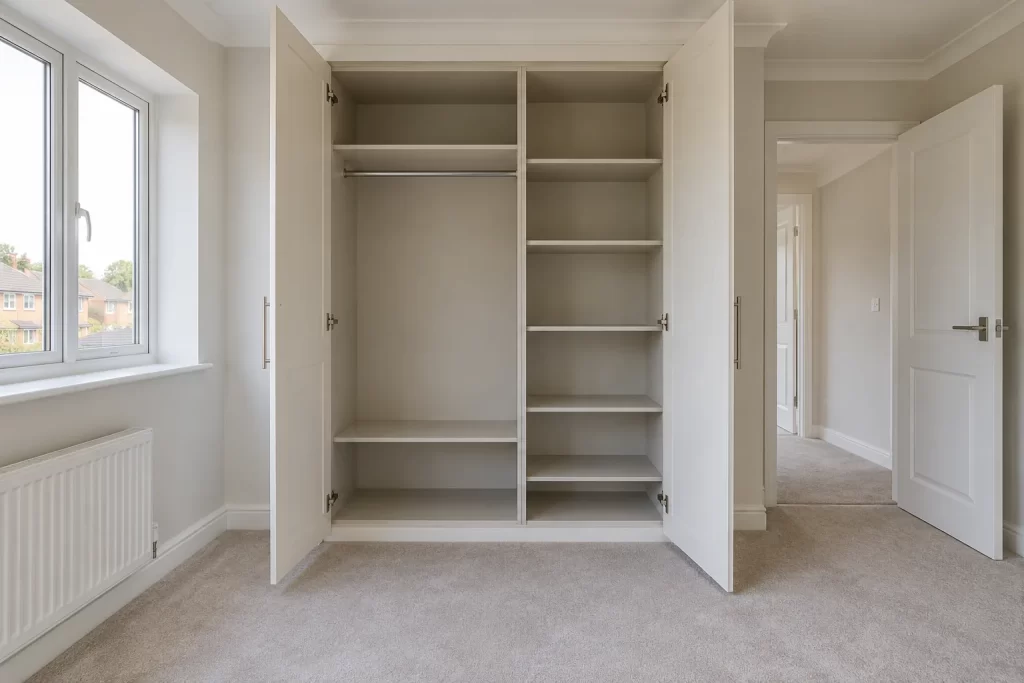
To clean built-in rental storage, empty every accessible shelf and drawer first, identify the surface material, and collect loose dust from the top down. Use a soft brush or vacuum attachment around corners and hinges without forcing fittings. Wipe laminate, painted or sealed surfaces only with the mild method their finish permits, then dry edges and interiors thoroughly. Leave doors open long enough to check for remaining moisture and odour. If a shelf is swollen, a hinge is loose or a cabinet cannot be accessed, record it separately rather than treating it as a cleaning mark.
Fixed wardrobes and cupboards can be overlooked in an otherwise empty room. Their interiors may hold crumbs, hair, shelf-liner residue, dust along rail supports and grease around handles. Yet the materials can be less water-resistant than they look. A paper-foil shelf, painted fibreboard back and metal rail may sit in the same unit. IKEA’s PAX wardrobe information lists several such materials and instructs a mild cleaner on a cloth followed by drying. The useful approach is to clean each component according to its finish instead of washing the entire interior as if it were tiled.
Make the storage genuinely accessible
Open each door and drawer and check that it is empty. Remove remaining hangers, shelf liners, loose screws, paper and personal belongings before cleaning, but do not discard anything that is not yours without the property contact’s direction. If a built-in unit still contains possessions, note which section is blocked and ask for it to be cleared. A cleaner cannot inspect or clean the whole shelf behind a stack of boxes.
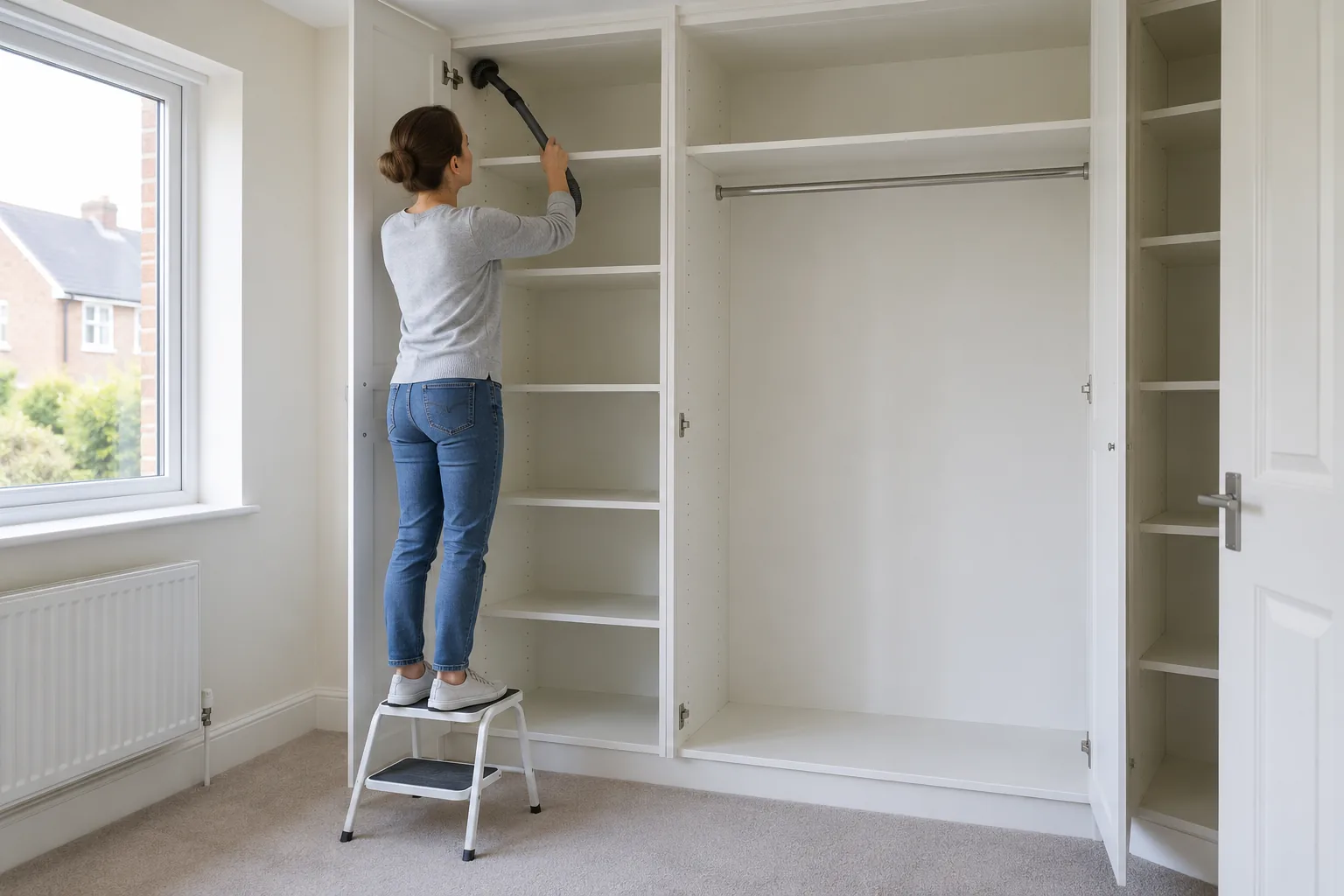
Check that doors open safely and drawers run without sticking. If a hinge is loose, a rail is bent or a shelf sags, photograph the defect before touching it. Do not lean on an unstable shelf to reach the top. Use a stable step platform on a dry floor for a high section; never stand inside a cupboard or on a drawer. Some tall storage units may be fixed to the wall for safety. Do not undo fixings or pull the unit forward merely to reach a gap behind it.
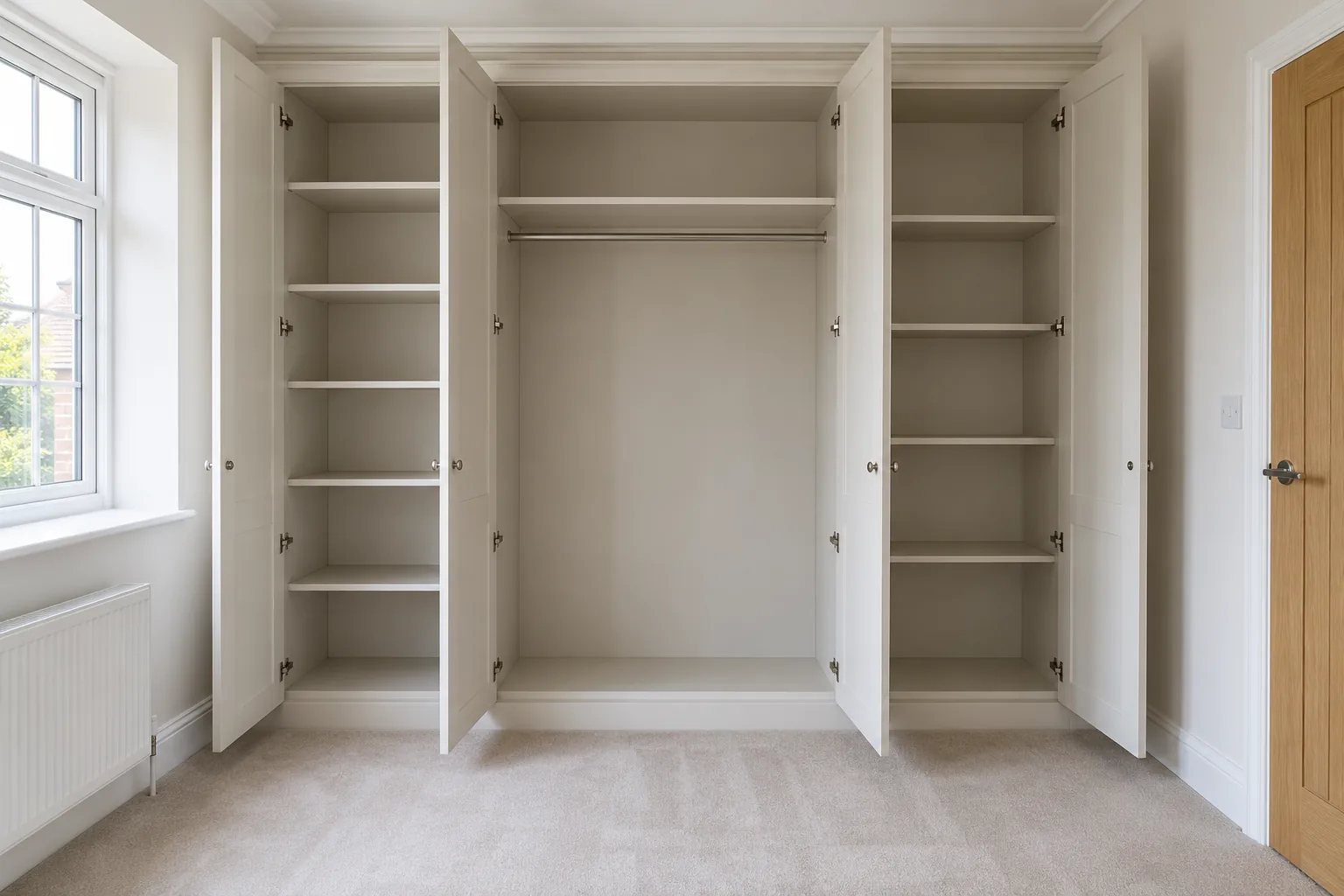
Make a short section list: upper shelf, hanging rail, lower shelf, drawers, door faces, handles and hinge areas. This prevents the common mistake of wiping the visible front but missing a dusty interior corner. If the rental has several fixed units, use the same order in each room so the final inspection is consistent. Our apartment move-out cleaning checklist covers the broader room sequence; this guide concentrates on storage components.
Remove dry soil before adding moisture
Start with the top shelf and work down. Use a soft brush, a clean microfibre cloth or a vacuum with a suitable brush attachment to lift loose dust. Keep a narrow nozzle away from brittle veneer edges and paper backing. Fold the cloth as it loads with dust so particles are collected rather than smeared. A dry pass is especially useful around screw holes, shelf-pin sockets and the joint between back panel and shelf, where crumbs can collect.
Check drawer runners and grooves from the accessible side. Vacuum loose debris gently without pulling a drawer off its track unless the maker’s instructions show safe removal. A drawer that does not release easily may have a stop or soft-close mechanism. Force can bend a runner and create a repair issue. If you do remove a permitted drawer, note its position and support its weight; put it back only after the cavity and runner are dry.
On a wardrobe rail, wipe dust with a soft cloth while supporting the rail if it flexes. Do not hang from it or use it as a handhold. If there is sticky label residue or a waxy shelf-liner mark, test a maker-approved cleaner in a hidden area rather than scraping with a metal blade. Do not use solvent blindly on a foil or painted finish. EGGER’s laminate guidance warns that waxy furniture polishes can leave a dirt-attracting layer and abrasives can scratch or affect gloss on its laminate surfaces.
Wipe shelves by material and protect edges
Once dry particles are removed, inspect each surface. Laminate, melamine foil, painted wood, bare timber and veneer may need different treatment. If the product or material is known, follow its care instructions. For PAX, IKEA specifies a mild cleaner on a damp cloth, followed by a dry wipe; its SMÅGÖRA wardrobe page specifies a damp cloth and then a dry cloth. These examples do not mean every older rental cabinet can tolerate the same amount of water.
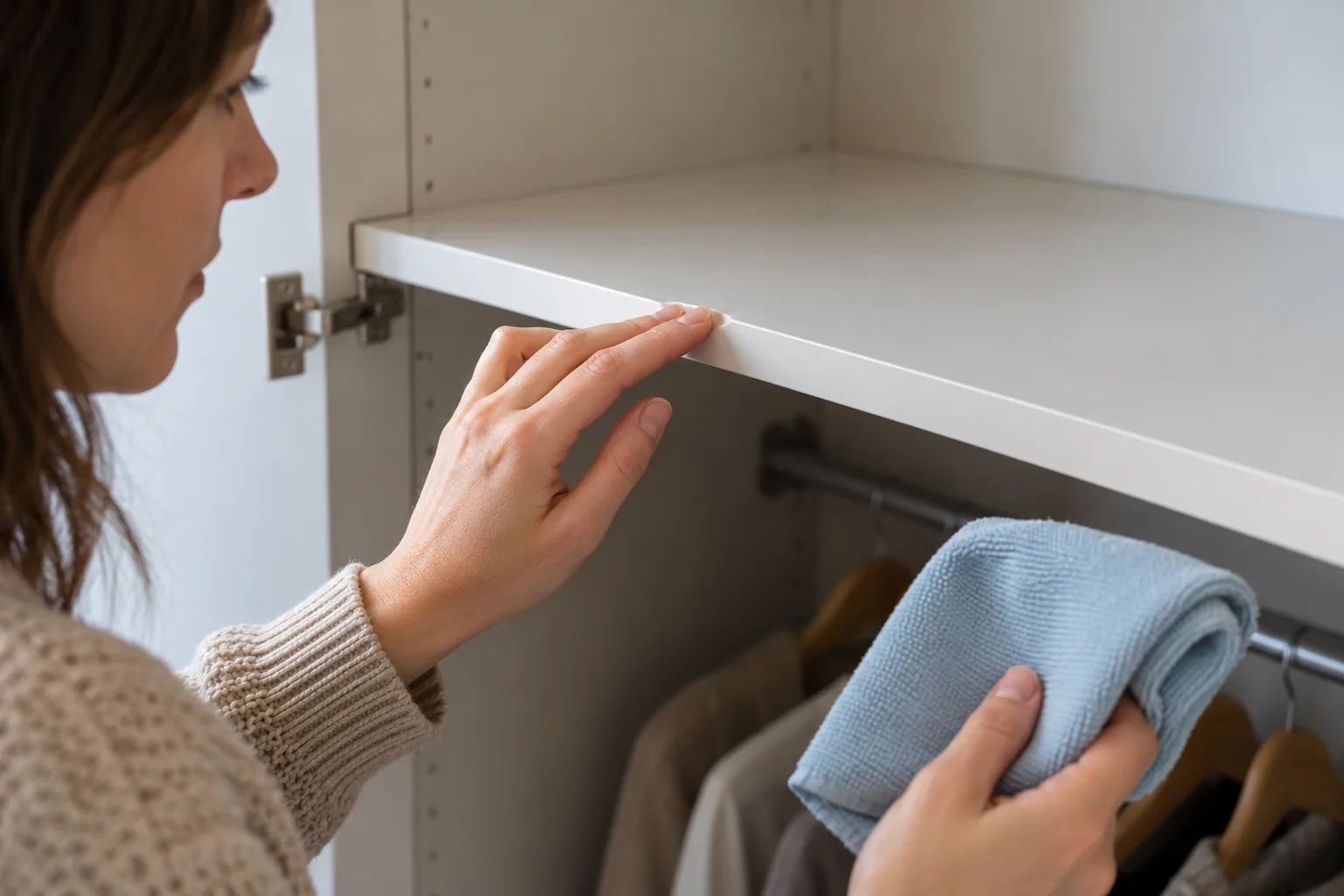
Apply any permitted cleaner to the cloth, not directly to the shelf. Wring it out well and wipe in small sections. Pay particular attention to front edges, seams and holes where liquid can enter particleboard. Immediately follow with a dry cloth. A swollen edge or lifting veneer should not be soaked or scrubbed. Photograph it and leave it for repair assessment. The apparent stain may be damaged substrate rather than dirt.
For a painted shelf, test a hidden spot to check whether wiping removes colour or dulls the finish. If paint is chalking, flaking or fresh, avoid pressure and ask the property contact for the finish details. For bare wood, do not use a laminate cleaner by assumption; seek its specific guidance. A kitchen cupboard interior may also have food residue or grease, but that does not justify flooding corners. Work with a compatible product and remove all residue before leaving the space ready for use.
Handle hinges, rails and hardware gently
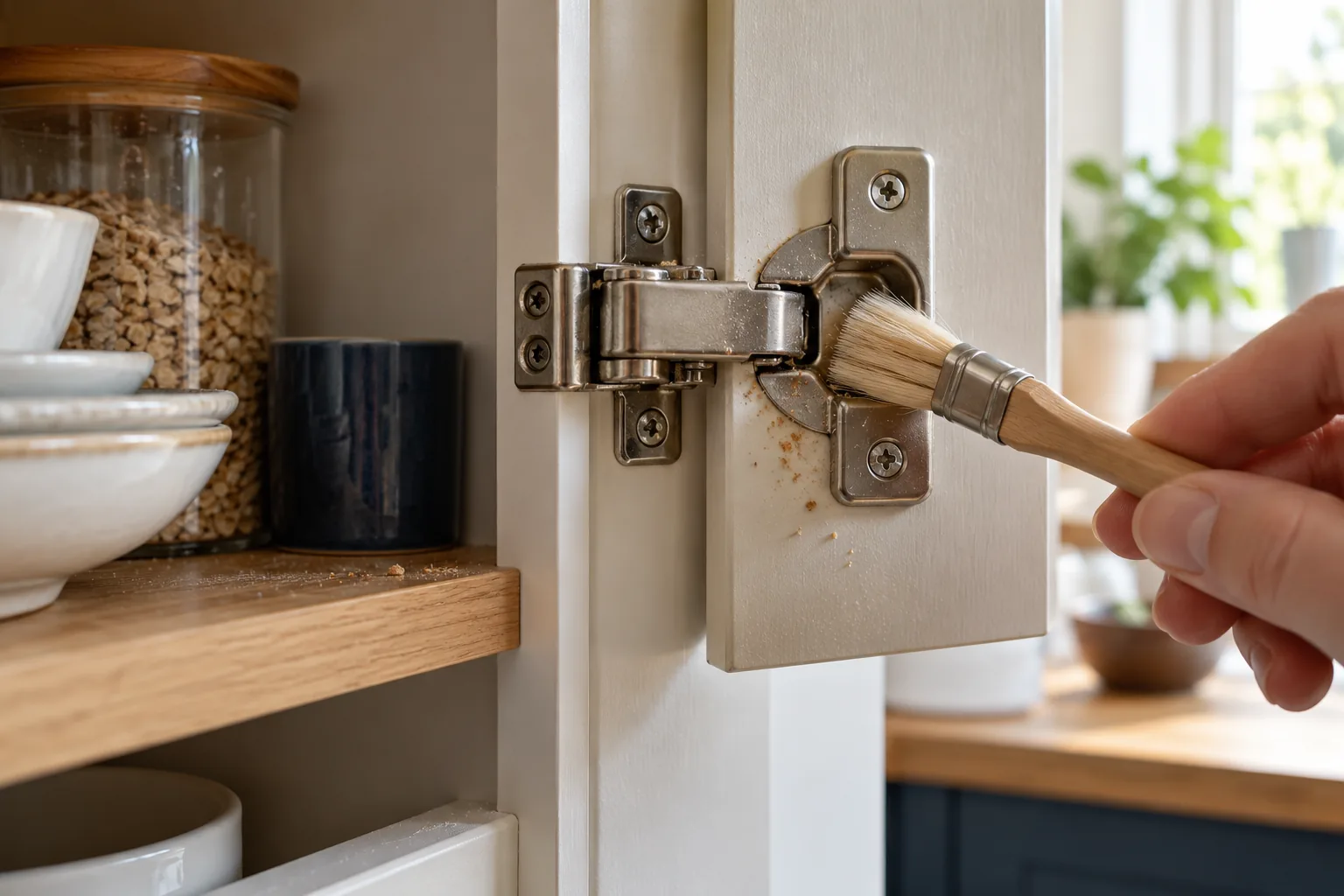
Hinges collect dust around their plates and screws. Use a small soft brush to lift dry debris from visible areas, then wipe the exposed metal only as its maker permits. Do not spray cleaner into a hinge or soft-close mechanism. One Blum hinge instruction sheet specifies a lightly damp soft cloth and clean water, with no chemical cleaner, for that fitting. Another hinge may have a different finish, so do not treat the example as universal.
Wipe handles and their bases with a suitable cloth, taking care not to let liquid run into screw holes. If a handle spins or a door scrapes, note it as a maintenance defect. Do not tighten unknown fixings or apply oil as part of cleaning unless you are authorised and have the correct instructions. A clean hinge should move normally once dry; a stiff or noisy hinge may need repair rather than more washing.
Check the surrounding wall and skirting that become visible when doors are open. Dust those surfaces according to their finish, but do not try to reach behind a fixed cabinet by forcing a tool through a narrow gap. If a dark mark suggests damp behind storage, document it and ask for assessment. Cleaning the visible shelf will not solve moisture in a wall or back panel.
Let the interior dry and record what remains
Leave drawers and doors open for a short inspection once you finish. Check high corners, the underside of shelves, rail brackets, door edges and the bottom panel for dust or moisture. A dry white cloth can reveal leftover residue. Do not shut a damp cupboard immediately; trapped moisture can affect contents and finishes. Remove cleaning cloths, bottles and tools from the unit before photographing the result.
Record any excluded or damaged area in a concise handover note: “wardrobe upper left shelf has swollen edge; cleaned sound surface around it” or “lower cupboard inaccessible because appliance remains in place”. Separate condition from cleanliness. The end-of-tenancy handover checklist can help track those points alongside other rooms, but a storage-specific note makes it clear exactly which interiors were accessible.
If you are arranging end-of-tenancy cleaning, tell the team how many built-in cupboards and wardrobes there are, whether drawers can be opened, and whether the property will be empty. A broad “clean all cupboards” instruction can hide very different amounts of work. Sharing material details and pre-existing damage helps the cleaner choose a safe method and set a realistic scope.
The finished result should be simple: dry, dust-free accessible shelves and hardware, with damaged or blocked sections documented rather than concealed. That makes the storage easier for the next inspection and avoids turning a routine clean into an avoidable repair.
Common questions
Can I spray cupboard cleaner directly onto built-in shelves?
Usually apply a maker-approved cleaner to a cloth so liquid cannot run into edges, joints or shelf-pin holes. Follow the actual finish instructions and dry immediately. Avoid soaking swollen or lifting material.
Should I remove drawers to clean the runners?
Only if the unit maker shows safe user removal and you can support and refit the drawer correctly. Otherwise, clean accessible debris without forcing the mechanism. A damaged runner needs maintenance advice.
What if a cupboard smells damp after cleaning?
Leave it open to dry and check for a moisture source or swollen back panel. Do not mask the smell with fragrance or close damp contents inside. Persistent damp calls for property maintenance assessment.