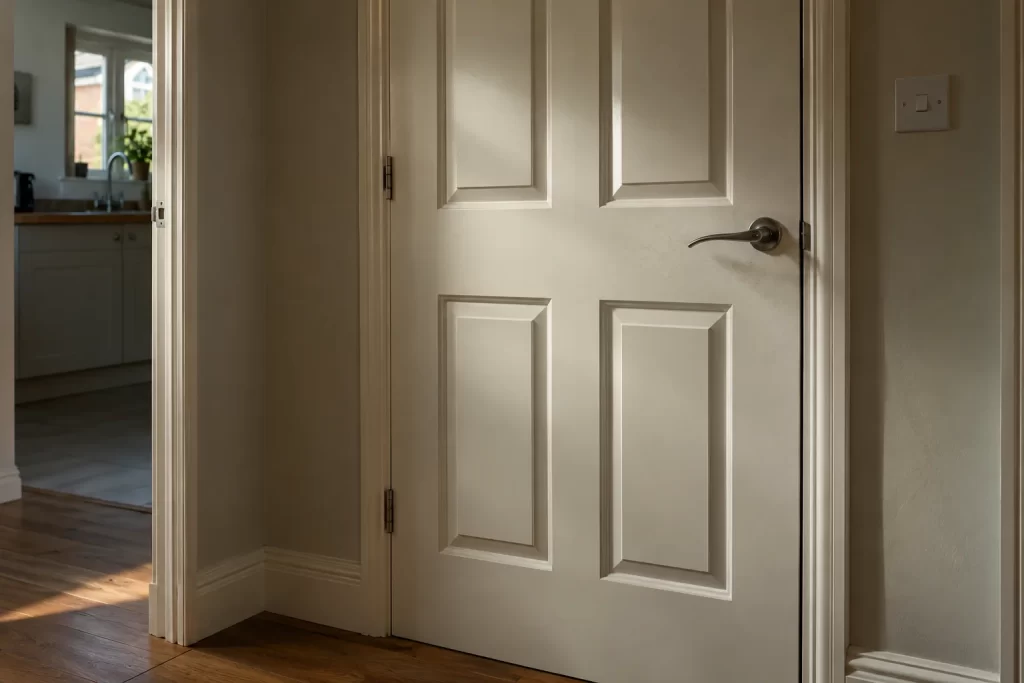
The area around an internal door handle collects hand marks faster than most painted surfaces. A quick scrub may remove the mark, but it can also leave a shiny patch on a matt finish, take colour off an older coating or push water into a panel joint. The handle has its own finish and needs its own care. To clean painted internal doors well, identify what you are touching, begin with the gentlest appropriate method and check the result after it dries.
This guide is for routine household marks on sound, fully cured paint. A newly painted door, peeling coating, swollen timber or sticky residue from an unknown adhesive calls for a different decision. If you do not know what paint was used, treat a hidden test as essential and stop if the cloth picks up colour or the sheen changes. The goal is a clean door that still looks like the same door, not a perfectly pale patch surrounded by its original finish.
Identify the paint, its age and the mark
Look at the door in daylight and from an angle. Is the paint flat or matt, soft eggshell, satin or gloss? Does the mark sit on top of the surface like a fingerprint, or is it a scratch, chip or area of polished paint? Check the top and edge of the door for a less visible place to test. If you have leftover paint tins or a record from the decorator, note the product and its cleaning instructions. Washability varies between coatings, even when their sheen appears similar.
Ask when the door was last painted. Dry to the touch is not the same as cured. The maker’s data sheet should guide the waiting period before washing. Benjamin Moore’s paint-care guidance distinguishes dry time from cure time and advises waiting for full cure before routine cleaning of its coatings. Do not transplant a single waiting period to every brand. If the door is fresh, remove loose dust gently and avoid wet cleaning unless the specific paint instructions allow it.
Fingerprints and light dust are usually surface contamination. A grey streak at hip height may be a scuff from a bag or furniture. A dark outline around the handle may combine skin oils with general dirt. A bright patch that appears only in side light may be burnishing: the paint film itself has changed sheen through repeated rubbing. Benjamin Moore’s burnishing explanation notes that repeated washing or abrasive cleaning can change gloss, particularly on lower-sheen paint. More scrubbing will not restore the original texture.
Prepare a restrained cleaning kit
Begin with two clean, soft, non-abrasive cloths, one for paint and one for the handle, plus a dry cloth for finishing. A little clean water may be enough for ordinary hand marks. If the paint maker allows a mild cleaning solution, prepare it exactly as directed and use sparingly. Avoid gritty powders, stiff brushes, melamine sponges and strong solvents unless the specific coating maker expressly permits them. Such products may lift a mark but can also alter the paint film.
Keep the cloth damp, not dripping. Do not spray cleaner across the door face. Overspray can run into the panel detail, hinge recess, latch and floor below. On a timber door, standing moisture near a joint or bottom edge may be especially undesirable. Place a dry cloth beneath the area if a small amount of water could drip. Open the door to a comfortable position and ensure it cannot swing against you while you work. A door wedge can help if it is safe on the floor finish.
Remove loose dust first. Use a dry soft cloth or an appropriate vacuum brush attachment on the upper edge, panel grooves and frame. Otherwise, moisture can turn dust into streaks. Work on the door in sections so you can observe the effect of each pass. The method for painted kitchen cabinets can be related, but hardware and panel joints make a door a separate surface; see the kitchen cabinet cleaning guide for that distinct job.
Test near an edge before cleaning the visible area
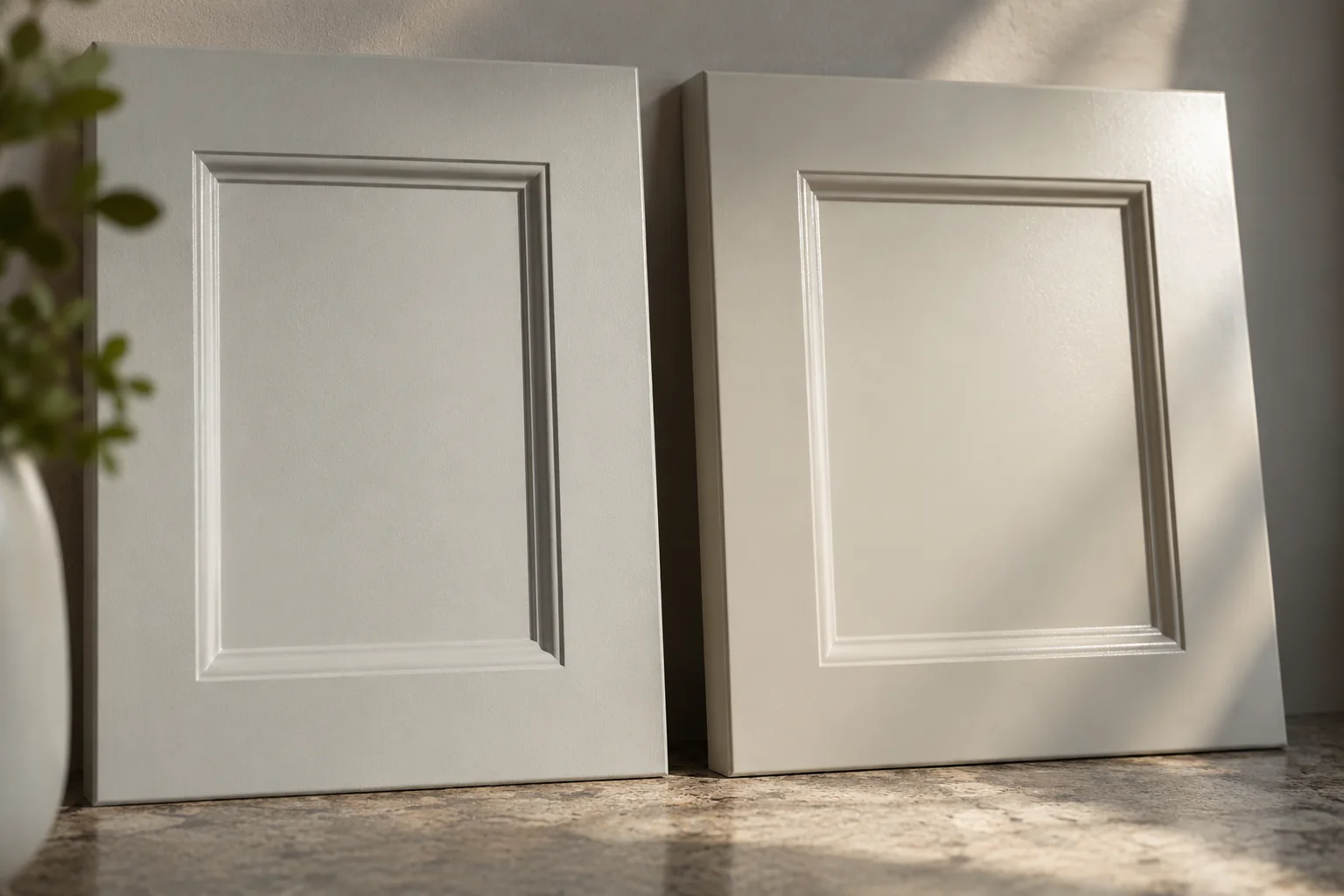
Choose a small, inconspicuous painted area close to the door edge, but avoid bare timber, a chip or a place where moisture could enter a joint. Wipe gently with the barely damp cloth and let it dry fully. Examine from the front and in side light. Look for colour transfer onto the cloth, tackiness, fading, a different sheen or a pale halo. If any of these appears, stop and consult the paint maker or a decorator before trying another product.
If the test is sound, clean the marked area with light pressure. Wipe a little beyond the visible mark to avoid creating a hard-edged clean patch, but do not wash the whole door simply to chase uniformity. For a stubborn fingerprint, repeat a gentle pass after the first has dried rather than rubbing forcefully in one spot. If a permitted mild solution is used, remove residue with a second clean, lightly damp cloth as the paint instructions direct, then dry softly. Avoid rubbing the dry paint vigorously with a towel.
Panel mouldings need care because liquid can collect in their corners. Wrap the cloth around a fingertip to reach a groove rather than flooding it. Check the bottom rail and edge for drips. On a door with glass inserts, clean the glass separately using a method that does not run onto the painted beading. If the dirt sits in cracked or lifting paint, cleaning may detach more coating; record the defect for repair instead of forcing the cloth into it.
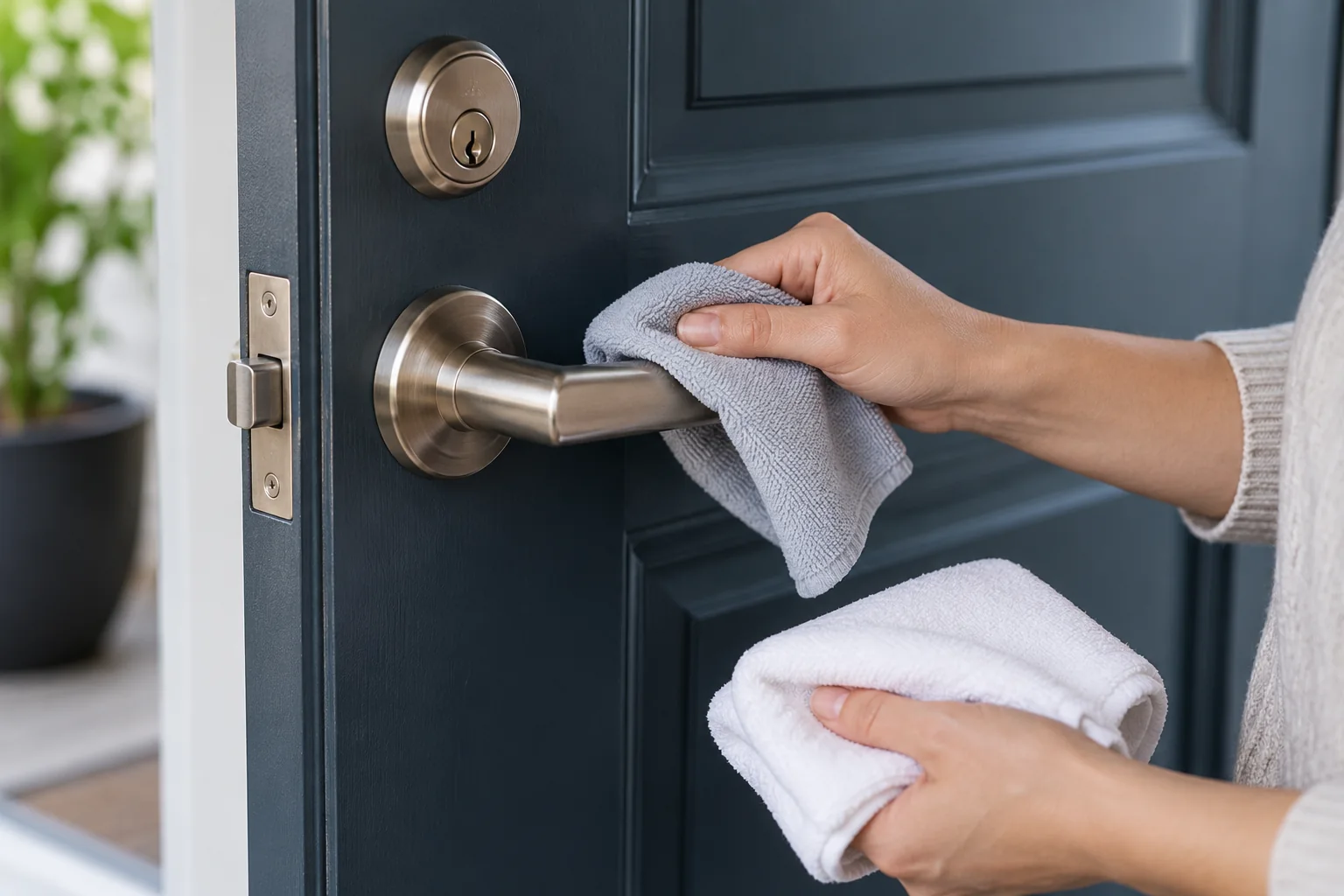
Clean the handle as a different finish
Metal handles, painted handles, lacquered brass and coated hardware may have different care requirements. Identify the handle if you can. HOPPE’s UK materials guidance says a damp cloth can remove dirt from its brass hardware and cautions against caustic cleansers. These are maker-specific instructions; follow the guidance for your actual handle when available.
Use the second cloth for the handle and its plate or rose. Wipe the areas fingers touch, then the underside and the edge where grime collects. Keep liquid out of the latch opening, keyhole and around screws. Dry the hardware after cleaning. A cloth used on a metal handle can pick up polish or residue that you should not carry back onto paint, which is why separating cloths is helpful.
If the handle is loose, cleaning is not a repair. Do not pull on it to reach a mark or dismantle it casually. Note a loose fixing, damaged coating or sharp edge and arrange appropriate maintenance. A scratched lacquered handle may tarnish or look uneven after cleaning because the protective layer is already compromised. More product will not restore that layer.
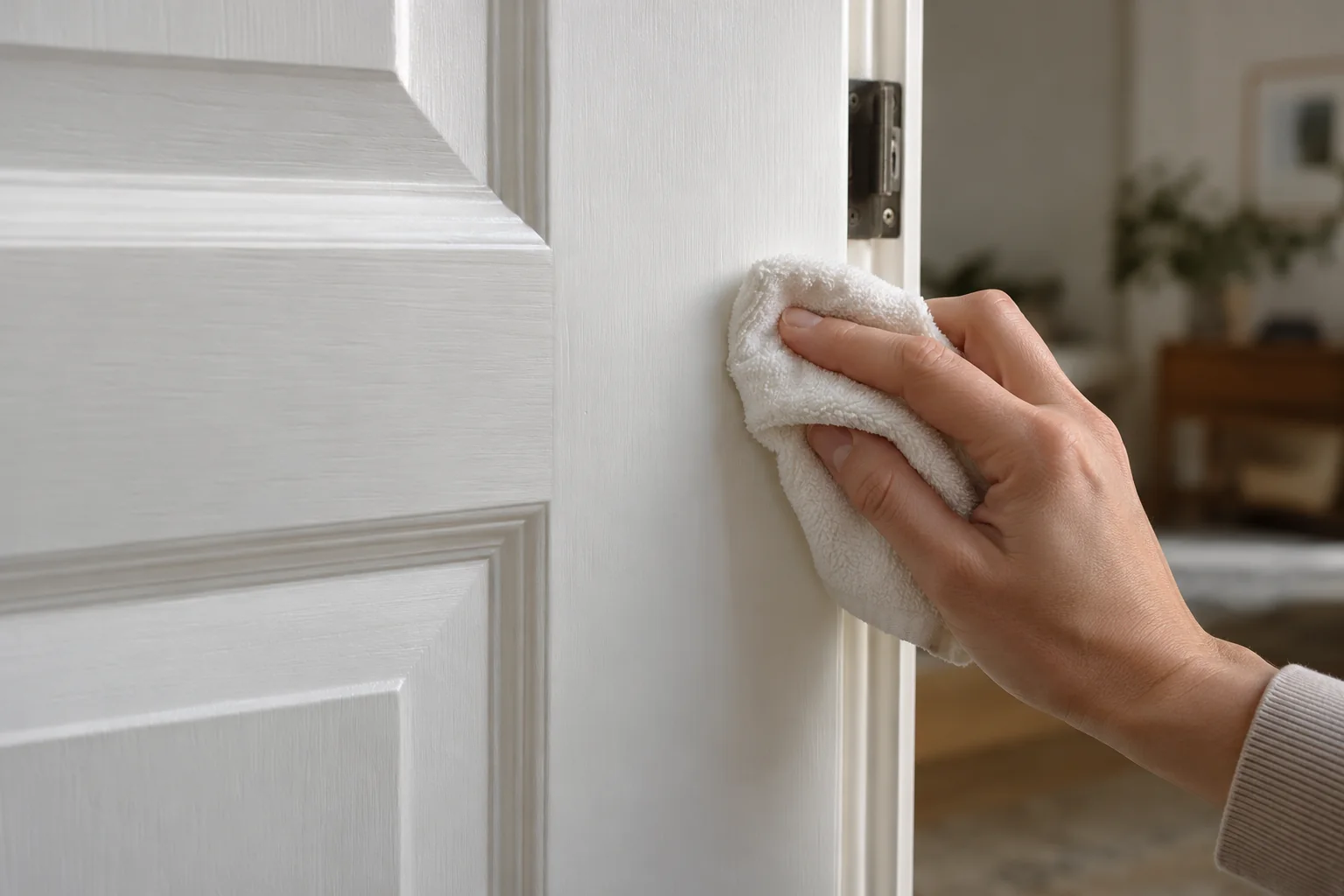
Check the dry result before repeating work
Let the door and handle dry fully. Then look at the painted panel in side light. A damp surface can hide streaks or exaggerate colour changes, so judge the outcome only when dry. If the original mark has gone and the sheen is uniform, stop. Repeated spot cleaning increases wear without adding value. If a shiny patch remains, decide whether it is residual contamination or burnished paint. A patch that looks smooth and different from the surrounding texture may need refinishing rather than another wash.
If the mark persists but the paint is intact, use the paint maker’s specific stain guidance or ask a decorator. Do not work through a series of increasingly strong household products. A black rubber scuff, adhesive residue and grease spot may require different approaches, and the wrong one can make the repair more visible. If paint transfers to the cloth, the coating feels soft, or a joint is swollen, stop. Photograph the issue in ordinary light so a professional can see the extent of it.
Inspect the floor beneath the door for drops or residue, and dry it. Check that the handle works normally and the door closes without the cleaned edge sticking. A painted door near a bathroom may see more moisture, but that does not mean it tolerates a wet cloth left in contact with a joint. Keep future cleaning quick and controlled.
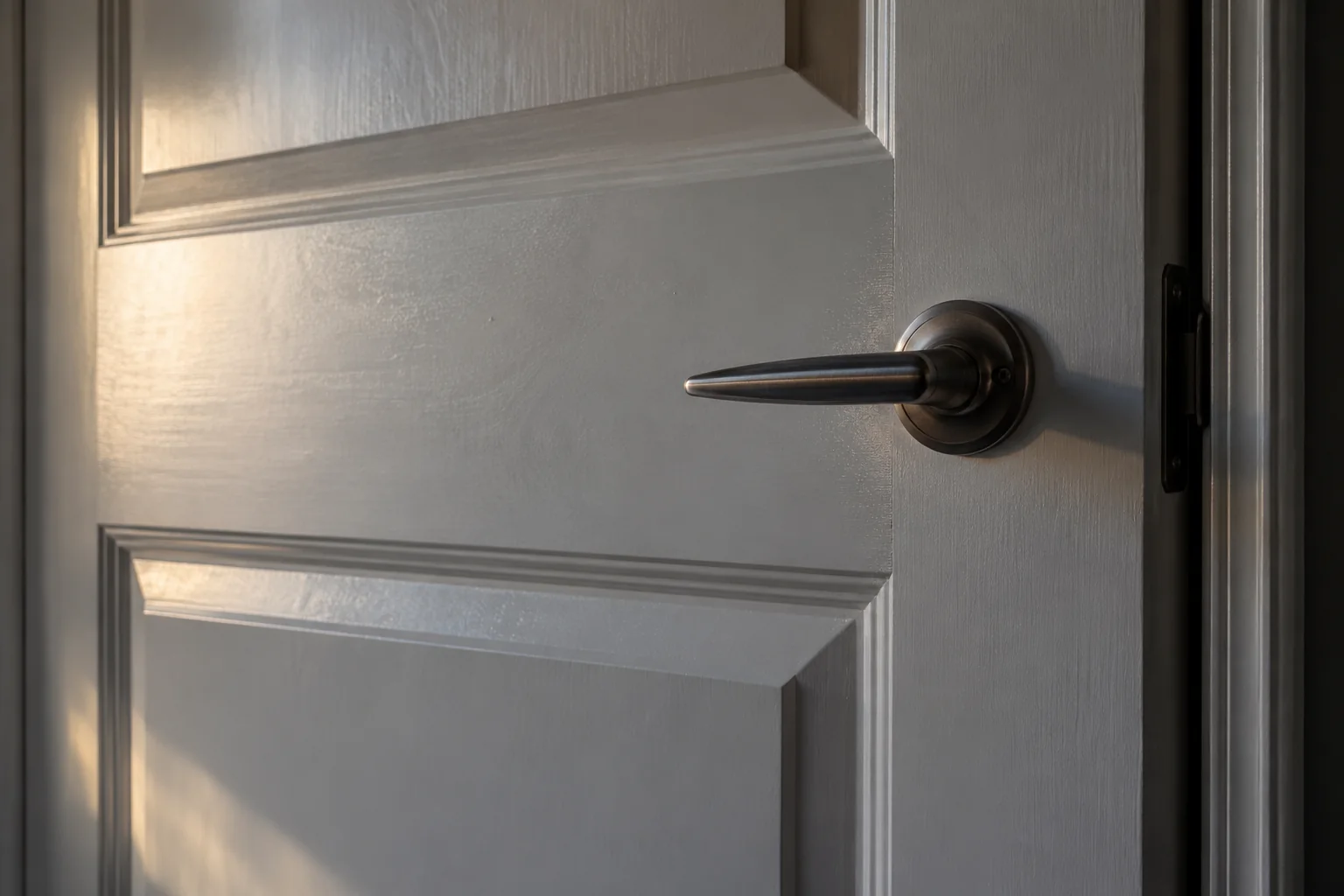
Keep hand marks from becoming a bigger job
A light, regular wipe of the handle and a small area of sound cured paint can be gentler than an occasional hard scrub of built-up grime. Use a clean cloth and the correct product for the finish. Make sure people are not dragging bags or furniture along the door face. If the same patch repeatedly shows marks, check whether the handle position, door swing or nearby storage is causing contact.
Include doors in a realistic home-care schedule, but do not wash every painted panel on every visit. The deep cleaning frequency and room plan can help you prioritise. If you use a regular home cleaning service, identify delicate paint, recently decorated doors and the acceptable method in the brief. Ask cleaners to flag a finish that changes under a test rather than pressing on with the mark.
The reliable sequence is identify, dust, test, lightly clean, dry and inspect. Handle and paint remain separate tasks. That small discipline protects the door’s appearance and prevents an ordinary fingerprint from becoming an obvious patch of altered sheen.
Can I use a melamine sponge on painted doors?
Do not assume it is safe. Its abrasive action may change sheen or remove colour, particularly on matt finishes. Follow the paint maker’s cleaning instructions and test an approved method in a hidden area first.
Why does a cleaned patch look shinier than the rest?
It may be burnishing caused by rubbing the paint film. Let the patch dry before judging it. If the texture or sheen has changed, further washing is unlikely to restore it; ask a decorator about refinishing.
Should I disinfect the door handle and painted panel together?
Treat the handle and paint according to their separate material instructions. A product appropriate for one finish may damage the other. Apply any approved cleaner to a cloth, keep it out of hardware openings and dry the surfaces.