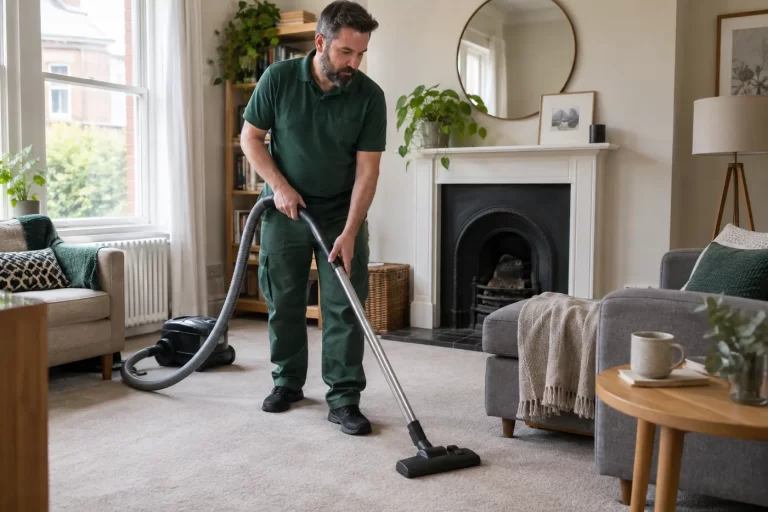
To clean behind furniture, first ask whether the dust can be reached without moving the item. A long crevice tool, soft brush or slim duster may clear a sofa gap while the furniture stays put. If more access is genuinely needed, assess the weight, stability, floor, cables and route before moving anything. Empty loose items, protect the floor according to its maker and get suitable help or equipment for a heavy piece. Never drag a loaded cabinet, pull it by a handle, or twist and lift a sofa alone just to reach a strip of dust.
Dust behind a sofa or media unit is easy to forget because it is hidden in normal view. The cleaning itself is often straightforward; the risk lies in moving a bulky object through a tight room. HSE’s manual-handling guidance starts by asking whether the task can be redesigned to avoid moving the load. That principle works at home too. Clean the accessible space first, then move only what you can control safely without damaging the furniture or floor.
Decide whether the furniture needs to move at all
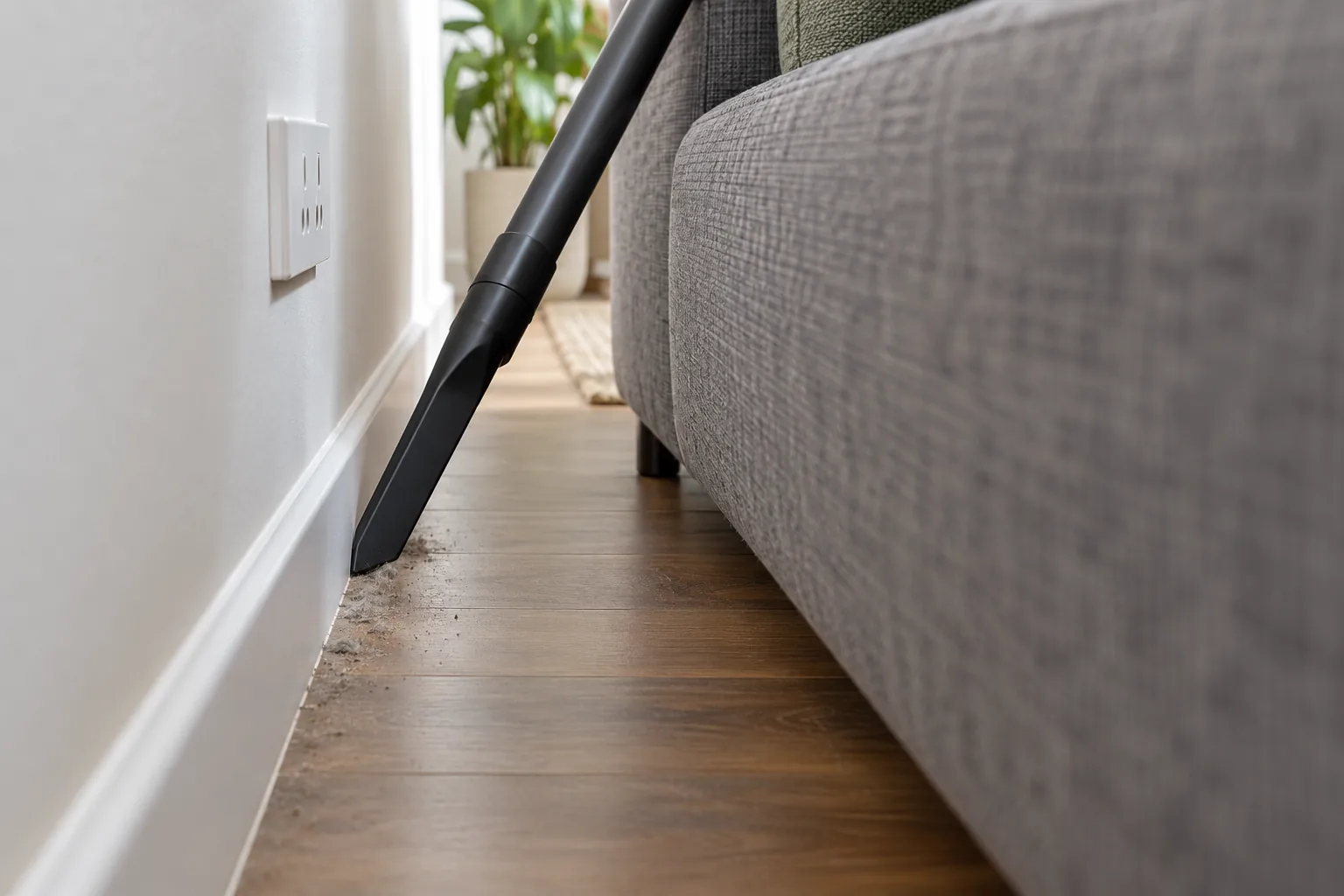
Look behind and beneath the piece with a torch from a comfortable position. Check where dust has collected and whether a plug, trailing lead, wall socket, heater or fragile item lies in the gap. If you can reach the dust with a vacuum crevice nozzle or a long soft duster, do that while the sofa or cabinet remains stationary. Do not poke a tool blindly into a live socket or along an unknown cable. If a cable disappears under furniture, trace it and disconnect the equipment safely before cleaning nearby.
For a light layer of ordinary dust, a dry tool is usually enough. Use the vacuum’s proper floor and upholstery attachments according to the floor and furniture care instructions. Move slowly so the nozzle captures dust instead of pushing it out into the room. A slim duster can pull debris towards an open side, where the vacuum can collect it. If something valuable has fallen behind the furniture, stop and plan retrieval separately rather than levering the piece up in a hurry.
Not every hidden area must be exposed on a fixed timetable. A heavy bookcase secured to a wall or a large cabinet loaded with equipment may not be intended for routine movement. Clean what is reachable and plan any deeper access with people who have the right equipment. The HSE manual-handling overview notes that pushing and pulling are handling tasks as well as lifting; a short slide is not automatically risk-free.
Check the floor, feet and route before a small move
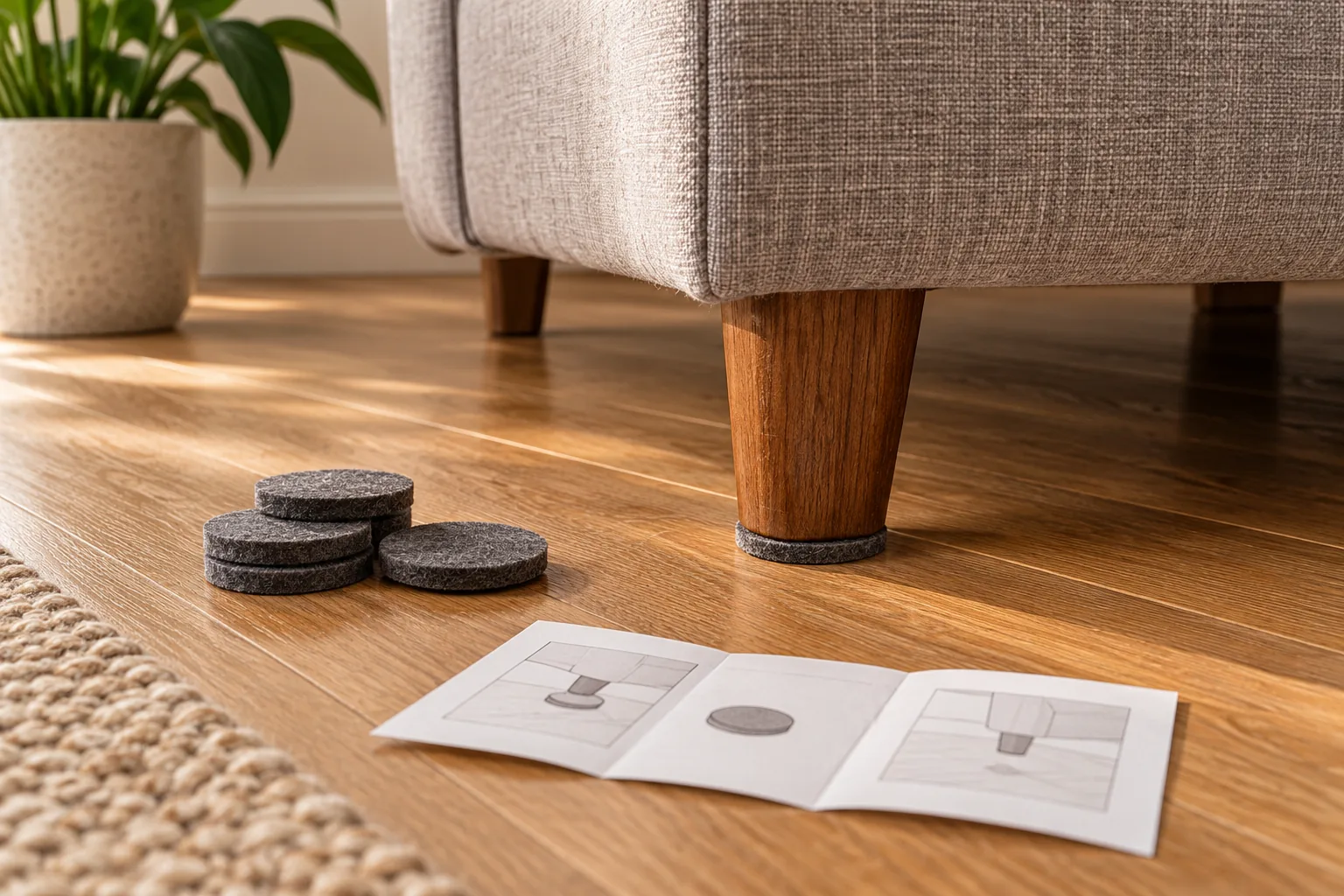
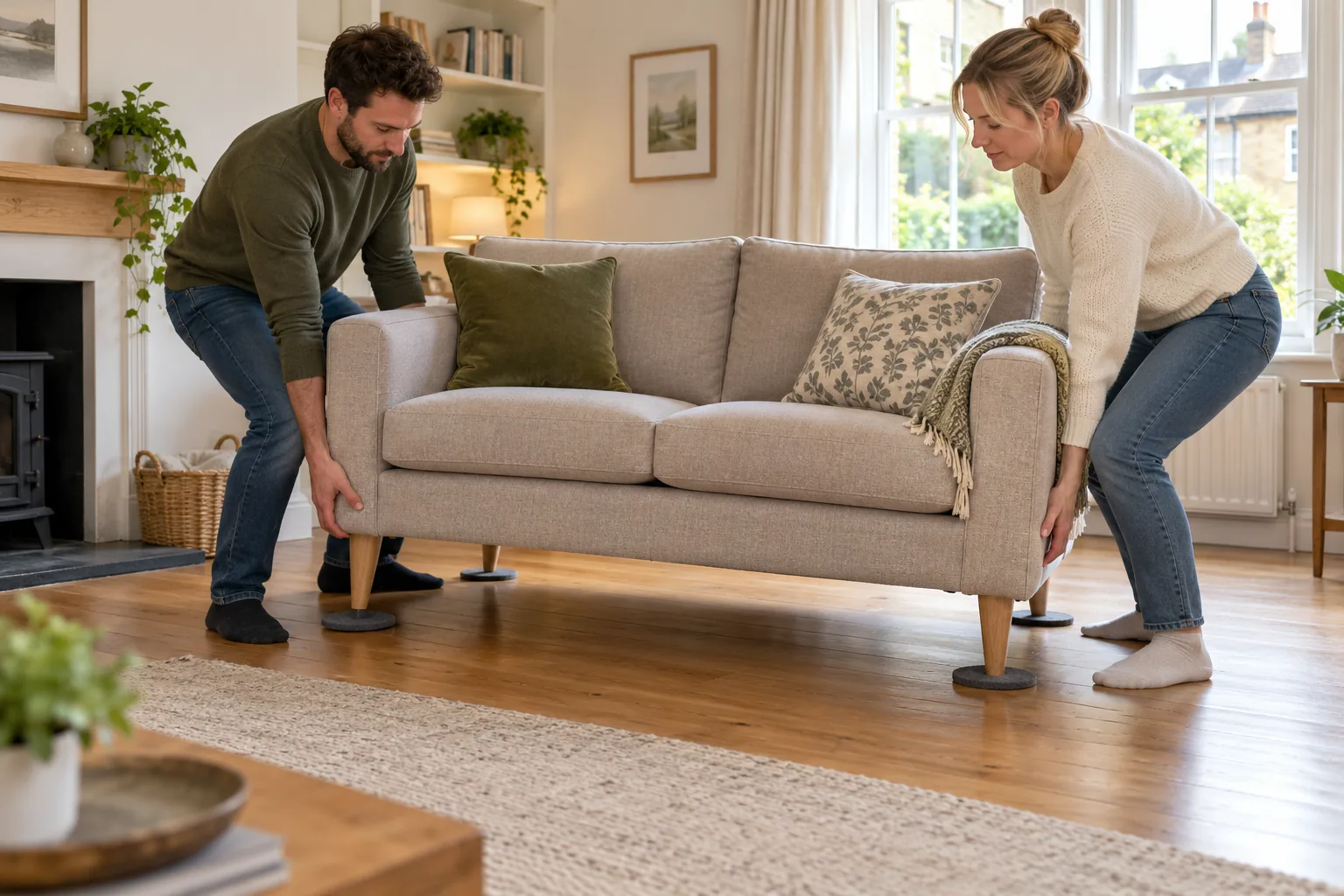
If the piece can be moved safely, inspect its feet and the flooring first. A loose felt pad, sharp metal foot or grit under a leg can score a hard floor. Karndean’s floor-care guide advises against sliding or dragging furniture and recommends protective pads and castor cups for heavy items. Amtico’s wear-and-care leaflet similarly says to lift rather than drag and use appropriate protection. Follow your own floor maker’s directions; a pad suited to vinyl may not be the right tool for carpet or delicate timber.
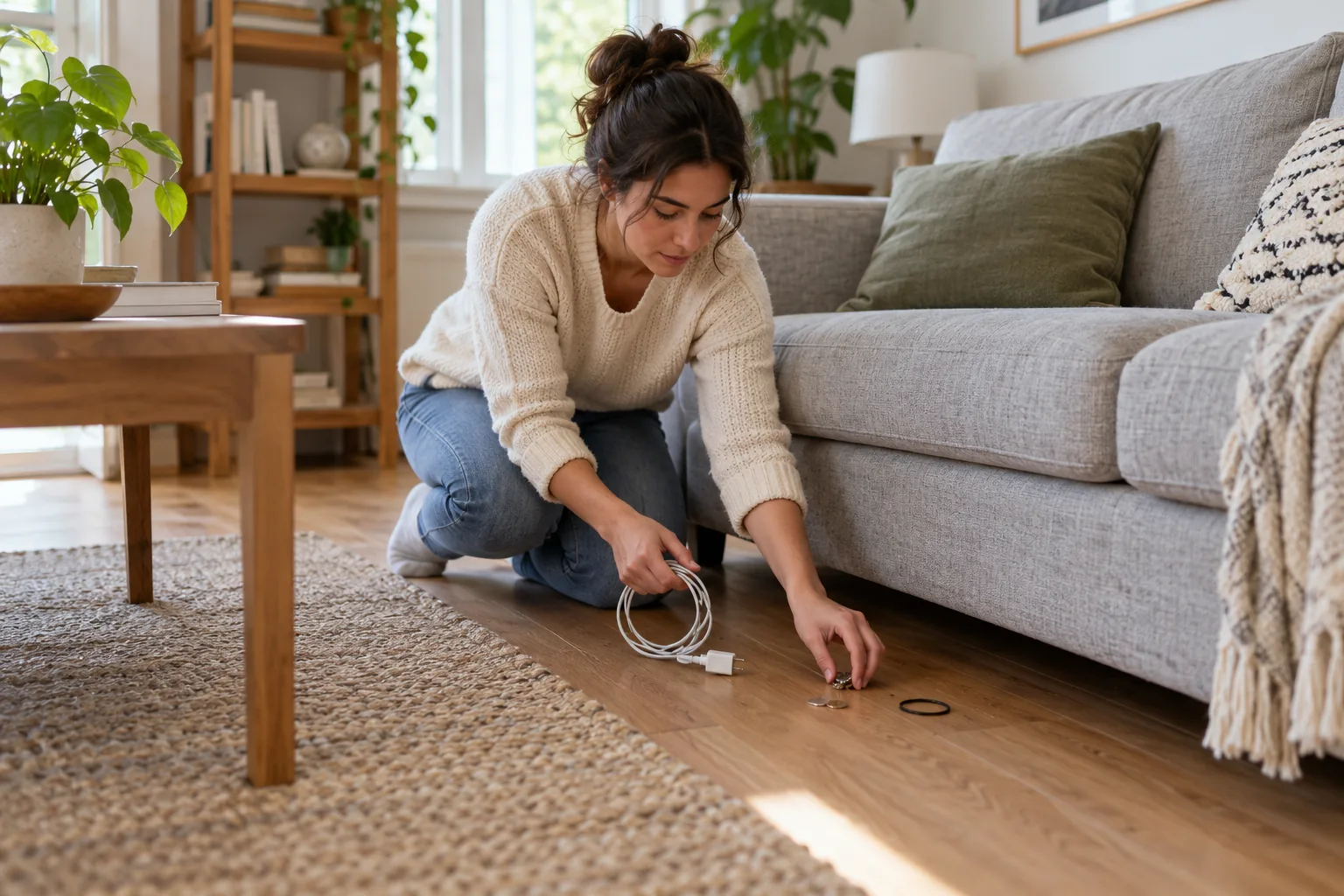
Clear the movement route and the landing space. Remove small tables, rugs, toys and ornaments that could catch a foot. Check the width of the gap you need, not just the full room. A sofa may only need to move a short distance, while a tall cabinet may be unsafe to move at all without emptying and checking how it is fixed. Disconnect and coil cables from a media unit before it shifts; do not let a lead pull on a socket or device. Photograph connections if you will need to reconnect them.
Check whether the item is anchored to the wall. Anti-tip fixings on shelving and cabinets are safety devices, not an inconvenience to undo for cleaning. Do not detach them casually. If the furniture is too heavy, unstable, bolted in place or likely to trap fingers, leave it and arrange competent help. HSE says the law sets no specific weight limit for manual handling at work. At home, judge the whole task, including size, grip, posture and the route. A tall awkward piece may be riskier than a lower item of the same weight.
Move only a manageable item with control
If you decide to move a manageable sofa or chair, ask another adult to help when needed and agree on the direction before starting. Use the frame or proper lifting points, never cushions, doors, drawers or a decorative trim. Keep the route short and level. Avoid twisting your back while carrying; turn your feet with the object. Do not lift while reaching over the furniture or trying to step backwards around a table. If the item starts to tilt or feels heavier than expected, set it down safely and reconsider.
Appropriate furniture sliders or castors can reduce effort on some floors, but check their compatibility and how the piece will remain stable. Grit trapped under a slider can scratch, and pushing still requires control. Use the floor maker’s guidance and the slider maker’s instructions. If a sofa has delicate legs, an internal mechanism or a reclining electrical supply, those features may change how it can be moved. Unplug a powered recliner according to its manual before moving it, and do not pull it by the cable.
Do not ask children to steady heavy furniture or stand where it could fall. Keep pets out of the route. A fixed large display cabinet, aquarium stand, piano or wall-mounted unit is outside routine household moving for dusting. The better choice may be a narrow cleaning tool, a later planned professional move, or leaving an inaccessible strip undisturbed until furniture is repositioned for another reason.
Clean the exposed area and inspect for hidden issues
Once the area is accessible, vacuum loose dust and cobwebs from the wall edge and skirting first, then the floor. Use the attachment appropriate to the floor; hard nozzles can mark wood or vinyl, while a spinning brush may be unsuitable for a delicate rug. Wipe the skirting with a well-wrung cloth if the paint permits it, keeping water away from sockets and cable entries. Pick up small objects rather than sucking them into the vacuum.
Look for signs that need attention beyond cleaning: damp staining on the wall, mould, damaged wiring, insect activity or a hot outlet. Do not touch suspect wiring or wet electrical fittings. Photograph the issue and seek the right repair or inspection. A sofa pushed hard against a damp wall may hide a continuing moisture problem; vacuuming dust will not resolve it. A smell that remains after the area is clean also deserves investigation rather than fragrance sprayed into the gap.
Allow any wiped floor or skirting to dry before returning the item. Check that felt pads, glides or castors are clean and secure. Move the piece back with the same controlled method, keeping enough clearance for cables and any heat source as specified by the furniture or appliance maker. Reconnect equipment only after the route is clear and cords are not trapped. Inspect the floor where the feet now rest for scratches or indentations.
Make future cleaning easier without a big rearrangement
Consider whether a small gap would allow a crevice tool behind the sofa next time, provided it does not compromise furniture stability or the room layout. Keep cables bundled safely and away from cleaning routes. A periodic dry pass along accessible edges can prevent large dust accumulations, so a major move is needed less often. Store a slim duster where it will be used rather than relying on an annual heavy-lifting session.
The right interval depends on the room, pets, ventilation and how much furniture blocks the skirting. Our room-by-room deep-cleaning frequency guide can help prioritise hidden areas, and the weekly cleaning plan for busy households offers a way to fit accessible dusting into routine care. If you arrange one-off deep cleaning, describe the furniture and access in advance so the task can be assessed. Moving heavy, fixed or unstable items should be planned separately with suitable help.
The goal is a clean living room without turning a strip of hidden dust into an injury, a scratched floor or a pulled cable. If a small movement is safe, prepare it and control it. If not, use a reach tool or wait for a properly planned move. That judgement is part of good cleaning, not a failure to clean thoroughly.
Common questions
Should I move a bookcase to clean behind it?
Usually start with accessible dusting. A loaded or wall-anchored bookcase can become unstable if shifted. Do not remove anti-tip fixings simply for routine cleaning; arrange competent help if deeper access is essential.
Are furniture sliders always safe for floors?
No. They must suit the floor finish and load, and grit beneath them can scratch. Check floor and slider instructions first. Karndean and Amtico both caution against dragging furniture and recommend appropriate protection for their floors.
What if I find damp or mould behind a sofa?
Do not push the sofa back over a wet patch. Photograph it, check for an obvious moisture source without disturbing electrical fittings, and arrange suitable assessment. Removing dust alone will not correct a leak or condensation problem.