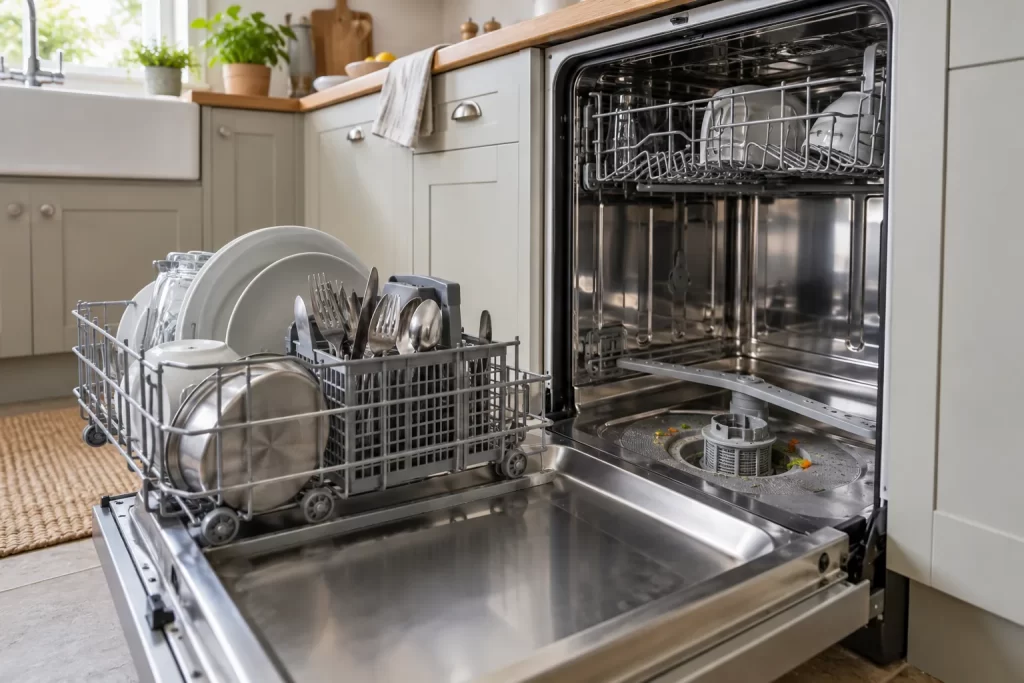
If a dishwasher smells or leaves bits of food behind, begin with the user-accessible parts rather than pouring in a stronger cleaner. Switch it off, let a completed cycle cool, remove the lower rack and check the filter for debris. Clean and refit it exactly as the model’s manual describes. Wipe the accessible door seal and adjacent edges, then check whether the spray arms can rotate freely and whether their outlets are blocked. Stop at the parts the manufacturer says the user may remove. Water left standing after a cycle, leaks or electrical symptoms may need a separate fault check or repair.
Dishwashers differ in filter locks, arm fittings and care programmes. Find the model’s manual and keep it beside you. This routine covers user-accessible maintenance; pump and drainage problems may need separate troubleshooting.
Start with the model and a safe work area
Check that a wash programme has finished and the appliance is cool enough to handle comfortably. Switch it off before touching internal parts, using the method in its instructions. If the manual requires isolation at the plug or switch for maintenance, follow it. Never reach inside a running machine or force the door against hot steam. Electrical Safety First’s dishwasher guidance stresses following the maker’s instructions and keeping the outlet filter clean.
Clear space for the rack and filter components. Put a towel beneath wet parts, away from sockets and walking routes. Look for sharp debris before touching the filter; gloves do not make glass safe to grab. If shards are present, follow the model’s removal guidance or seek help.
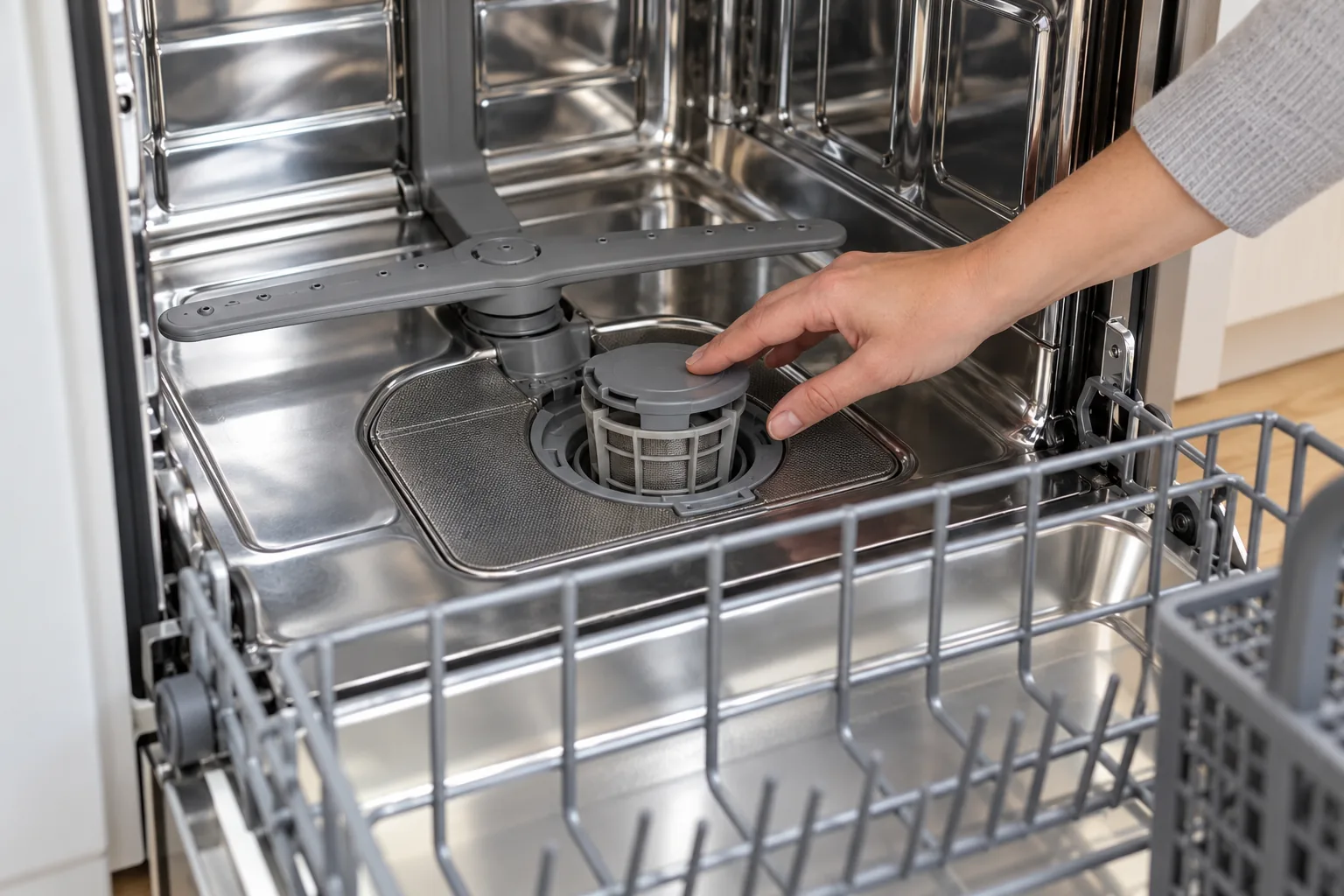
Identify the filter assembly in the manual. Many machines have a cylinder and flat mesh, but locks differ. Some spray arms unscrew or unclip; others are not intended for routine removal. A photograph can help you restore permitted parts correctly.
Clean the filter without pushing debris into the pump
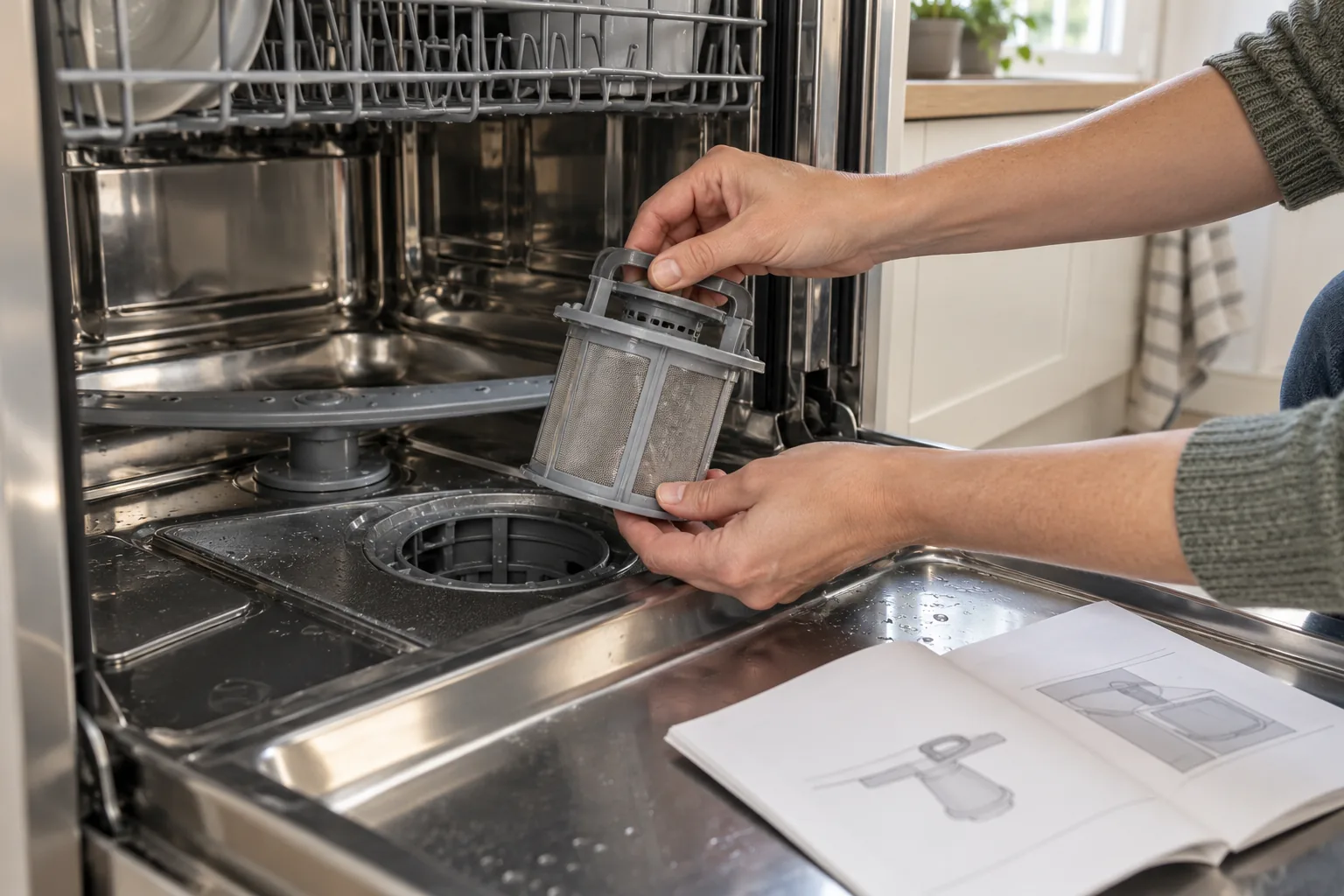
Slide out the lower rack, lift away visible food scraps and then release the filter as directed. This order matters: crumbs or fragments should not fall into the opening when the filter is removed. Lift the assembly carefully and inspect its frame, screen and lock. If the screen is split or the catch damaged, source the correct replacement for the model rather than running the dishwasher with a compromised part.
Rinse the removable filter under running water and use a soft brush where its instructions permit. Work food residue out of the mesh without bending it. Bosch UK’s dishwasher-cleaning guide shows this for its relevant models, including separating the filter components and reassembling them before replacement. Use that as an example; your appliance’s own locking sequence takes priority. Avoid a stiff wire brush or a sharp implement that can enlarge the mesh or damage a seal.
Check the accessible well beneath the filter for loose scraps. Do not probe a pump opening or remove a cover unless the manual identifies that as a user task and you can follow its safety steps. Miele’s support guidance distinguishes a clogged filter from pump and hose problems. If standing water remains after the permitted filter check, seek appliance support.
Wipe the door seal and the edges it cannot wash
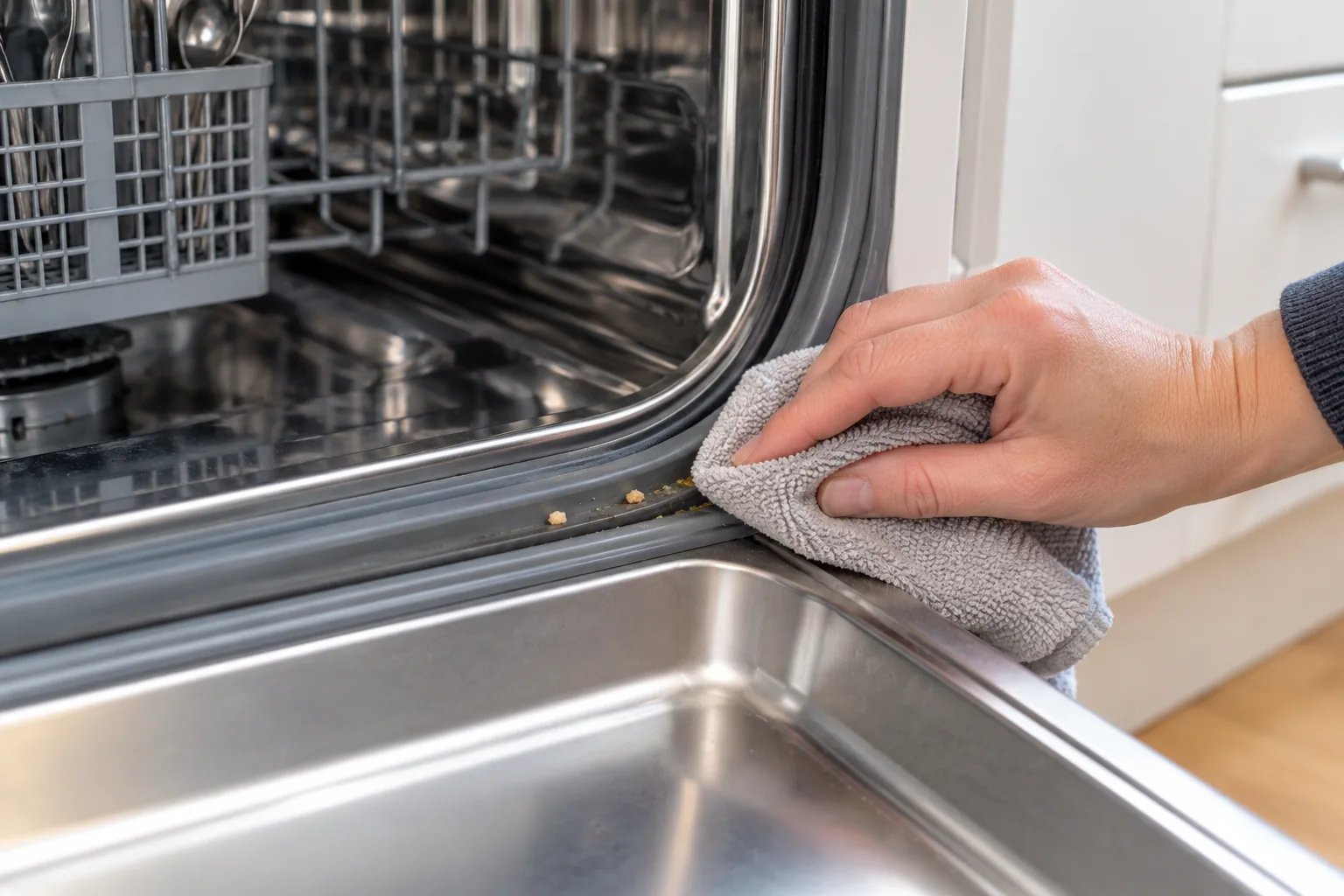
The door seal and the edges beside it may not receive the same spray as the main wash chamber. Food liquid can sit in a fold even when the interior looks clean. Gently wipe the accessible seal and neighbouring door edge with a soft cloth using the method allowed in the manual. Do not pull the gasket from its channel simply to clean beneath it. Dry the area and inspect for splits, deformation or a section that no longer seats properly.
One Miele operating manual advises regular damp wiping of door seals and notes that the sides of the door may not be reached by the spray arms. That is a useful explanation for why this small hand-cleaning job exists, but the permitted cleaner still depends on your appliance. A harsh solvent or abrasive pad may mark plastic, rubber or an exterior finish. Do not use the same cloth on food preparation surfaces without cleaning it first.
If the seal is brittle or the machine leaks, cleaning will not repair it. Do not run another wash while water escapes onto the floor or cabinet. Dry the spill and seek model-specific repair advice. Bosch’s door-seal support page identifies a failed seal as a possible cause of leakage for its machines.
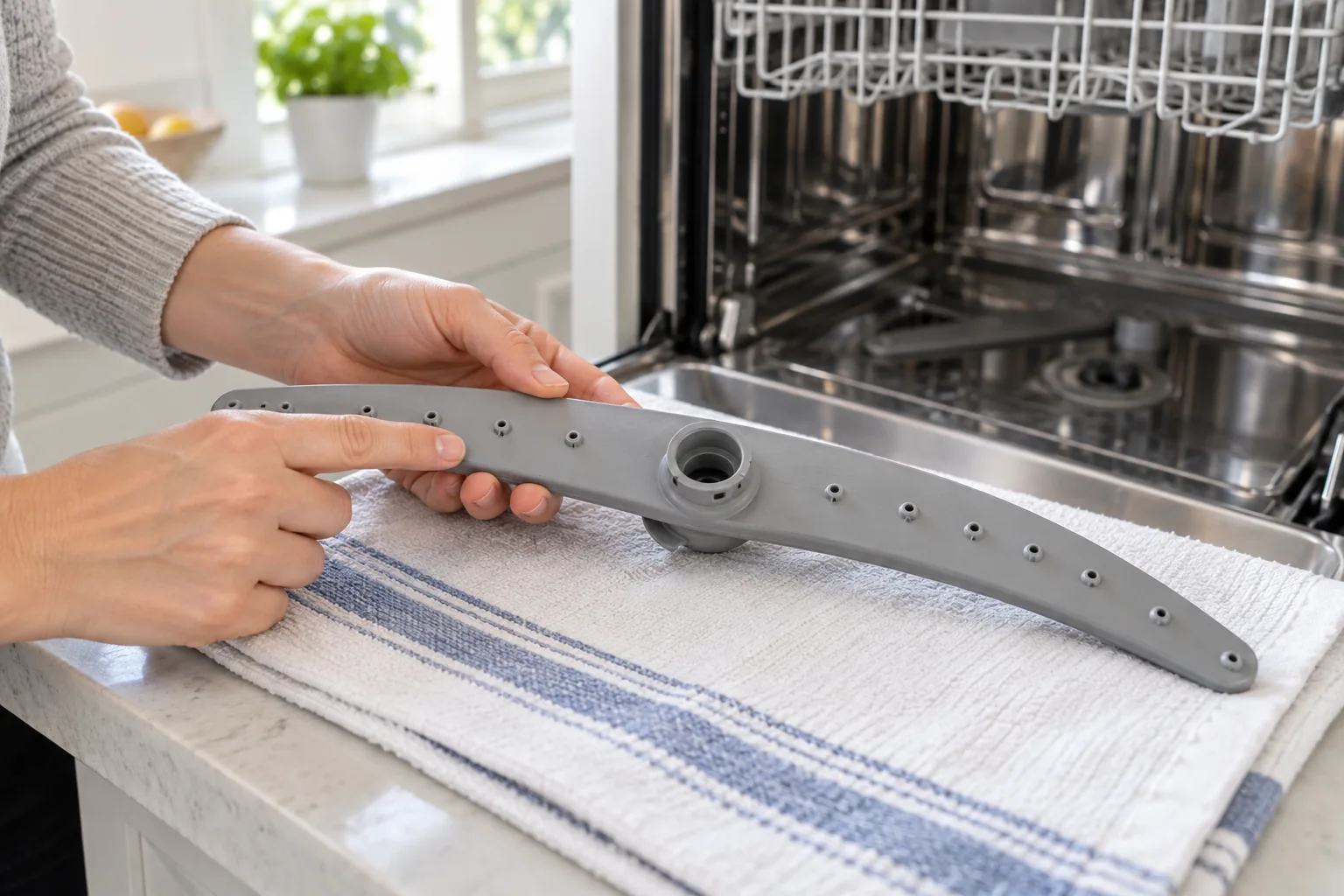
Inspect the spray arms before removing them
Turn each accessible spray arm gently by hand when the machine is off and empty. It should not hit a rack, pan handle or utensil. A blocked or obstructed arm can leave a pattern of poor washing even when the detergent and programme are right. First check how the machine was loaded. A tall tray or misplaced spoon may be the real cause, and it can be moved without dismantling anything.
If the outlets contain visible food particles, read the manual before removing the arm. Bosch UK’s spray-arm guide describes model-specific unclipping and unscrewing, rinsing and secure refitting. Do not assume the same motion applies to another brand. Use a soft, permitted method to clear an outlet; avoid driving debris further inside with a metal pin or widening a small hole. If the arm will not come free as shown, stop rather than twisting harder.
Rinse and drain a removable arm as instructed. Check it for cracks or an insecure end cap. Refit it until it locks or seats according to the manual, then turn it by hand again to make sure it moves freely. A loose arm can cause noise or poor cleaning during the next cycle. If it still catches a rack with the appliance empty, that is a fitting or repair issue, not a reason to run a hotter wash.
Reassemble before any care programme
Put the filter components together in the correct order and place the assembly flat in its recess. Engage the lock fully. Return the racks and check that both spray arms can rotate without hitting them. Do not run the dishwasher without its required filters in place. A Miele manual explicitly warns that its machine must not be used without the filters; the general principle is to respect the filter arrangement specified for your model.
Only after reassembly should you consider a machine-care programme. Use a programme and product permitted by the appliance manual, and follow the product label. Do not mix a descaler, bleach, vinegar and dishwasher cleaner in the hope of clearing an unknown fault. The HSE advises reading cleaning-product labels and never mixing chemicals. More product is not a substitute for a correctly fitted filter or a blocked spray outlet.
Check the salt and rinse-aid systems only as the manual instructs for your water and detergent setup. White marks, poor drying, greasy residue and food pieces can have different causes. Avoid changing several settings at once; it makes it harder to tell what helped. Record what you saw, what you cleaned and whether the next normal load is improved.
Know when to stop cleaning and seek a repair
Persistent standing water, repeated error codes, a leak, a damaged seal, a filter that will not lock, unusual grinding or any sign of electrical overheating should change the plan. Switch the machine off and follow the manual’s troubleshooting or service route. Electrical Safety First advises seeking a qualified repair when a plug or socket shows burn marks, arcing, excessive heat or repeated tripping. Household cleaning cannot correct those faults.
Likewise, a bad smell is not proof that one cleaner or one filter is the answer. Check for trapped food and the parts you can maintain, but do not reach into a drain or pull a built-in machine forward without understanding the installation. Keep the work at the user-maintenance boundary. A technician can diagnose a pump, hose or electrical problem with the appropriate access and tools.
For normal upkeep, add a quick filter glance to the rhythm of your kitchen cleaning rather than waiting for a strong odour. The existing kitchen guide between cleaning visits covers the daily food-surface routine, while the guide to deep-cleaning frequency helps decide which less frequent jobs are actually due. The appliance manual should set the dishwasher’s specific checks; a calendar reminder is useful only if it leads to a real inspection.
If a wider kitchen clean is needed, ask what is included in the site’s one-off deep cleaning service. Mention the dishwasher and its condition explicitly. Do not assume a cleaning appointment includes opening appliance components or diagnosing faults. The useful finish line here is a clear, intact filter correctly locked in place, a clean accessible seal, free-moving spray arms and no evidence of a leak. Anything beyond those observations deserves the right maintenance or repair decision.