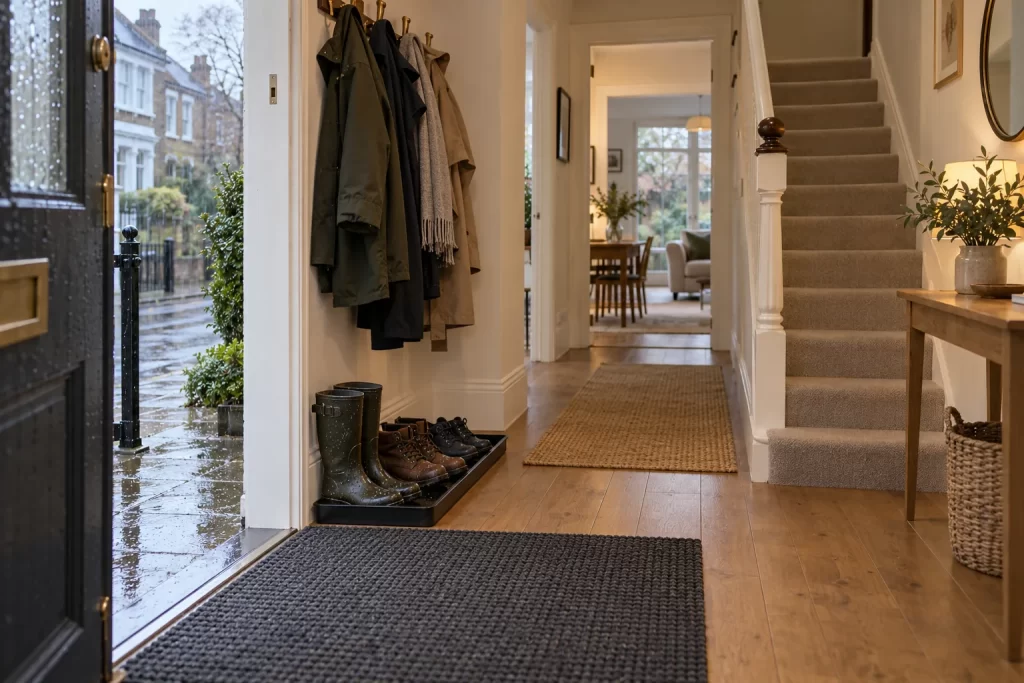
On a wet day, a useful hallway clean begins at the door. Give shoes a place to shed water and grit, provide somewhere for coats and umbrellas to drip safely, and keep a clear dry route into the home. Deal with puddles straight away. Once muddy marks have dried enough to lift loose grit, remove that grit before wiping the floor with a method suited to its material. This routine helps limit dirt carried into other rooms.
The aim is a usable entrance rather than an immaculate floor during every shower. Its layout depends on the floor finish, the door swing and where people take off their shoes. A mat that catches the door or curls underfoot is a poor solution even if it looks tidy.
Watch how water and grit enter the hall
Watch the first few steps inside the threshold. Do people pause on the mat or step past it? Does the door fold the mat? Do shoes pile up in the walking route? These are placement problems that mopping more often will not solve.
Rainwater arrives on soles, coats, pushchair wheels and umbrellas. Grit may abrade hard floors or settle into carpet; a puddle on a smooth floor presents an immediate slip risk. The Health and Safety Executive’s floor-cleaning guidance is for workplaces, but its practical points are useful at home: remove spillages promptly and leave smooth floors dry after cleaning. A full mop bucket may create a larger wet patch than the spill.
Check where the outer and inner mats end. If the mat is too small for anyone to take a full step on it, it may be missing most of the water. If the hall is narrow, a smaller stable mat used properly can be better than a larger one that obstructs access. Choose a mat and backing compatible with the floor below; some flooring manufacturers warn that certain backings can discolour their products.
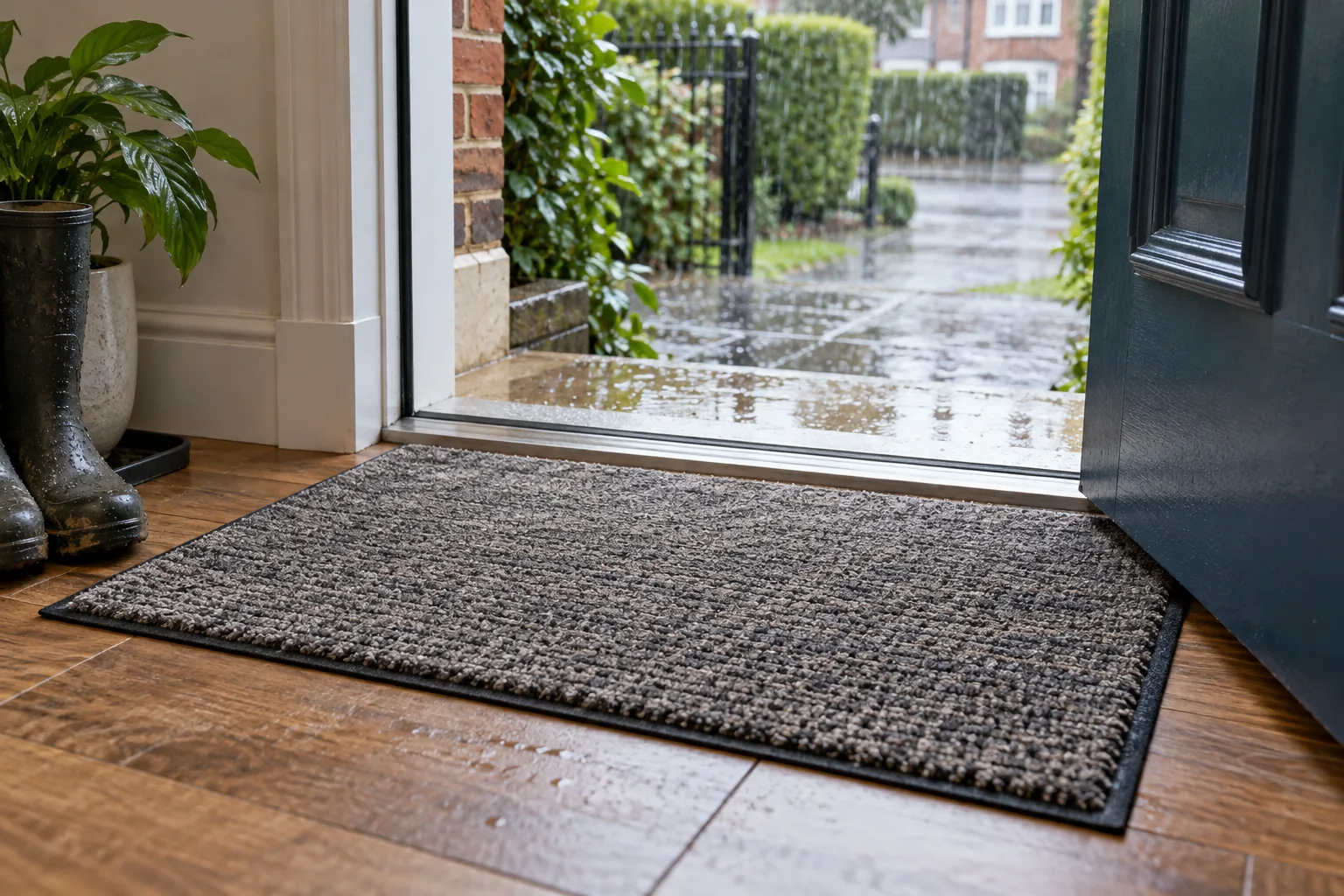
Make the entrance easy to use
A wet-weather station needs a secure mat, a tray for footwear, somewhere for coats and a place for umbrellas to drain. Keep the walking line open. Place the tray where people can reach it before crossing the room in muddy boots.
Check the mat’s edges every time you clean it. A curled corner or sliding backing can be a trip hazard. Lift it to check whether moisture has collected underneath, then let both mat and floor dry. A saturated mat transfers water rather than absorbing it. Have a way to dry or swap it when several people are coming and going. If a mat is washed, follow its own care label and return it only when fully dry.
Empty the umbrella stand or drip tray before it becomes another pool. Hang coats where they can dry without resting against wallpaper or a wooden cabinet. The arrangement should be easy to use when someone arrives with bags.
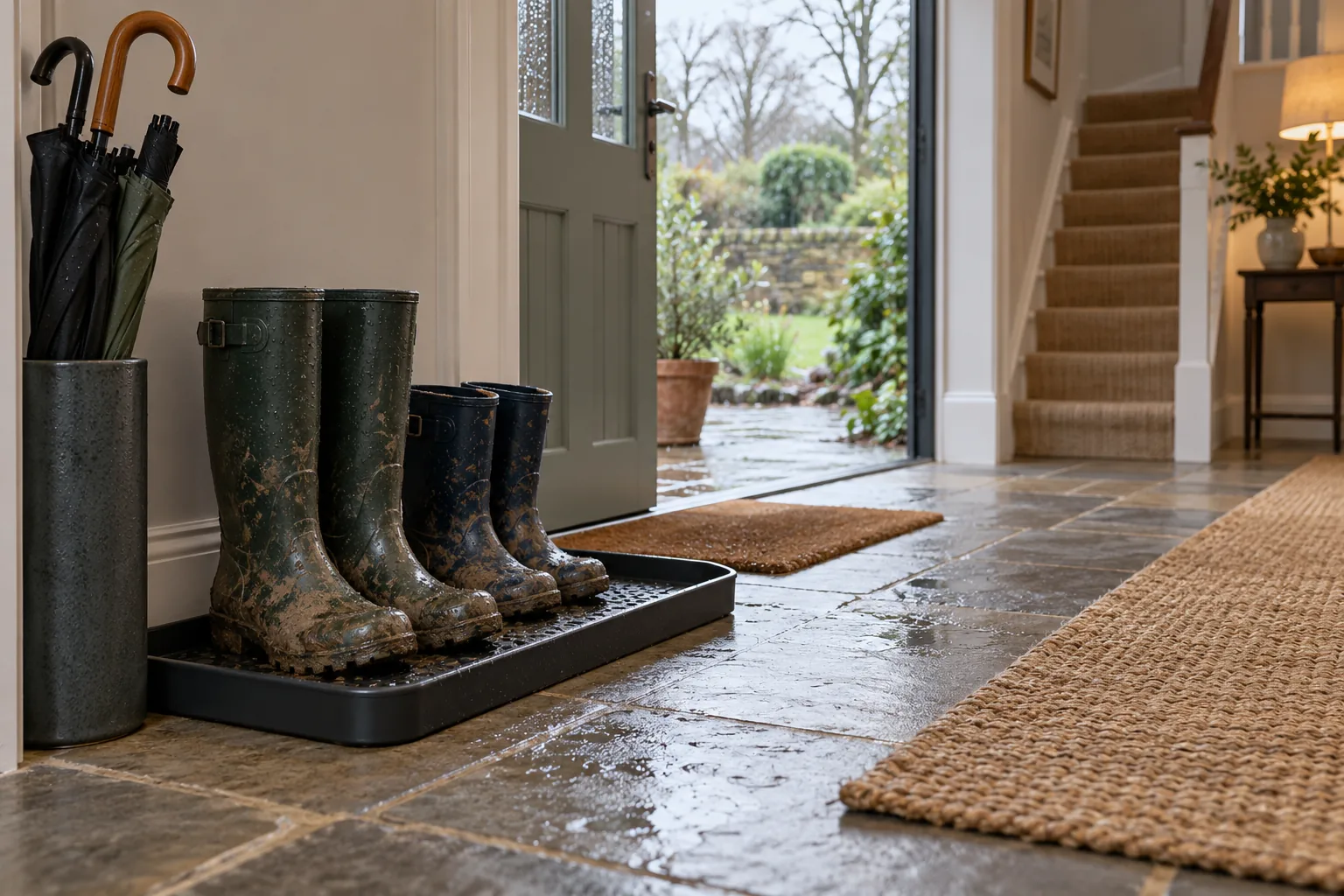
Remove the immediate slip risk first
Blot or wipe water from a smooth floor promptly and leave it dry before people pass. Avoid slippery polish and keep cleaning equipment out of the route. If the hall is busy, work in small sections so a dry path stays available.
For mud, separate the wet water problem from the grit problem. Blot the water without rubbing soil into the finish. When loose mud has dried enough to lift safely, collect the grit with a soft broom or a vacuum head approved for that floor. Scrubbing gritty water across a glossy surface can make fine scratches. Then spot-clean the remaining mark with the product and moisture level appropriate to the material. A stubborn mark may need a second careful pass; it does not automatically need a stronger chemical.
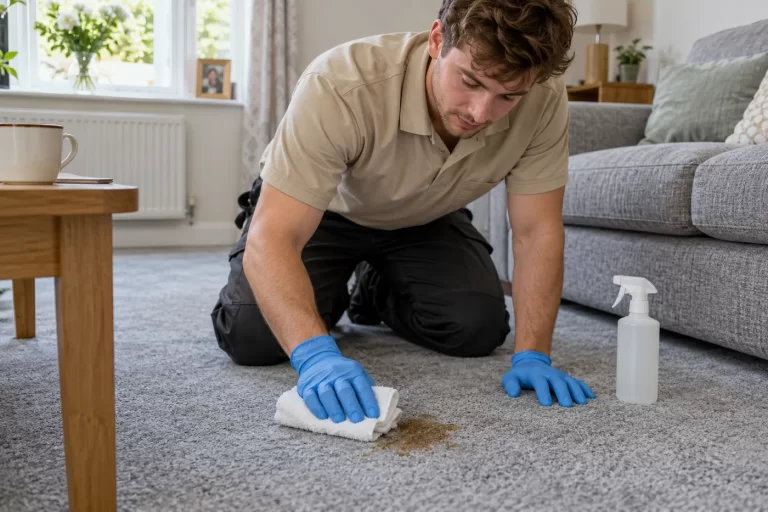
If the entrance opens straight onto carpet, do not pour water onto a muddy footprint. Pick up any solids carefully, blot moisture with a clean cloth and follow the carpet’s care information for the remaining stain. The site’s carpet-stain first-response guide covers fibre checks and the limits of home treatment. If a larger area needs attention, discuss the material and condition with the carpet cleaning service rather than repeatedly soaking the pile.
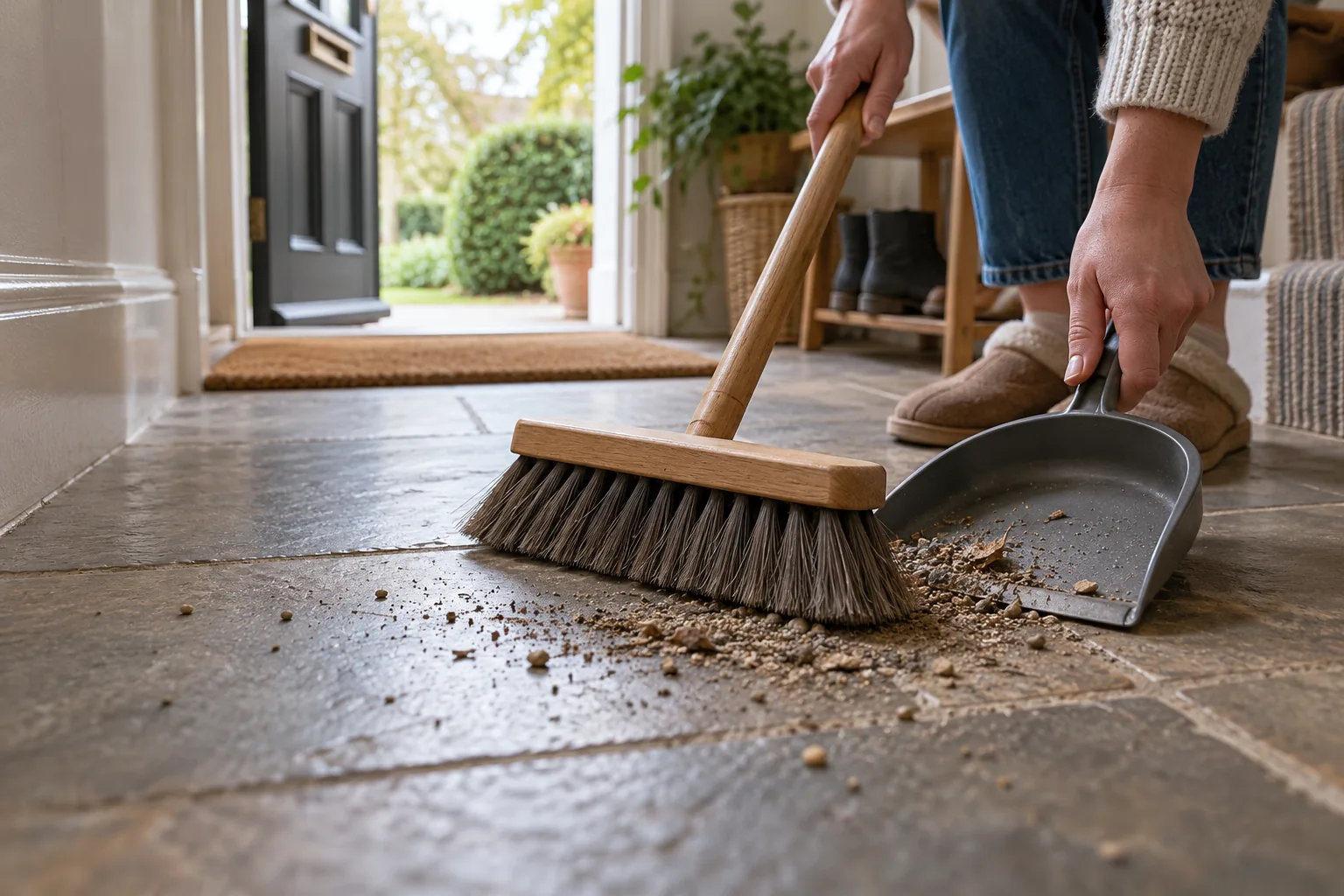
Match the wet clean to the floor
One hall can contain several finishes, particularly where a tiled entrance meets timber stairs or a carpet runner. Do not carry one wet mop across every section. Identify the floor and read any product or installer care instructions you have. If you rent, ask for the flooring details when a finish is unfamiliar. The site’s article on popular home flooring options introduces the material differences, though the manufacturer’s instructions for your actual floor should decide its cleaning method.
Laminate and engineered boards
Remove loose grit with a suitable soft tool before damp wiping. Use only as much moisture as the specific product permits and dry standing water quickly, especially at joints and skirting. Do not assume that all laminate is waterproof. Quick-Step’s UK care guidance describes regular dry maintenance and a lightly damp clean for its laminate ranges, with product-specific differences in water resistance. Another brand or older installation may have different limits. Avoid letting a boot tray leak over board seams overnight.
Vinyl and luxury vinyl tile
Vinyl often tolerates routine damp cleaning, but it still needs the cleaner and method recommended for that product. Karndean’s floor-care guidance advises removing loose grit, promptly cleaning spills and using compatible mats. It also cautions that certain mat backings can discolour its floors. This is a reason to check the care guide for the actual vinyl in your hall rather than treating all rubber-backed mats as universally suitable.
Tile, stone and other hard finishes
An impervious-looking tile does not tell you whether its grout, sealant or underlying stone tolerates an acidic or abrasive cleaner. Start with loose dirt removal and use a cleaner approved for the finish. A textured floor can hold grit in its pattern and may need a soft brush, but do not scour a polished or delicate surface. Dry the walking area after any wet clean. If the stone is unsealed or the finish is unknown, obtain its care instructions before treating a mark with a household product.
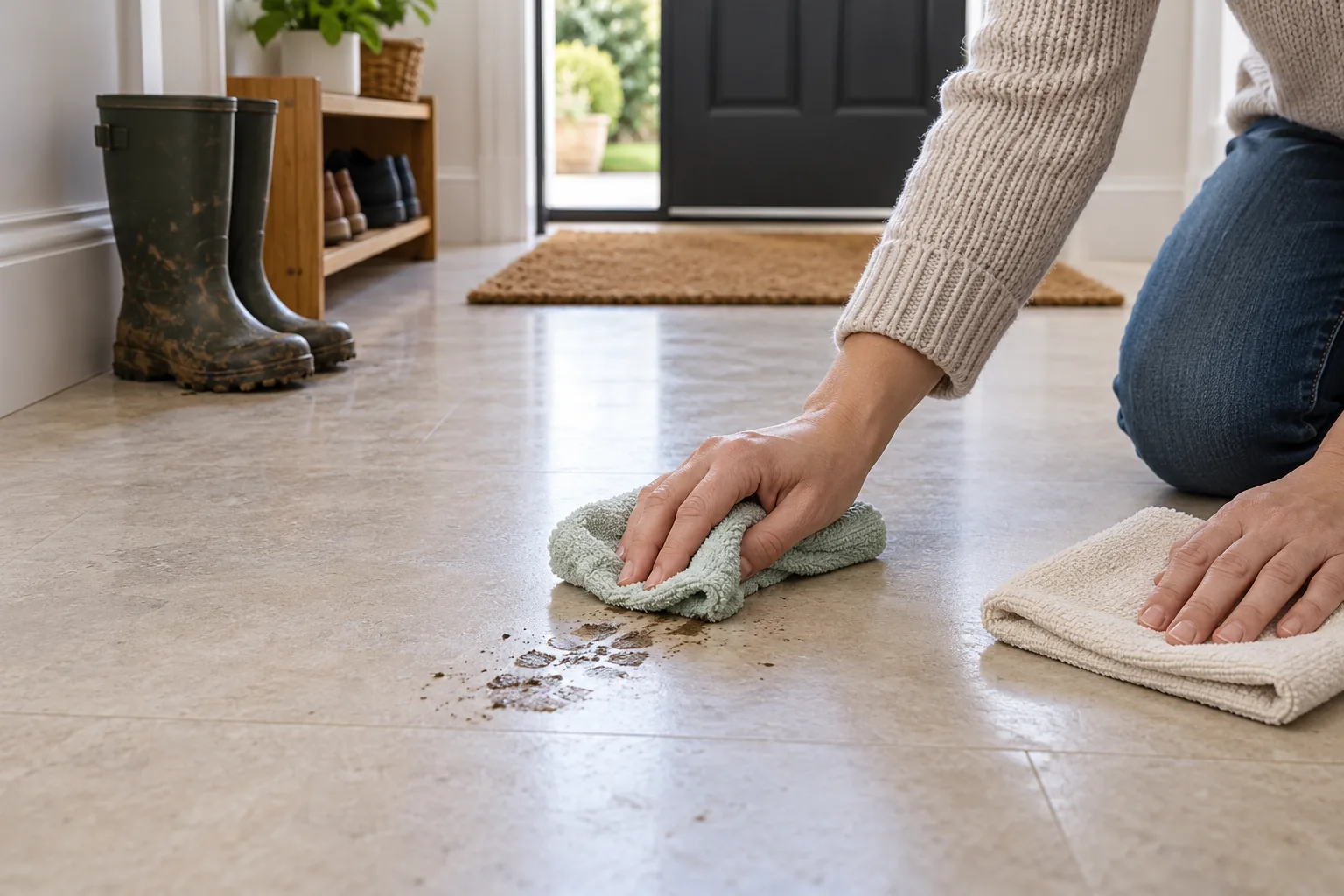
Keep footwear and storage from becoming the next problem
A crowded hall makes people step around the mat. Keep daily shoes within reach, move rarely worn pairs elsewhere and leave space to take footwear off safely. Let wet boots dry before closing them in a cupboard. Empty grit from the boot tray and dry it.
Pets add another route for wet marks. Keep an appropriate towel near the entrance if your pet is comfortable with a quick wipe, and follow any veterinary advice about paws or skin. Do not use a floor cleaning chemical on an animal. If a dog tends to rush straight from the door to a sofa, the most useful change may be to establish a short pause on the mat, not to intensify cleaning in every room.
Provide a place to park or wipe pushchair, mobility-aid or trolley wheels without blocking access. Do not lift heavy equipment merely to protect the floor. Place storage where it works for the household and ensure no tray edge catches a wheel or foot.
Use a short routine during a run of rainy days
After the last regular arrival, empty the umbrella tray, hang outerwear to dry, check beneath the mat, lift visible grit and spot-clean the path. Let the floor dry before the next use. This is a short reset, not a full deep clean.
Once or twice during a prolonged wet spell, inspect the skirting, corners and door threshold. Water that repeatedly gathers in the same place may point to a leaking seal, a door that admits rain or an unsuitable mat arrangement. A soft cloth can clean an ordinary mark, but it cannot fix a water-entry problem. Dry the area and investigate the source before the skirting or floor begins to deteriorate.
The weekly cleaning plan for busy households separates daily essentials from occasional jobs. In wet weather, water, grit and a safe route come first; a saturated mat needs attention before more floor polishing.
Know when to ask for a more thorough clean
If a busy entrance has built up dirt beyond the daily reset, explain the floor materials and condition when arranging regular domestic cleaning or a one-off deep clean. These are verified services on the site, but the exact floor tasks, products and timing should be agreed before the visit. Mention delicate finishes, loose tiles, worn carpet edges, water-damaged boards or access needs. Cleaning should not be promised as a repair for those defects.
An effective wet-weather hallway is modest: a mat that stays flat, a contained place for wet items, grit removed before wiping, and a floor left dry. Adjust the arrangement after you see how the household actually uses the entrance. That is more reliable than mopping the same muddy trail every evening.