Star Domestic Cleaners
Menu
A fabric sofa in a naturally lit UK living room
CARE INFORMATION BEFORE A TREATMENT DECISION

Upholstery Cleaning St Johns Wood

A sensitive-looking cover should have its actual guidance discussed before a cleaning method is chosen. Share labels, manufacturer instructions and marked areas for your St Johns Wood furniture. We can review the piece, surfaces wanted and suitable upholstery care.

  • Care restrictions reviewed
  • Different panels identified
  • Furniture-specific aftercare discussed
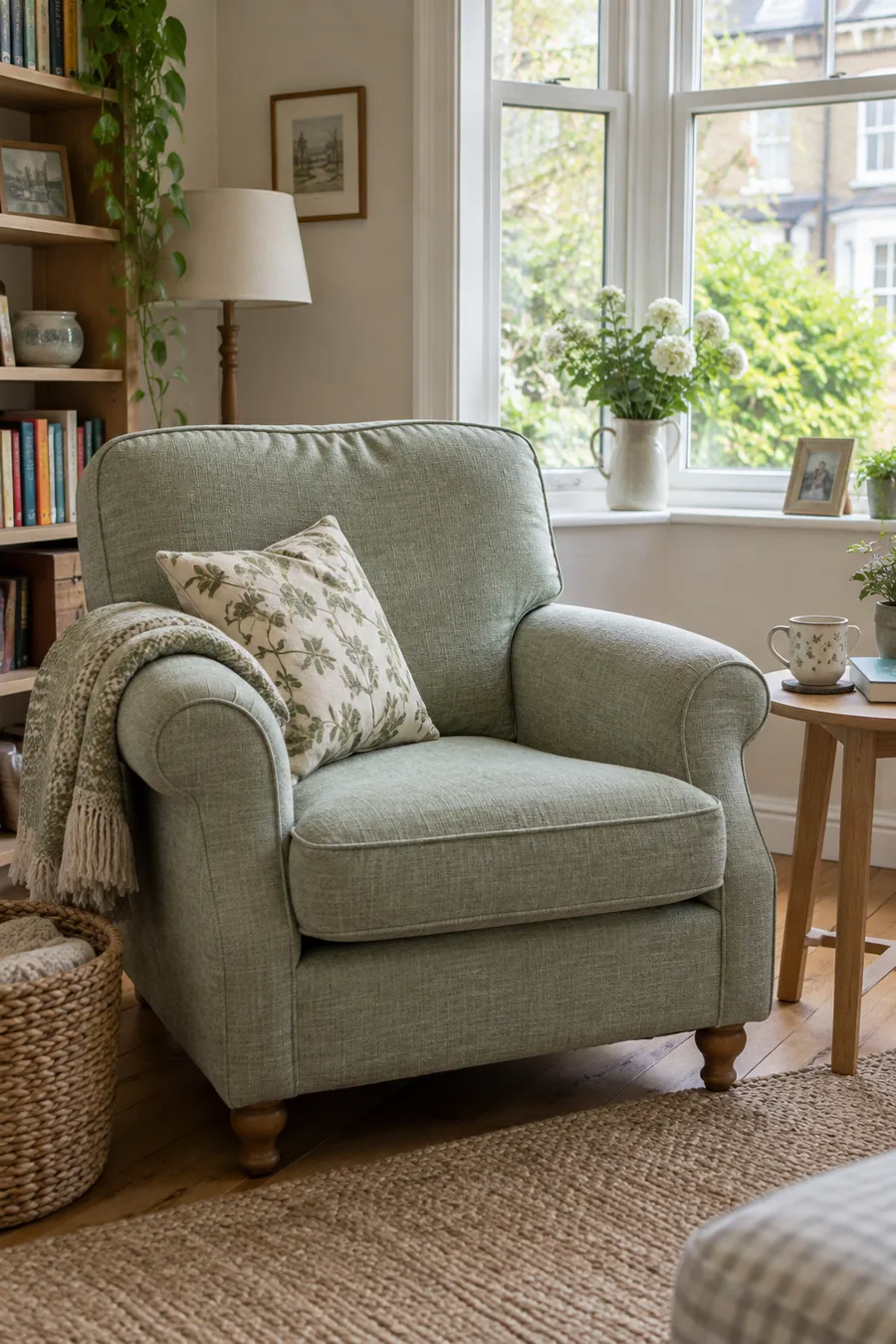
Textured fabric armchair in a UK sitting room
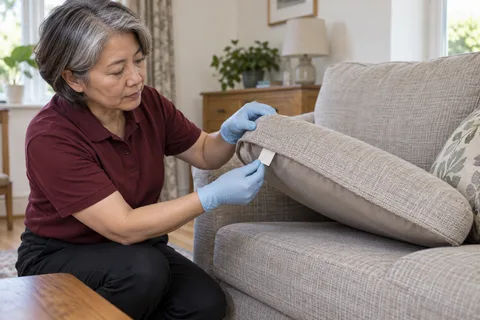
Technician checking a fabric care tag beneath a cushion

Use manufacturer information rather than a material guess.

Send the label and any care instructions available, including moisture or product restrictions. A photograph is useful if the label is tucked beneath a seat. Mention contrasting trim, panels and cushion undersides. If composition or care remains unknown, say so instead of choosing a method from softness, sheen or colour.

Describe previous cleaning, protection and home products used on marks. Explain changes in colour or texture afterwards. Sensitive upholstery needs care information considered alongside condition, not a promise that all fabrics can be cleaned in one way. Products you want avoided should be raised before the treatment is agreed.

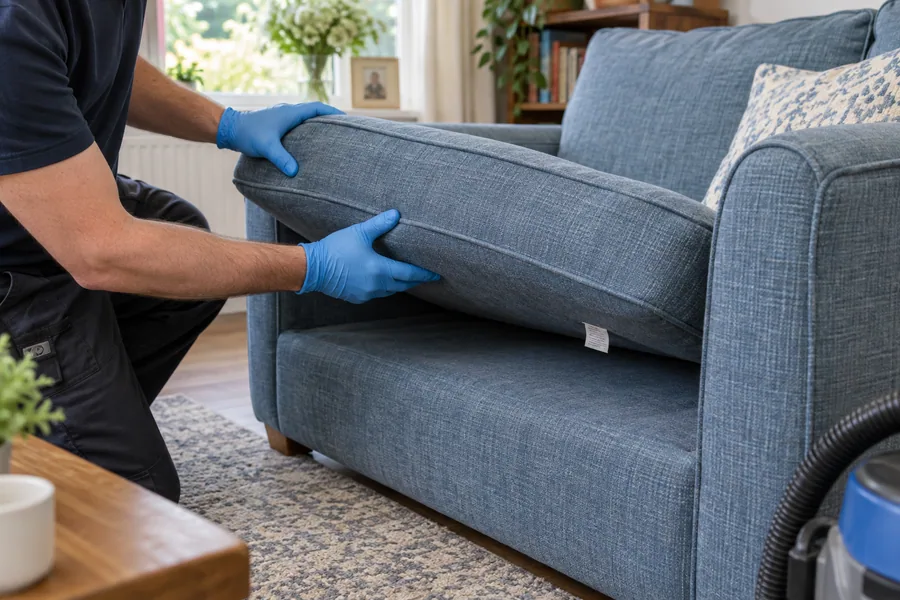
Hands checking a care label beneath a sofa cushion

We offer options whose suitability follows the furniture details.

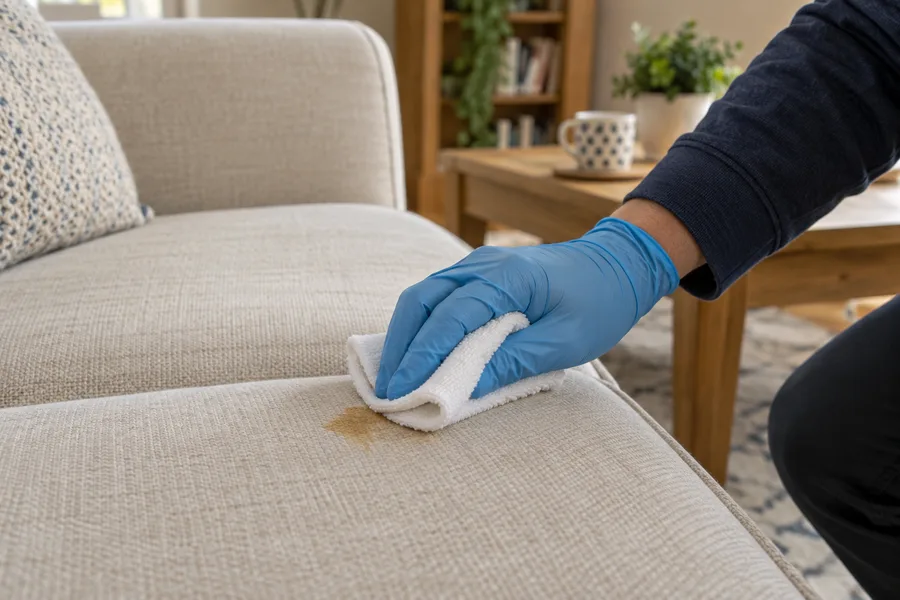
A gloved hand blotting a small mark on a sofa cushion

Dry cleaning and delicates

Dry cleaning is an offered option for suitable delicate materials. Share the instructions when asking whether to consider it for this piece. A sensitive appearance does not automatically establish eligibility or treatment of every panel. Confirm surfaces and aftercare for the actual furniture rather than relying on a method name.

Hot water extraction

Hot water extraction is another offered upholstery option for suitable fabric and condition. Explain construction and marks so suitability can be discussed. Ask how the seating should be managed afterwards and which areas are included. A familiar sofa shape does not determine care for the particular cover or contrasting trim.

Describe the furniture shape and condition separately from the fabric.

Give sofa seating capacity, dimensions and any corner, chaise or detachable sections. List an armchair as its own item if also wanted. A wider photograph shows the construction while close views can illustrate marks. Pieces in one suite can have different condition or care information, so describe each rather than assuming they match in every detail.

Point out contact soiling on arms, seat fronts and head-rest areas alongside isolated spills. Identify wear, fading and damaged stitching separately. Cleaning suitable dirt cannot restore missing colour, mend upholstery or guarantee a new appearance. The brief should name the changes and surfaces wanted, keeping realistic expectations about sensitive fabric.

Identify loose cushions and contrasting reverse materials.

Say which seat and back cushions lift out or stay fixed and give loose-piece counts. Request fronts, reverses and undersides explicitly, especially where the material differs. Confirm those surfaces in the quote; a sofa seat category does not establish every cushion inclusion or the treatment of its filling.

Mention visible soiling around seams, piping and folds, with fraying or loose stitching identified as damage. Leave unfamiliar covers and fastenings alone while checking preparation. Removable does not establish machine-washing suitability. Do not dismantle the piece to expose another area whose fabric care and treatment have not been agreed.

Give every home product a place in the mark’s history.

For food or drink, explain the substance, approximate age and products or rubbing used afterwards. Avoid adding more unknown cleaners while waiting for advice. A wider photograph helps locate the concern, while close views can show the patch. If the cause is uncertain, say what you know rather than guessing.

Ask for use advice tied to the cover and filling.

Drying depends on fabric, filling, treatment and room conditions. Explain ventilation and when the piece is needed before booking. Ask for an estimate and advice about sitting, loose-cushion arrangement and replacing throws. Do not borrow a fixed time from another fabric or decide readiness from surface appearance alone.

Keep another seat available where practical. Ask whether protection suits the material, whether it is included or optional and any charge. It does not prevent every future spill or restore damage. Follow the furniture’s aftercare rather than assuming a delicate treatment needs no practical use arrangements.

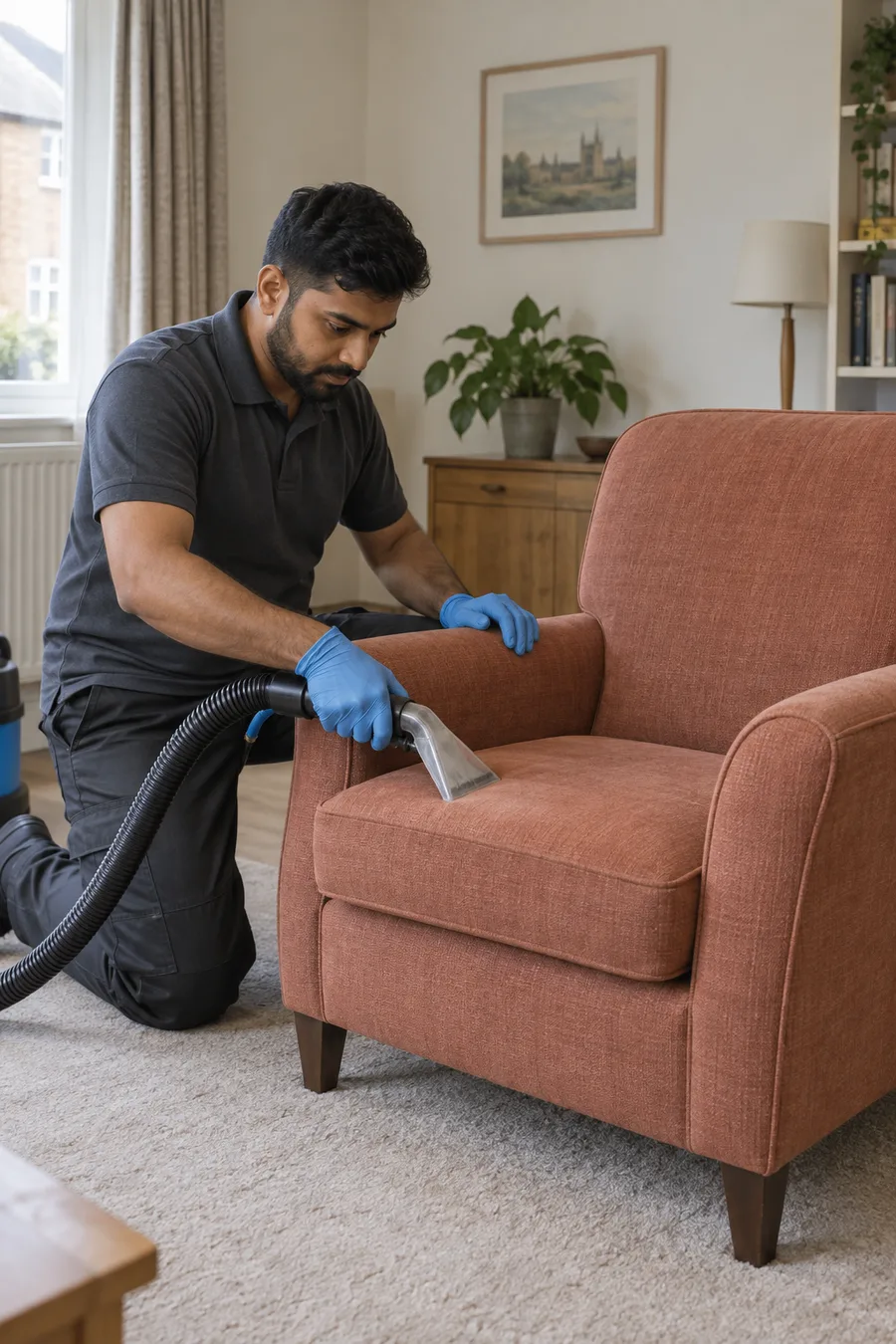
Technician treating the seat of a fabric armchair

Clear belongings without experimenting with covers or fastenings.

Remove personal items and loose objects and leave a route to the furniture. Discuss lightweight pieces nearby and any moving arrangements. Explain heavier furniture or restricted sides before arrival; do not shift or dismantle it unsafely. Ask what preparation is wanted for the agreed treatment.

Give the St Johns Wood address, stairs or lift details, receiving contact and relevant parking arrangements. Confirm equipment access and practical requirements with the fabric restrictions. Care-label and furniture photos can support the enquiry without private information. If somebody else provides entry, settle that practical arrangement beforehand.

Confirm the item total after the care decision is discussed.

An armchair starts at £15 for extraction or £19 for dry cleaning; a two-seat sofa starts at £36 or £42 respectively. Size, fabric and layout affect the quote, alongside area and availability; applicable congestion charges are extra. Confirm the St Johns Wood pieces, surfaces, cushion requests, stain work, protection and full total. Starting figures do not establish eligibility for every delicate cover.

Other upholstery cleaning areas

BEFORE THE FURNITURE IS TREATED

Sensitive upholstery and care information in St Johns Wood

Can every delicate-looking fabric be cleaned?

Share the actual care guidance and condition. Appearance alone does not establish eligibility or one suitable treatment for every material.

Does a soft or shiny cover identify its composition?

No complete material decision should come from appearance alone. Provide labels or manufacturer information and state which details are unknown.

Is dry cleaning always the choice for sensitive upholstery?

Discuss the care restrictions and furniture details first. Dry cleaning is an offered option for suitable materials, not a universal rule.

Should contrasting trim be treated like the main cover?

Point out the difference and share its guidance where available. Confirm surfaces and suitability rather than assuming identical care.

Will cleaning restore colour changed by a home product?

Cleaning cannot replace missing colour or repair damaged fabric. Explain what was used and the change noticed when discussing realistic work.

Can I remove covers to read the care instructions?

Leave unfamiliar fastenings alone and avoid unsafe moving. Share accessible labels and ask about preparation before dismantling anything.

Bring the instructions and the furniture’s condition together.

Describe the St Johns Wood cover, contrasting panels and marks. We can review suitable treatment, practical aftercare and the complete item quotation.

Illustrative generated photographs show furniture and cleaning situations, rather than actual staff or local customer jobs.