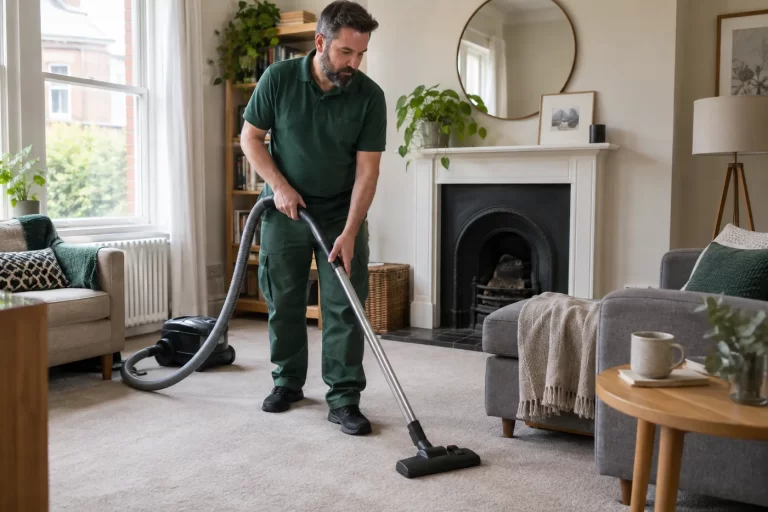
A date on the calendar does not tell you whether a room needs a deep clean. Look at how the home is used, what ordinary cleaning already covers and where work is building up. This guide gives practical review points and a way to choose the jobs that are actually due.
Use a calendar to check condition, not to order another clean
There is no single deep-clean interval that suits every home. A kitchen used for several meals a day will need different attention from a spare bedroom that is rarely entered. Start with the work that ordinary cleaning is leaving behind: grease on cupboard fronts, deposits around bathroom fittings, dust on accessible ledges or dirt along floor edges. Review those jobs regularly, then choose a manageable appointment or household task when the condition calls for it.
A useful starting plan is to look over the kitchen and bathroom each month, and the less-used rooms every few months. That is a suggested planning rhythm, not a hygiene standard or a promise that nothing needs doing in between. Deal with spills, food debris and obvious dirt promptly. If your regular routine already covers the detailed jobs, you may not need a separate whole-home deep clean on a fixed date.
Write down what you mean by deep cleaning before comparing frequency. Washing bedding, clearing a cupboard and professionally treating a carpet are three different jobs. Putting them under one heading can make the workload look much bigger than the cleaning itself. Our one-off cleaning information explains how room priorities and separate treatments are discussed.
Make a room review plan
The table below helps you decide when to look more closely. Adjust the review points to the way you use the home. A review can take a few minutes: inspect the relevant surfaces, note the condition and decide whether to clean, book help or leave the task until the next check. It need not turn into a full day of work.
| Area | Suggested review point | What to look for |
|---|---|---|
| Kitchen | Monthly, sooner after heavy cooking | Sticky handles, grease on fronts and splashbacks, food beneath movable items |
| Bathroom | Monthly, with routine cleaning between checks | Scale, soap deposits, dirty edges and changes to grout or sealant |
| Bedrooms | Every two or three months | Dust on accessible ledges, floor edges and surfaces hidden by stored items |
| Living rooms and hallways | Every two or three months, adjusted for traffic | Marks on touch points, dusty corners and changes to floor coverings |
| Spare rooms | Before use and periodically when unoccupied | Dust, stored clutter, stale odours or damp concerns requiring investigation |
Use the review to name specific tasks. “Bathroom needs a clean” gives less direction than “soap deposits around the screen and dirt along the accessible floor edge”. Take a photograph of any unfamiliar mark, but do not treat an image as a diagnosis. Discoloured sealant, worn paint and etched stone may need repair or specialist advice rather than harder scrubbing.
Let cooking habits set the kitchen workload
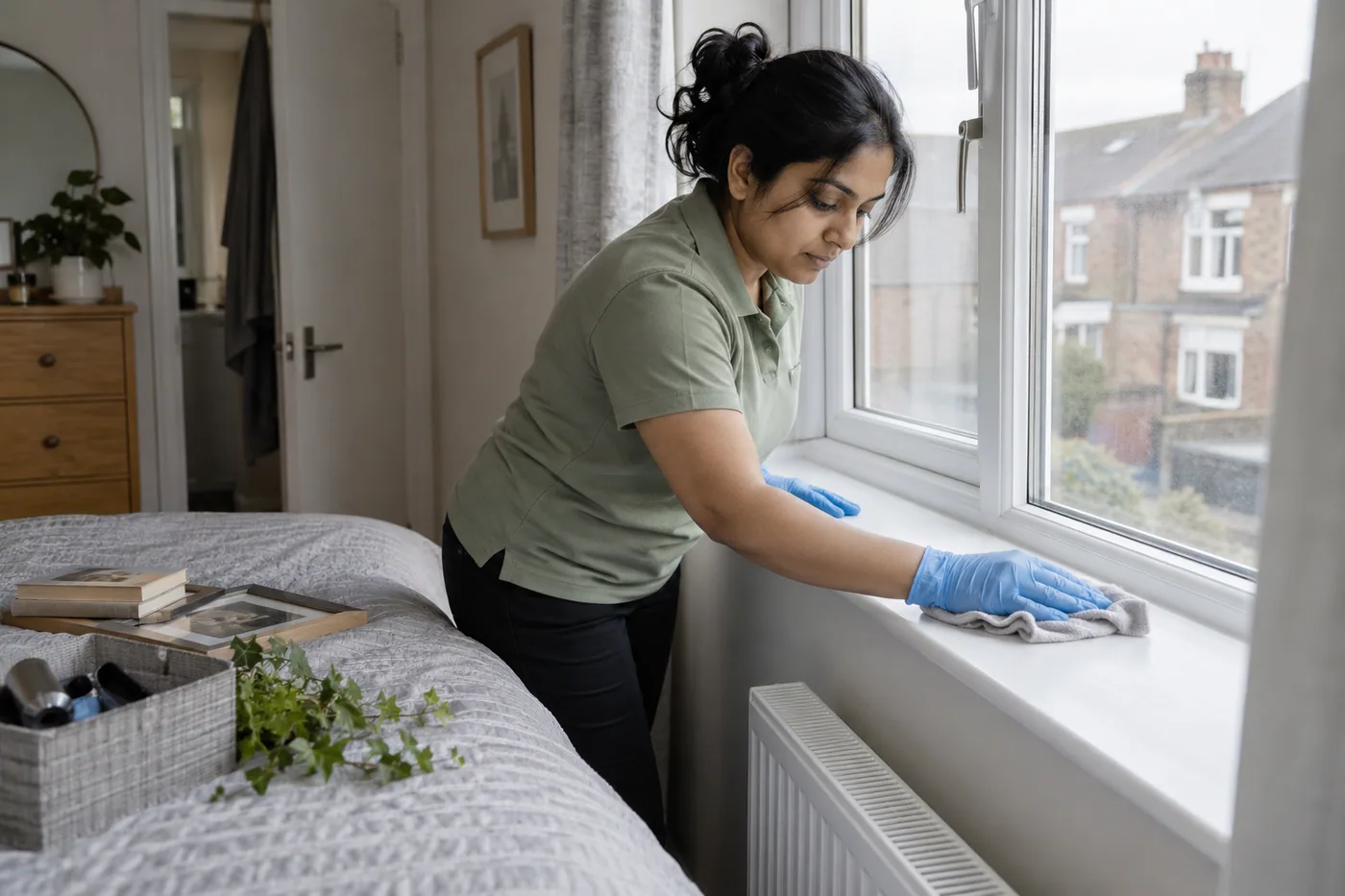
Keep food preparation surfaces and fresh spills within your ordinary routine. A deep clean is for the accumulated work that this routine does not cover, such as cupboard fronts, accessible skirting and residue around appliances. Frequent frying can make grease appear sooner; preparing simple meals may leave less of that work. Look at the condition rather than assuming every household needs the same monthly booking.
Separate cleaning from sorting. Emptying a crowded drawer and deciding what to keep can take longer than wiping it afterwards. Do that first if you want the interior cleaned. Check whether cupboards will be empty, which appliance surfaces are accessible and whether food needs moving. A cleaner cannot safely work through an unspecified collection of personal items or assume every cabinet can be emptied.
An oven is a separate appliance enquiry, even when its exterior is wiped during household cleaning. Note grease inside, the cooker type and removable fittings. Compare the appliance details needed for oven work before adding it to the room list. Booking a kitchen clean does not automatically include dismantling the oven door, an extractor or every internal appliance part.
In bathrooms, check both deposits and the surface underneath
Bathrooms used by several people can develop deposits faster than a lightly used en-suite. Review the shower screen, taps, accessible grout, basin edges and floor. Keep drying and ordinary wiping within the regular routine where the finish permits it. Leaving deposits until an annual deep clean can turn a small task into a much larger one, but the answer is not automatically a stronger product.
Find the care instructions for taps, stone, coated glass and other finishes. Manufacturer advice can differ: hansgrohe’s tap-care guidance, for example, excludes several aggressive or vinegar-based cleaners for its products. That is a reason to check your own fittings, not to copy one manufacturer’s method onto every bathroom surface.
A recurring dark patch on a wall or around a window is a different concern from ordinary soap residue. Note whether the area is wet, whether it returns after cleaning and any known leak. Do not put repeated mould under the heading of an overdue deep clean. It may need an assessment of moisture and the affected material as well as treatment.
Review bedrooms and living spaces around actual use
In a bedroom, look at reachable high ledges, bedside surfaces, floor edges and space beneath furniture that can be moved safely. Bedding and clothing have their own care labels and washing routines. They are not evidence that the whole room needs a professional deep clean. For a room used mainly for sleeping, a small set of detailed tasks may be enough.
Living spaces often have a mixture of jobs: crumbs near seating, dust behind accessible objects and marks on handles or switches. List the surfaces separately from the furniture fabric. Vacuuming the room does not include extracting upholstery, and a stain on a cushion is not an ordinary dusting task. If a room has become crowded, clear safe working space before deciding how much cleaning time it needs.
Carpet traffic routes deserve a separate check. Regular vacuuming and professional carpet treatment serve different purposes. Describe fibres, stains and previous products before choosing a method or timing. WoolSafe’s fine-fibre care information is useful where delicate floor coverings are involved; it does not establish one treatment interval for every home.

Adjust the plan for pets, children and visitors
Pets can bring in loose hair and outdoor dirt. Put the actual problem on the list rather than booking an unspecified sanitising service. A hallway may need more frequent floor care while a rarely used room does not. Washable pet bedding follows its own instructions, and an accident on a carpet or sofa needs its substance, age and earlier treatment explained.
With children, food near seating or fingerprints on reachable surfaces may change the ordinary workload. Keep products stored safely and choose work that can be completed without leaving tools or wet floors in a busy route. There is no need to describe a family home as failing because it is used throughout the day. Focus on surfaces that need attention and a routine that the household can sustain.
Before guests arrive, check the areas they will actually use. A guest room, bathroom and dining space may be enough. Doing every cupboard interior at the same time can consume hours without helping the visit. After a gathering, deal with fresh spills and food first, then decide whether any accumulated detailed work also needs an appointment.
Use seasonal changes to notice different jobs
A change of season is a useful reminder to inspect the home, rather than a rule that every surface must be cleaned twice a year. Opening a room that has been little used, putting away heavier bedding or preparing for more indoor activity can reveal dusty edges and stored clutter. Choose the tasks that are present instead of copying a long seasonal list unchanged.
Our older spring-cleaning article covers organising a larger cleaning session. This frequency plan serves a different purpose: deciding which jobs are due and which can wait. A small review each month can help you avoid repeatedly postponing an awkward job until it becomes a whole-home project.
In colder weather, watch for damp or recurring condensation as well as dirt. Government guidance on damp and mould explains why the underlying moisture problem needs attention. Cleaning visible marks alone should not be presented as a substitute for resolving the cause.
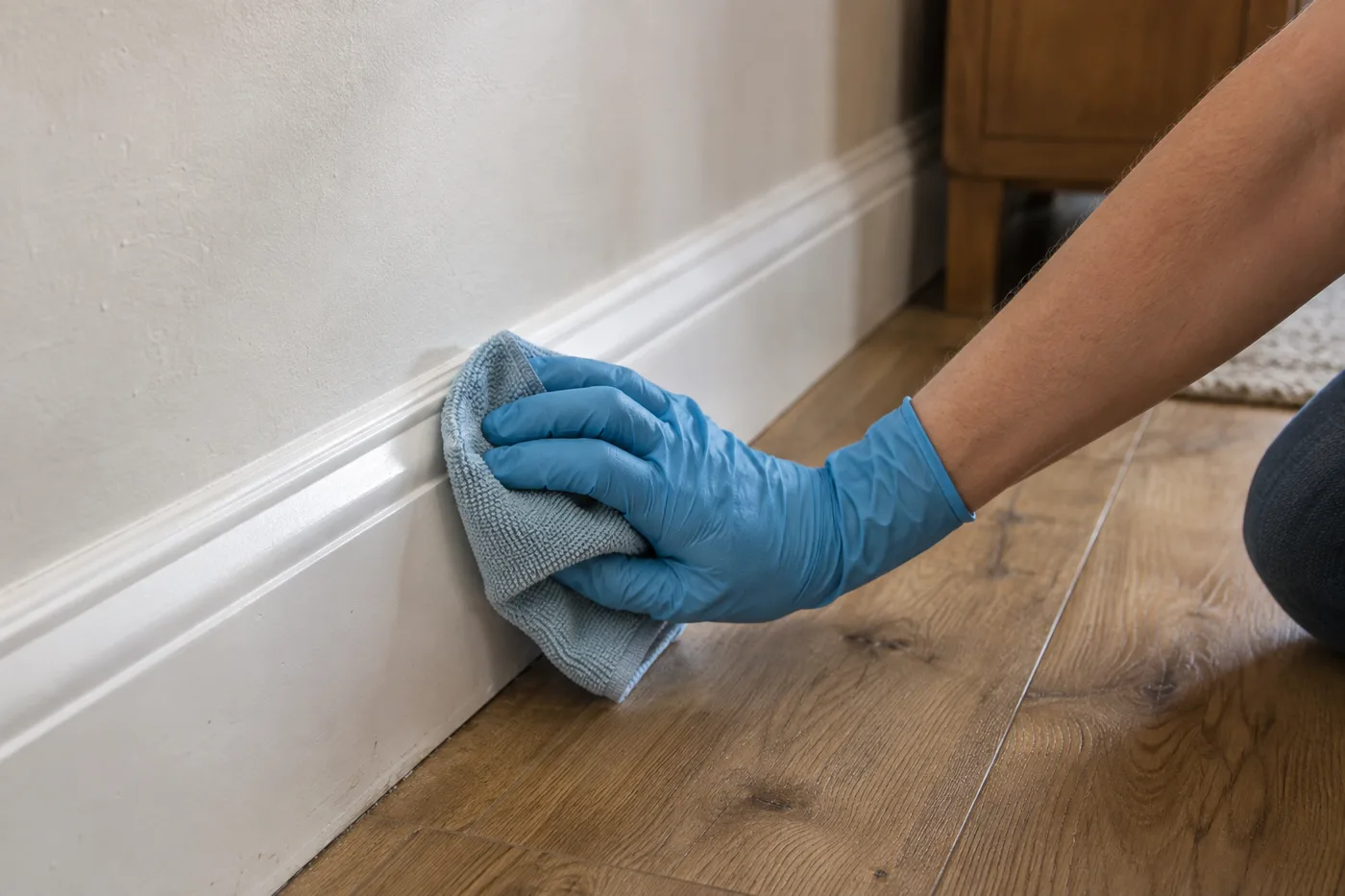
Decide whether the gap is routine work or a separate deep clean
If the same everyday jobs are consistently missed, a regular arrangement may be more useful than occasional large visits. A kitchen sink, bathroom and floors that need ordinary upkeep every week are a scheduling question. Read about weekly and fortnightly room cleaning to compare that option with a one-off brief.
Choose a separate deep clean when there is a defined backlog or a group of detailed jobs requiring more time. Give the room count, condition and priorities. Include accessible areas behind or beneath lightweight items, but discuss heavier furniture before assuming it will move. Describe finishes and any damage so the scope respects the material.
For several missed jobs, group the work by room and then rank it. The bathroom deposits may matter more than the spare-room shelves. Ask which tasks fit the proposed hours and which are separate extras. Check how starting prices and the full quote differ rather than multiplying a headline rate without knowing the appointment scope.
Build a plan that still works during a busy month
Keep a short note with three columns: task, last checked and next action. “Checked, no extra work needed” is a valid entry. A plan should help you make decisions, not create an obligation to clean a room simply because a date arrived. Put fresh mess and safe access ahead of decorative polishing.
If you have an hour available, choose one useful area and complete it safely rather than starting five unfinished jobs. Put supplies away, allow surfaces to dry as needed and leave the room usable. The existing organisation guide can help with reducing clutter before detailed cleaning begins.
When using cleaning products, follow their labels, ventilation and material instructions. Do not combine products to make a stronger cleaner. HSE’s surface-cleaning safety guidance specifically warns against adding chemicals to bleach concentrates. A product left on longer than directed is not a shortcut to a better clean.
Questions about timing
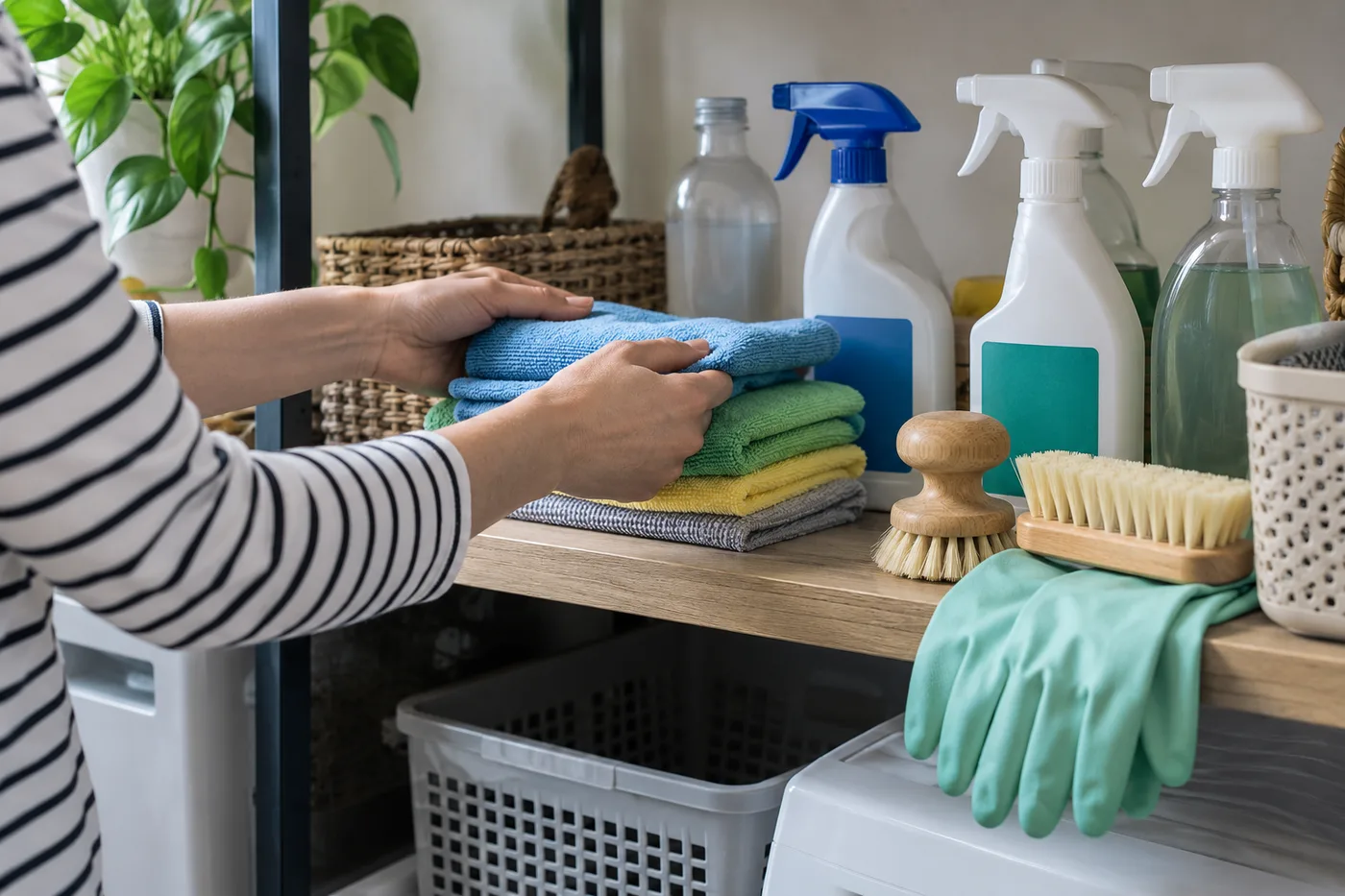
Does every home need a deep clean every month?
No. Monthly can be a useful point to review heavily used rooms, but the actual work depends on condition and what regular cleaning already covers. A monthly inspection and a monthly professional booking are different decisions.
Is a spring clean enough for the year?
Not for fresh spills and ordinary upkeep. It may cover a group of detailed jobs, but kitchen use, bathroom deposits and floor traffic continue afterwards. Review the home between larger sessions and deal with the tasks that arise.
Should I clean before asking for help?
Clear personal belongings and explain the condition honestly. You do not need to hide the backlog or treat a stain before discussing it. A useful enquiry lists the rooms, surfaces and main priorities so the work and time can be agreed.