A zipped cover, familiar fabric name or small cleaning-machine attachment does not establish how a sofa should be treated. Start with the furniture’s own instructions and a clear list of pieces. This guide explains the questions to ask about stains, methods and drying without promising one rule for every sofa.
Read the sofa’s instructions, not just the fabric name
A sofa described as linen, velvet or a synthetic blend is not automatically washable by a particular method. Its cover, dyes, backing, fillings and construction can all affect care. Find the label and any instructions supplied with the furniture before using water, a household product or a cleaning machine.
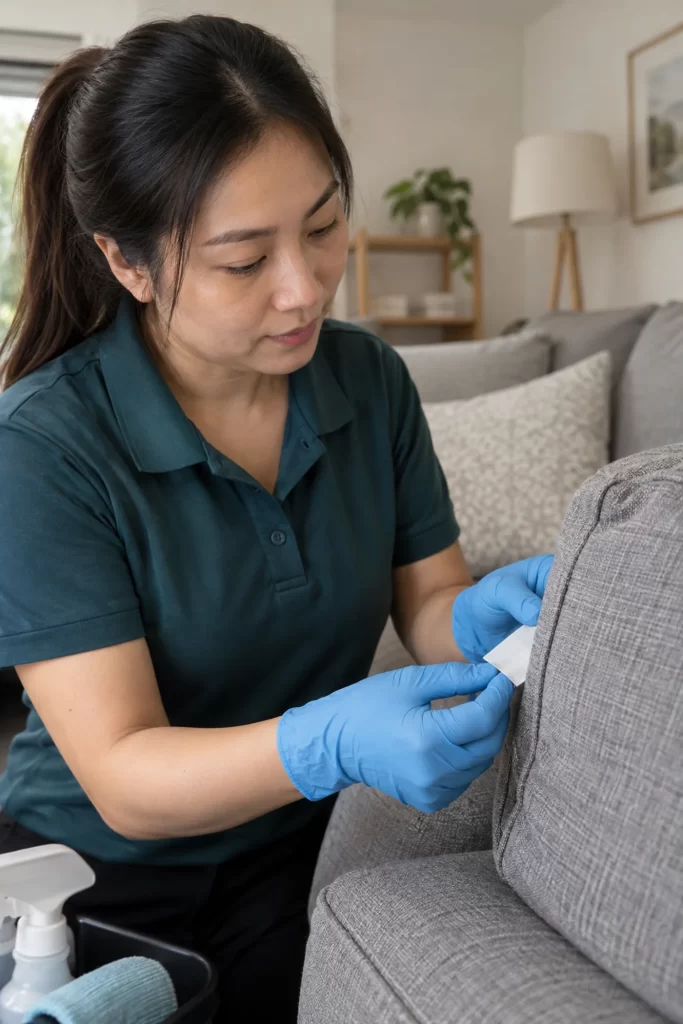
Check inside a loose cushion where accessible and look for the manufacturer’s name or model in your purchase information. Do not tear a lining or remove fixed upholstery to search. Photograph the available label clearly, including care symbols and written restrictions, and keep it with a wider photograph of the sofa.
If you cannot find instructions, say that when asking about a sofa-cleaning appointment. A missing label is useful information, not a reason to guess. Explain any previous cleaning or protective treatment as well as the furniture’s present condition.
What the words on a label do not tell you
“Removable” describes whether a cover can come off; it does not establish that it can go in a domestic washing machine. “Easy-clean” describes a particular finish or product range, not every fabric that looks similar. “Velvet” describes a surface construction but does not identify every fibre or treatment rule.
DFS’s fabric-care advice, for example, warns against machine washing its sofa covers even where they are removable and gives restrictions on household products. Use the instructions for your own furniture. Another retailer or a specialist loose-cover range may have different directions.
Do not translate an unfamiliar care code through a generic online chart and assume the decision is finished. Ask the manufacturer or supplier if the meaning or application is unclear. A cushion’s decorative reverse, lining and trim may also differ from the seat fabric, so keep more than one label where pieces are not identical.
Use fabric types to ask better questions
| Fabric description | Question to check | Information worth sharing |
|---|---|---|
| Cotton or linen cover | Is this specific cover washable, fixed-frame cleaned or another care category? | Label, previous washing and any change in shape |
| Wool or a blend | Which method is permitted for the whole construction? | Fibre proportions, care instructions and earlier treatment |
| Velvet, chenille or another pile fabric | How should pile and shading be handled? | Direction-dependent marks, rubbing and product history |
| Synthetic or performance fabric | What does the identified range permit? | Brand, finish name and any protection applied |
| Mixed panels, piping or trims | Do all parts tolerate the proposed method? | Contrasting materials and labels for individual pieces |
John Lewis’s upholstery guide shows how fabric descriptions, constructions and product-specific care differ. That is a useful background check, but a buying-guide description should not replace the label for the sofa already in your room.
A sample from the same colour range can be helpful only if it belongs to the actual fabric. Do not identify an older sofa from a similar image on a shop’s current website. Keep uncertainty visible: an accurate account of what is known is more useful than a confident but incorrect material name.

Map the pieces before asking for a quote
Describe the full arrangement: ordinary two-seater, three-seater, corner unit, chaise, recliner or joined modular sections. Include approximate dimensions and a photograph showing the whole piece. Seat count alone can leave out a long chaise, a corner section or an unusual back.
Count loose seats, back cushions and decorative cushions separately. State which surfaces you want considered: top, edges, reverses or the sofa frame. A scatter cushion with a different fabric needs its own care information. Do not leave several pieces beside the sofa and assume every one is included in an advertised starting price.
If armchairs or footstools are involved too, read about mixed upholstered furniture. The useful distinction is the item list, not whether every piece matches the sofa visually. A combined appointment should still describe the treatment and inclusions for each item.
Respond to a spill without turning it into several treatments
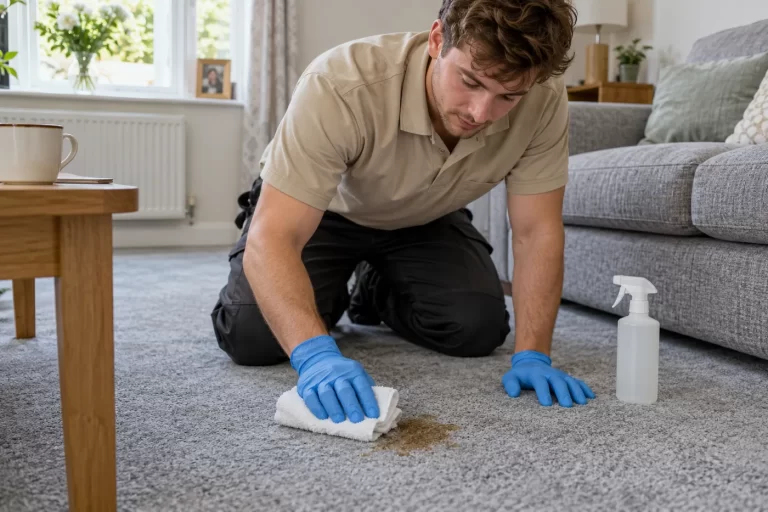
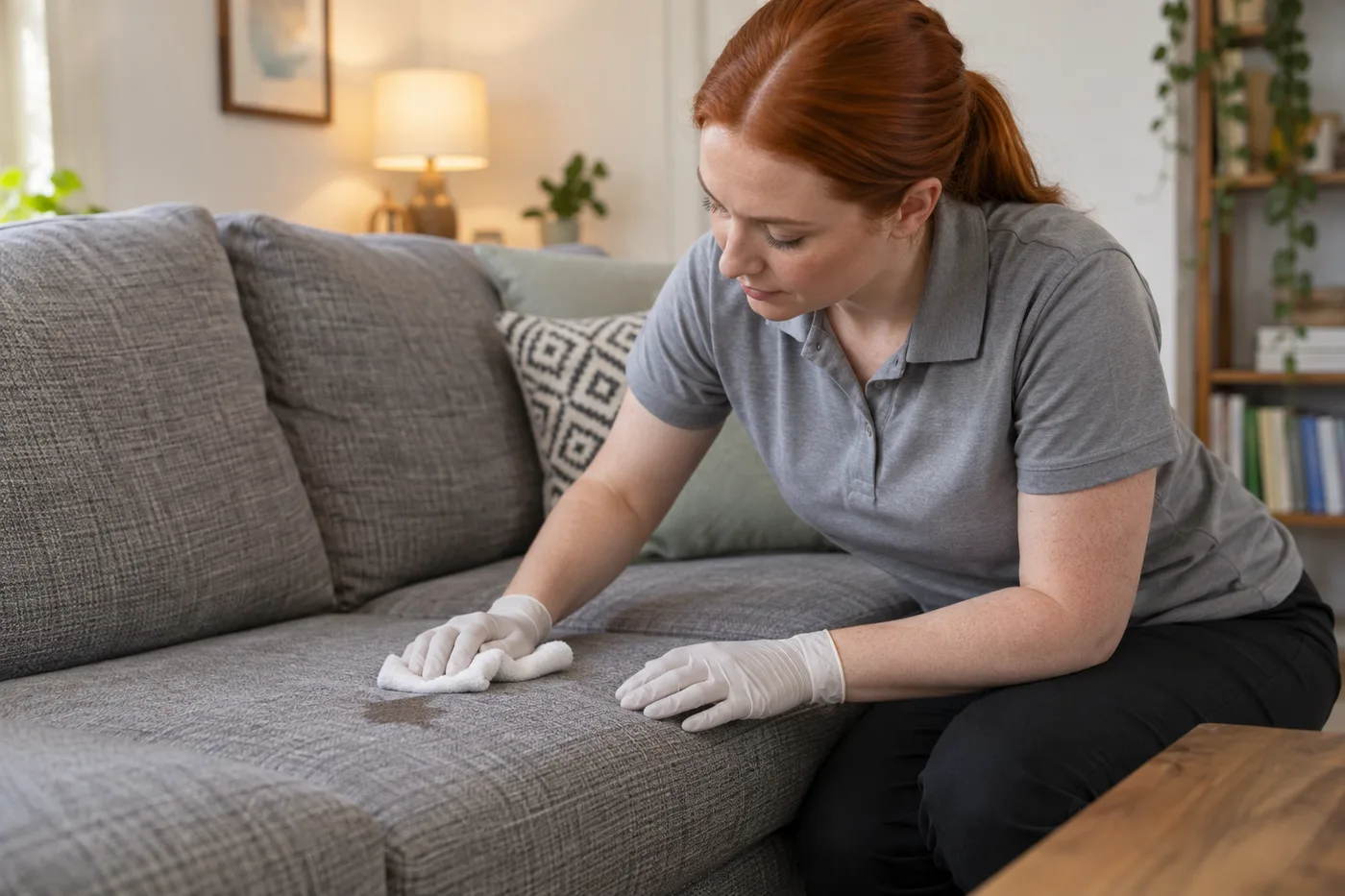
For a fresh liquid spill, gently absorb what you can with a clean cloth or suitable kitchen roll, following the furniture’s instructions. Avoid scrubbing it across the surface. Keep replacing the absorbent material rather than using a dirty area to rub the same patch again.
Find the actual care advice before adding water or a stain product. Record the substance, when it happened and what you did first. Tea with milk, a greasy food mark and a coloured cosmetic are different enquiries. If the spill is large, has entered the cushion or the fabric is uncertain, ask for suitable advice rather than repeatedly wetting it.
Keep the product packaging for any previous attempt. Include household wipes, a fabric spray, washing-up liquid or a home-machine solution, even if it was sold as gentle. Do not hide an earlier attempt because the mark looks worse now; the history can matter to the next treatment decision.
Marks are not all the same problem
Gradual soiling on a favourite armrest differs from a single drink spill. A pale patch after a chemical product may involve colour change, and a flat or shaded area on pile fabric may need its texture considered. Cleaning cannot be assumed to repair wear, restore missing colour or mend stitching.
Take a close view and a wider photograph showing the mark’s location. Explain if it looks different from another angle, whether it is still damp and whether the texture changed after rubbing. Do not keep brushing, steaming or heating it to make the photograph look clearer.
Sofas & Stuff’s fabric guide describes differences between materials, including delicate fibres. It supports checking the actual fabric and care needs rather than treating a familiar texture as permission for an aggressive method.
Ask how the proposed method fits the sofa
A professional should discuss a method suitable for the material and condition. The service name alone does not establish whether a wet process, a lower-moisture approach or specialist dry cleaning is appropriate. Ask what will be treated and how the work affects preparation and drying.
Do not assume a home carpet machine is suitable for upholstery because it has a small attachment. The machine, solution and fabric all need to be appropriate. A spot-cleaning permission for one mark is not automatically permission to wet the whole sofa. Conversely, cleaning one visible face may leave other requested areas outside the quote.
Ask whether any proposed stain protection is suitable for the identified fabric, whether it is included and what it costs. It is not a guarantee that future spills cannot stain. Check the manufacturer’s conditions and any existing protection information before agreeing to another treatment.
Treat covers, cushion fillings and the frame as separate questions
A zip does not tell you how the cover or filling should be cleaned. Leave covers in place until the instructions and proposed work are clear. Removing them prematurely can create a separate problem with handling, refitting or identifying which cover belongs to which cushion.
Tell the cleaner if liquid appears to have passed beyond the outer fabric. Treatment of a surface and treatment within a cushion are not automatically the same service. Mention persistent odour, repeated spills and known damage. Ask what can reasonably be addressed rather than assuming a fabric appointment rebuilds the cushion.
The older curtain care-label article raises a related textile question: an item being removable does not cancel its care restrictions. Follow the sofa’s own instructions rather than borrowing a washing process from curtains or clothing.
Drying time is not the working time
Ask for two separate estimates: the likely appointment duration and the drying or return-to-use arrangements for the proposed method. A cleaner finishing work does not mean every treated part is immediately ready for sitting, covering or pushing tightly against another surface.
There is no reliable universal number of hours for every sofa. Fabric, filling, moisture used and room conditions can affect the plan. Describe the room and any limitations on ventilation before booking. Ask for aftercare that belongs to this sofa rather than choosing the shortest time shown in a general advertisement.
Arrange somewhere else to sit, especially if this is the household’s only sofa. Mention a visitor, sleeping arrangement or other deadline so it can be discussed beforehand. Do not treat a preferred return-to-use time as a guarantee that the material can safely be made dry by then.
Follow the cleaner’s advice about cushions and airflow. Do not improvise with direct heaters, a hairdryer or strong sun to force a damp fabric to appear dry. Ask what signs and instructions apply before using the furniture again. A surface feeling dry is not, by itself, a complete aftercare assessment of every filling and part.

Prepare the room without dismantling the furniture
Remove throws, phones, toys and loose personal items. Make the working route clear and explain narrow doors, stairs or a shared entrance. Tell the booking team if a heavy table or another large piece restricts access; do not assume all furniture movement is included.
Leave recliner mechanisms and joined units alone unless an appropriate person has explained the required preparation. Electrical controls, unfamiliar fastenings and fixed upholstery need care. A cleaning visit should not begin with a customer taking apart a mechanism they do not understand.
If the floor also needs treatment, discuss the room’s carpet work and its access and aftercare separately. Plan the sequence so one booked task does not prevent another. General cleaning of the surrounding room is another brief, not automatic upholstery treatment.
Keep ordinary maintenance within the care instructions
Use the maintenance method specified for the furniture. Some fabrics permit appropriate gentle vacuuming; others need different handling, especially where pile or delicate construction is involved. A powerful attachment or stiff brush should not be chosen simply because it removes crumbs quickly.
Keep drinks, cosmetics and sharp objects managed around the seating. Deal with fresh spills promptly under the care directions. If cushions can be moved or rotated, follow the manufacturer’s instructions rather than forcing fixed pieces. Routine care can reduce the backlog but cannot prevent every accident or repair wear.
Our guide to choosing cleaning help can support the wider decision. Before booking, have the sofa list, labels, photographs, postcode and stain history ready. A useful quotation connects those details with the proposed work and realistic limits.
Questions about sofa care

Can I wash a zipped cushion cover?
Only if the care instructions for that exact cover permit the proposed washing and drying process. A zip indicates access, not washability. If the instructions are unclear, check with the manufacturer before removing it.
Will professional treatment remove every mark?
No. Age, substance, fibre, previous products and damage can limit removal. Ask what is likely after the fabric and condition have been assessed; a photograph of another sofa is not a result guarantee.
When can we sit on it again?
Use the aftercare advice for the actual method and sofa. Arrange alternative seating and ask about expected drying before confirming a time-sensitive appointment.