The easiest way to make a dusty room feel worse is to sweep a dry duster across the top of a cupboard and watch the debris fall onto everything beneath it. For high shelves and ceiling corners, start by deciding what you can reach safely from the floor. Move loose objects, use a clean tool that holds dust rather than flicking it into the room, and work downwards so the floor is the last area you clean. A lightly damp cloth works well on many washable, reachable surfaces; a soft, long-handled tool is more suitable for corners and delicate areas that should not get wet.
This guide deals with the practical job: where dust settles, which surfaces need a different approach, and how to finish without leaving a fine layer over the room. It does not turn every high surface into a reason to climb. If an area cannot be reached securely with suitable equipment, leave it for a properly planned cleaning visit.
Plan the route before you lift a cloth
Look around the room from the doorway. Dust often collects on the tops of tall cupboards, picture frames, door heads, curtain poles, shelving and the ledge above a radiator. Cobwebs favour ceiling corners and the junctions around a light fitting. Note which surfaces are painted, papered, polished, unfinished or close to electrical equipment. They may need different tools even though they are only a few centimetres apart.
Clear the floor where you will stand or move a long-handled tool. A cable, toy or small table can turn an ordinary reach into a trip. If a shelf holds books or ornaments, move only what you can handle comfortably and put the items on a stable surface. Photograph an arrangement first if it is complicated. Do not balance a tray of objects while trying to clean above shoulder height.
Choose a sensible order: ceiling corners and fittings first, then the tops of furniture, then the open shelves, lower furniture and finally the floor. Cleaning from high to low limits the need to repeat work when a little dust inevitably falls. The NHS guidance on managing household dust recommends damp dusting for people managing diagnosed house dust mite allergy. For an ordinary household, the same principle is useful because a clean, lightly damp cloth holds loose surface dust better than a vigorous dry sweep.
Gather a small set of suitable tools
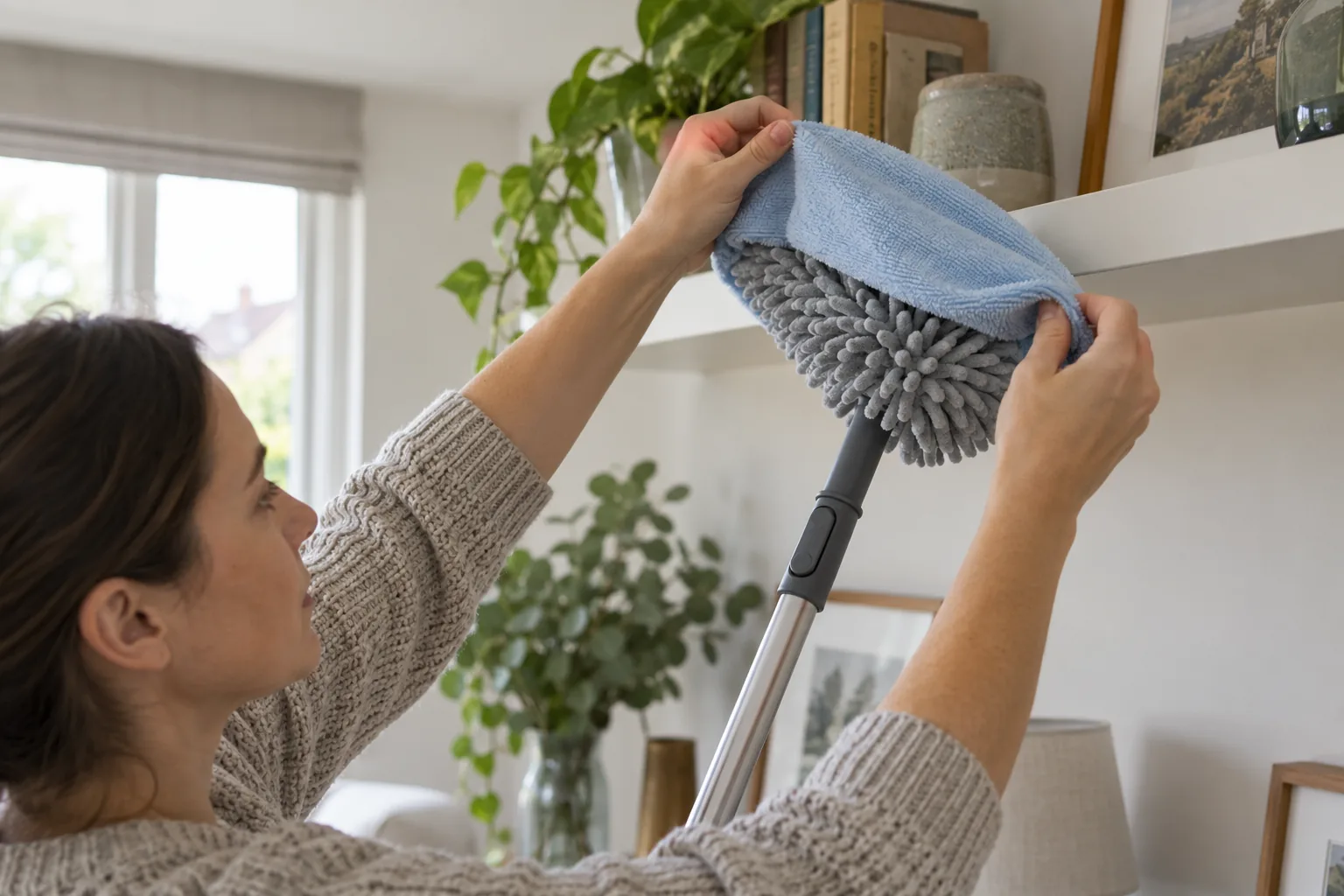
You do not need a cupboard of sprays. Start with several clean, soft cloths, a long-handled duster with a washable or replaceable head, a soft brush for awkward edges, and a vacuum with an attachment suitable for the surface. Keep one cloth for ordinary washable shelves and another for delicate finishes. Change a cloth when it is visibly loaded with dust; folding a dirty side over a clean side merely moves debris about.
For a washable surface, dampen the cloth lightly and wring it out. It should collect dust without leaving drops behind. Water is not automatically safe on wallpaper, unsealed wood, fragile paint, paper lampshades or antique finishes. Follow the manufacturer’s care instructions where you have them. If you do not know the finish, start with the gentlest dry method and stop if pigment, finish or fibres lift onto the tool. A hidden patch test cannot make an expressly prohibited method safe.
Keep cleaning chemicals out of the task unless a particular surface has soil that genuinely needs a labelled product. If you do use one, read its instructions and apply it to the cloth only where the product and surface directions allow. Never spray liquid into a ceiling fitting, vent, plug socket or device. Do not mix products. The Health and Safety Executive advises reading labels and not mixing cleaning chemicals; for loose household dust, a chemical often adds work without improving the result.
Decide whether the height is safe
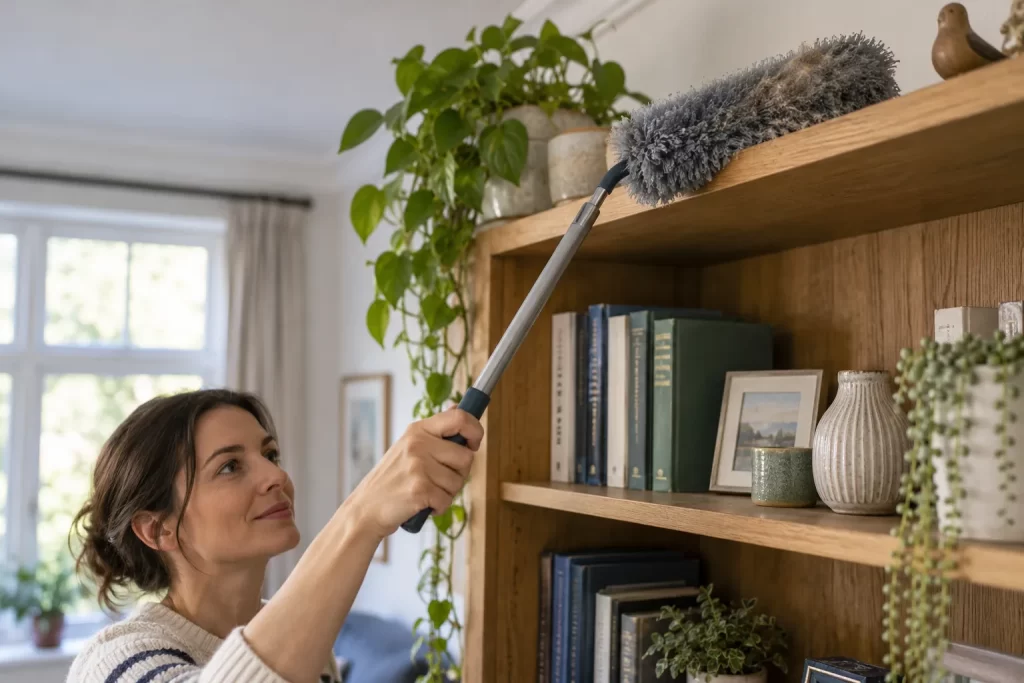
A long handle lets you stay on the floor for many corners and cupboard tops. That should be your first option, provided you can see what the head touches and control it without knocking a fitting or ornament. Do not lean sideways around a bookcase or press against an unstable shelf to reach the last strip. Reposition yourself and the tool instead.
Avoid standing on a chair, sofa arm, kitchen worktop or pile of books. These are not access equipment. A stepladder may be appropriate for a short, light task, but it must be in good condition, level, fully opened and positioned so you are not overreaching. Keep the task light and maintain a secure handhold. The HSE’s stepladder guidance is written for work settings, yet its checks on level feet, engaged locks and avoiding overreach are sensible reminders at home too. If a task requires both hands above your head for a long time, or the floor is uneven or crowded, do not improvise an access method.
Tell a cleaner about any high or awkward area before booking rather than assuming it is part of an ordinary visit. The agreed scope and safe access matter. The site’s regular domestic cleaning service covers routine household work, while a one-off deep clean can be discussed when there is a larger backlog. Ask what can safely be included at your property; the height alone does not establish that a particular surface is accessible.

Clean shelves without dropping dust onto their contents
For an open shelf, remove a manageable group of objects and dust the empty section before replacing them. Work from the back towards the front so crumbs of dust do not end up behind the books. Fold a lightly damp cloth into quarters and use a clean face for each short section. Follow the grain on a finished wooden shelf where its care guidance permits damp wiping, then dry any remaining moisture promptly. Do not soak joins, veneer edges or the backing board.
Dust each object according to its material before it returns. A cloth may be fine for a glazed ceramic vase but risky for a flaking painted frame or a paper-covered book. A soft brush can loosen dust from a carved edge while a vacuum attachment, held nearby without touching the fragile surface, can collect what comes away. Avoid pressing a vacuum nozzle against loose fabric, delicate books or decorative trim. An object that feels loose, cracked or valuable deserves a slower, individual method rather than being rushed through a shelf reset.
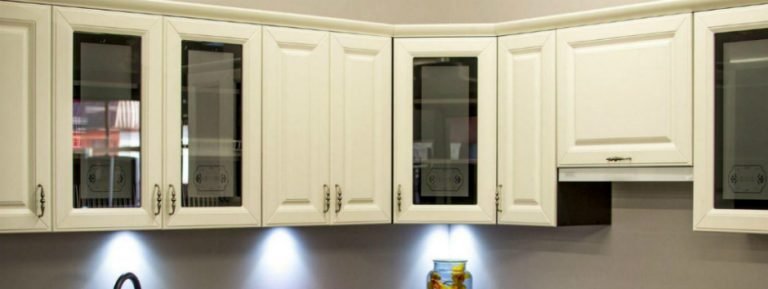
The top of a tall cabinet is often dirtier than its visible shelves because it goes untouched. If you can reach it safely, take a small section at a time, drawing the dust towards your cloth rather than pushing it over the front edge. Where grease has bonded dust to a kitchen cupboard, do not scrub blindly. Check the cabinet finish and product directions first. The existing guide to cleaning kitchen cabinets covers that separate surface-care problem.
Treat ceiling corners and fittings as separate surfaces
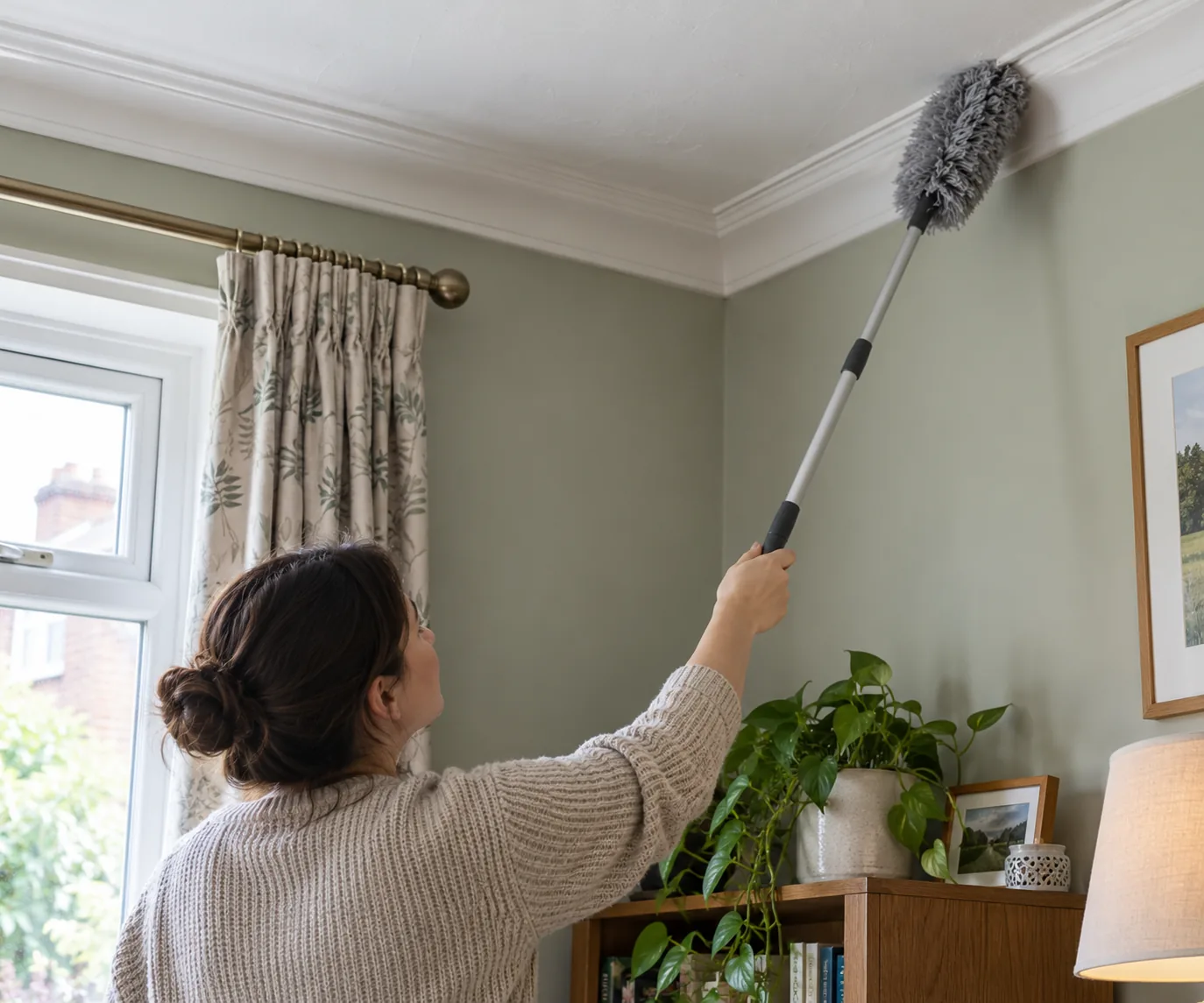
A ceiling corner usually needs little force. Use a soft long-handled head to lift a web and its loose dust, then inspect the adjacent paint. Pulling hard can mark a weak coating or damage decorative plaster. If the head becomes dirty, replace or wash it before moving to a pale wall. Do not drag one dark web around the whole ceiling line.
Cornices, coving and ornate ceiling roses have ridges that trap dust but can also be fragile. Use the softest tool that reaches them without pressure. If paint is flaking or plaster feels loose, stop and consider repair; cleaning cannot secure an unstable finish. The same applies around a water stain. Find and address the source of dampness rather than repeatedly wiping the mark.
For light fittings, check the manufacturer’s instructions. Switch off and allow bulbs and shades to cool before cleaning any accessible exterior. Keep moisture away from sockets and wiring. Do not remove a heavy shade or dismantle a fixture solely to reach dust unless you can do so safely and know how it is meant to be handled. A paper, fabric or pleated shade may need a different method from washable glass. If the fitting is beyond comfortable reach, leave it for a suitable specialist or a properly planned task.
Give vents, blinds and curtain poles their own checks
An accessible vent grille may have loose dust on its outer face. Use a soft brush or vacuum attachment carefully, following its care instructions and avoiding pressure that could dislodge it. Do not push a damp cloth or tool into the duct. If there is heavy dirt inside, poor airflow or a mechanical fault, surface dusting is unlikely to solve it and you may need the owner, landlord or a competent technician to inspect it.
Blinds and curtain poles sit near windows, so it is easy to treat them as one long high-level sweep. They are not all robust enough for that. Support a slat rather than bending it, and check whether its finish permits a damp cloth. The site’s guide to cleaning blinds is the better reference for the blind itself. A curtain pole with loose brackets should be repaired before it is cleaned; tugging it with an extension tool may bring the pole down.
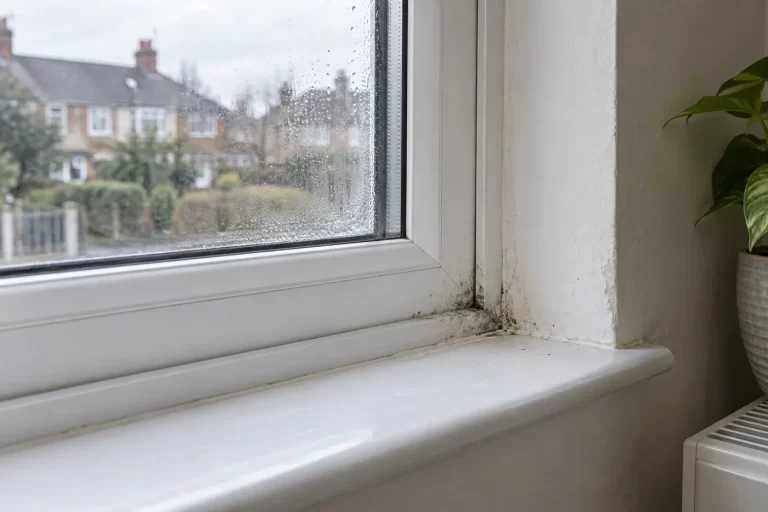
If you notice condensation or mould near a window, do not fold it into an ordinary dusting job. Moisture needs its own assessment. The guide to condensation and mould in UK homes explains the difference between cleaning a visible mark and dealing with why it returns.
Finish the room without repeating the job
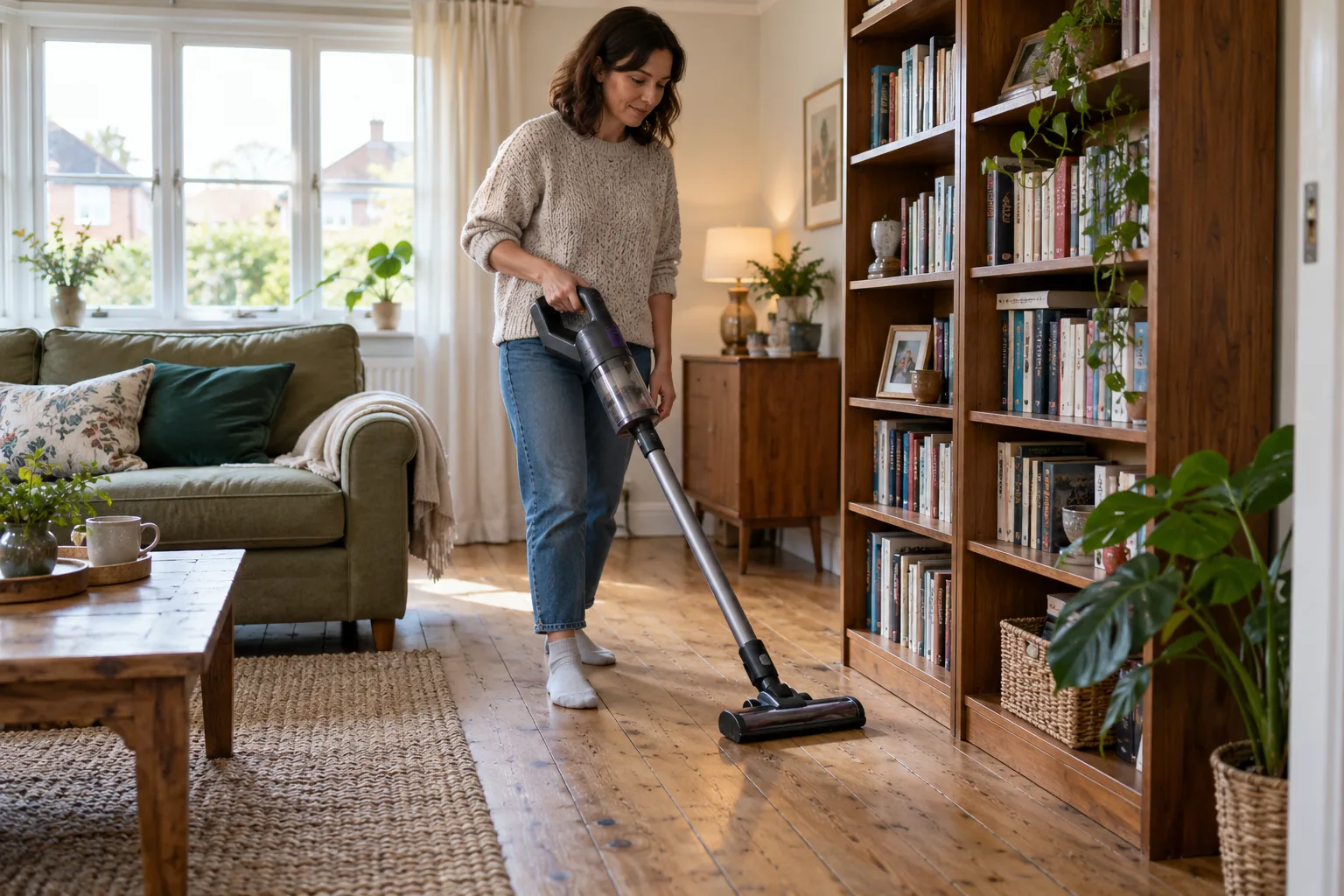
Once the high surfaces are done, inspect the middle of the room in daylight. Dust may have landed on a table, windowsill or chair. Wipe hard surfaces with a clean cloth suited to their finish and vacuum the soft furnishings if their care instructions allow it. Then vacuum or clean the floor. Pay attention to the skirting board below the shelf and the gap beside tall furniture, where the fallen dust often settles.
Empty a vacuum or dispose of a heavily soiled cloth according to the equipment instructions. Wash reusable cloths separately as directed and let the duster head dry before storing it. A dirty damp tool left in a cupboard is a poor starting point for the next room. Put objects back only when their shelf is dry and stable. Check that nothing blocks a vent, touches a hot fitting or hangs over the edge.
For households with allergy concerns, avoid claiming that a single dusting session will remove all allergens. Asthma + Lung UK notes that dust mites cannot be removed completely and recommends a damp cloth to limit dust entering the air. If symptoms are a concern, follow the person’s healthcare advice and focus on a manageable routine rather than a one-off dramatic clean. The site’s older article on dust and health discusses that broader subject; this guide is about the safe method for awkward high surfaces.
Make the next high-level clean easier
Write down the places that were difficult to reach and the surfaces that needed special care. That short note is more useful than a rule saying every shelf needs the same attention each week. A busy bookcase may show dust sooner than a closed cabinet; a kitchen cupboard may collect grease as well as dust. Review the condition when you do your ordinary room clean and plan the larger jobs when they are due.
If several rooms have a backlog, agree priorities before arranging help. Explain the height of the surfaces, the materials, whether ornaments need moving and any access restrictions. A useful cleaning enquiry describes the actual work rather than simply asking for “all high dusting”. With the right scope, you can deal with the reachable surfaces carefully and leave the unsafe ones for a visit that is properly equipped and planned.