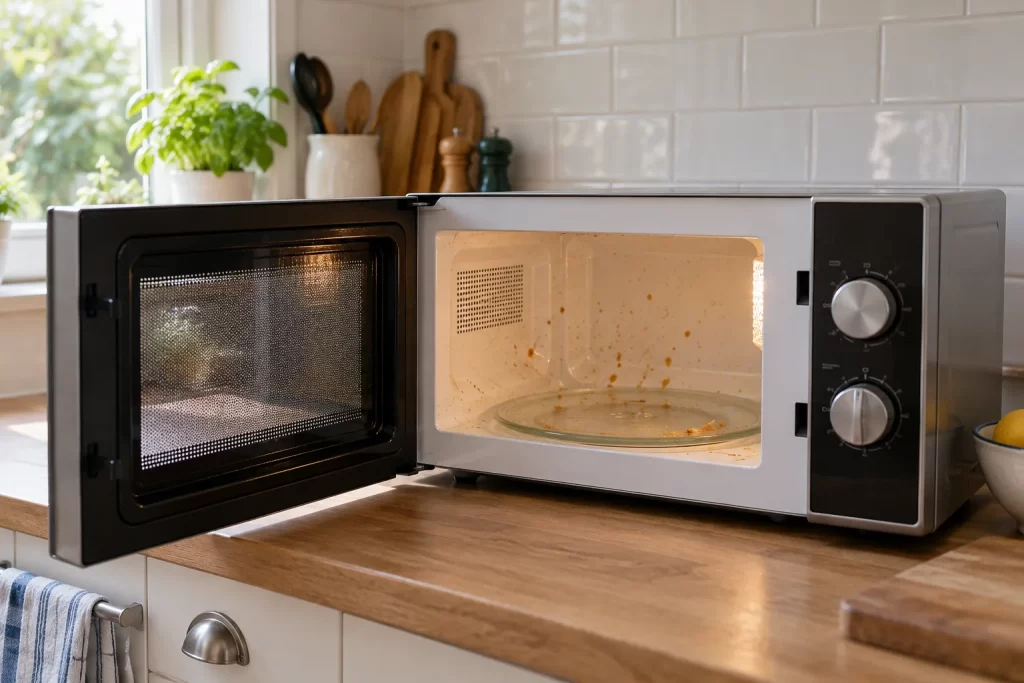
To clean a microwave safely, let it cool, switch it off and unplug it if its manual advises and the plug is accessible. Remove the cooled turntable and roller ring, then lift crumbs and wipe food splashes from the cavity with a soft, lightly damp cloth. Use a little mild washing-up liquid only where the model’s instructions permit it. Wipe away any residue and dry the accessible surfaces. Give the door edge, control panel and ventilation openings separate attention: these areas should be clean, but never flooded or sprayed directly.
The manual for your exact model takes priority. A combination microwave may have a grill element, specialist coating or cleaning programme that changes what is safe. If the door is bent, its seal damaged, its latch faulty or water has entered the controls, stop using it and seek the manufacturer’s advice.
Prepare the microwave and choose gentle materials
Wait until the cavity, glass tray and any grill fittings have cooled. A hot glass turntable can be damaged by a sudden temperature change, and a recently used grill may burn your hand. Remove food and any loose crumbs before introducing moisture. Switch the appliance off; unplug a freestanding unit if the plug can be reached safely and the manual directs you to do so. For a built-in unit, follow its isolation instructions rather than pulling at the appliance or reaching into a cramped space. Never remove its outer casing for cleaning.
Gather soft cloths, warm water, mild washing-up liquid if permitted, and a dry towel. Wring the cloth out well so it cannot drip towards openings. Avoid abrasive sponges, metal scrapers and oven cleaners that could damage finishes or door glass. Dishwasher suitability for the turntable varies by model; wash it by hand unless your manual approves a dishwasher.
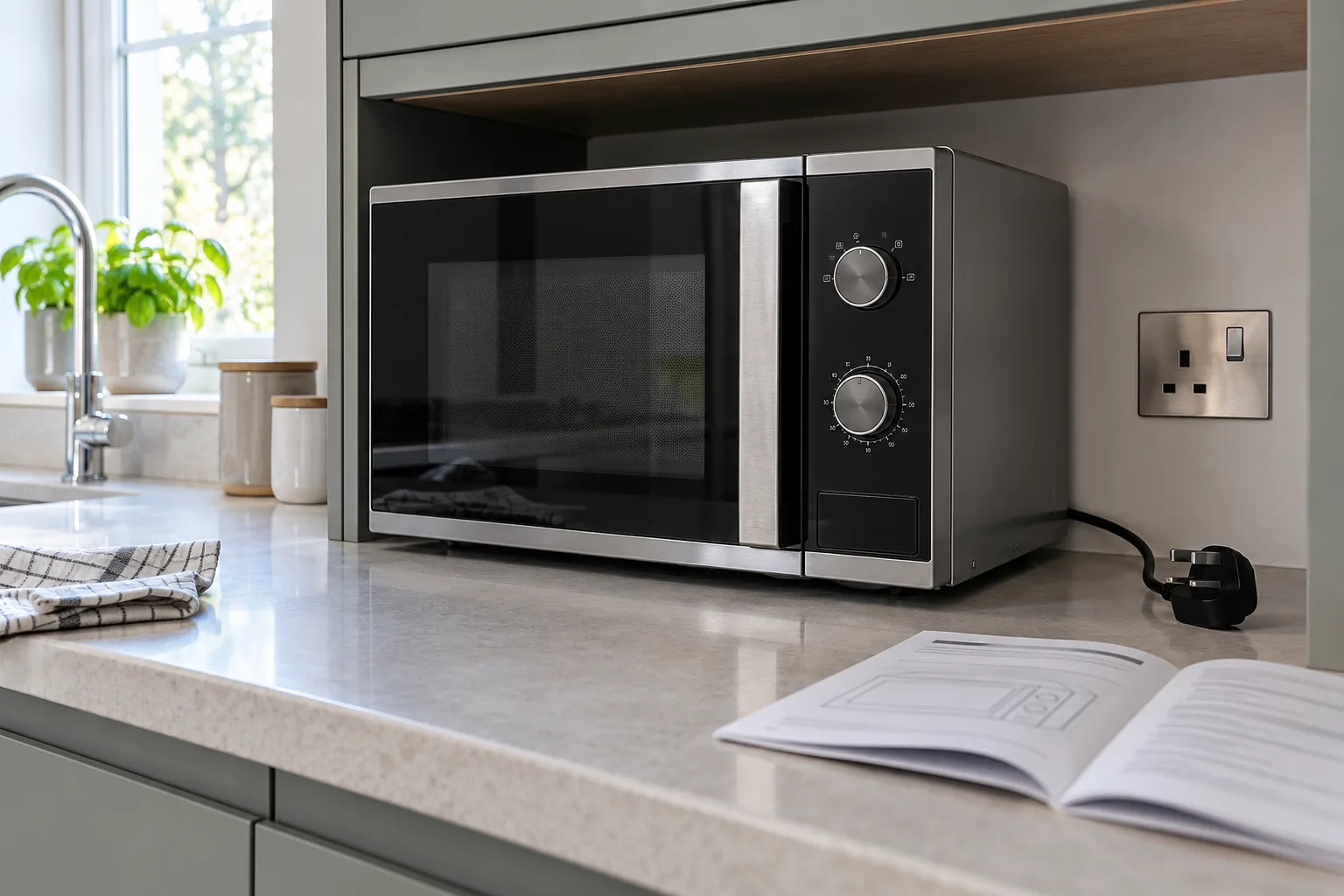
Lift splashes without scrubbing the cavity
Lift dry crumbs with a soft cloth or kitchen paper. Wipe the sides, ceiling and floor with a lightly damp cloth. Hold it briefly against a dried splash to soften the food, then lift gently instead of scrubbing. Panasonic’s microwave care guidance permits a mild detergent for heavier dirt on applicable models and cautions against strong scrubbing. If your manual permits detergent, wipe away its residue and dry the area.
Avoid spraying cleaner into the cavity. The appliance has seams, vents and a microwave feed area whose construction differs by model. Do not prise off a panel or scrape a cover over that area. Some manuals specifically warn against cleaning the microwave feed guide itself. If food is trapped behind a fixed cover, consult the manufacturer instead of trying to remove it. A coated interior may look robust, but a scratch or flaking finish deserves model-specific advice, not a stronger chemical.
A bowl-of-water steam trick is unnecessary for an ordinary wipe-down: hot liquid can scald, and models differ. If yours has a built-in steam-clean function, use it exactly as the manual specifies, let the appliance cool and wipe out the loosened residue. Do not heat a wet cloth or sponge in the microwave unless its maker expressly directs it.
Wash the turntable and ring, then refit them correctly
Take out the glass turntable and, if removable on your model, the roller ring. Let both cool first. Wash the parts carefully in warm water with a little washing-up liquid, using a soft cloth to lift food from the underside of the glass and around the ring. Rinse and dry them thoroughly. Wipe the cavity floor and the track where the ring sits; crumbs left there can make the tray roll noisily or unevenly. Avoid forcing the central drive fitting or pouring water into the base.
Return the ring and seat the turntable as the manual shows. It should sit level, without debris beneath it. Do not substitute another plate for a broken turntable or run a model that requires its tray and ring without them. Ask the manufacturer for the correct replacement if either part is damaged or missing.
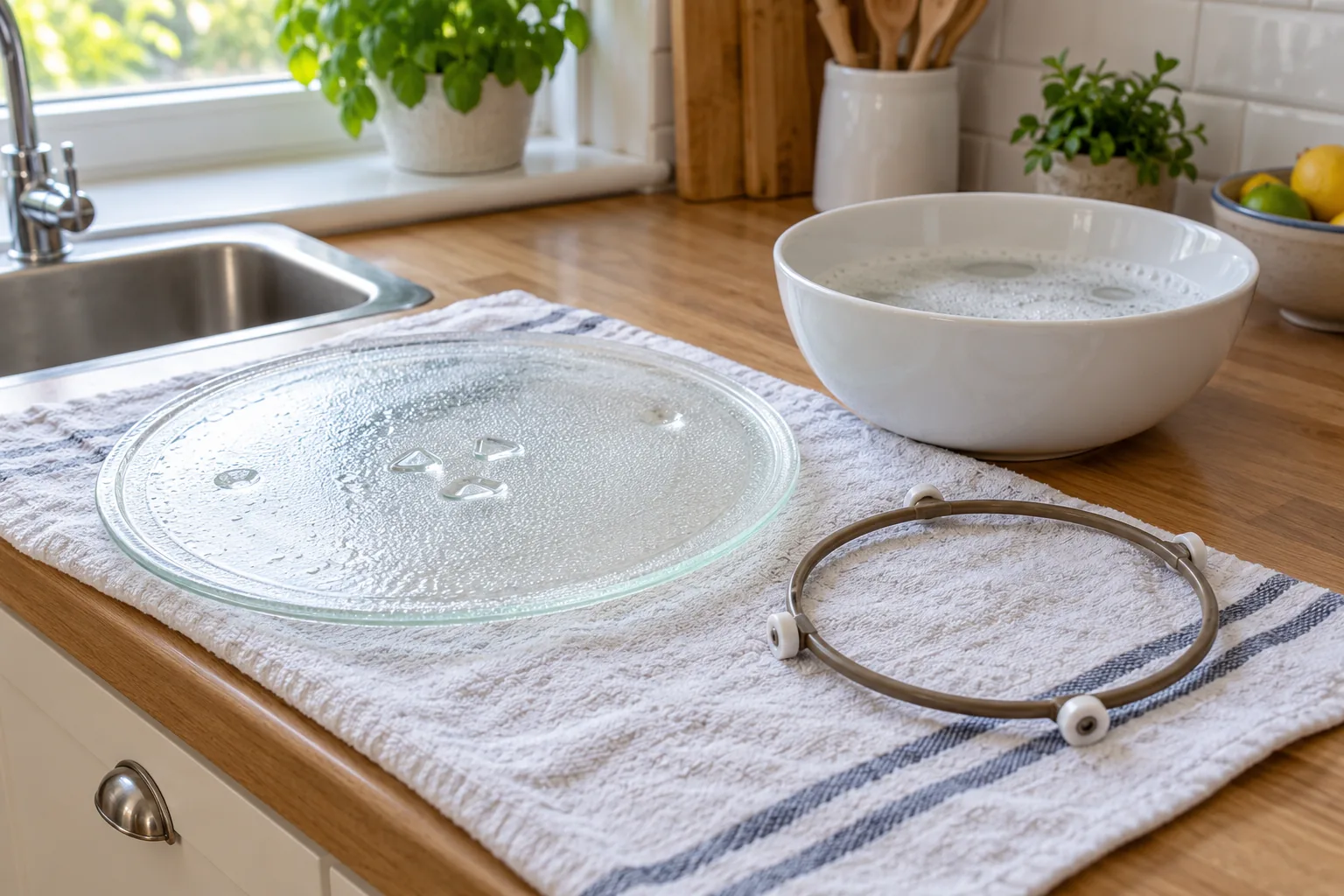
Clean the door edge, seal area and viewing window carefully
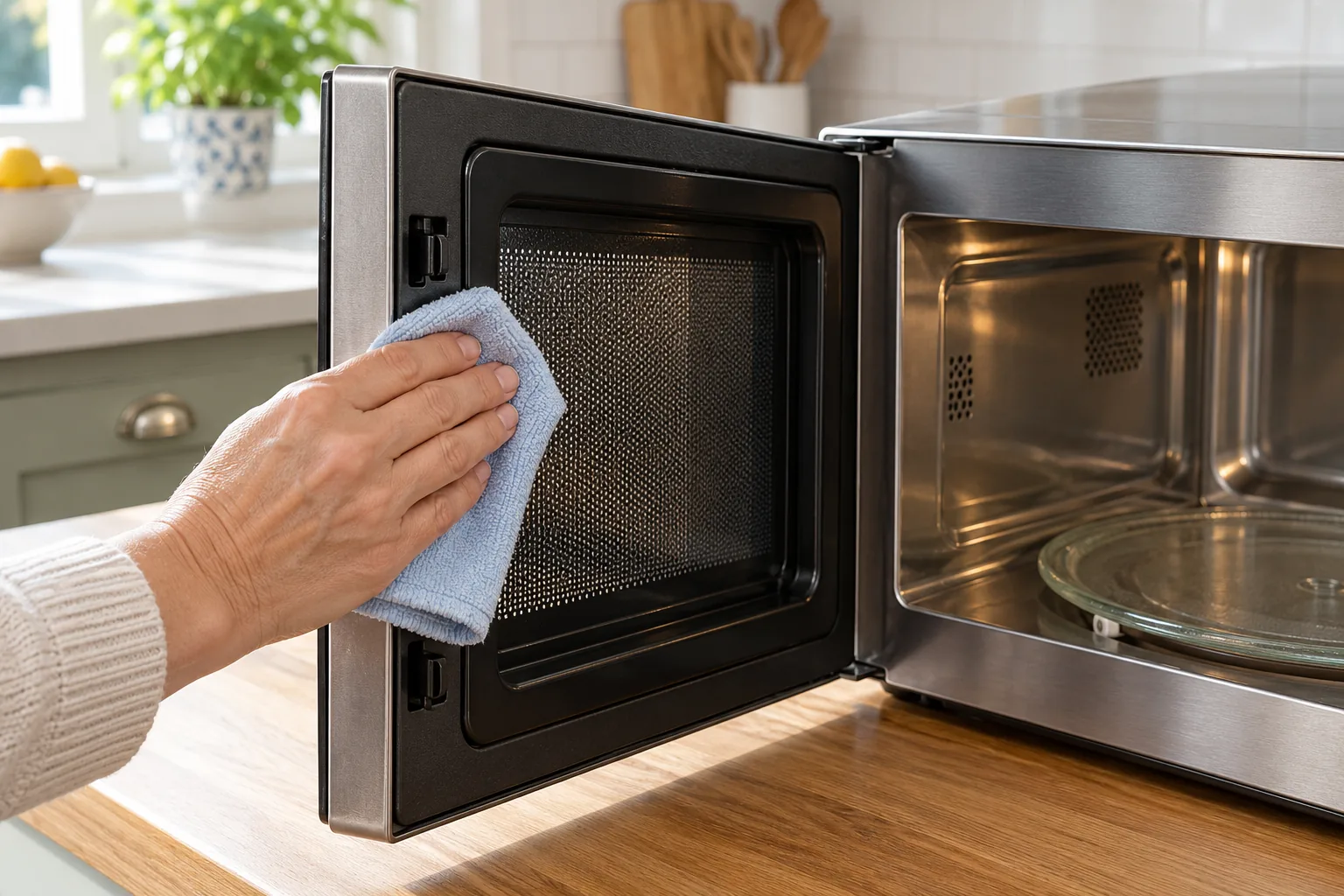
Food caught where the door closes can interfere with the mating surfaces. Wipe the accessible door and cabinet edges with a soft damp cloth. For grease, use mild detergent only if the manual permits it, then wipe away residue and dry. Keep liquid and sharp tools out of seams and latch slots; do not dismantle a sealing component.
Clean the window with the same gentle approach. Avoid abrasive pads and sharp metal scrapers that could scratch the glass. If condensation has formed around the door after normal cooking, wipe it away with a soft cloth. Condensation alone is not a reason to scrub the seal. Instead, inspect the door as you clean: does it close firmly and evenly, without damage, looseness or a stubborn latch? If not, stop using the microwave and contact its manufacturer or a qualified repairer. Electrical Safety First’s microwave guidance advises repair or replacement when the door or its seal is defective.
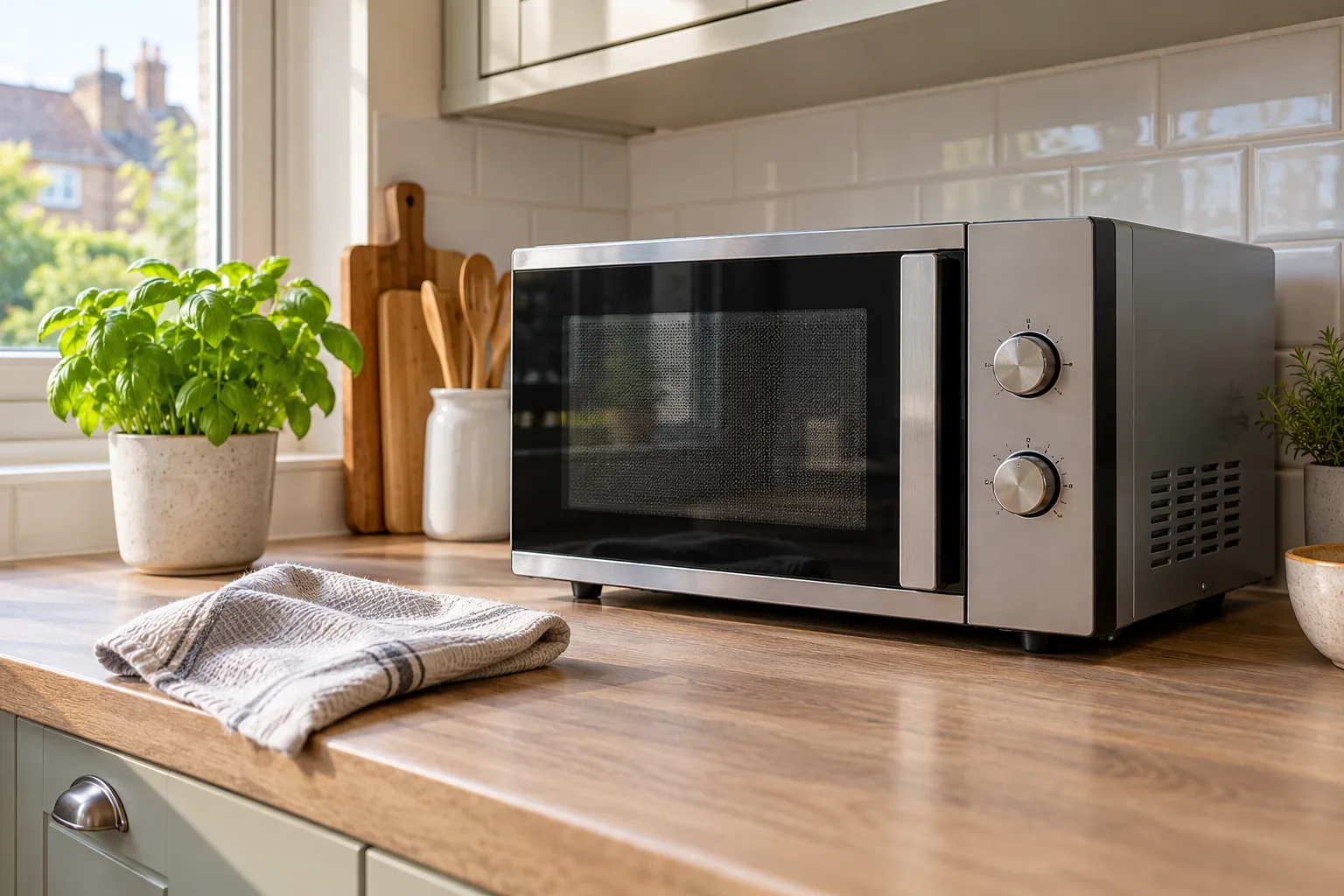
Protect the control panel and keep ventilation clear
Controls need less moisture than the cavity. Wipe them with a barely damp cloth if required, then dry thoroughly. Put cleaner onto the cloth, never onto the panel. Do not flood button edges or use abrasive tools. If a control behaves unexpectedly or liquid has run behind it, stop and seek technical advice.
Inspect the external ventilation slots without inserting anything into them. Brush or wipe loose dust from accessible surrounding surfaces with the appliance off, keeping the cloth dry near the openings. Never pour liquid through a vent, block it with a cloth or cover the appliance with stored items. Clear ventilation is part of normal microwave use, as Electrical Safety First notes. If an installed unit has inaccessible vents or needs to be pulled out to reach dust, leave that work to its installation instructions or a competent professional.
Finish by checking that all visible surfaces are dry, the tray is seated properly and the door shuts normally. Reconnect power only when the appliance and your hands are dry. If your manual calls for a test after cleaning, follow that exact method; do not operate the microwave empty merely to see whether it starts. Keep the manual handy so the next clean is quicker and specific to the model.
Make small clean-ups routine, and know when to stop
Food is easiest to remove soon after a spill, once the appliance has cooled enough to handle safely. A quick wipe of the turntable, cavity floor and door edge after a messy reheating session prevents layers of residue building up. Cover food with a microwave-safe cover when suitable for the cooking task, leaving any required venting and following the cookware instructions. Check that the cover itself is marked microwave safe. These habits reduce splashes; they do not replace periodic cleaning around the ring, door edges and accessible vents.
Keep a kitchen cleaning cloth for food-contact areas separate from one used for floors or bins, and wash it regularly. If a cleaner has been used inside the cavity, remove its residue as the product and microwave instructions direct before the next food use. Do not mix cleaning chemicals or assume that an oven product is safe for a microwave. For more everyday kitchen routines, see our guide to kitchen cleaning between visits. Our article on oven cleaning mistakes and materials explains why material and product choice matters across cooking appliances, although microwave care still requires its own manual.
Cleaning has a firm limit. A bent door, damaged seal, persistent failure to latch, arcing, unusual burning smell, repeated tripping or water behind the controls is a fault to investigate, not a stain to remove. Switch off, unplug if safe and contact the manufacturer or a qualified repairer. Never open the casing: internal electrical components can remain hazardous even after unplugging. If you are arranging a wider kitchen reset, one-off deep cleaning can help with ordinary accessible surfaces. Appliance repair and internal dismantling are separate specialist work.
Frequently asked questions
Can I spray kitchen cleaner directly inside the microwave?
It is safer to apply only a model-approved mild cleaner to a soft cloth. A direct spray can reach seams, the control panel or ventilation openings. Wipe away the cleaner and dry the cavity according to the manual. Avoid harsh oven cleaners unless your specific appliance instructions expressly allow a product for a specified surface.
Is a microwave turntable dishwasher safe?
Some manufacturers approve it for particular models; others instruct handwashing. Check your own manual before using the dishwasher. Handwashing a cooled tray and ring in warm soapy water is a cautious default, followed by thorough drying and correct refitting.
What if a stain will not come off the door seal area?
Try a soft damp cloth and only the mild detergent your manual allows. Do not scrape, pull at a seal or soak the door. If residue seems trapped in a part you cannot reach safely, or if the door no longer closes properly, ask the manufacturer for advice before using the microwave again.