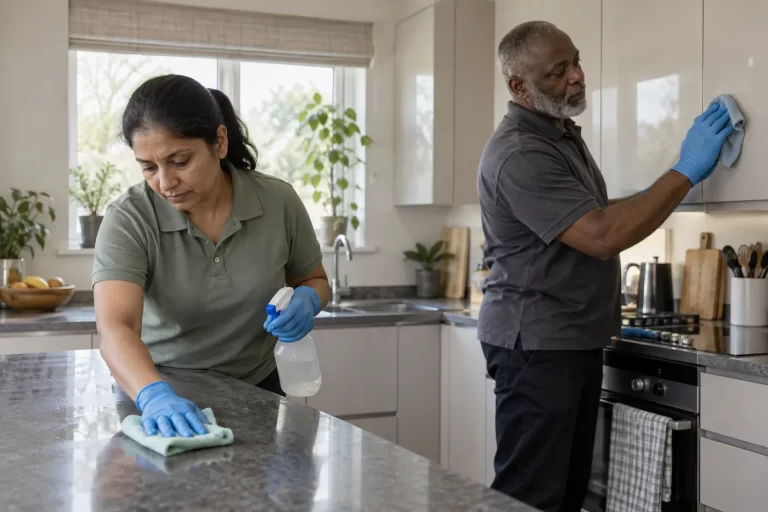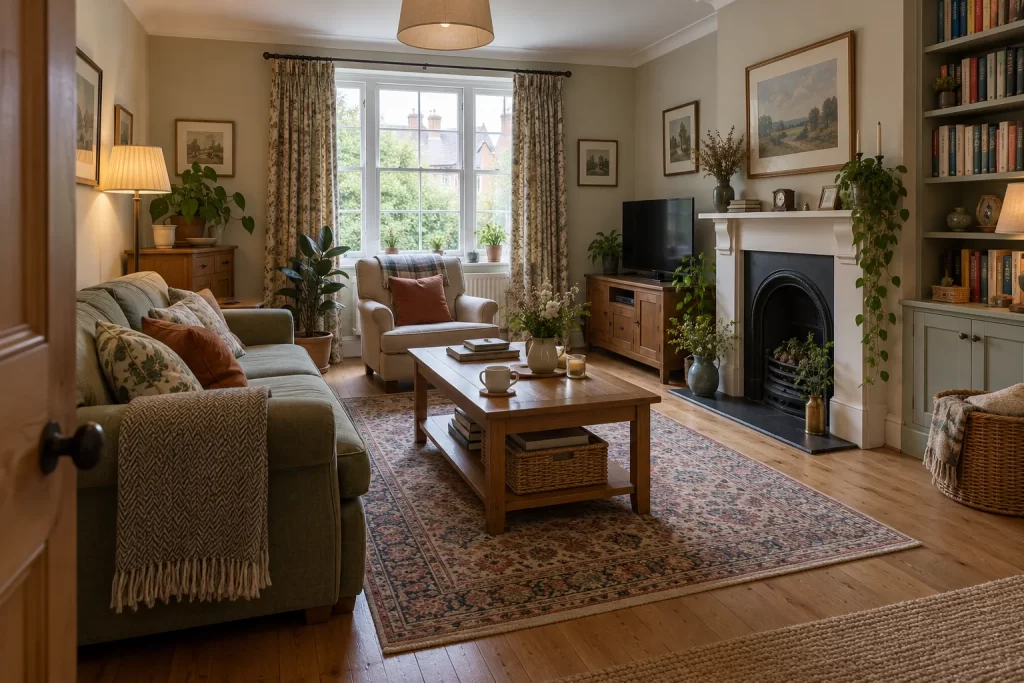
A one-off clean sounds straightforward until two people imagine different jobs. You may picture detailed work in the kitchen and bathroom; the cleaner may have allowed time for a general clean across every room. Furniture, belongings and limited access add another layer. The best way to scope a one-off clean is to describe the actual home, the surfaces that need attention and what you want completed first. A clear brief helps a cleaning company estimate time and equipment, and gives you a useful record of what was agreed.
This is especially helpful in a furnished home. A bookcase full of objects, an occupied bedroom and an empty guest room are not equivalent spaces, even when their floor areas match. You do not need to write a technical specification. A short room list, a few honest photographs and a clear order of priorities will do more than a vague request to “deep clean everything”.
Begin with the reason for the clean
State what has prompted the booking. Are visitors due, has routine cleaning slipped during a busy period, or do you want a reset before starting a regular schedule? The answer changes the emphasis. A visit before guests may prioritise the entrance, bathroom and sitting room. A seasonal reset may put skirting, accessible high shelves and cupboard fronts ahead of presentation on a particular day.
Write down the date by which the home must be ready and any fixed access window. Say whether you will be present, who can open the door and whether the team can use water and electricity. If another contractor or delivery is due, mention it. Crowded schedules make it harder to work safely and to allow freshly cleaned floors to dry before people walk through them.
Describe the property in useful terms: number of rooms to be cleaned, number of bathrooms, floor types, stairs, and whether rooms are occupied or partly packed. Include any unusual features, such as a conservatory, utility room or many internal glass panels. This is more informative than bedroom count alone. For a wider look at how different services are described, see how to choose the right cleaning service.
Walk through each room and name the work
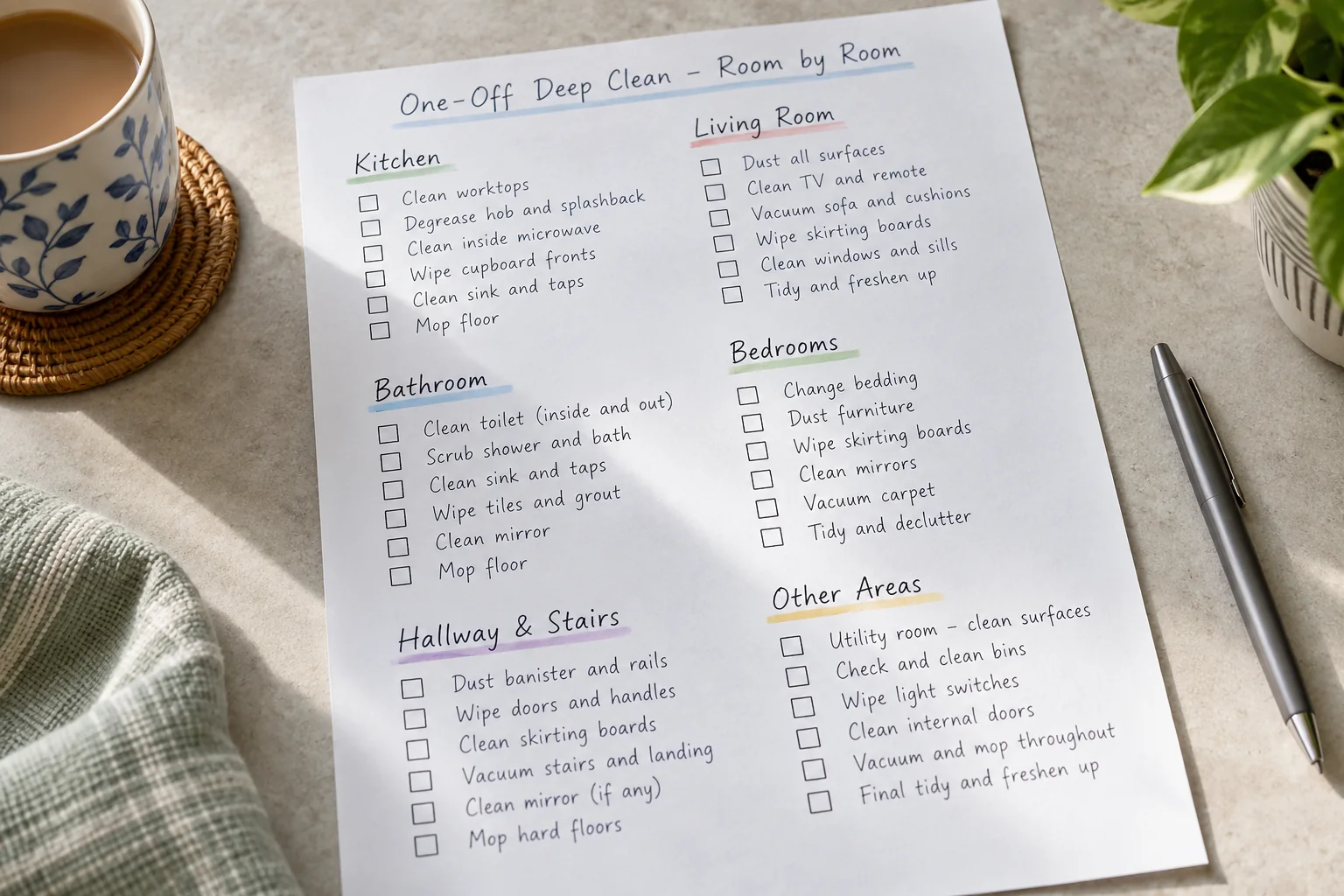
Make a brief list for each room rather than writing “whole house”. Separate routine tasks from the details that are driving the one-off booking. In the kitchen, for example, you might want worktops, sink, hob exterior and cabinet fronts, with the oven interior requested as an extra. In a bathroom, specify whether attention should go to taps and screens, accessible tile edges, or general fixtures and floor. In the sitting room, distinguish dusting exposed surfaces from moving and replacing dozens of decorative objects.
Keep the language observable. “Wipe accessible cabinet fronts” is easier to price and check than “make the kitchen immaculate”. “Vacuum under the sofa if it can be moved safely by the household beforehand” is clearer than “get everywhere”. If a finish needs special care, identify it: oiled timber, natural stone, unsealed grout, delicate wallpaper or a fabric that must not be dampened. Share any manufacturer instructions you have. A cleaning team should be able to decide whether a suitable method is available, rather than discovering the restriction on arrival.
Avoid describing permanent damage as dirt. Etching, worn varnish, failed sealant and deep staining may remain after careful cleaning. If you are unsure, describe what you can see and ask for an assessment. Do not promise yourself a particular result from an unknown mark. This distinction also helps you compare quotations fairly, because restoration and repair are separate work.
Record the furniture and belongings that affect access
Furnished rooms have visible surfaces and hidden ones. Tell the company whether shelves are crowded, worktops are clear, beds can be reached on both sides and floors have toys, cables or boxes. Specify what you will move before the visit. A cleaner should not have to decide where to put private papers, medication, jewellery or fragile collections. Put these away yourself or identify an area that is out of scope.
For delicate ornaments, photographs and electronics, decide whether the team may lift them, dust around them or leave them untouched. One clear instruction is better than expecting the cleaner to infer the value or stability of an item. If you want shelves emptied and cleaned, say who will remove and replace the contents. Photograph any arrangement you need restored exactly.
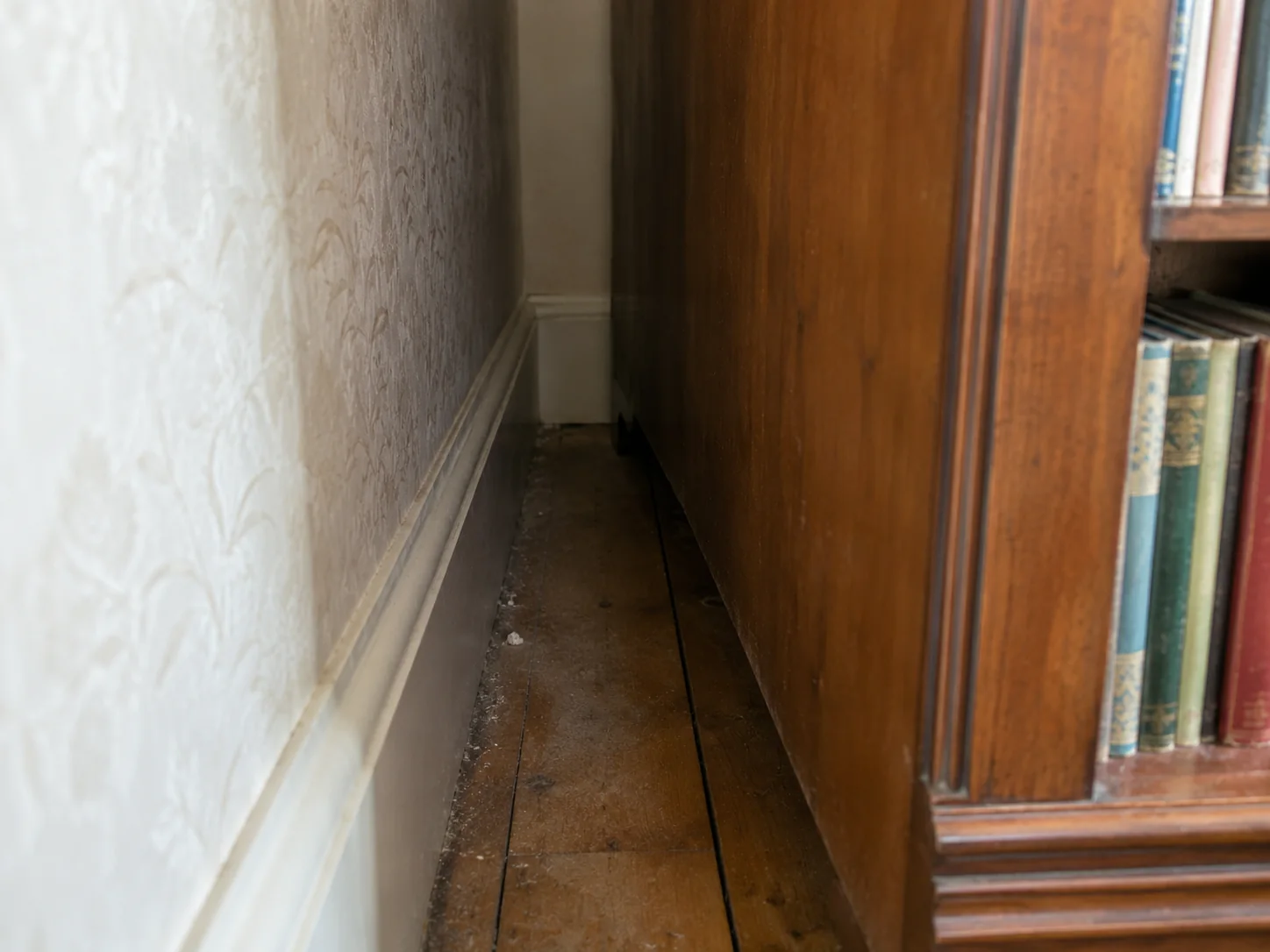
Heavy furniture needs a separate conversation. The Health and Safety Executive’s guidance for cleaners identifies heavy lifting, restricted workspace and awkward posture as risks. Do not assume a one-off clean includes shifting wardrobes, loaded bookcases or large appliances. If access behind a unit matters, ask how it can be made safe and whether it is within scope. Often the sensible answer is to clean the accessible edge and leave the blocked area recorded as excluded.
Pets matter too. Note whether a dog or cat will be at home, where it will stay while doors are opened and floors dry, and whether bowls or litter areas are included. If anyone in the household has a product sensitivity, flag it before booking and provide relevant instructions. Do not leave a last-minute note expecting a different product regime without checking what the company can use.

Separate standard tasks, extras and exclusions
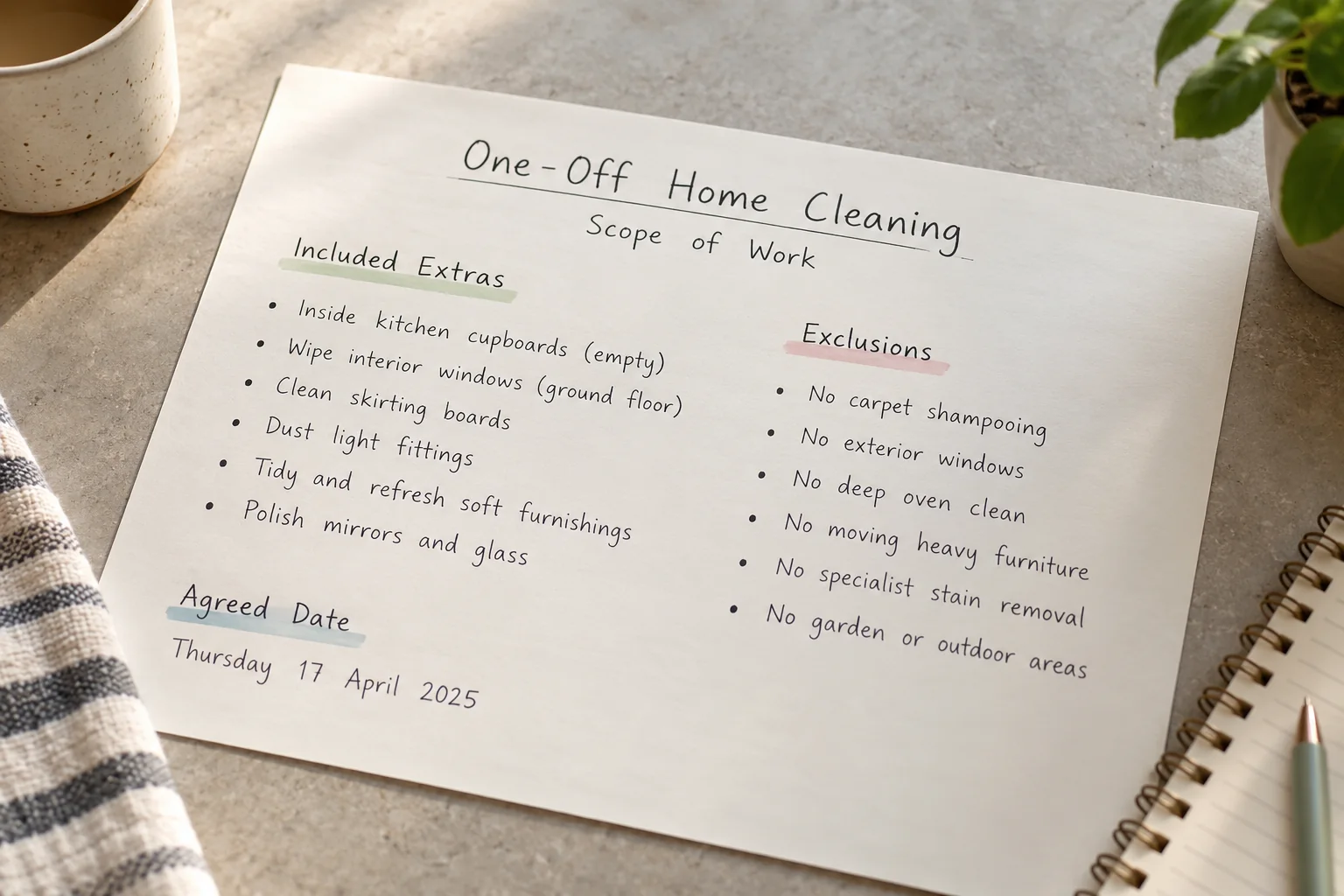
A useful scope has three short columns: included tasks, requested extras and exclusions. Standard tasks depend on the provider, so ask for the actual list instead of assuming what “deep clean” means. An oven interior, refrigerator interior, inside cupboards, interior windows, upholstery treatment and carpet extraction are examples of work that may need separate time, equipment or pricing. Request only the extras you genuinely need and state whether cupboards or appliances will be emptied in advance.
Also say what should not be cleaned. This might include a home office desk with confidential papers, a display cabinet, a damaged floor section, a wall with fresh paint, a locked room or a surface awaiting repair. Exclusions protect both sides from surprise and can free time for your priorities. If there is mould, pest contamination, sharp waste or suspected hazardous dust, disclose it before a routine domestic booking so the provider can decide whether specialist work is required.
Be precise about waste. Ordinary small bins and the removal of accumulated possessions are very different jobs. Say whether bins need emptying, where liners are kept and where bagged waste should go. If a garage is full of unwanted items, do not assume a cleaning visit includes sorting and disposal. The same applies to laundry, dishes and changing bedding: list them if wanted and establish whether the company offers them.
Use the deep cleaning frequency and room plan to decide which detailed jobs can wait for another date. A one-off appointment has a finite number of working hours. A focused scope usually produces a better outcome than spreading the visit thinly across every possible detail.
Set priorities that survive a change in time
Put your tasks in order. Mark a small number as essential, then list the desirable work that can follow if time allows. For example: first, bathrooms and kitchen contact surfaces; second, floors and accessible dusting in rooms visitors will use; third, detailed skirting in the spare room. This avoids a situation where a cleaner spends the first hour on low-priority detail while a key bathroom remains unfinished.
Ask how the company handles a discovery that changes the estimate. A heavily scaled shower, grease inside an oven or a room that has not been cleared can take longer than the initial description suggested. Agree who can authorise extra time or cost, and what should be reduced if you wish to stay within the original budget. Do not rely on an informal instruction passed at the door when the booking was made by someone else.
Include a realistic finish point. If the home must be available at 3 pm, the team needs time to pack equipment, check rooms and leave floors safe to cross. If you need to inspect the result while the cleaner is present, schedule that into the access window. Keep expectations tied to the agreed tasks and the condition the surfaces can safely reach.
Use photographs and a written confirmation
Photographs can clarify a quotation, especially where a room has many objects, a particular stain or unusual access. Take ordinary, well-lit views of the affected area and a wider view showing its context. Avoid sending images of documents, family photographs or other private details. Label the images by room and explain what you want done; a photograph alone may not show the intended task.
Before accepting the booking, ask for written confirmation of the rooms, key tasks, extras, exclusions, likely duration or staffing, products or equipment you must supply, and the price basis. Citizens Advice England recommends clear work descriptions and written quotes when arranging work at home. Its guidance on getting quotes distinguishes a fixed quote from an estimate; ask which you are receiving and under what conditions the price could change. Check cancellation and access arrangements as well.
This need not be a lengthy contract. A concise email or booking summary can say: “Kitchen and two bathrooms first; dust accessible living-room surfaces; vacuum and mop clear floors; oven interior included; no movement of heavy furniture; office excluded.” That gives both sides something concrete to refer to. If you add a task later, get the revised scope and price confirmed before the visit.
Prepare the home without doing the clean twice
You do not have to pre-clean the property to make a one-off booking worthwhile. A little preparation, however, lets paid cleaning time go towards the surfaces you actually want cleaned. Clear loose papers from worktops, lift small items off floors, put valuables away and make sure keys and parking instructions are accurate. Empty a cupboard only if inside cleaning has been requested and the provider has asked you to do so. Leave visible any surface instructions or product restrictions.
On the day, do a brief handover. Point out the essential rooms, known damage and any areas where the written scope has changed. If a planned task cannot be carried out safely, ask the cleaner to tell you and agree a substitute rather than pressing for an improvised method. HSE guidance highlights the role of work organisation and adequate time in managing cleaning risks. A sensible brief is a working plan, not a demand that every possible task be finished regardless of conditions.
For a furnished property, the strongest one-off brief answers five questions: which rooms, which surfaces, what can be reached, which details matter most, and what is deliberately excluded. If you are considering a one-off deep cleaning service, send that brief with your enquiry and compare the written response with your priorities before confirming.
Should I tidy before a one-off clean?
Clear loose items enough to expose the surfaces you want cleaned, and put valuables or private papers away. You do not need to carry out the cleaning itself. Tell the provider if substantial clutter will remain so the time and accessible areas can be estimated honestly.
Will cleaners move heavy furniture?
Do not assume so. Describe the furniture and the desired access when requesting a quote. Heavy lifting and awkward positions can create risks; the provider should decide what can be moved safely and what will remain excluded.
What if I remember an extra task after booking?
Send the request before the visit and ask for a revised written scope. Confirm any change in time or price. On the day, agree which existing task should give way if the appointment cannot be extended.