Once guests leave, it is tempting to collect every plate, mop the floor and call the room done. The better order starts with anything that can spread, stain or create a slip: drinks on fabric, sticky liquid near floor joints, dropped food and broken items. General tidying can follow. Cleaning after a party is easier when you pause long enough to identify each surface before choosing a product. A sofa cover, finished timber table, laminate floor and vinyl floor may all respond differently to the same spill.
You do not need to carry out a whole-house deep clean at midnight. A short first-response round protects the room until you have daylight and time for the remaining work. This guide separates that immediate round from the next-day clean, so you can act promptly without making a mark worse through rubbing, soaking or using an unsuitable cleaner.
Make the room safe and stop fresh spills spreading
Turn on the lights and walk a clear route through the room. Look for wet patches, broken glass, dropped food, unstable chairs and bags left in walkways. Keep children and pets away from a spill while you clean it. If glass has broken, use suitable tools to collect visible pieces and inspect the surrounding area, including under furniture; avoid sweeping fragments with your hands. Put sharp waste in a secure container according to local disposal arrangements rather than in a thin loose bag.
Blot or absorb liquids before they travel. Use a clean towel or absorbent paper on a hard surface and a suitable clean cloth on fabric. Work from the edge of a spill towards the centre so it does not spread. Change cloths when they become saturated. If a liquid has reached an electrical socket, appliance or cable, do not continue with wet cleaning around it; isolate the area and arrange competent help where needed.
The Health and Safety Executive’s slips guidance stresses prompt, effective removal of spillages and the need for a floor to be dry before people use it. That principle is useful in a home after guests leave. Do not create a new wet route with an overfilled mop bucket. Keep people away from a cleaned section until it has dried. A small torch can help you inspect the floor edge for sticky patches, but do not drag heavy furniture to chase a spill without a safe plan.
Treat upholstery as a separate task
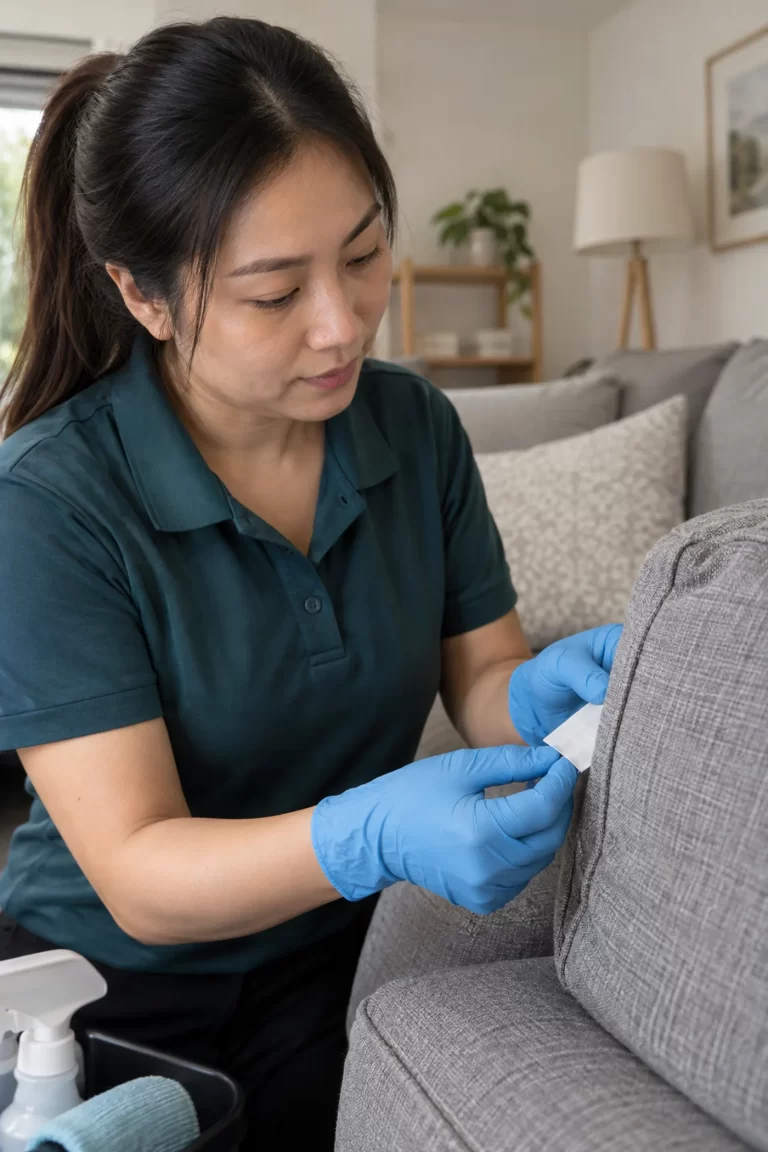
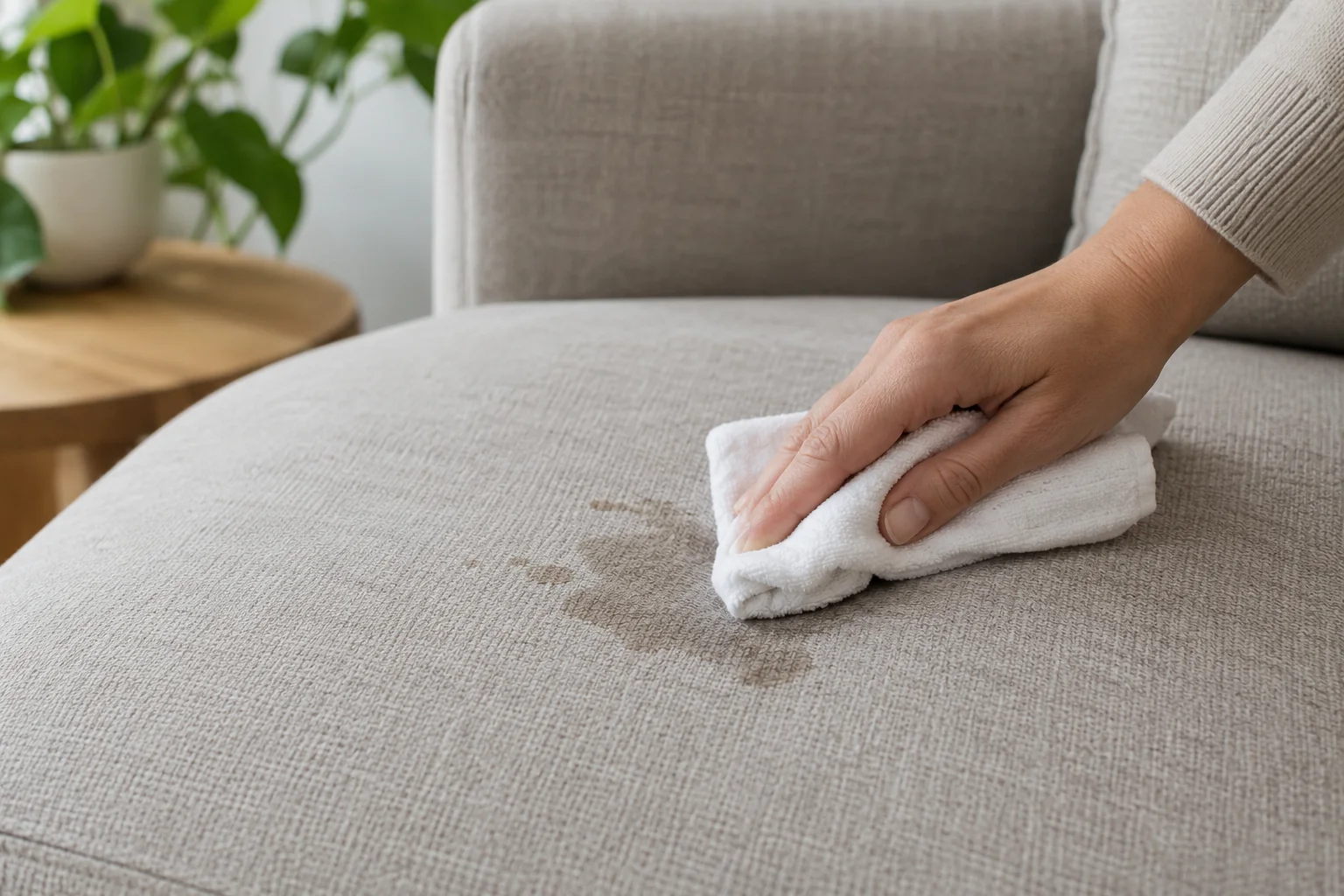
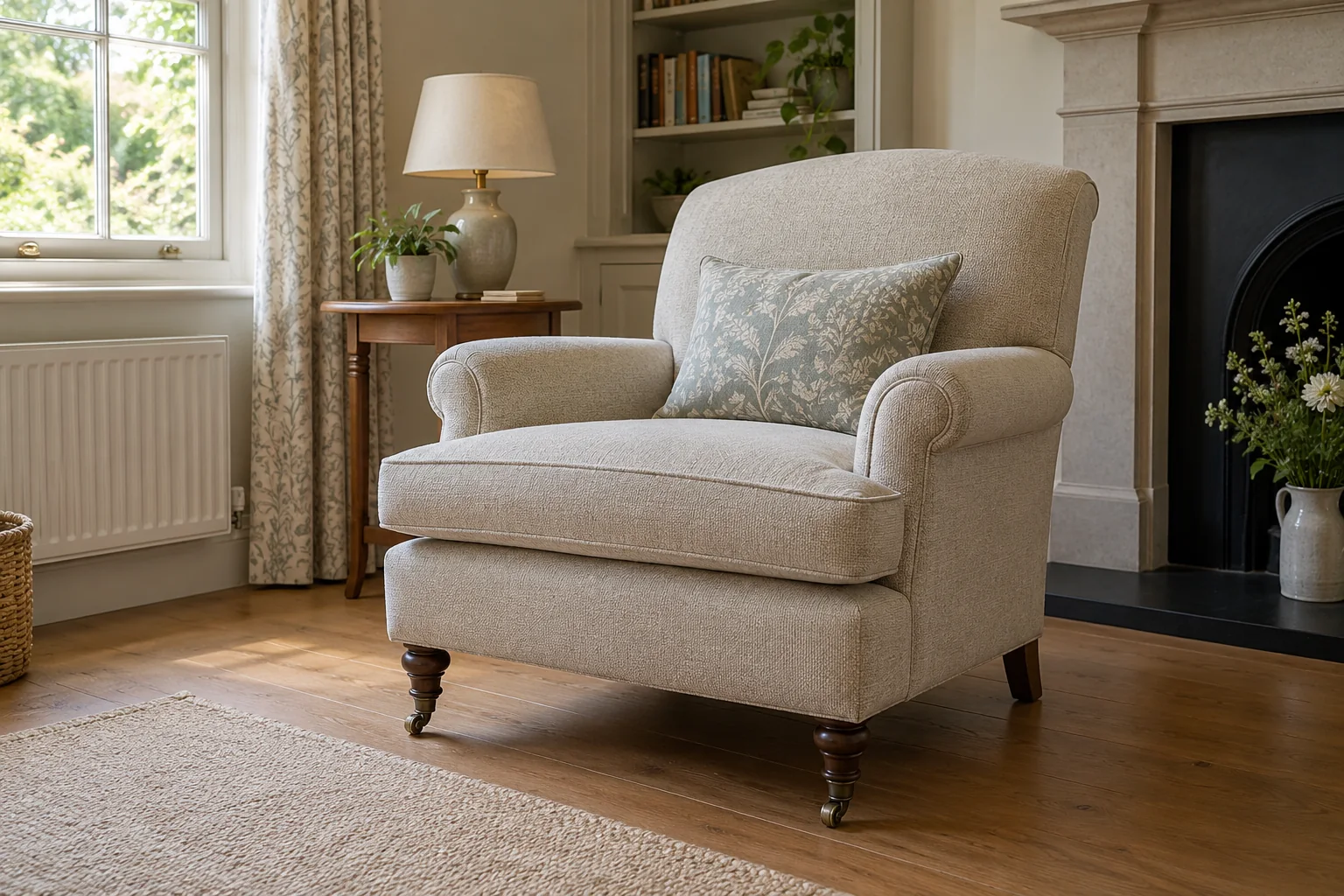
If a drink has landed on a sofa or chair, remove as much free liquid as you can by blotting. Do not rub a dark stain across the weave or press it deep into the padding. Check the furniture’s care label and manufacturer’s instructions before adding water, detergent or a spot treatment. Some covers can be removed and laundered; others have restrictions that make casual wet cleaning risky. IKEA’s UK care guidance directs owners to the care information supplied with the product or shown under its material and care details.
Take a photograph of the mark in good light before treating it, particularly if you may ask a professional to assess it later. Note what was spilled and when. A clear drink, wine and oily food are different problems; guessing at the substance can lead to the wrong treatment. If you do not know the fibre or care code, stop at gentle blotting and avoid saturating the cushion. Do not try multiple chemicals in succession in the hope that one works. They may interact with the fabric or leave residues that complicate later care.
If the cover is removable, confirm its exact washing instructions and whether it can be washed separately from the rest of the set without causing a colour mismatch. If the chair has a non-removable cover, lifting it into a machine is not an option. Let any fabric treated according to its instructions dry fully with appropriate ventilation before replacing cushions or allowing people to sit on it. The related guide to sofa care labels, stains and drying explains the label-first approach in more detail.
Remove crumbs and food before wiping floors
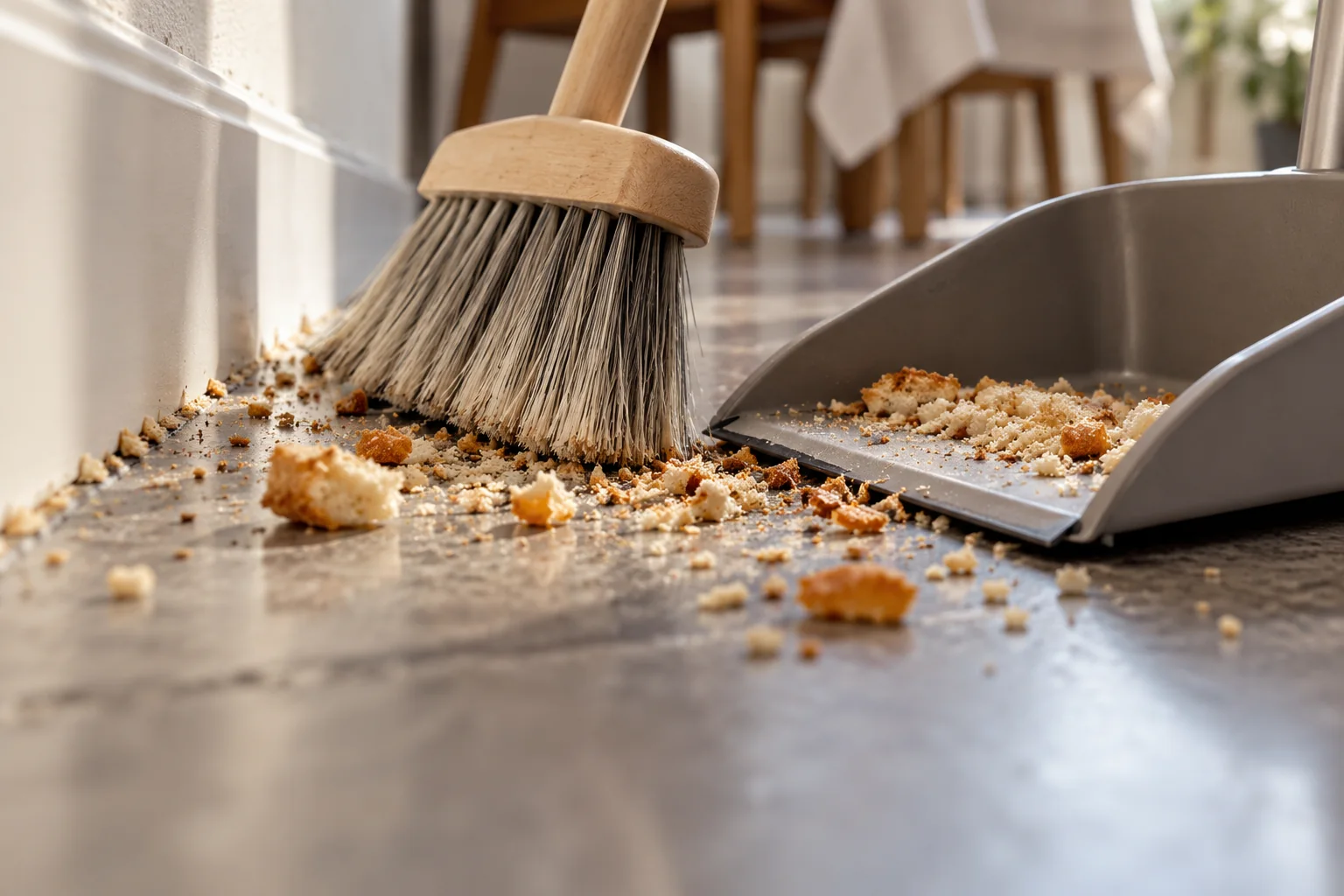
Solid food can smear when you reach for a wet mop. Lift larger pieces first using a suitable tool, then collect crumbs and grit with a soft brush or vacuum attachment appropriate for the floor. Pay attention to edges where people have stood and to the route between the serving area and seating. Do not use a vacuum for wet material unless the equipment is designed for it. Check beneath the table for small hard fragments that could scratch a finish when stepped on or dragged by a cloth.
Deal with food waste promptly and clean the bin area if a bag has leaked. Separate dishes from surface cleaning: remove glasses and plates to the kitchen, then return to wipe the table and floor with clear space. A cloth used for spilled food or the bin should not go straight onto a dining surface. Use clean cloths for different areas and follow the product label for any cleaner you choose.
Sticky food on a floor may soften with a method suitable for that floor, but avoid a universal “scrub harder” response. Floor coverings differ in how much water and abrasion they tolerate. If a fragment has bonded to a delicate finish, pause and consult the flooring maker’s care instructions. An aggressive edge or abrasive pad can turn a removable food mark into a permanent surface scratch.
Check table finishes before tackling rings and sticky marks
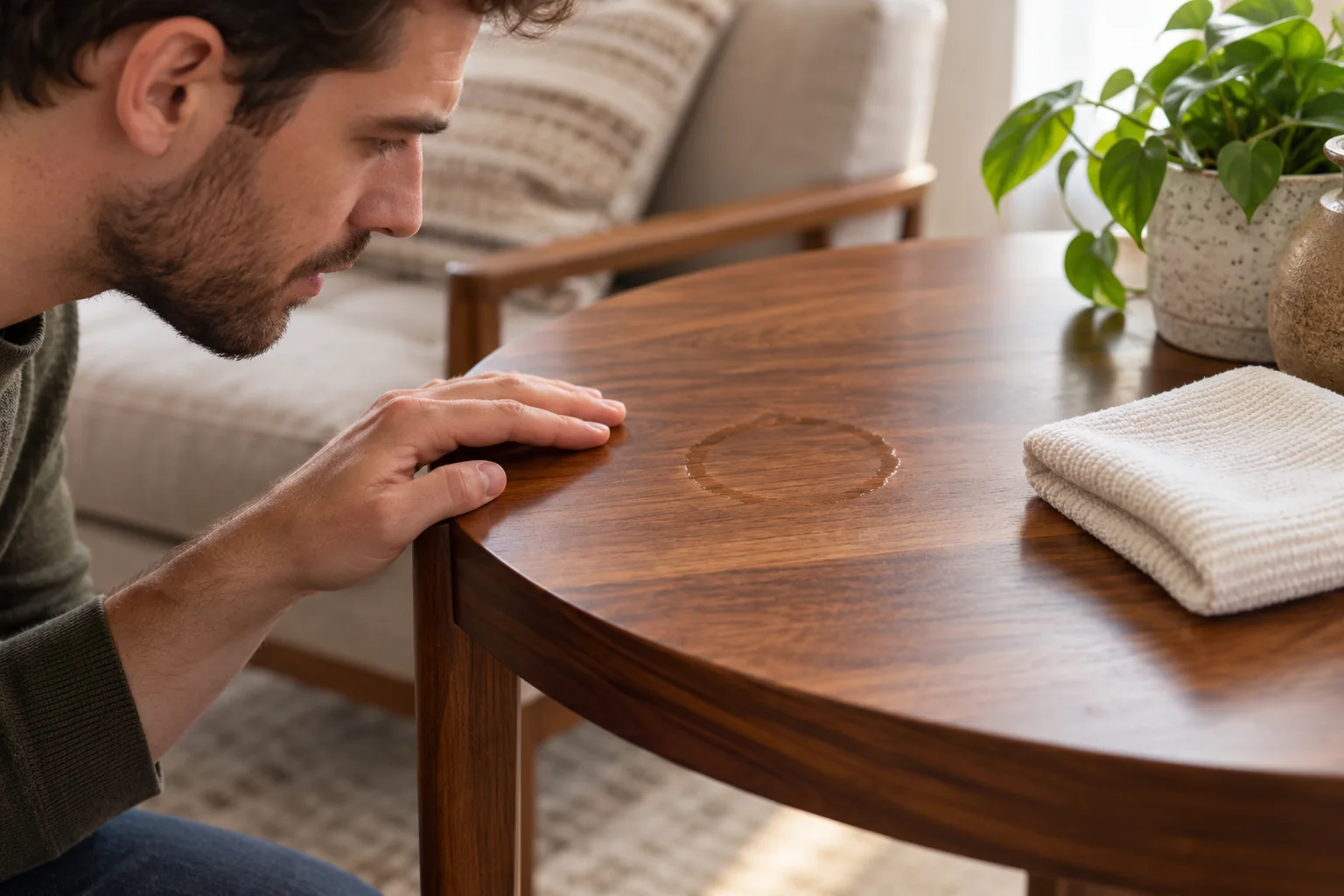
Clear the table, then look closely at the material. A sealed timber finish, waxed wood, veneer, laminate, stone and glass should not all receive the same treatment. Check the maker’s care guide if available. Test a proposed method in an inconspicuous area where the instructions permit it, and use the smallest amount of moisture needed. Spray onto a cloth rather than directly onto a finished wooden surface or near seams. Wipe away residue and dry the area promptly.
A sticky ring may be dried drink on top of the finish; a pale or dark mark may be within the finish itself. If the mark does not lift with the recommended routine method, stop. Harsh solvents, abrasive sponges and heat can remove or distort the coating. Similarly, do not scrape candle wax or glue from a table with a knife. Ask a specialist if a valuable or delicate piece appears damaged. Cleaning a surface and repairing its finish are separate jobs.
Inspect chair arms and the back of dining chairs, where hands may have left food or drink. Use a material-suitable method rather than applying the same cloth to upholstery and polished timber. If a spill reached a table joint or beneath a decorative runner, remove the runner and check the area, then allow it to dry according to the material’s guidance. Photograph any damage you find before attempting further work.
Clean each floor according to its material
Once loose debris is gone, identify the flooring and inspect the most exposed routes. A vinyl floor may permit a pH-neutral cleaner approved for vinyl; Karndean’s UK care guidance advises prompt spill removal, sweeping loose dirt first and avoiding cleaners that may cause discolouration or slipperiness on its floors. Follow the guidance for your actual make and finish rather than treating that as a rule for every floor.
Laminate needs restraint with moisture. Quick-Step’s spill advice says to absorb liquid promptly and use a moist cloth for remaining stickiness without excess water on its laminate. Do not leave puddles sitting at board joins. Sealed timber, natural stone and other floors have their own requirements; when the finish is unknown, remove dry grit first and check instructions before wet cleaning.
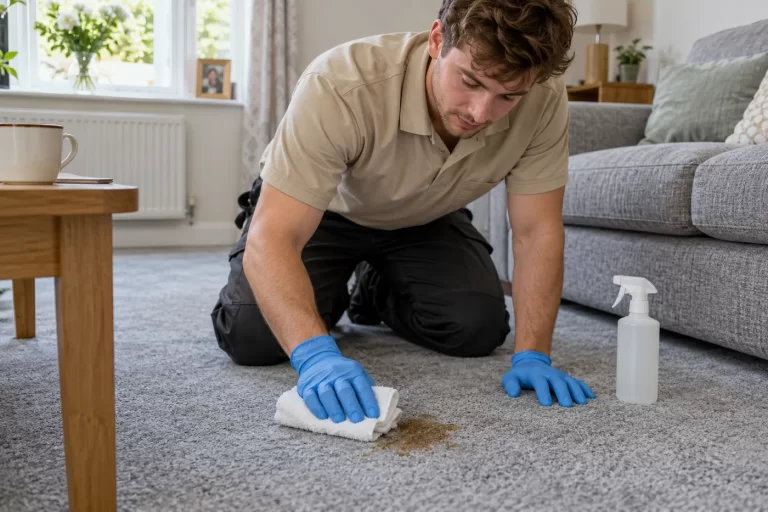
Avoid dragging chairs and tables to clean under them. Lift small movable items safely, and use protective pads where the floor maker recommends them. Give a cleaned section time to dry fully before restoring furniture and normal foot traffic. If a stain or raised joint remains after the surface dries, note it. More water or repeated aggressive rubbing is unlikely to fix a damaged floor. For a fabric floor covering, the carpet stain first-response guide offers a more suitable starting point than a hard-floor product.
Finish with a next-day inspection
When the immediate spills are contained, collect ordinary rubbish, put dishes away and let the room air safely. Leave a damp cushion or wet rug out of use until completely dry. The following day, inspect in natural light. Look at the fabric from more than one angle, check the floor around seating and under tables, and feel for remaining tackiness with clean hands only after products have dried. Odour can signal a spill that reached padding or a hidden edge, but fragrance will not remove it.
Make a short list of what still needs attention: a carpet spot, a chair that needs professional assessment, or a tabletop mark that looks like finish damage. This prevents you from repeating unsuitable treatments. If the gathering has left more work than a routine clean can cover, describe the surfaces and marks accurately when enquiring about one-off deep cleaning. For a significant carpet issue, explain the fibre, spill and treatments already used when asking about specialist carpet care. A professional can then advise whether cleaning is appropriate and what result is realistic.
The useful order is simple: make the space safe, absorb fresh liquid, lift solids, identify each material, then carry out the appropriate clean. That sequence protects the surfaces you want to keep while making the room pleasant again. It also gives you permission to stop when a stain is actually damage or when you lack the care information needed for a safe treatment.
Should I scrub a party spill out of a sofa straight away?
Blot free liquid first and check the care label. Scrubbing can spread a mark or distort fabric. If you cannot identify a safe treatment, record the spill and ask for material-specific advice.
Can I use one cleaner on every floor?
No. Check the floor material and manufacturer instructions. Remove grit first, absorb liquid promptly and avoid excess water, particularly around laminate joins.
When is the room safe to use again?
Wait until the floor and any treated upholstery are fully dry, sharp debris is removed and walkways are clear. A stain may need further attention even after the surface is safe to use.