Star Domestic Cleaners
Menu
MATERIAL CARE AT HANDOVER · CHELSEA

End of Tenancy Cleaning Chelsea

A tenancy checklist needs to reflect the finishes in the property. Explain stone, wood, specialist fittings and remaining furniture before your Chelsea clean is quoted, alongside the deposits and dust that need attention.

  • Care instructions reviewed
  • Damage distinguished from dirt
  • Property scope priced clearly

Scope and price agreed before booking

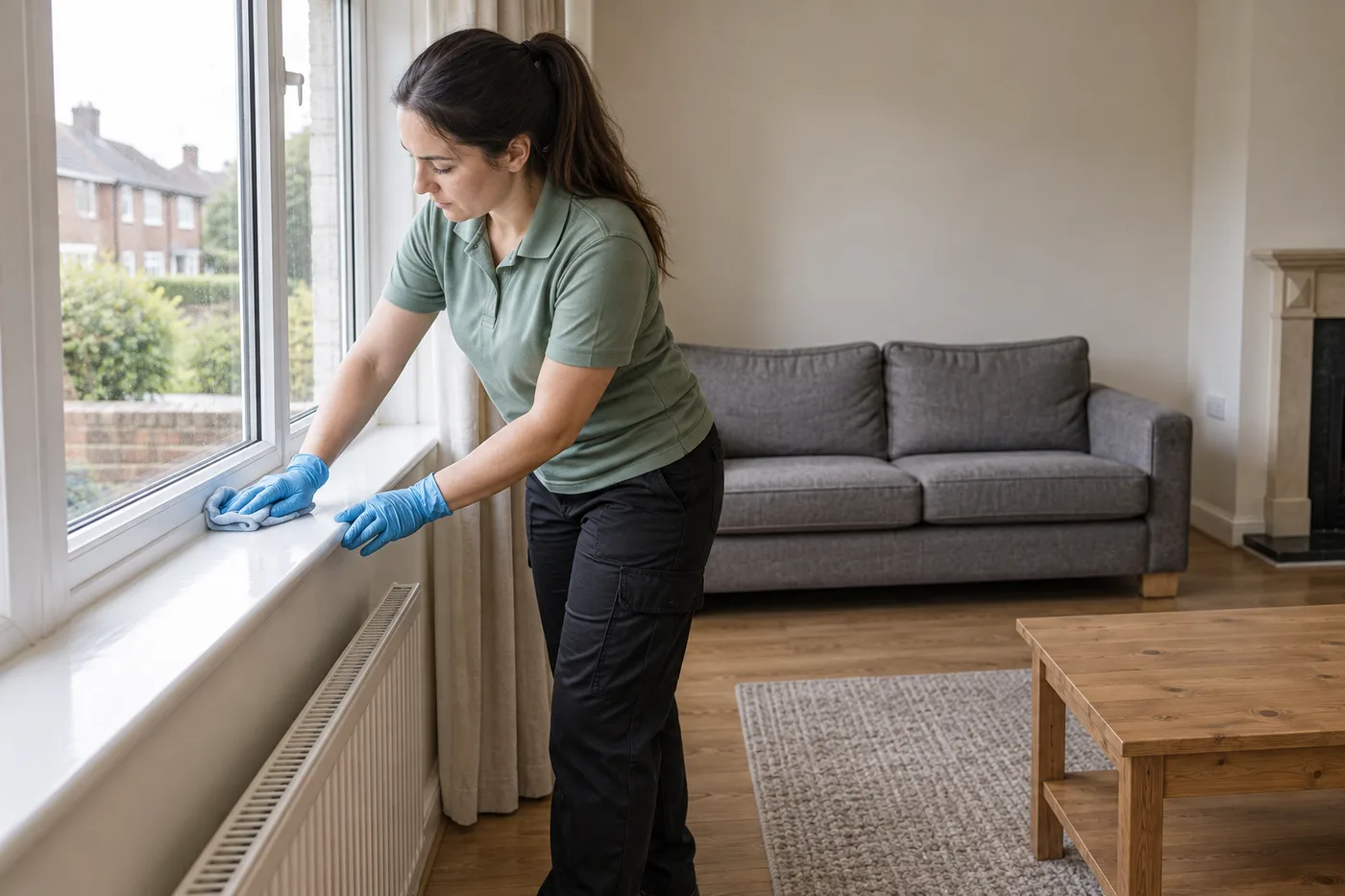
Cleaner wiping an accessible ledge in a partly furnished living room

Start with materials before asking for stronger cleaning.

Explain the material, previous products and any damage before asking for stronger cleaning. Care instructions can help; persistent residue does not establish that hard scrubbing is appropriate.

Share the tenancy cleaning requirements with room and appliance details. Identify tasks that need assessment, such as interiors, difficult access or delicate fittings. Cleaning addresses agreed dirt and deposits; it does not restore worn coatings, repair scratches or guarantee that every stain can be removed. A useful scope separates those matters before the appointment.

Connect the care information to the rooms on the list.

Kitchen surfaces and appliance finishes

Describe worktops, splashbacks, cupboard fronts, sink, hob and extractor surfaces with their materials. Request accessible cupboard or appliance interiors explicitly and explain how contents will be prepared. Tenancy prices advertise free oven cleaning; confirm the cooker and compartments under the applicable offer. Specialist finishes or unusual appliance arrangements need discussion rather than universal product assumptions.

Bathroom deposits on sensitive fittings

List taps, basin, toilet, bath or shower and suitable tile surfaces. Explain limescale, product residue and finish restrictions, including any worn sealant or grout. Stronger chemicals cannot be presumed appropriate for every fitting. Persistent moisture or structural mould concerns should be raised separately; a tenancy clean does not correct their underlying cause.

Furniture, floors and internal glass

Identify accessible furniture surfaces, doors, skirting, fittings and internal windows. Give floor materials and any particular instructions. Describe heavy furniture or fragile objects restricting access. Vacuuming a carpet and treating it are different tasks, while wiping a chair frame does not establish fabric treatment; make those distinctions visible in the brief.

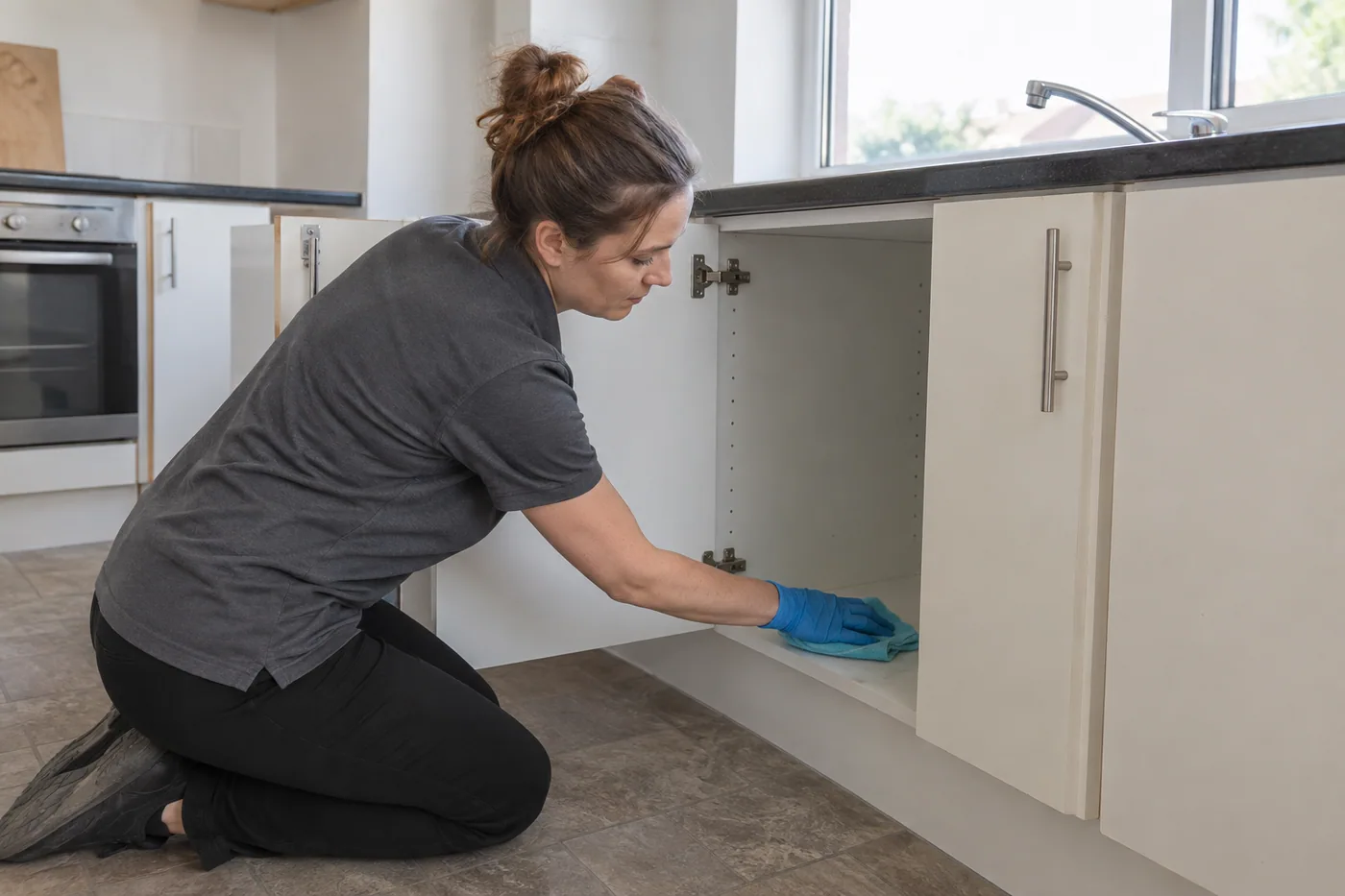
Wiping the inside of an emptied kitchen cupboard
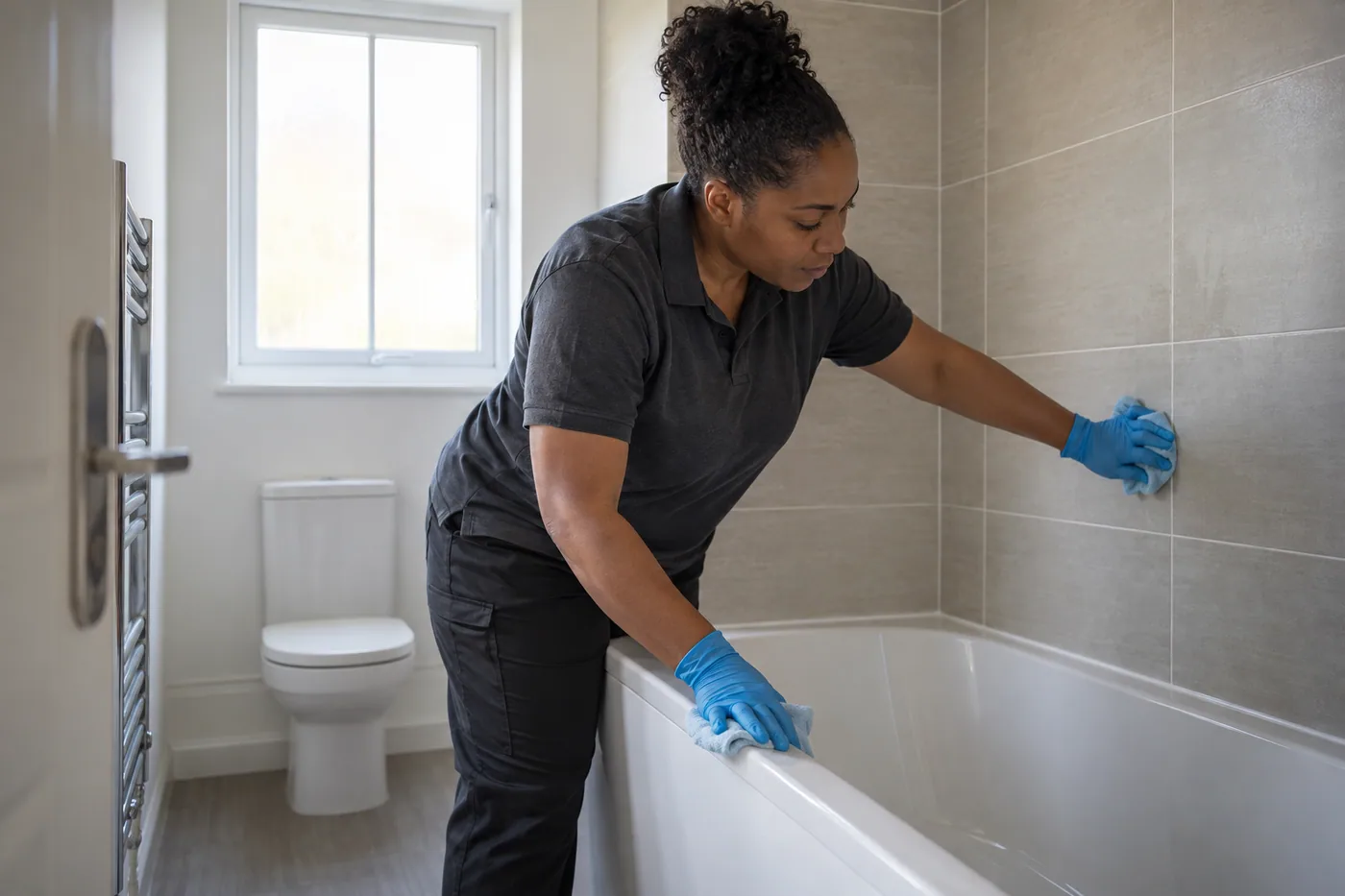
Cleaning the bath and tiles before handover

List the remaining furniture without assuming fabric care.

For a furnished property, separate the landlord’s remaining furniture from personal belongings being removed. Explain materials, condition and access around beds, cabinets or seating. Furniture surfaces can be considered for the room clean; upholstery needs a separate enquiry with fabric and mark details.

Unfurnished properties can retain storage, appliances and floors. Describe actual contents and dimensions; the label does not establish duration or access to every interior or obstructed area.

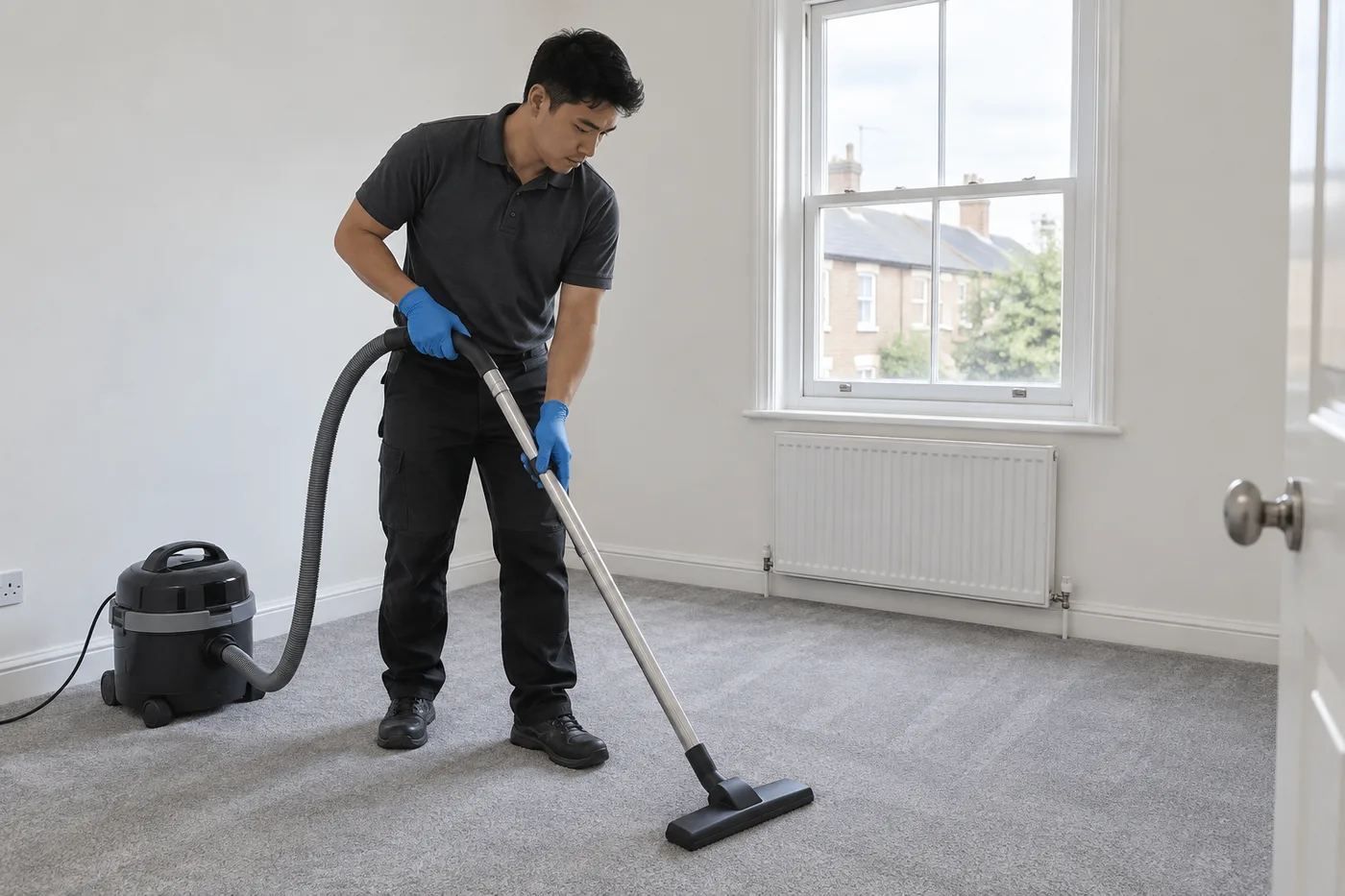
Cleaner vacuuming the floor of an empty bedroom
Cleaner working on a hallway floor beside neatly packed boxes

Leave clear instructions, not a mixture of unknown products.

Remove possessions and rubbish, securing private and fragile items. Prepare agreed interiors and record any products already used on difficult marks so suitable care can be discussed.

Share material instructions and any restricted products before booking. Confirm supply and equipment arrangements, including unusual surface or access requirements. Explain areas you cannot clear safely. Cleaning preparation should expose the agreed surfaces without risking injury or damage from moving heavy items.

Schedule the clean after movement through the property.

Plan the appointment once removals have finished and before the handover. Describe deliveries, furniture collections or repair work that could overlap, particularly if they may disturb floors or freshly cleaned surfaces. An empty date on the calendar is useful only if the property is actually accessible.

Landlords or agents can share the cleaning requirements; tenants can explain checkout timing. Cleaning supports preparation for that stage, but the company does not decide deposit deductions or inspection outcomes. Keep repair and inventory concerns separate from the agreed cleaning work.

Use photos to explain condition alongside the material.

Give the Chelsea address, size, rooms, bathrooms, furnishing and desired date. Photos can show residue and the surrounding fitting; include a written material description and omit personal documents. Expected duration depends on the scope, access and condition rather than a fixed bedroom formula.

Arrange authorised entry and the key contact, shared-door instructions, alarms and securing afterwards. You do not need to remain throughout. Explain relevant parking restrictions and who receives completion information. Check availability before treating the cleaning date as settled, especially for a short-notice handover.

Assess separate fabrics and additional glazing.

For retained seating, request upholstery care with fabric and previous treatment details. Carpeted rooms can be discussed through carpet cleaning, choosing the appropriate quote basis. Additional glass or exterior sides need a window-cleaning assessment with access explained. Confirm preparation, methods and price instead of expecting one product or room instruction to cover everything.

Ask for the property total with the chosen treatments.

Published two-bedroom tenancy prices start at £245 excluding carpets or £275 including them. The three-bedroom figures start at £307 and £337 respectively. These are property-based starting prices. Describe size, extra spaces and specified areas so the quotation corresponds to the actual property rather than a label alone.

Minimum charges, terms and availability apply; applicable congestion charges are additional. Confirm the total, inclusions, carpet basis and advertised oven offer for the Chelsea address. Separate upholstery or glazing work needs its own assessment. Do not assume promotional offers can be stacked or every special requirement is included.

Have the care guidance available for the visit.

For the Chelsea property, keep care instructions for delicate finishes with the confirmed room brief. Identify surfaces or possessions to leave untouched and any furniture blocking access. Agree a contact who can clarify those limits if you will be away during cleaning.

Material and condition questions for a Chelsea tenancy clean

What if I do not know the worktop material?

Say that during the enquiry and share any care information available. A photo and property contact may help clarify it; do not assume a cleaning method before the material is understood.

Should I report old scratches before cleaning?

Identify existing damage alongside dirt and deposits. Cleaning does not repair scratches or worn finishes, so those conditions should be separate in the scope discussion.

Can one product be used on every bathroom fitting?

Do not assume universal suitability. Explain finishes, instructions and restricted products so appropriate care and supply arrangements can be checked.

Does the oven offer cover unusual cooker layouts?

Confirm appliance type and compartments in the quote. The advertised tenancy offer should not be extended to every cooker arrangement without confirmation.

Can delicate furniture stay in the rooms?

Describe what remains, its access and any restrictions. Secure fragile possessions and agree the surfaces requested rather than expecting unrestricted moving or handling.

What terms apply if I raise a concern?

Confirm the applicable reporting period, covered cleaning issues, remedy and any fee in the booking terms. Contact the booking contact if a concern arises.

Bring the care information into the handover brief.

Describe the Chelsea finishes, condition and handover tasks. We can review practical scope, entry and the complete quote.

Illustrative photographs with generated models; these are not records of local customer jobs or actual staff.