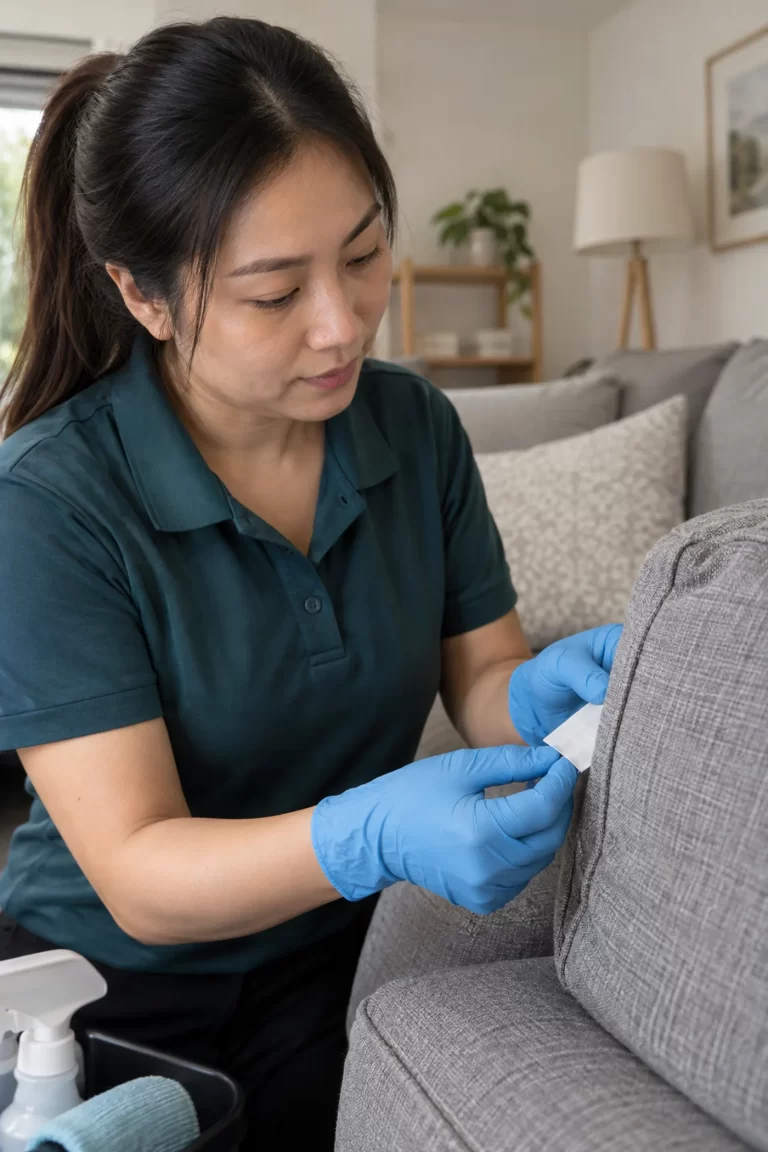
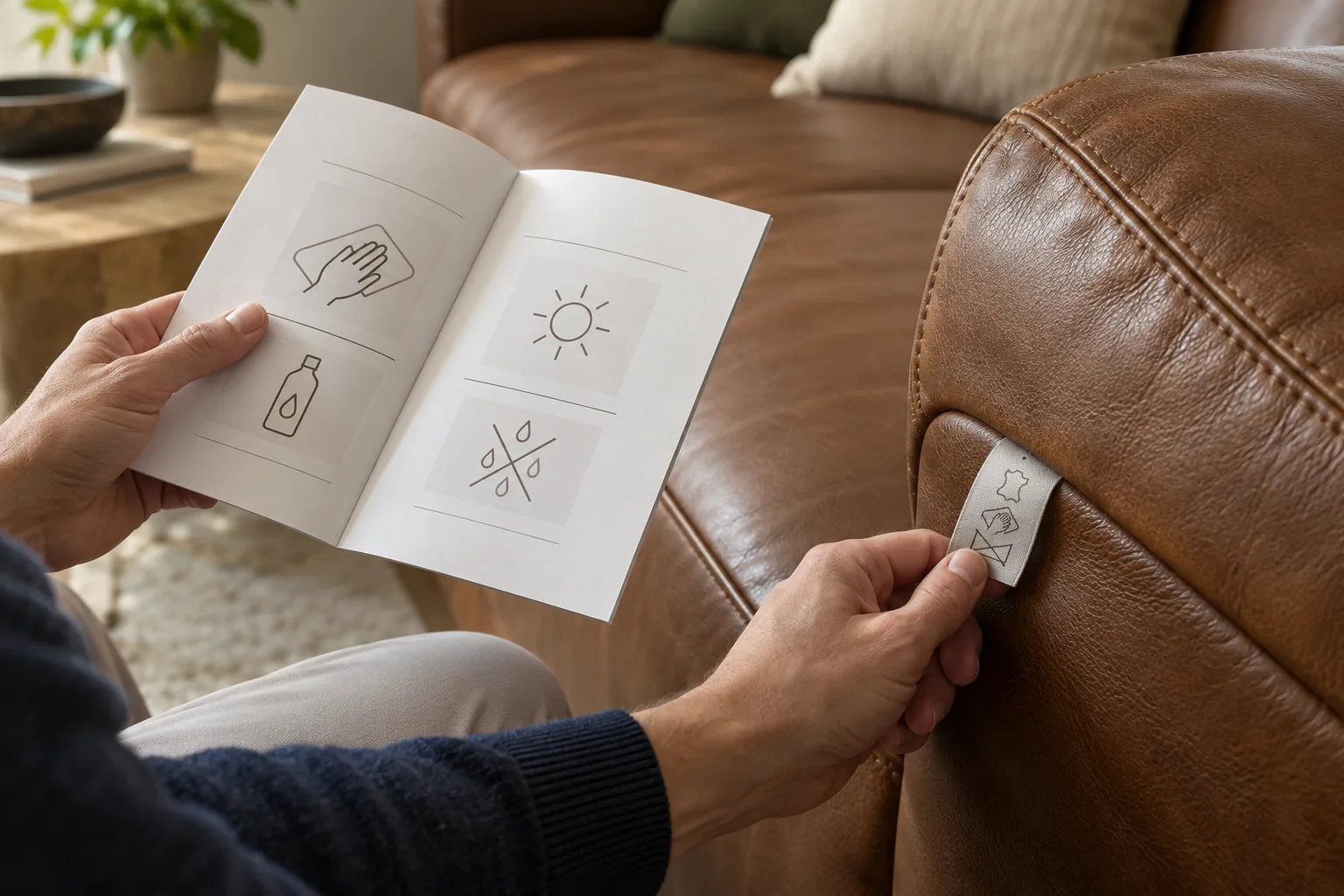
Good leather sofa care starts with knowing the upholstery. Find the sofa maker’s label or care booklet, identify whether the surface is protected leather, aniline or another natural finish, or a leather-look coated fabric, and follow those instructions. For routine upkeep, lift loose dust gently with a soft dry cloth; use a vacuum only if the maker permits a soft attachment. Blot a fresh spill promptly without rubbing or saturating the surface. Do not apply a general household cleaner, conditioner or water-based stain treatment until the exact finish guidance says it is suitable.
Leather furniture may look robust, but the finish can be more sensitive than the hide beneath it. DFS’s leather-care guide notes that its Natural leather should not be cleaned with water, while its Regal leather must not receive DFS leather care kits. By contrast, IKEA’s STOCKHOLM sofa instructions permit a soft-brush vacuum or slightly damp cloth for that specific aniline leather. This variation is why an online “one product for all leather” recipe is a poor starting point.
Identify the finish before any stain treatment
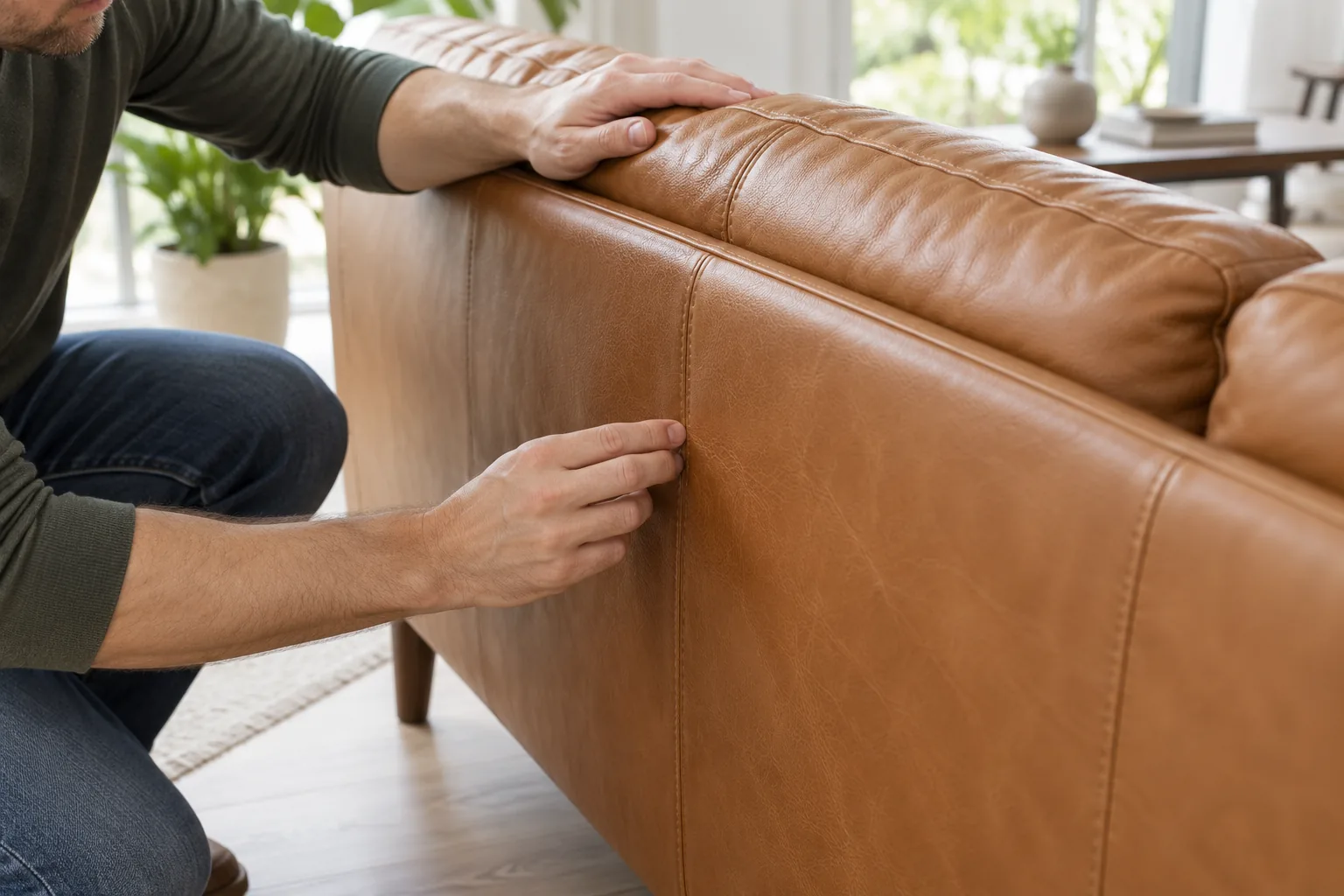
Look for a label beneath the sofa or on its paperwork, then find the product page for the exact model and upholstery option. A sofa range may be sold in several leathers, and one piece may use leather on the seating surfaces with a coated fabric on the sides or back. IKEA’s KIVIK product details describe just such a combination. Check which area you are cleaning rather than assuming all panels have the same finish.
Aniline and lightly coated leather can show natural grain, scars and colour variation. IKEA’s STOCKHOLM page says its aniline finish is more sensitive to dirt, liquids and scratches than fully coated leather. A protected or pigmented surface may tolerate a maker-approved cleaner, while a faux or coated textile may have a different care method again. The label, not the look or feel alone, should determine what is used. If the original paperwork is gone, ask the retailer or maker for advice using a product photo and any serial or model information.
Test any approved care product on a hidden area first, following the manufacturer’s directions. Look for colour transfer to the cloth, darkening, a change in sheen or a sticky feel once dry. Stop if any of these occur. A conditioner advertised for shoes or car seats is not automatically suitable for lounge upholstery. In particular, some natural finishes should not be conditioned at all with a generic kit.
Remove dust without scratching the leather
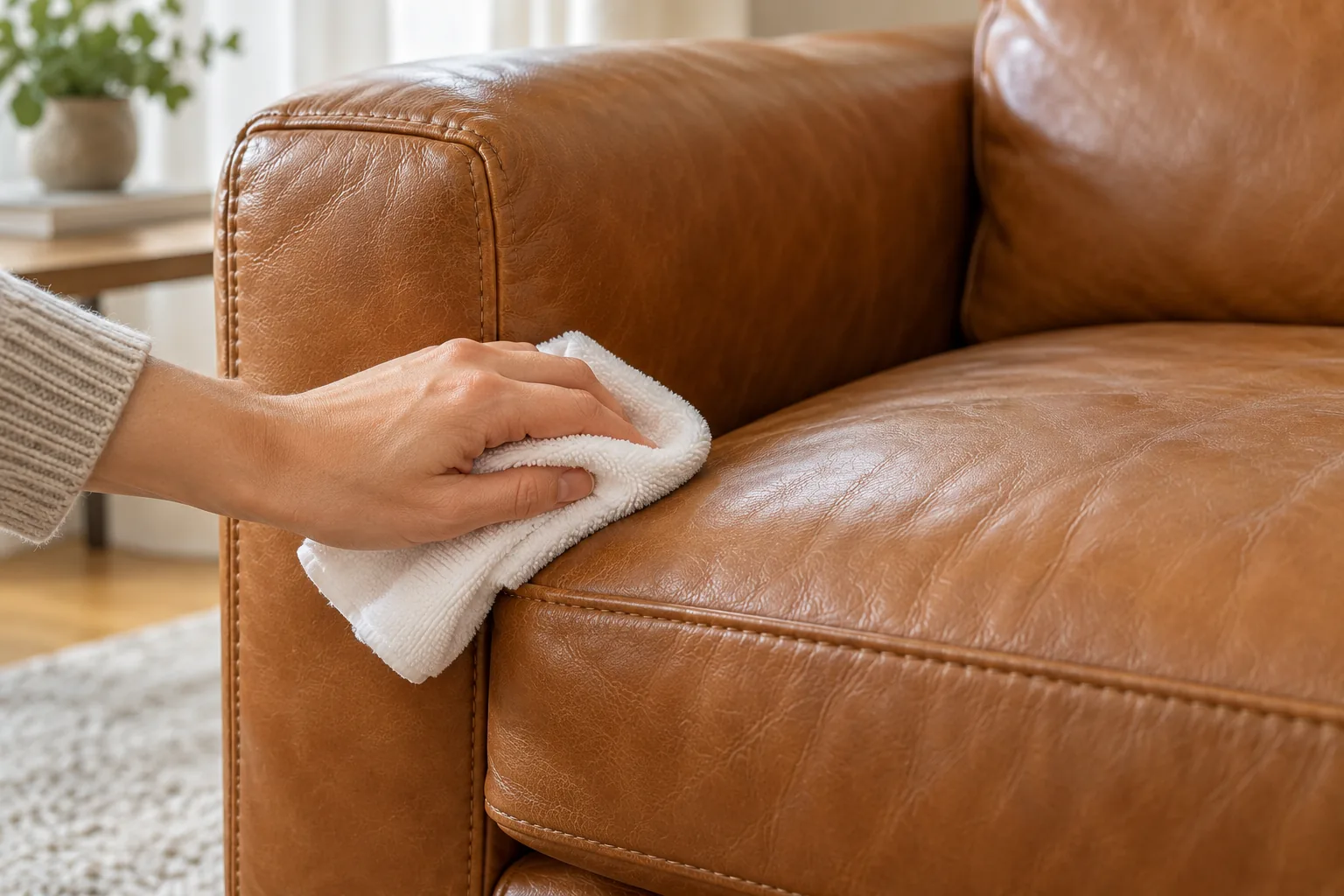
Take cushions off only if the sofa’s construction allows it. Use a soft, clean, dry white cloth to wipe the seating panels lightly and collect particles along seams, creases and arms. White cloth helps you notice any colour transfer. Fold it often so grit is not dragged across the finish. A soft brush can lift dust from a seam, but do not press bristles into stitching or pull at loose threads. Collect debris from underneath cushions before replacing them.
Vacuum guidance varies. DFS says a gentle dry cloth is suitable for routine dusting on its leather sofas and cautions that a vacuum may mark some leather. IKEA permits light vacuuming with a soft brush on its STOCKHOLM sofa. If your own maker permits a vacuum, use low suction and a clean soft attachment without a hard plastic edge touching the leather. Otherwise, stay with the cloth. Do not use a stiff brush, scouring sponge or narrow crevice nozzle directly on the hide.
Dusting is also a chance to inspect the furniture. Look for a fresh scratch, loose seam, transfer from dark clothing or a patch that feels unusually dry. Those signs help you act early under the maker’s care guidance. Do not treat normal creases and patina as stains to scrub away. Leather changes with use; the aim is to prevent avoidable soil and damage while respecting its finish.
Blot a spill promptly, then pause
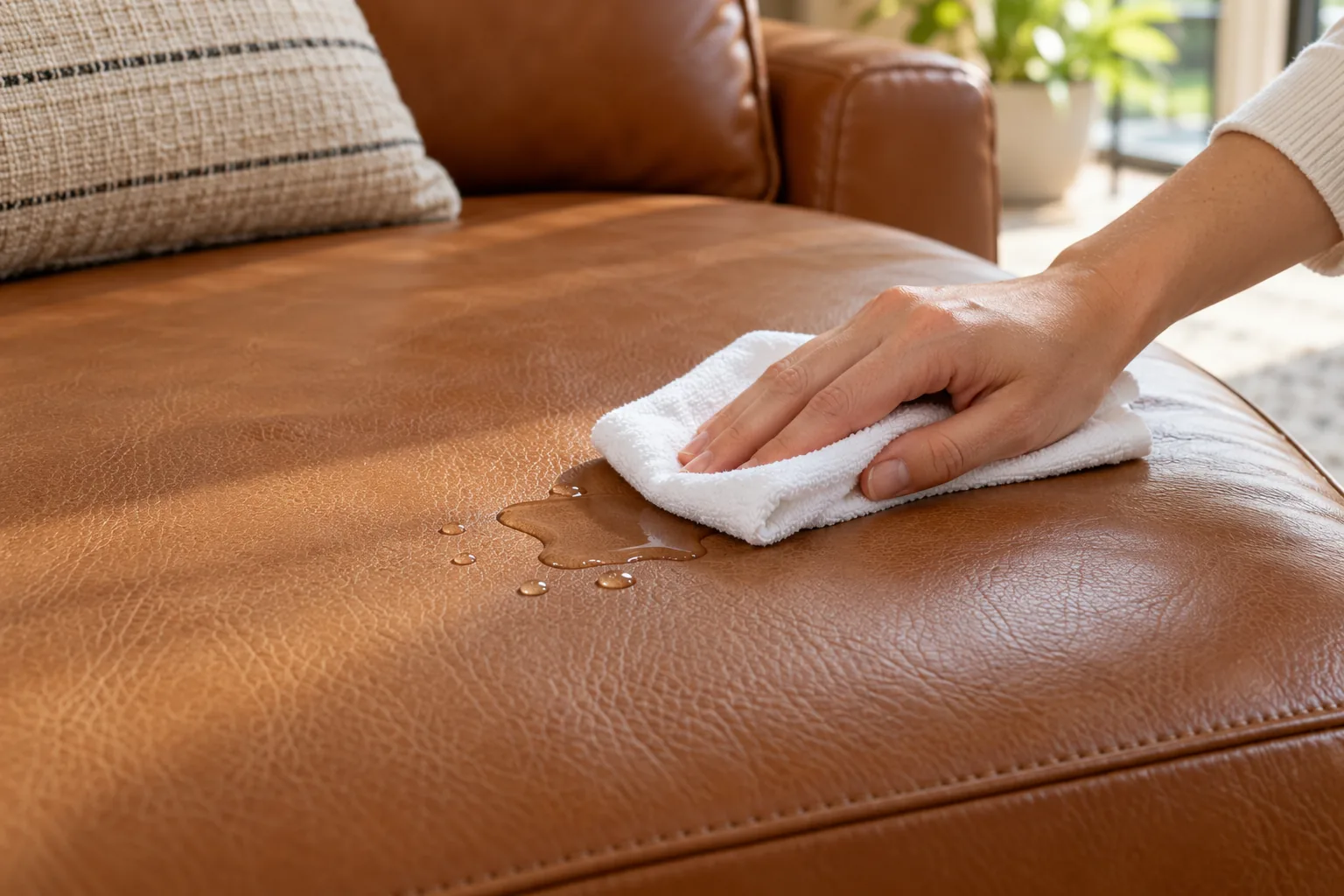
Move cups and cushions out of the way. Use a clean dry absorbent cloth or paper towel to lift liquid from the surface. Press gently and change to a dry section; do not rub across the stain or push fluid into a seam. DFS’s leather-care guidance advises prompt spill response and warns against general household sprays, baby wipes, bleach and harsh chemicals on its leather furniture. The first action is absorption, not a chemical treatment.
After blotting, consult the finish-specific instruction. Some makers allow a very slightly damp cloth for a particular leather, while others forbid water on natural leather. If the spill involved dye, oil, ink or a hot liquid, a household wipe may make it worse. Do not apply baby wipes, washing-up liquid, vinegar or an all-purpose spray just because the spill looks small. Contact the retailer or a leather-upholstery specialist if the mark remains or the finish has darkened.
Keep the area free to air-dry according to the product guidance. Do not aim a hairdryer or heater at the mark. Strong heat can affect leather and may fix a stain or dry the finish unevenly. Avoid sitting on the spot or placing a throw over it while it is still damp. Reassess it in natural light only after the surface has returned to its normal dry appearance.
Use only care products approved for that sofa
Leather cleaners and conditioners are not interchangeable. A cleaner removes suitable soil; a conditioner or protector is a separate treatment that may change appearance. DFS recommends a kit matched to the type of leather on its sofas, but also notes its specialist Regal leather that must not receive the standard DFS kit. IKEA’s STOCKHOLM care allows slightly damp wiping, while DFS says cleaner choice depends on the leather finish and singles out its Regal leather as an exception to its own kits. These examples show why a purchase label and finish-specific instructions matter more than a product marked simply “for leather”.
Follow the maker’s frequency, amount and application method for any approved conditioner. Apply to a clean test area first, use a soft cloth as directed, and buff or leave to dry only as the instructions specify. Do not pour product directly onto a panel or work it into stitching. If the leather becomes sticky, darker or patchy, stop and ask for advice before treating the rest. Over-application can be difficult to reverse.
Keep leather away from direct sunlight and strong heat where practical. Both DFS and IKEA warn that sun exposure can dry or fade the upholstery. Maintain the clearances in the furniture’s instructions near radiators or fires. A throw or cushion can protect a high-use spot, but avoid leaving a wet fabric or colour-transferring textile in contact with pale leather. Check care labels on the accessories too.
Know when routine care is no longer enough
A small amount of dust and a promptly blotted water spill may be within normal household care. Ink, dye transfer, grease, widespread soiling, cracking, peeling or colour loss need product-specific assessment. A peeling “leather-look” coating is not the same as a dirty leather hide; repeated cleaning will not repair a failing finish. Likewise, worn leather may need restoration rather than a stronger detergent. Photograph the mark and note what caused it before speaking to a specialist.
Our guide to sofa care labels, stains and drying gives a broader upholstery framework, but the fabric methods there should not be copied onto leather. If you arrange sofa cleaning or upholstery cleaning, share the exact leather type, label and stain history first so the suitability of any treatment can be assessed. No cleaning service should promise to reverse finish damage without examining it.
A simple routine is enough for many sofas: identify the finish, dust softly, respond immediately to spills, and use only the maker’s approved products. Keep those instructions with the sofa records so everyone in the household knows what not to apply. The time saved by a quick dry cloth is worth more than the risk of a universal home remedy on an expensive finish.
Common questions
Can I use a damp cloth on a leather sofa?
Only if the exact sofa and leather finish instructions allow it. IKEA permits one for its STOCKHOLM aniline sofa, while DFS warns against water on some natural leathers. Always avoid saturating the surface and let any permitted damp area dry as directed.
Should I vacuum a leather sofa?
Check the maker’s advice. Some permit a soft brush at low suction; others caution that the nozzle can mark leather. A soft dry cloth is a conservative way to lift loose dust when the instructions are uncertain.
Will leather conditioner remove a stain?
Conditioner is not a universal stain remover, and some finishes must not receive it. Identify the stain and leather type, use only an approved product, and test discreetly. Seek specialist advice for ink, dye, oil or colour loss.