Star Domestic Cleaners
Menu
LOOSE RUGS · WEMBLEY

Rug Cleaning Wembley

If a rug is reversible, describe both faces rather than only the side in use. Tell us about the weave, edge condition and any marks. We’ll discuss the requested work and practical arrangements for your Wembley address.

  • Both faces described clearly
  • Different marks kept separate
  • Treatment scope checked before booking

Explain how the rug is made and used.

Say whether the maker describes the rug as reversible, whether it has an attached backing or whether you are simply using an unlabelled piece on either side. Those are different descriptions. Share instructions and pictures showing the whole item and accessible details. Measure length and width, with fringe identified separately. Do not turn over a heavy piece just to start the enquiry.

Give each face an identifiable description if the designs differ. Point out marks on the side usually hidden as well as the face above. This helps set the requested scope without assuming that both sides can be treated alike. Missing care information should remain an honest unknown rather than being filled in from the appearance of the pattern.

A person lifting a rug corner to look at its backing

Distinguish a reverse from a second usable face.

An underside may contain a coating, stitched layer or structural backing which is not intended as the visible surface. Describe what is known from the label and what you can safely see. Mention brittleness, separation or residue. A separate grip pad is another item, with its own condition. The enquiry should not promise to clean every reverse surface or repair a weakened layer because the rug can be lifted.

Read the material details for the whole weave.

Wool and mixed wool rugs

Wool can be combined with other yarns and dyes. Give documented content and restrictions, including information about edges and any attached layer. A design visible on both sides does not establish the same suitability for every process. Mention earlier changes in feel or shape.
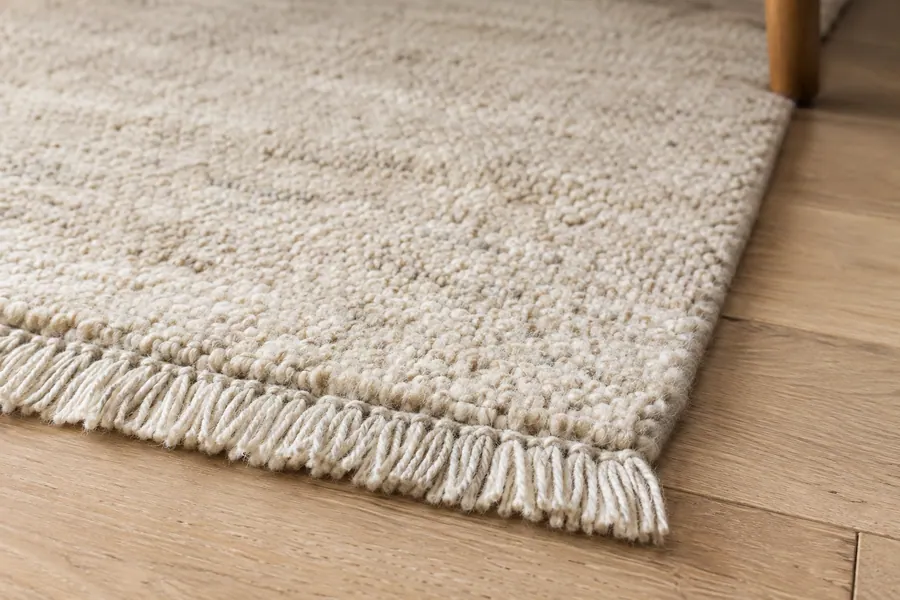
Wool rug fibres and short plain fringe at an edge

Synthetic fabrics

Share the named fibre where known. Synthetic threads can be used with different coatings or bound edges, and the complete item needs consideration. Explain earlier washing or stain products rather than assuming a resilient-looking face is suitable for all treatment.

Cotton and delicate weaves

Cotton flatweaves can have contrasting threads and trims. A light or reversible construction is not itself a machine-washing instruction. Silk, valuable or older pieces need a suitability discussion, and routine rug cleaning is not specialist restoration, conservation or repair.

Describe each face’s stain history.

A spill may have passed through the weave while the visible marks differ on either side. Say what happened, its approximate age and what has already been applied. Include pet incidents, repetition and odour if relevant. A grip layer or floor can be separately affected. These details help discuss suitable work, but they do not establish that both faces or every affected layer will become stain-free.

Show changes across the pattern.

Explain where shade has faded, transferred or changed after treatment. Use an overall picture to locate the concern and a detail view to show it. Contrasting colours may have different sensitivities. Ask how this affects the proposed work rather than trying a home wet test. A stain and dye loss are different problems, and removing soiling is not a promise to replace lost colour.

The join at the boundary deserves its own description.

Photograph accessible binding, tassels and seams, including any existing weakness. Ask what fringe or border attention is included and whether the thread differs from the main weave. Avoid pulling loose material to find out how the rug is joined. Missing fringe and torn stitching will not be recreated by cleaning. Show the condition before agreeing handling, especially where a damaged edge makes turning or carrying awkward.

State the work you want without choosing a universal process.

Our carpet and upholstery pages describe extraction and dry cleaning. Ask which approach suits the reversible rug and which work can include its other face. Ask how construction, fibres and colours influence the proposal, and which parts can reasonably be included. The work may have limitations that need agreement before booking.

Clarify the place of treatment and any collection and return arrangements. We advertise rug collection and delivery, but practical details and applicable charges need discussion for the item and postcode. For upholstered furniture, use the separate fabric-furniture service rather than extending the rug quotation to seating.

Cleaner checking a small mark on a loose rug with a cloth

Make the two descriptions easy to follow.

Keep photographs, labels and earlier product information together. Clear small belongings where safe and explain furniture above the rug. Do not flip, fold or carry a fragile item before preparation is agreed. If the fixed flooring also needs work, see care for fitted carpet; if the surrounding room needs ordinary dusting, use regular home cleaning for that separate scope.

Check readiness of the full item before turning it over.

Ask when the rug can be used, rolled or put back in place, including guidance for the reverse. Feeling the exposed face does not establish that every layer is ready. Treatment, thickness and conditions influence drying advice. Avoid covering, stacking or returning it to a sensitive floor while drying is incomplete. Agree practical aftercare rather than assuming a reversible rug has a shorter or fixed drying time.

Both-face requests belong in the quotation.

Rates depend on type and condition. Send dimensions and explain the areas or faces you want discussed. Ask which work is included, what is excluded and whether handling or other applicable charges are separate. Ask how work on each requested face is included in the total. Nor should a carpet-room charge be used as the tariff for an individual loose item.

Use the actual Wembley postcode when calling.

Give the address details, preferred timing and relevant access or furniture restrictions. Confirm possible arrangements for this rug rather than assuming that a page confirms a booking or collection. Nearby rug information is useful for another property; it is not evidence of a dedicated local team, office or guaranteed appointment time.

Questions about reversible and two-sided rugs

Does reversible mean both faces can be cleaned identically?

No. Share the maker’s information and requested work; fibres, dyes, trims and condition still affect suitability.

What if I use a backed rug upside down?

Say that clearly rather than calling it reversible. An attached reverse layer may not be designed as the visible face.

Should I turn it over before making contact?

Only provide views you can obtain safely. Explain limited access and agree handling before moving an awkward item.

Will one face’s stain history help with the other?

Give the accident and product history, noting marks visible on each side. Do not assume identical effects or results.

Is a second face automatically included in the price?

Ask what the quote covers. The scope must be agreed rather than inferred from the rug’s construction.

Can I reverse the rug while it is still drying?

Follow the item-specific aftercare advice before turning, replacing or covering it. Check readiness of the whole construction.

Tell us which faces need attention.

Call with the Wembley postcode, dimensions and construction details. Ask about suitable work, handling and the quotation’s scope.

Generated photographs illustrate rug materials and handling. They are not photographs of actual staff or customer projects.