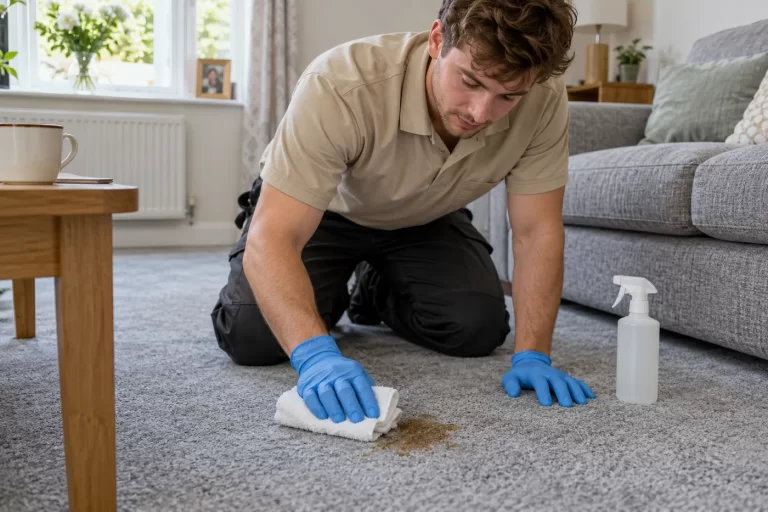
Wool rug maintenance between professional cleans is mainly about controlling loose soil and reacting promptly to spills. Check the rug’s label and construction, then vacuum with the setting its maker permits, testing an edge first. Keep fringe out of a rotating brush. For a fresh liquid spill, blot with a clean white absorbent cloth, working gently without rubbing or soaking the backing. Stop home treatment if colour transfers, the rug is delicate or the spill is large. A specialist can assess the fibre, dyes, backing and suitable cleaning method before the next restorative clean.
Wool is a durable furnishing fibre, but rugs differ widely. A flatweave, loop pile, tufted rug with a glued backing and hand-knotted rug may all contain wool while responding differently to agitation and moisture. The WoolSafe Organisation’s guidance warns that overwetting, excessive mechanical action and unsuitable chemicals are common sources of damage during wet cleaning. The safest household routine is modest and consistent rather than a dramatic home shampoo.
Identify the rug before choosing a vacuum head
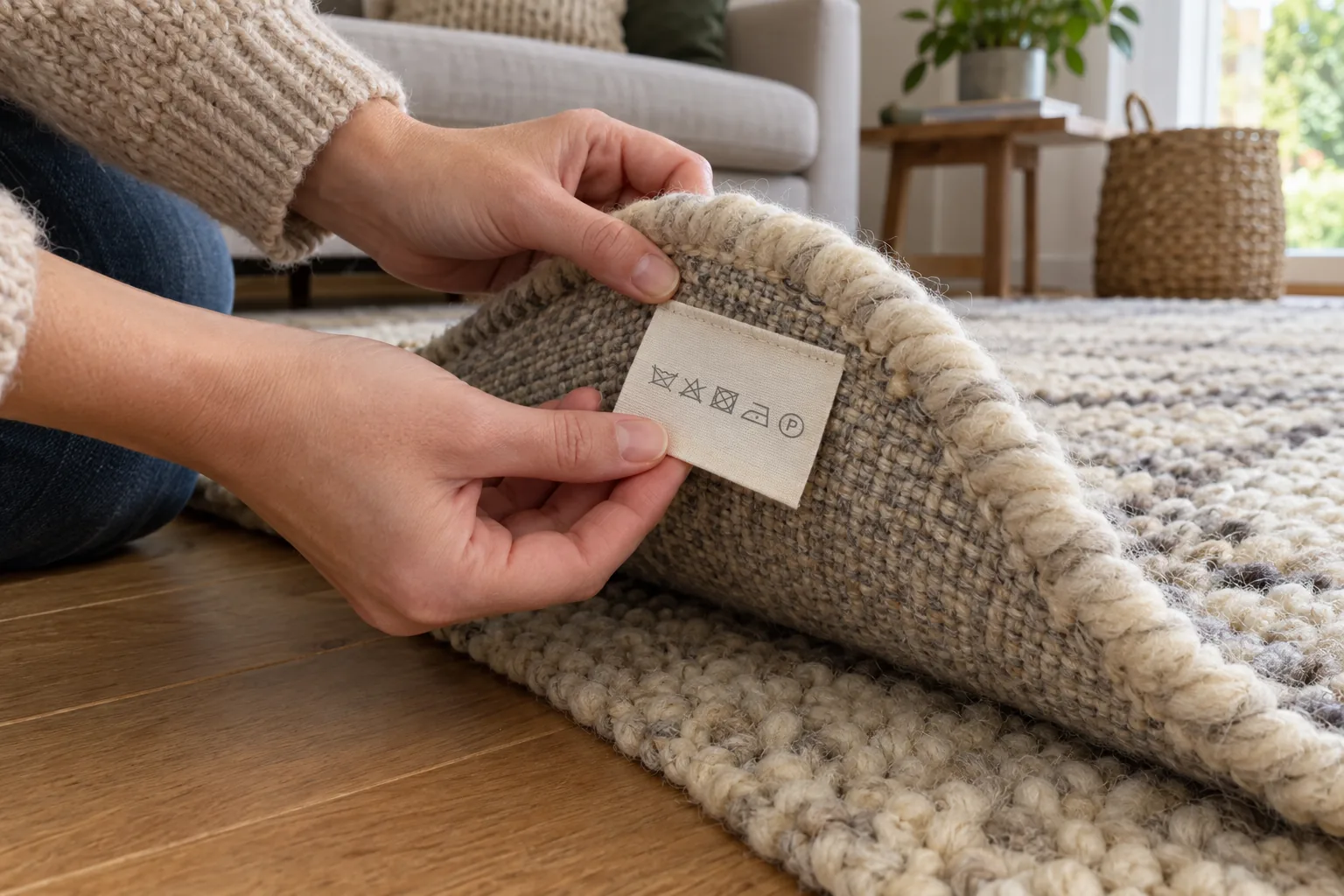
Read any sewn label, purchase record or maker’s care page. Note the fibre blend, pile type, backing, dye or special finish, and whether the fringe is part of the rug’s structure. A “wool rug” may contain a second fibre that is more sensitive to water than the wool. WoolSafe’s fine-fibre care advice says a blended rug should be treated according to its most sensitive fibre. If the rug is handmade, antique, unusually valuable or has no reliable care information, ask a qualified rug specialist before applying a product.
Look over the rug for loose tufts, open seams, curling edges, colour change or a damp backing. Check whether it lies flat on a suitable underlay and whether furniture feet are pressing into one area. Do not pull out a loose yarn or cut fringe to neaten it. Take a photograph if you notice a change, so you can describe it accurately to the retailer or cleaner.
The maker’s vacuum instructions matter. Alternative Flooring’s wool care page says recommendations vary by range and directs owners to each product’s information. Some cut piles tolerate a gentle brush setting; loops, longer pile and fringe may catch in rotating bars. Start with the least aggressive approved setting and a small hidden edge test. If the pile lifts, snags or sheds abnormally, stop and adjust the method.
Vacuum slowly without flattening or pulling the pile
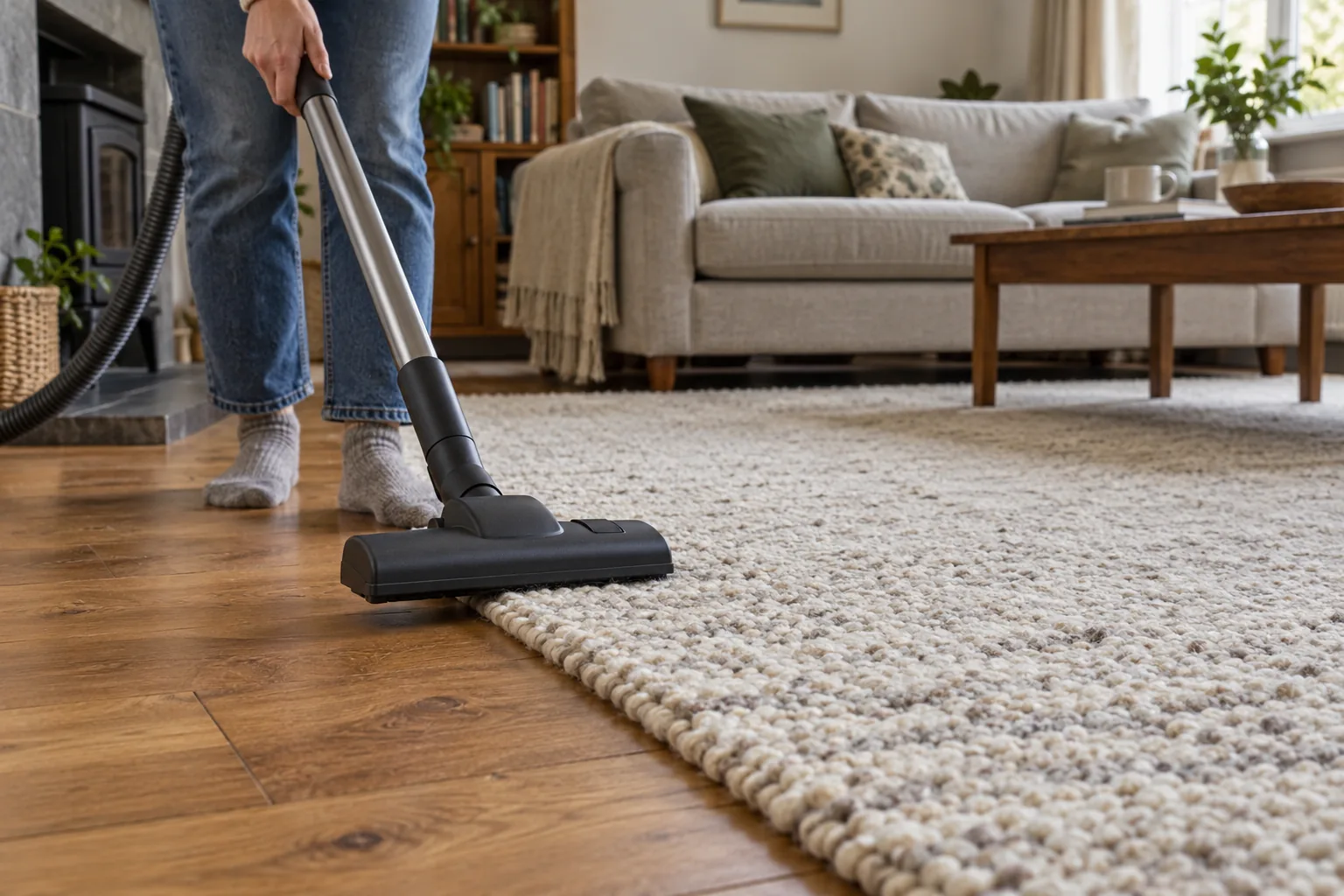
Clear small objects from the rug and check the vacuum head for grit or rough plastic edges. Move in straight, unhurried passes, overlapping slightly to collect dry soil rather than rubbing one patch repeatedly. Let the vacuum do the work; pressing hard into the pile can distort it. A rug with a deep or loose pile may need suction only. WoolSafe advises avoiding brushes or beaters on long or coarse loop pile wool carpeting. Follow the rug’s own manual for the safest head and direction.
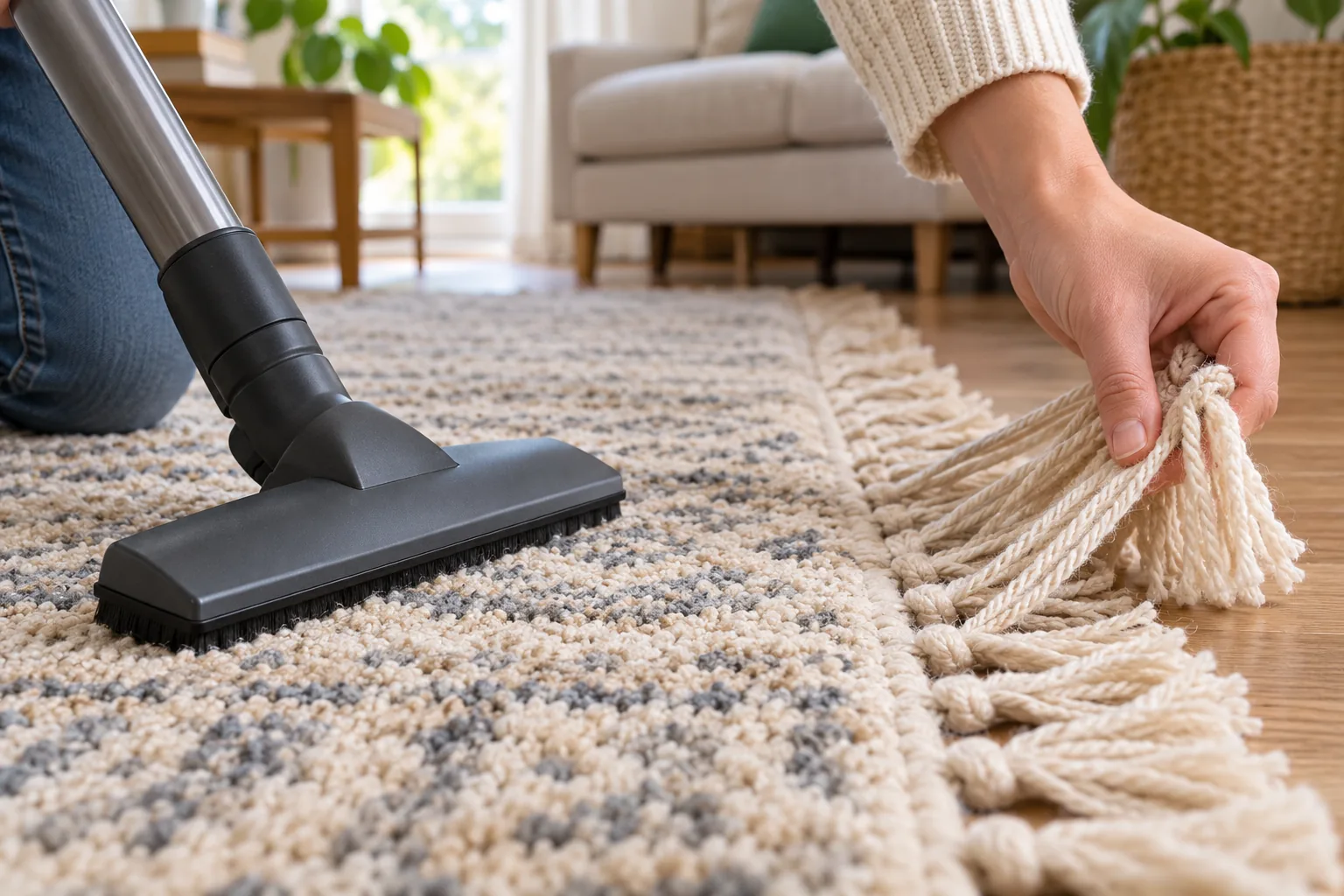
Test at an unobtrusive edge before crossing the central area. If the vacuum seals itself to the rug, lifts a corner or drags tufts, reduce suction or change attachment. Support a small rug so it does not bunch and cause a trip. Do not run the head over tassels or binding. Hold fringe clear and use a gentle suction-only nozzle near it if the maker allows, or brush loose debris away by hand. A rotating bar can tangle and tear threads before you realise what happened.
Traffic areas may need more frequent passes than the rest of the rug. The aim is to remove gritty particles before they are worked deeper into the pile. Doormats at entrances and removing muddy shoes help limit what reaches the rug. Keep the vacuum maintained so a clogged bag or dirty head does not push debris back onto the textile. If the rug has an underlay, check and clean it according to its own instructions when it can be lifted safely.
Protect fringe, edges and backing
Fringe is often the most vulnerable part because it sits at the edge of traffic and catches in vacuum heads. Do not pull it straight with force or use a comb without specialist advice. Vacuum the pile up to the boundary, then leave the tassels for a very gentle method approved by the maker. If a fringe is fraying or a binding has opened, photograph it and arrange repair advice. Cleaning cannot reattach a loose edge.
Keep the rug and its backing dry. A small amount of moisture on the surface may be manageable under the care instructions, but pouring water through the pile can wet a backing or floor beneath it. A tufted backing may contain adhesives, while a hand-knotted piece has structural yarns that require different handling. WoolSafe’s fine-fibre guidance cautions that some blended rugs are especially moisture-sensitive and recommends a qualified provider for larger or older spills. If a rug or its backing becomes wet, consult its maker or a rug specialist about safe drying before attempting further cleaning.
Avoid letting a rug stay over a damp floor. Lift a corner occasionally to check for trapped moisture, particularly after a spill or floor washing, then replace it only when both rug and floor are dry. If a musty smell or colour transfer appears, stop household treatments and seek a rug-care specialist. Moving a large wet rug can be heavy and may distort its shape; get help rather than trying to carry it alone.
Blot a fresh spill and avoid a household detergent recipe
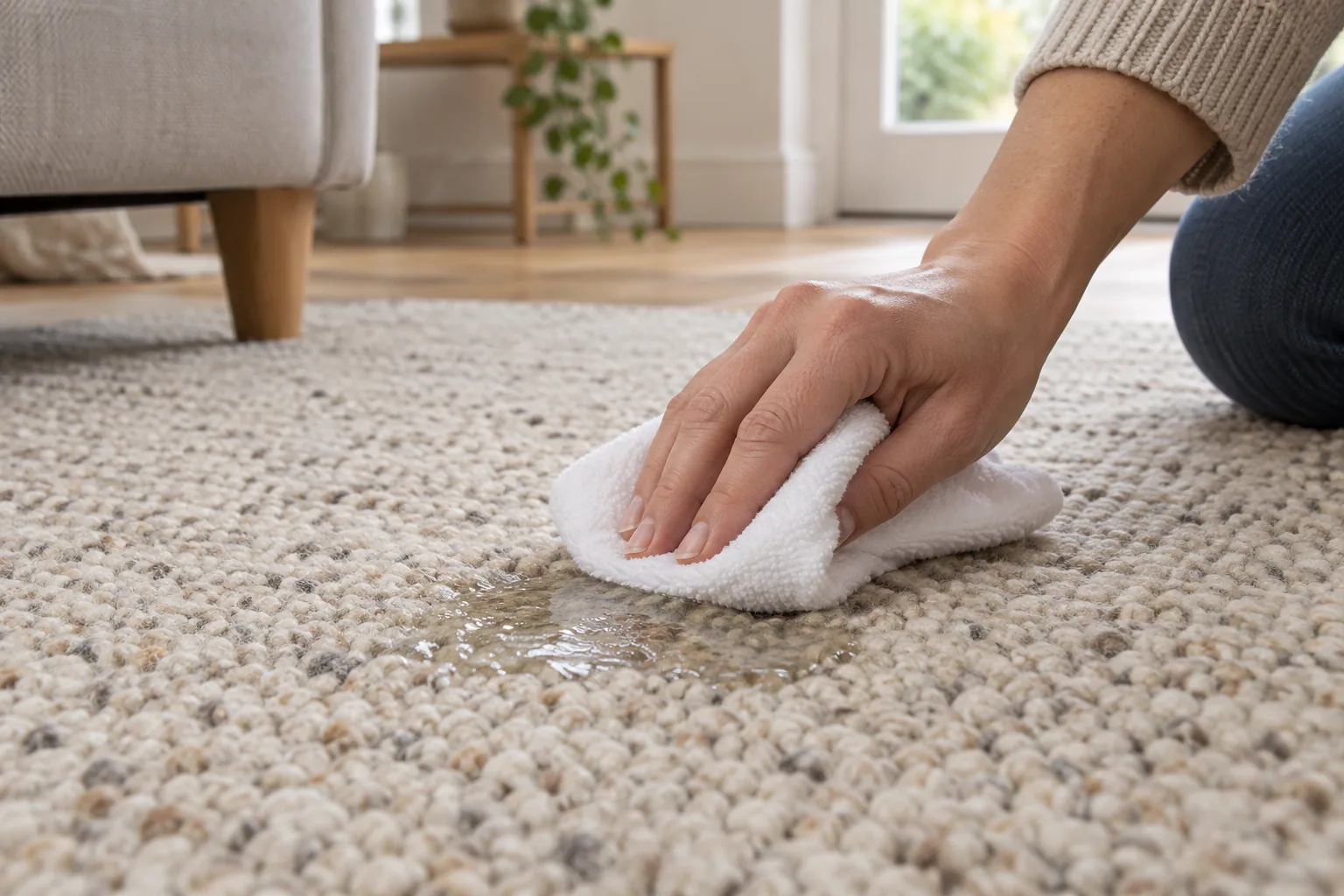
Act while the spill is fresh. Pick up solids with a spoon or blunt edge without grinding them into the pile. Blot liquid with a clean white towel or paper, replacing it as the colour transfers. Work from the outside towards the centre so the spot does not spread. Do not rub: friction can distort wool pile and make a cleaned area look fuzzy or lighter even after the stain is gone. Both WoolSafe’s wool-care guide and Alternative Flooring’s wool advice emphasise prompt blotting and warn against general household detergent.
After absorption, check the rug maker’s stain instructions. If a spot product is allowed, choose one approved for wool and the rug’s construction, pretest discreetly and use only the stated amount. Apply it to a white cloth rather than flooding the spot. Keep moisture out of the backing and remove residue as the product directs. Do not mix stain products or follow a generic vinegar and washing-up-liquid recipe. Alternative Flooring warns that household detergents can leave residue, encourage rapid resoiling, and harm colour, pile or backing.
If the spill is hot, oily, strongly coloured, large, old or on a delicate rug, stop after safe absorption and call a qualified rug cleaner. Note what spilled and what you used, if anything. This information helps a professional choose a treatment. Our carpet-stain first response guide explains the importance of acting promptly without aggressive rubbing, but a wool rug still needs its own fibre and construction assessment.
Plan professional cleaning before problems accumulate
Regular vacuuming cannot remove every type of embedded soil, oil or old residue. A specialist can examine the rug’s dyes, pile, backing and fringe before selecting a restorative method. Ask how the rug will be tested, cleaned and dried, and whether the service handles its exact construction. WoolSafe recommends trained providers for fine-fibre rugs and cautions that no wet method is foolproof. “Professional” alone does not tell you whether the operator understands a hand-knotted or mixed-fibre rug.
Do not wait for a spill to learn the rug’s details. Keep the purchase record, label photo and any previous cleaning notes. A small home routine of appropriate vacuuming, prompt blotting and regular checking of edges can make a professional visit more effective. Our carpet under a microscope infographic gives background on what fibres can hold; the methods for a specific rug should still come from its maker and a qualified specialist.
If you are arranging rug cleaning, share the rug’s fibre, dimensions, backing, age and spill history before a method is agreed. Do not assume that a wall-to-wall carpet process is suitable for a movable wool rug. The practical goal between visits is a tidy, dry and structurally sound rug, with treatment stopped early when a stain or fragile edge exceeds safe home care.
Common questions
Can I use a rotating brush on a wool rug?
It depends on the rug’s pile and maker’s directions. Long and loop piles may catch or distort; fringe should be kept out of the brush. Test a small edge with an approved gentle setting and switch to suction only if the construction calls for it.
Is washing-up liquid safe for a wool rug spill?
WoolSafe and Alternative Flooring warn against general household detergents because residues and colour or backing damage can follow. Blot first, then use only a product approved for the specific rug and wool if its maker allows home spot treatment.
When should I stop treating a spill myself?
Stop if colour transfers, moisture reaches the backing, the pile changes texture, or the spill is large, hot, old or unusually coloured. A qualified rug specialist can assess the next step without risking a wider stain.