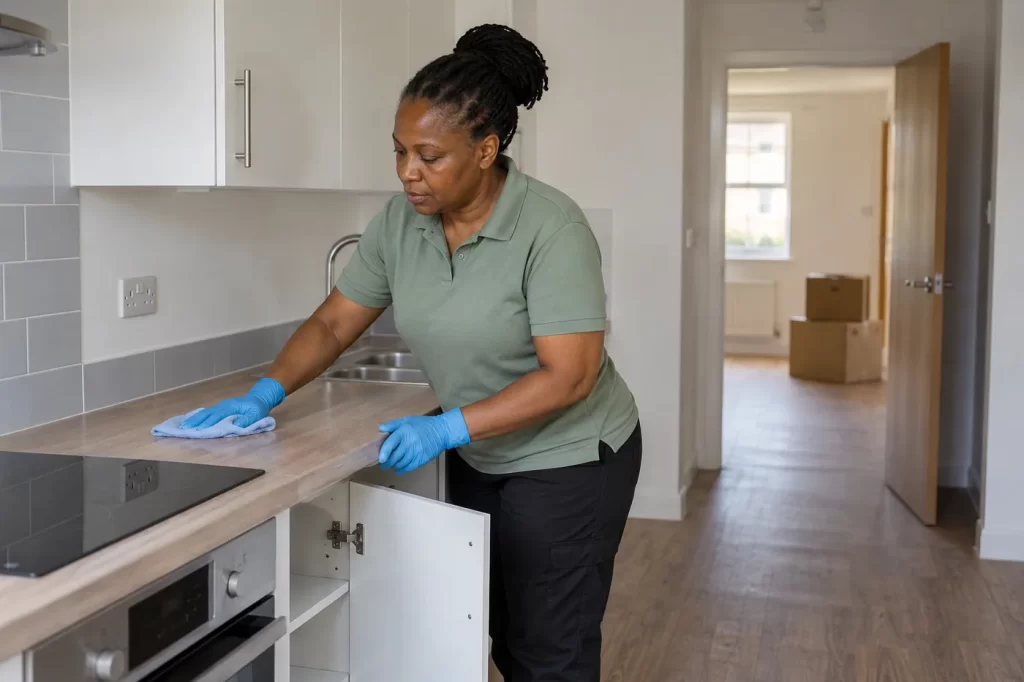
A useful move-out checklist starts before anyone picks up a cloth. You need the property ready, the starting condition understood and enough time between removals and handover. Use this guide to connect the room tasks with access, appliances, separate treatments and the records worth keeping.
Work back from the handover, not from a cleaning slogan
Put three times in your diary: when the last belongings leave, when cleaning can start and when the keys must be handed over. The most useful cleaning window is after removals and before the checkout inspection. If a bed, boxes or food still occupy the property, parts of the job may be inaccessible. Tell anyone helping you which items will remain and whether they belong to the landlord.
Allow room for the practical jobs around cleaning. A freezer may need preparation under its appliance instructions. Carpet treatment can require drying arrangements. You may need to collect a spare key from an agent or arrange parking for a booked service. Putting all of this into the final hour risks leaving the flat clean in some places but unfinished in others.
A tenancy-cleaning enquiry should name the rooms, appliances, furnishings and deadline. Describe the condition rather than relying on the number of bedrooms alone. A furnished studio with a heavily used cooker can require a different brief from an empty flat whose routine cleaning has been kept up.
Read the starting condition before writing the checklist
Find the check-in inventory, photographs and any messages recording issues when you moved in. Compare the same surfaces and fittings now. This helps separate dirt that can be cleaned from existing marks, wear and damage. It also gives you a specific question to ask if an agent’s checkout list appears to describe a different standard.
The Deposit Protection Service’s claim guidance explains the relevance of the agreement, check-in and checkout records, evidence and fair wear and tear. Keep those distinctions in mind. Cleaning cannot replace missing colour, repair a cracked tile or make an old carpet new.
Use a simple list with four headings: room, cleaning task, existing condition and person responsible. For a scratched worktop, the cleaning task might be removing grease while the scratch remains a separate recorded issue. This prevents an impossible result being put into a cleaner’s brief as though it were ordinary dirt.
Our older apartment move-out cleaning guide covers the room tasks. This handover plan adds the order, preparation, separate decisions and records around those tasks. Keep the older guide as useful reading rather than assuming a new checklist replaces the inventory for your property.
Keep cleaning, fees and the deposit decision separate
The standard of cleanliness and a requirement to buy a particular service are different issues. For homes in England, check the current Tenant Fees Act guidance before accepting a payment demand. Rules and advice differ across UK nations and tenancy circumstances. If a charge or professional-cleaning requirement is disputed, ask an appropriate advice service about the actual agreement.
You can choose to hire help because of time, condition or the amount of work. That choice does not make a cleaning company responsible for the deposit outcome. A landlord or agent may consider rent, damage, missing items and other issues as well as cleanliness. No checklist or cleaning receipt guarantees that every part of a deposit will be returned.
Keep a copy of the quote and the tasks agreed. If a service offers follow-up arrangements, ask for the applicable terms instead of assuming they cover every objection raised later. The older deposit-return article is a separate starting point for that process; use current scheme guidance for a specific dispute.
Make the property ready
- Remove your possessions, loose rubbish and food from the areas to be cleaned.
- Confirm which landlord-owned furniture stays and whether moving it is included or practical.
- Empty cupboards where interior cleaning has been agreed.
- Arrange entry, keys and permission for shared entrances.
- Check access to water and electricity and explain any known restrictions.
- Share appliance and delicate-surface instructions, plus photographs of difficult deposits or damage.
Do not pile remaining belongings into the bathroom and then expect the bathroom to be finished. If you cannot empty a room, explain the limitation before booking. Agree whether the job will cover accessible areas only or whether another date is needed. Avoid handing out door codes in public notes; use the booking route for private entry details.
Keep the key handover distinct from the cleaning appointment. Explain who locks up and who receives the keys afterwards. If the cleaners are working while you travel to the new home, make sure the agreed contact can answer a question about access or the requested scope.
Kitchen: work through storage, surfaces and appliances
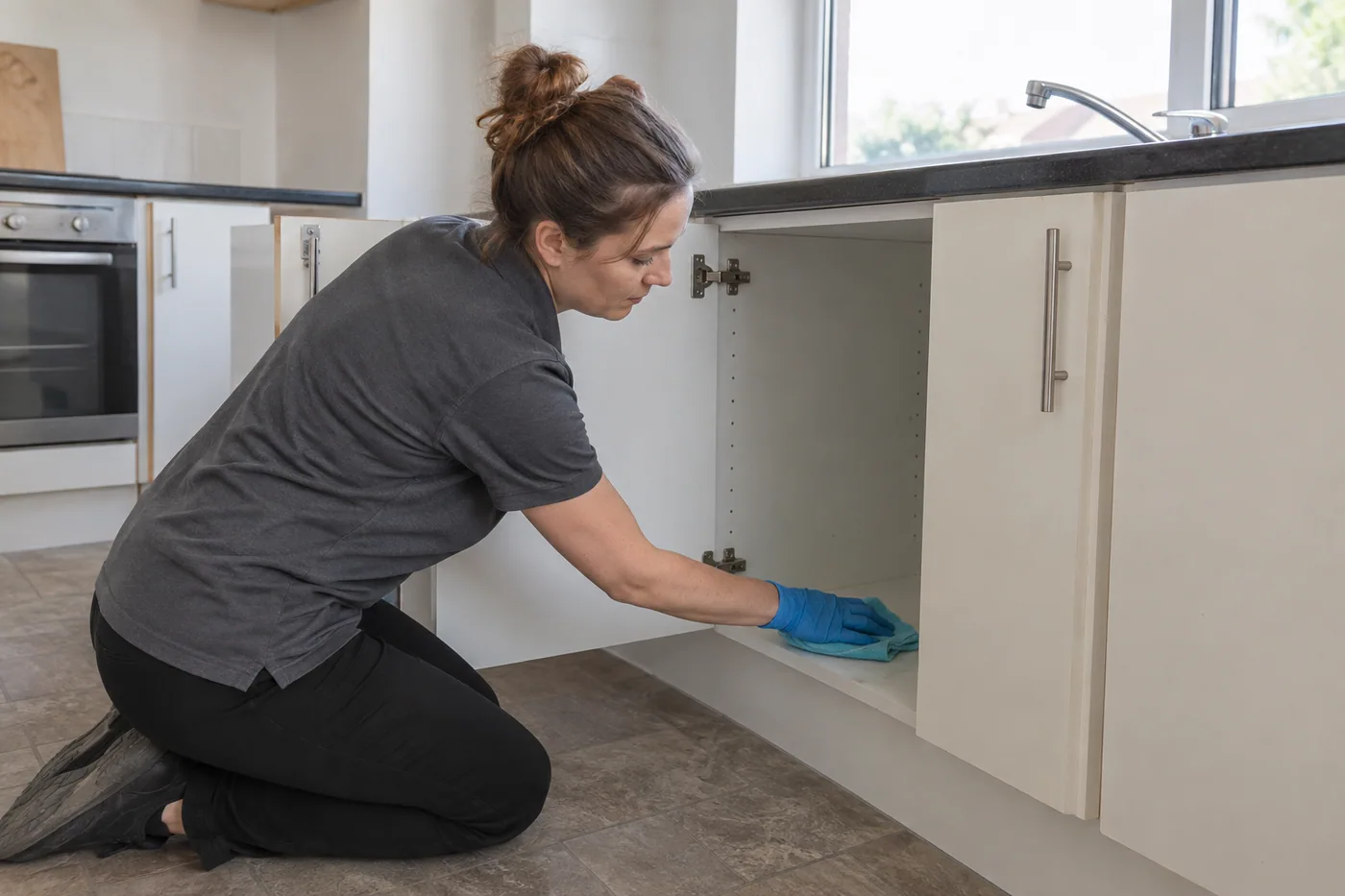
Start with empty storage. Check accessible shelves, drawer interiors and cupboard fronts. Remove food, crumbs and loose shelf liners before cleaning where appropriate. Identify the finish on the doors and worktops; timber, stone and coated surfaces can need different care. Scraping an unfamiliar deposit with a sharp tool may turn a cleaning problem into damage.
List worktops, splashbacks, handles, the sink and surrounding edges. Include grease around reachable cooking areas and the floor after the upper work is complete. For a composite sink, read the material-specific sink guide and check the manufacturer’s instructions rather than applying one strong cleaner to everything.
Name each appliance. State whether the fridge is empty, whether the freezer can be defrosted under its instructions and whether any cleaning is requested inside other appliances. Do not assume an oven offer covers a range cooker, hob or extractor. The oven service page helps you describe cavities, racks, glass and separate extras for a quote.
Take a final look for objects that were not on the cleaning list: old food on top of a cupboard, a tray left in the cooker or belongings in a drawer. Removing your items is a preparation task, not automatically part of an appliance or room clean.
Bathroom: distinguish removable deposits from deterioration
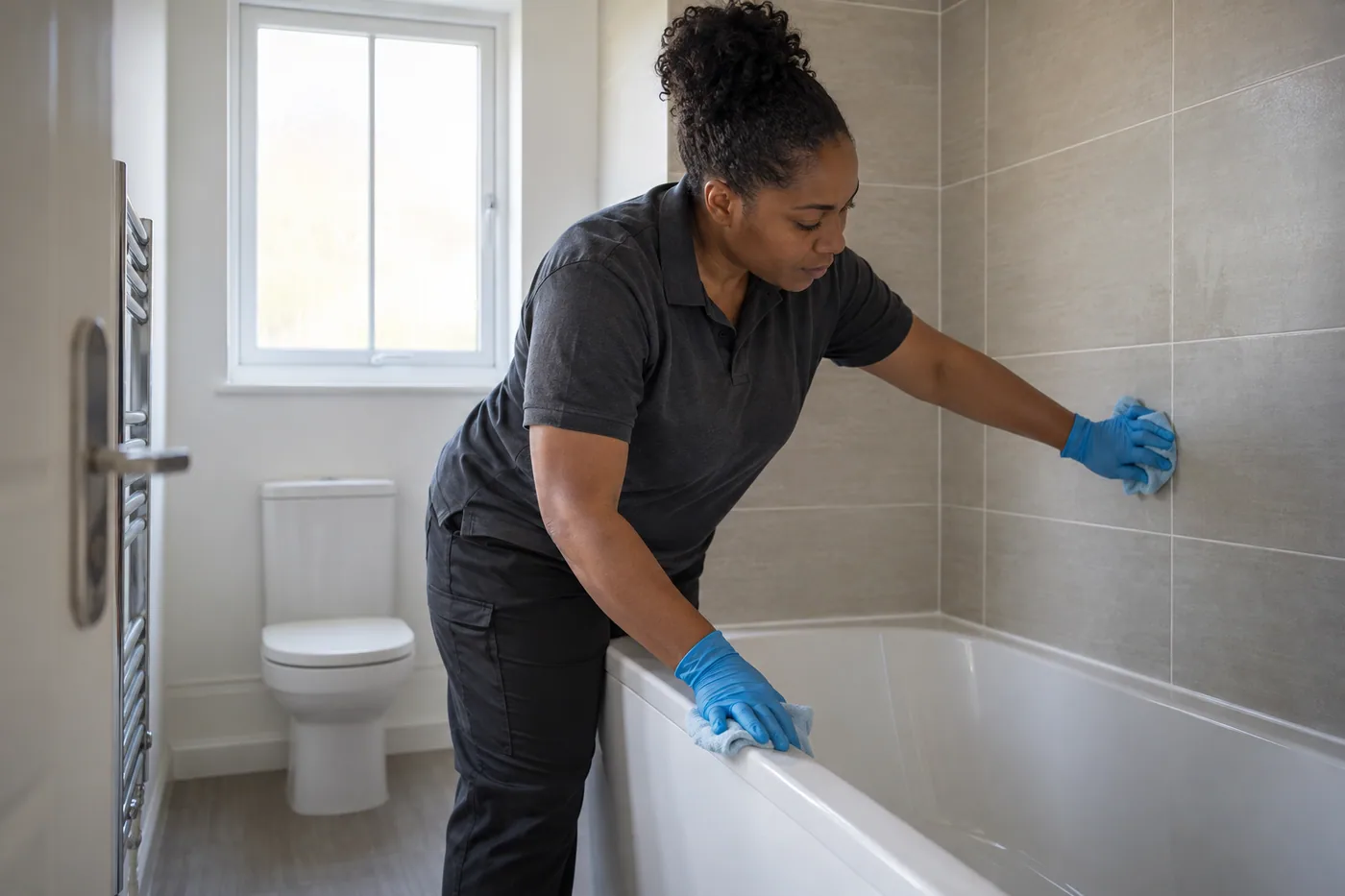
Check the toilet, basin, bath or shower, accessible screen, taps and surrounding surfaces. Include reachable ledges, the floor and deposits around fittings. Put heavily scaled areas in the enquiry rather than discovering them on the day. Ask which products are suitable for the material and any protective coating.
Grout and sealant need a careful description. Soap residue may be removable; a failing seal, missing grout or persistent discolouration may need separate work. A bathroom clean is not an agreement to replace silicone or repair a leak. Record the condition and explain any previous treatment before asking for a result.
Leave cleaning chemicals in their labelled packaging if you are asked to provide them. Do not mix products or leave an unidentified solution for someone else to use. HSE guidance on surface cleaning warns about adding chemicals to bleach concentrates; product instructions and surface compatibility remain relevant at home.
Rooms, floors and windows: specify the accessible work
In bedrooms and living areas, check reachable shelves, surfaces, skirting, doors and touch points. Explain whether wardrobes and drawers will be empty. Dust can sit around furniture or along floor edges after moving out, so walk the newly cleared room again before deciding the final list.
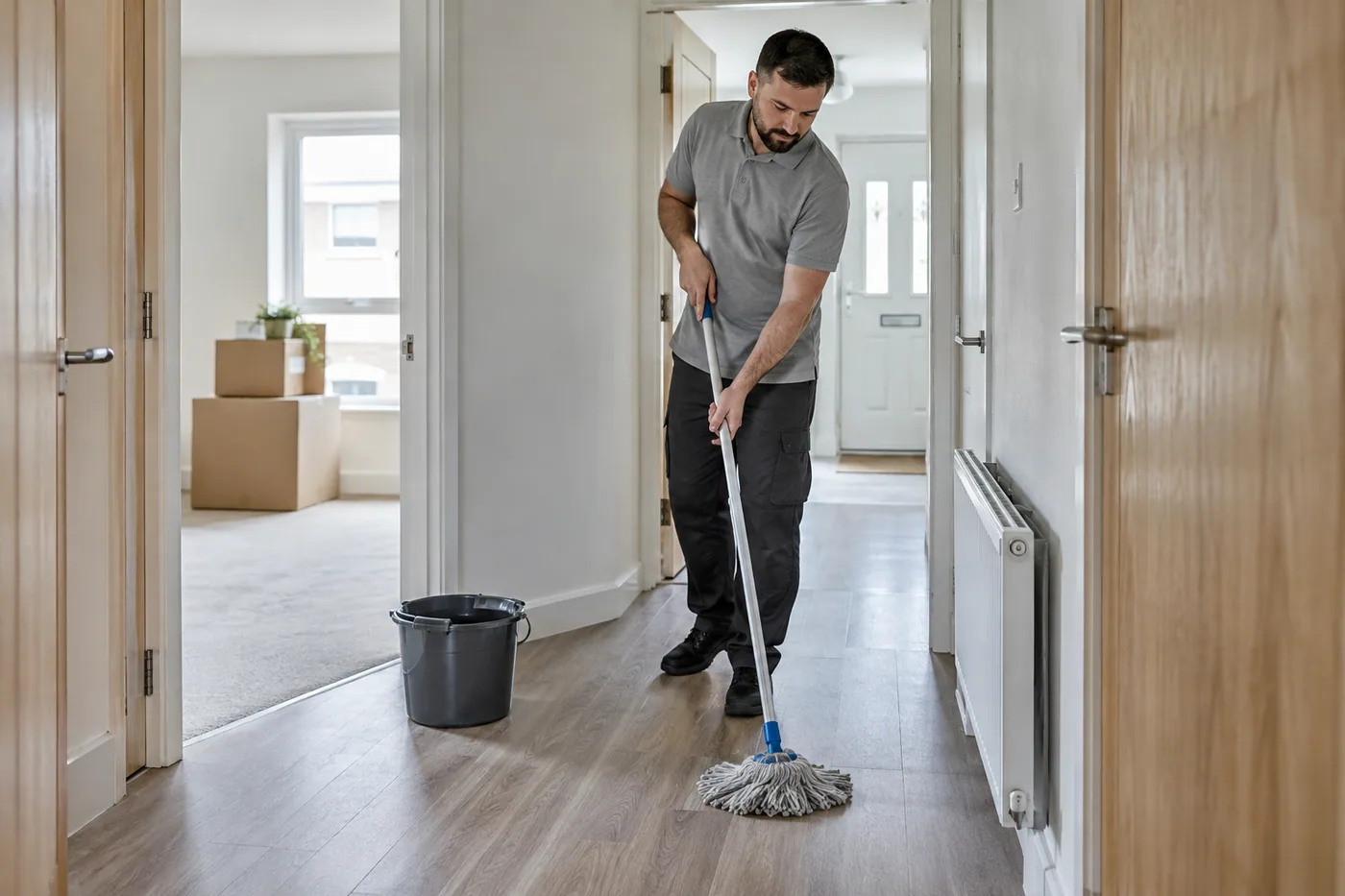
Identify each floor covering. Vacuuming a fitted carpet and professionally treating its fibres are separate tasks. For marks or odours, give the history and previous products. Read about carpet treatment, material checks and drying if it is needed. Ask whether it is included in the tenancy quote and how the room will be used while it dries.
Separate internal window glass from exterior cleaning. State which sides, frames and tracks need attention and describe access. A tall external pane does not become safely reachable because it appears on a checkout list. Curtains and blinds may have their own care instructions and should not be assumed to be washable during a room appointment.
Leave shared stairways, gardens and other spaces clear in the brief if relevant, but do not assume they are part of the interior package. Permission and responsibilities can differ. Ask who is arranging any separate task before paying for work in an area you do not control.
Put extras into a separate decision list
| Request | Details to supply | What to confirm |
|---|---|---|
| Carpet treatment | Rooms, fibres, marks, stairs and previous products | Included areas, method, cost and drying advice |
| Oven work | Cooker type, cavities, racks and condition | Covered fittings and separate hob or extractor work |
| Upholstered furniture | Pieces, covers, care labels and stains | Suitability, accessible surfaces and aftercare |
| Exterior windows | Building, sides, height and access | Reach, permission and the quoted scope |
| Visible defects | Location, material, earlier reports and photographs | Whether repair or another specialist is needed |
A separate list makes a combined enquiry clearer. It does not mean every extra needs a different company or date. It means the room clean, fabric treatment and appliance work are not accidentally treated as the same task. Check the full amount and inclusions on the price and quote information page before comparing headline starting figures.
Do a final walk-through and keep useful records
Walk through in the same order as your inventory. Look into empty storage, inspect appliance interiors that were included and check the floor edges after belongings have gone. Raise a specific missed task against the agreed brief, rather than asking for an undefined better standard. If an area is damaged, keep it identified as damage.
Photograph completed rooms with both a wider view and relevant details. Keep the original files and the messages arranging the work. Pictures are useful records, but a bright photograph is not proof that an inaccessible surface was cleaned or that a stain has disappeared. Capture the actual condition without changing the colour or presenting a misleading before-and-after.
Confirm the key return, forwarding contact and any remaining arrangements directly with the landlord or agent. Keep cleaning records separate from meter readings, possessions and other move-out tasks so they can be found later. A clear handover folder can save repeated searches through messages while you are settling into the next home.
Questions before you book

Can cleaning be done before the removals?
Some accessible work may be possible, but furniture and boxes can block surfaces and the move can leave fresh dirt. Describe the situation and agree the limitations. Booking after removals is usually the simpler sequence when the deadline allows.
Should every mark be removed for checkout?
Explain each mark and compare the starting condition. Some are dirt; others are staining, wear or damage. Cleaning cannot promise to reverse deterioration. Keep repair questions and deposit decisions separate from the cleaning task.
What should I send for a useful quote?
Give the postcode, handover deadline, room list, remaining furniture, appliance details and any separate treatments. Include clear condition and access information. Confirm the total and applicable terms before treating a requested date as a booked appointment.